Research Articles
Choosing a Peptide Supplier for Your Lab’s Quality Checks


A peptide’s purity result doesn’t tell the whole quality story. To understand how to choose a peptide supplier for your lab, compare the purity method with evidence of peptide identity and content, then consider batch documentation, analytical support, and quality controls.
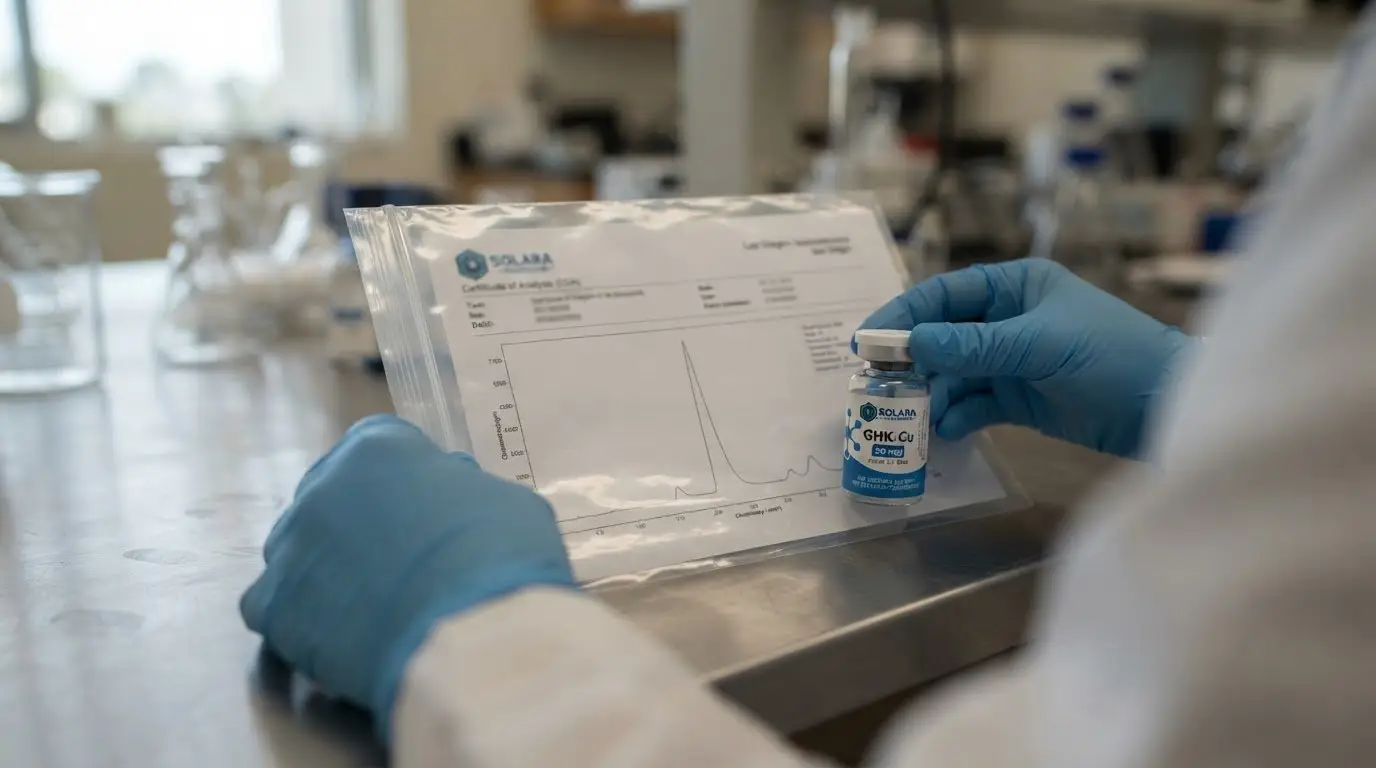
When deciding how to choose a peptide supplier for your lab, start with the Certificate of Analysis (COA), then check what the report actually measures. A chromatographic purity result and a content assay answer different questions, so understanding both helps researchers assess whether a material fits their laboratory work.
This guide explains how to evaluate purity testing, content assays, analytical capabilities, supplier support, and quality-control practices. It also covers how batch-specific COAs and third-party testing support an informed supplier comparison.
Solara Compounds supplies research peptides with batch-specific COAs and third-party testing information through solaracompounds.com. All products are for laboratory research only, not medicine or supplements, and are not for use in people or animals.
Key Takeaways
- Read purity results in context: chromatography, mass spectrometry, and content assays answer different quality questions.
- Distinguish peptide purity from net peptide content; a powder’s reported purity alone may not show how much peptide it contains by weight.
- Assess whether a supplier can explain its analytical methods and provide batch-specific documentation that supports your lab’s evaluation.
- Consider quality controls and consistency across batches, not just a single test result.
- Solara Compounds provides third-party testing and batch-specific Certificates of Analysis for research materials intended for laboratory use only.
HPLC purity, mass spectrometry, and content assays
HPLC, mass spectrometry, and amino acid analysis answer different questions about a peptide sample. Read their results as complementary measurements, not interchangeable quality scores.
HPLC Purity Assessment
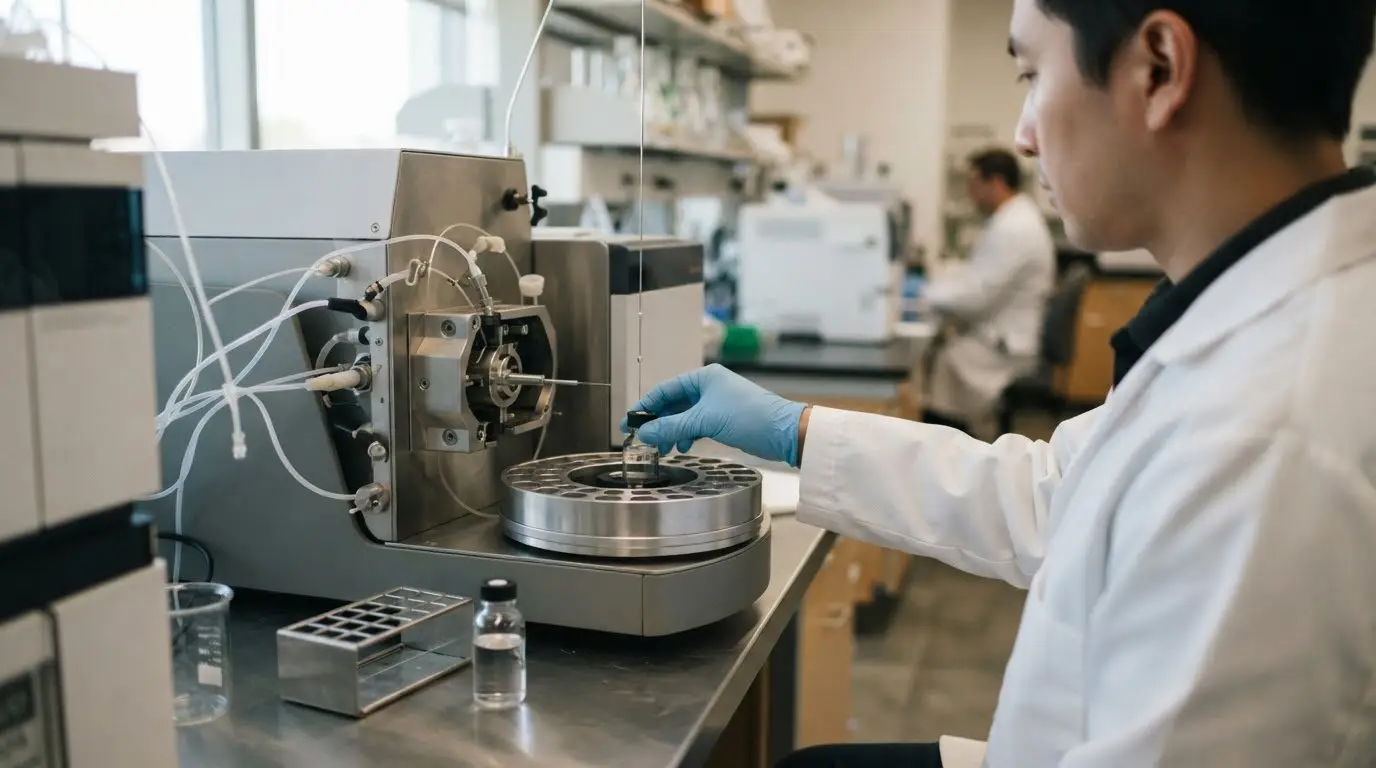
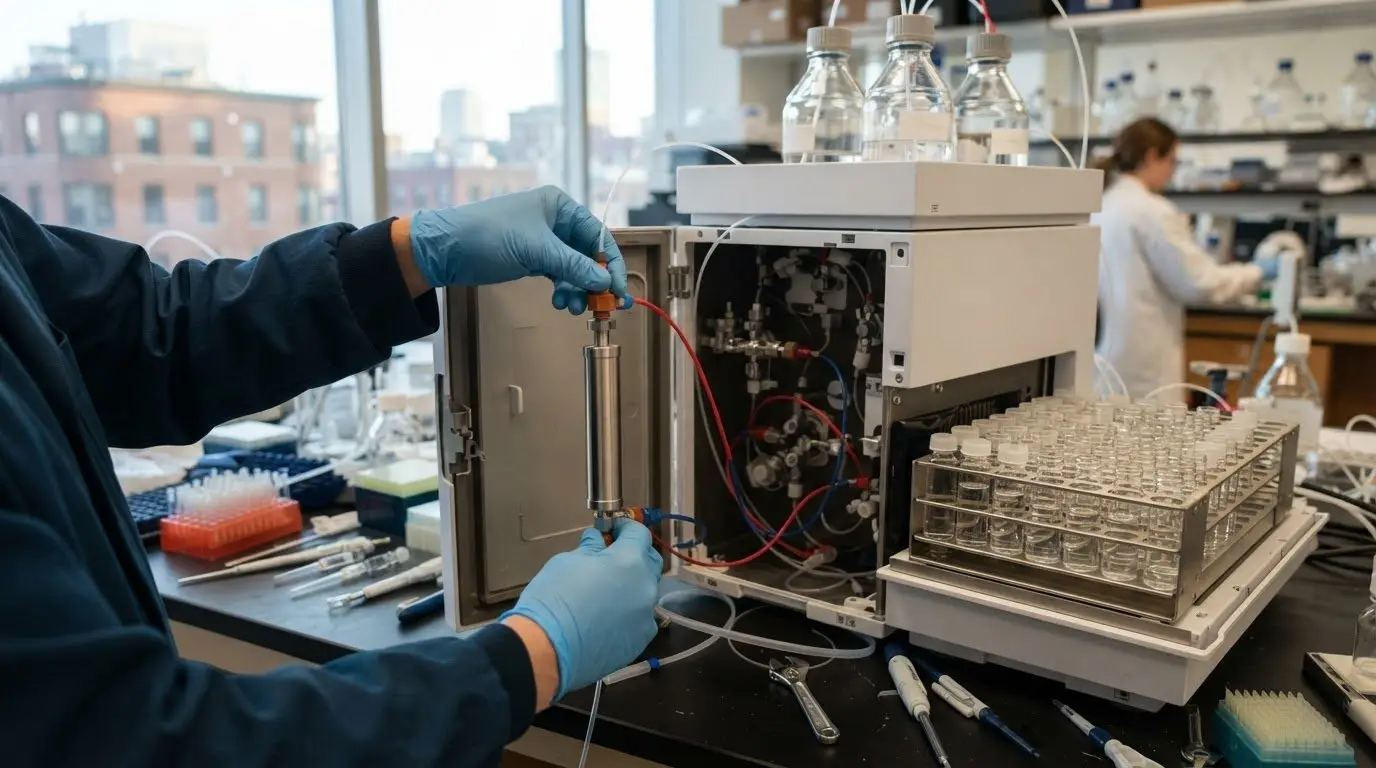
High-performance liquid chromatography (HPLC) separates compounds in a sample as they pass through a column. A detector records the separated peaks, allowing the main peptide peak to be compared with detected impurities. Peptide purity testing commonly uses ultraviolet detection at 220 nm, where peptide bonds absorb light.
Interpret the chromatogram alongside its method details, including the detection wavelength and the reported purity calculation. A single percentage describes the detected material under that method; it does not establish peptide identity or net peptide content. For a supplier comparison, the research peptide supplier should provide documentation that makes the test result understandable.
Mass Spectrometry and Content Assays
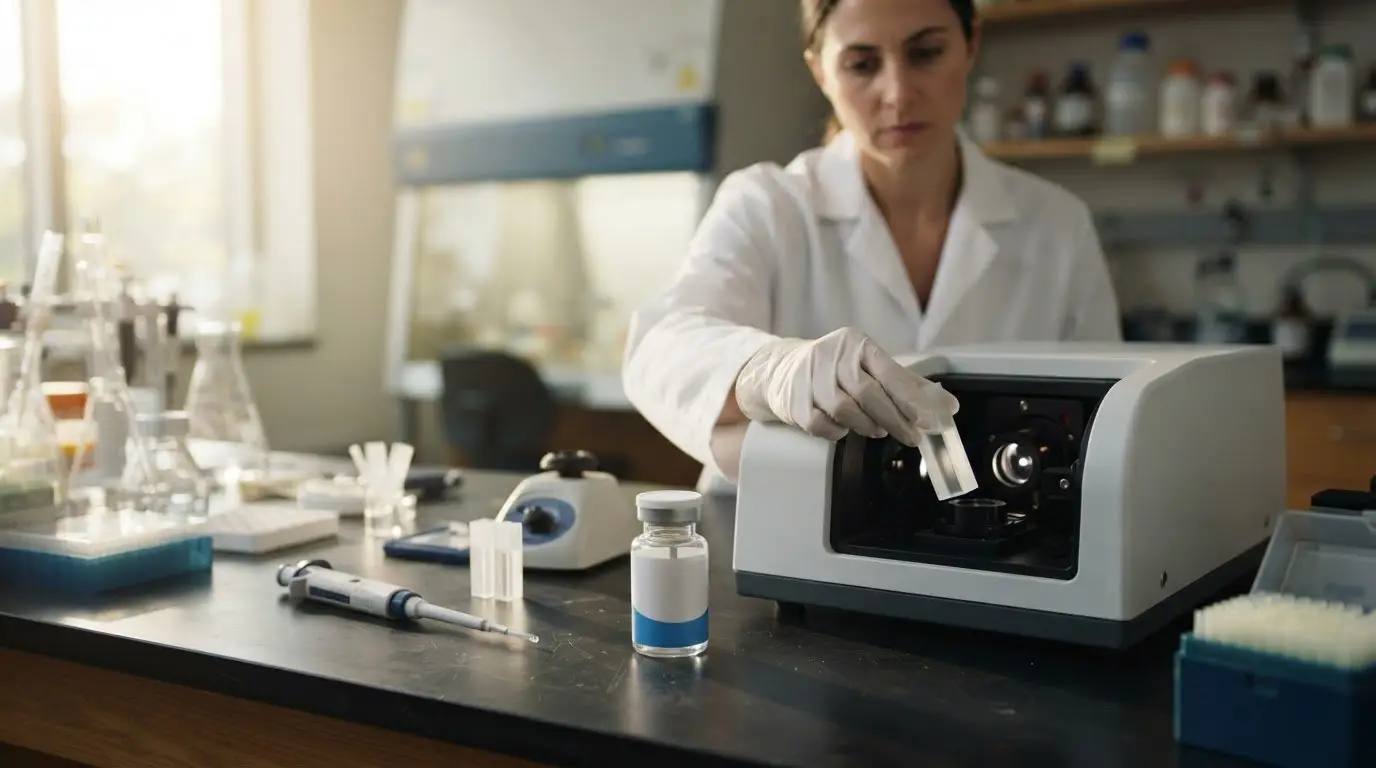
Mass spectrometry helps assess identity by measuring ions according to their mass-to-charge ratio. Compare the measured result with the expected molecular mass for the named peptide. This provides different evidence from an HPLC chromatogram, which separates detected components and estimates their relative amounts.
Amino acid analysis can quantify peptide concentration by measuring individual amino acids in a sample. One described method hydrolyzes peptide with 6 M hydrochloric acid and quantifies 17 amino acids. The resulting profile supports a content assessment, while HPLC reports chromatographic purity.
These measurements can produce different figures without contradicting each other. A sample may be 99% pure by HPLC yet contain only 70% net peptide by amino acid analysis. The first figure concerns the chromatographic profile; the second reflects peptide content in the tested material.
Use a practical reading sequence: identify the test method, note the property it measures, then interpret the result within that scope. For example, an HPLC purity figure alone cannot show researchers how much peptide is present by weight. A content assay addresses that separate question.
USP-NF General Chapter <1052> describes a framework for amino acid analysis. Together, the chapter’s subject and the assay results help distinguish analytical approaches: chromatography evaluates separated components, mass spectrometry supports identity assessment, and amino acid analysis measures peptide concentration.
The note gives two concrete purity examples: the α-Melanocyte Stimulating Hormone sample contained peptide that was 98% pure, and the Luteinizing Hormone-Releasing Hormone sample contained peptide that was 98% pure. For the α-Melanocyte Stimulating Hormone sample, the note also lists a formula weight of 1664.9. Read these details as sample-specific reported values, rather than as a general specification for either named peptide. The formula weight provides a reference for considering identity evidence, while the purity figures describe reported peptide purity; neither figure should be made to answer a question it does not measure.
When reviewing such records, keep each reported property attached to its sample and method. A purity percentage is meaningful in the context of the test that produced it, and it should not be treated as a substitute for a mass measurement or a content assay. Conversely, a listed formula weight is not itself a measurement of how much peptide is present in the material. Maintaining these distinctions makes comparisons more cautious: the two 98% results can be noted as matching reported purity values, while the separately listed formula weight remains relevant to identity assessment. Together, the information is useful within those limits.
Net peptide content versus gross powder weight
Gross powder weight includes the peptide and any other material in the vial. Net peptide content refers to the peptide portion alone. This distinction matters because a powder’s total mass does not establish how much peptide it contains. A content assay provides a basis for quantification, while the stated amount should be interpreted in light of its supporting documentation.
Amino acid analysis can estimate peptide concentration by measuring the amino acids in a sample. Results can differ from chromatographic purity: a sample may test at 99% purity by HPLC yet contain 70% net peptide by amino acid analysis. The figures describe different properties. One reflects the detected chromatographic profile; the other estimates peptide relative to the sample’s total mass.
Dry powders can contain 60-80% actual peptide by gross mass. This range shows why researchers should distinguish the amount of powder from the amount of peptide. For example, two samples with the same gross weight may have different net peptide content. A batch-specific report that identifies the assay and its result helps interpret that difference without treating purity and content as interchangeable.
For a practical comparison, identify the reported quantity, measurement method, and whether the result refers to gross powder or net peptide. Then consider whether that measurement suits the laboratory’s planned work. If a supplier reports only a purity percentage, that result alone does not quantify peptide mass in the sample.
How should suppliers compare on pricing, minimum order quantities, and shipping costs? Compare the stated unit price with minimum purchase requirements and shipping charges, since these determine the total order cost. Avoid treating a lower unit price as a like-for-like comparison when quantities or shipping terms differ.
What U.S. regulations apply to purchasing research peptides for laboratory use? Requirements depend on the compound, its intended research use, and the buyer’s institutional procedures. Restrict the material to laboratory research and assess the applicable requirements for the planned work before ordering.
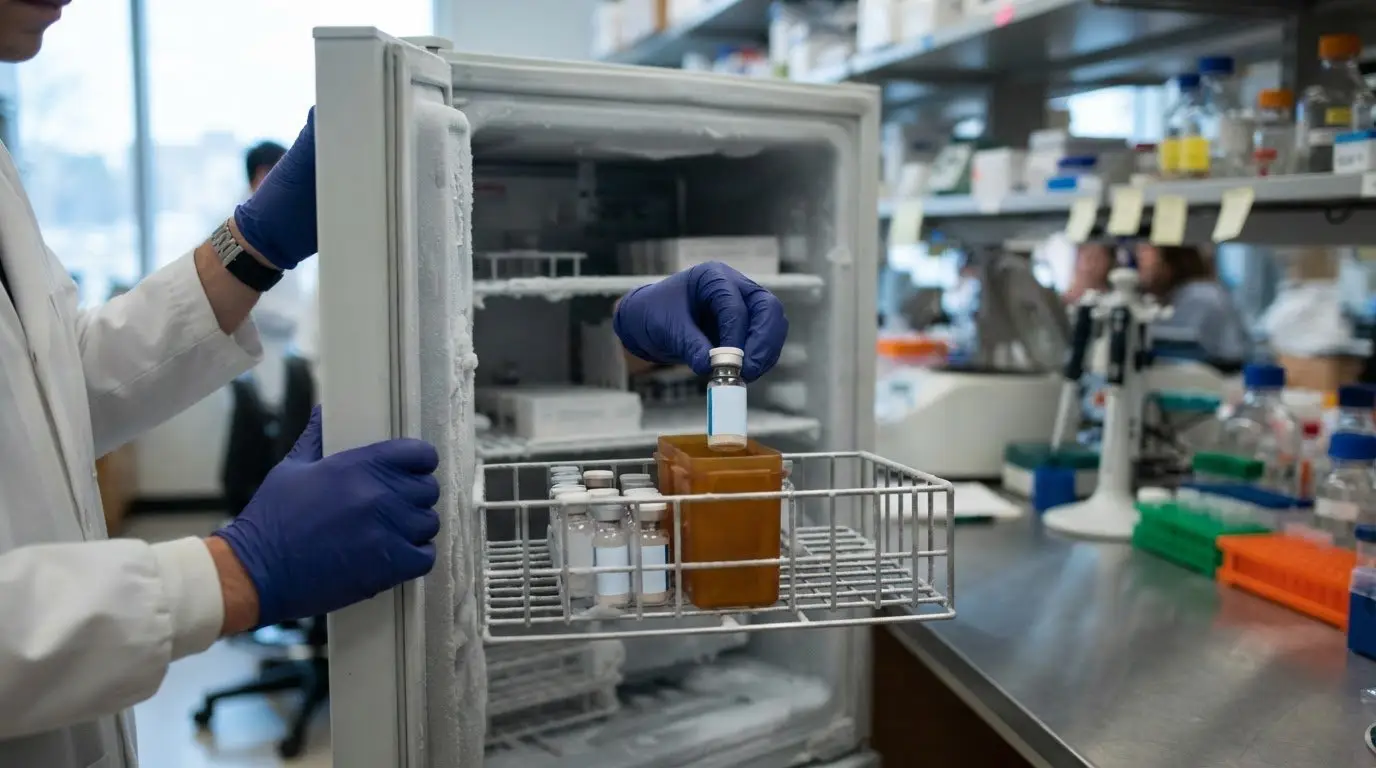
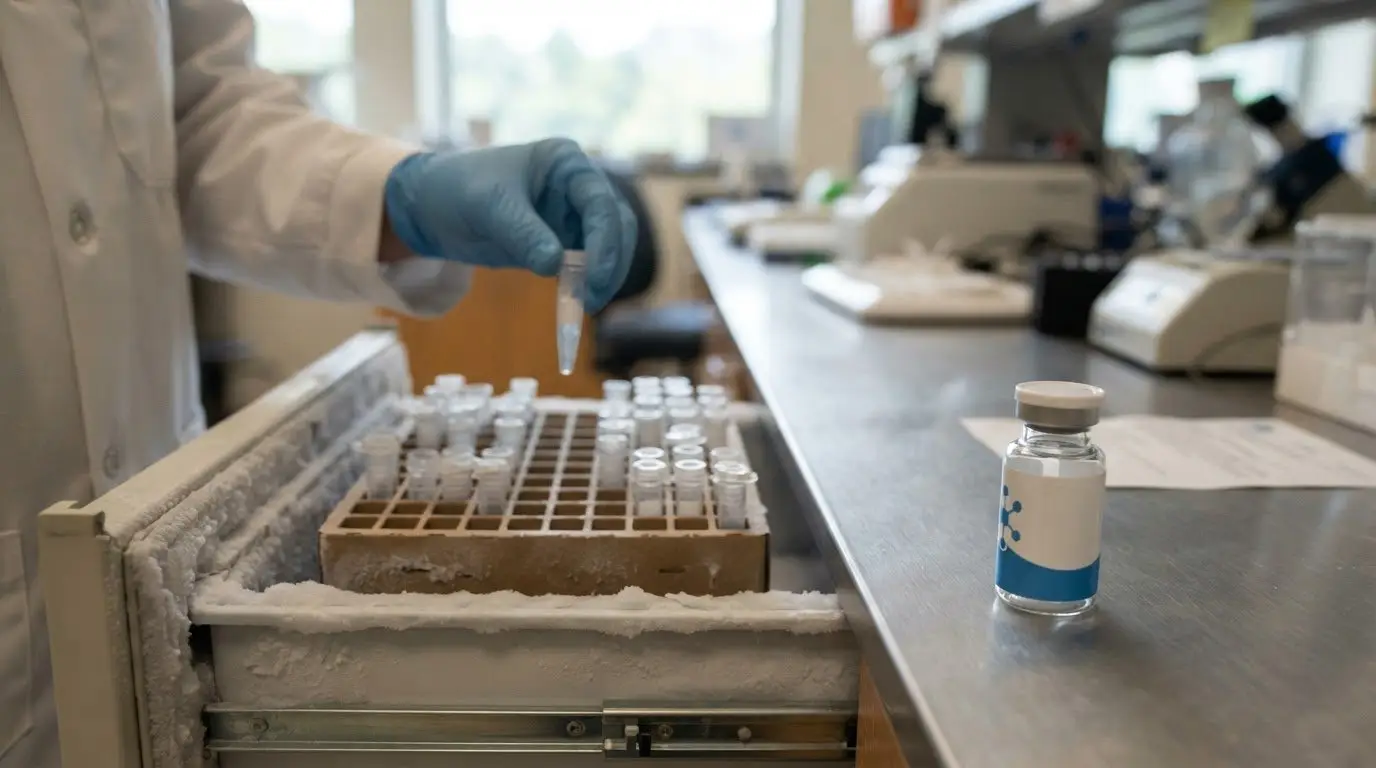
How should suppliers package, ship, and store peptides to maintain stability? Packaging should protect the sample from conditions that can affect its integrity, including moisture, light, and temperature changes. Follow the product’s storage information and account for handling conditions between delivery and laboratory storage.
For researchers comparing materials for laboratory work, the research peptide catalog provides a starting point for reviewing available options.
Provider support and analytical capabilities
Analytical support matters when a result needs interpretation, not just a pass-or-fail label. Compare the information supplied with each batch: test purpose, method, sample identity, and how the result relates to the peptide under study. Clear documentation helps researchers connect analytical evidence to their laboratory requirements.
No single instrument assesses every quality attribute. Separate analytical systems may be needed to evaluate purity, identity, elemental impurities, and residual solvents. A supplier’s explanation should distinguish what each test detects and what it cannot establish. This helps prevent one result from being treated as a complete assessment of a sample.
Support should make technical records usable. A batch-specific Certificate of Analysis (COA) connects a material to its reported results, while a clear method description helps readers understand the measurement. A purity result and an identity result answer different questions; neither establishes every other quality characteristic. Batch documentation is most useful when its purpose and scope are clear.
What should labs look for in peptide synthesis methods, modifications, and sequence capabilities? Assess whether the supplier clearly describes the peptide’s stated sequence and specified modifications, then determine whether its analytical documentation addresses those features. The relevant capability depends on the material and the laboratory’s research question.
Technical communication is another useful criterion. A capable support team should explain terms such as detection in plain language, identify which method generated a result, and distinguish measured evidence from assumptions. For instance, a mass-spectrometry result can support identity assessment, but should not be presented as measuring every impurity.
Use a simple review sequence: identify the research requirement, map each requirement to a relevant analytical method, then assess whether the report documents that method and its result. USP-NF General Chapter <1052> describes a framework for amino acid analysis, illustrating why specific questions call for specific analytical approaches. This method-based review makes supplier support more useful than broad claims about testing.
For a peptide requiring a particular sequence or modification, assess whether the documented material and analytical evidence align with that requirement. Clear explanations of method scope, sample identity, and detection limits reduce the risk of interpreting a result as proof beyond what the test measures.

Quality control and reproducibility
Quality control connects analytical results with how a material is produced and documented. Evaluate the supplier’s process, batch records, and evidence of consistency together.
Quality Management and Manufacturing Standards
Ask which quality-management certifications or manufacturing standards apply to the production site and process. Assess the named standard’s scope and documentation, rather than treating a certificate or logo as proof of every quality attribute. The relevant standard depends on the material and the laboratory’s requirements.
Trace-metal testing provides one example of a specific quality-control need. The cited frameworks include USP <232>/<233> and ICH Q3D. These references concern elemental impurities, so they don’t by themselves demonstrate peptide identity, purity, or content. Evaluate each test against the risk or property it addresses.
Reproducibility and Batch Consistency
Batch consistency matters when researchers compare results across experiments or repeat a measurement with a later lot. Review batch-specific records for sample identification, test methods, and results. Compare like with like: different analytical methods may describe different properties and should not be treated as direct measures of consistency.
Quality-control reviews assess peptide purity and identity, along with other relevant attributes, for materials made in-house or obtained from suppliers. No single analytical system covers purity, identity, elemental impurities, and residual solvents. Map each reported result to its method and purpose, then consider whether the records support comparisons across batches.
To assess supplier documentation and support, look for traceable batch records, clear explanations of methods, and consistent answers to technical questions. These indicators help lab buyers judge whether the records are useful for evaluating repeatability, rather than relying on general quality claims.
Supplier Risks and Red Flags
Common warning signs include missing batch identification, results without a named test method, or claims that one test proves every quality attribute. A report that omits the measured property makes comparisons difficult. So does treating a purity result as proof of content, identity, or trace-metal control.
Another risk is unclear certification language. Ask what site, process, or activity a stated standard covers, and whether the documentation matches the material supplied. Broad claims without a defined scope offer little help in assessing quality control.
When comparing suppliers, use a consistent review: connect each quality claim to a relevant record, analytical method, or documented standard. If an explanation cannot distinguish purity, identity, elemental impurities, and residual solvents, the available evidence may not support a complete assessment of the material.
Peptide purity testing
Peptide purity testing estimates the relative amount of the target peptide among detected components. High-performance liquid chromatography (HPLC) separates sample components, while a detector records their signals. For peptide analysis, UHPLC or HPLC with PDA or UV-Vis detection commonly uses a wavelength of 220 nm. The resulting chromatogram provides evidence about separation and relative peak areas, not every aspect of sample quality.
Interpret each result in light of its method. A reported purity percentage depends on which components the system detects and how the result is calculated. Review the chromatogram, detection wavelength, and test report together. A percentage is more informative when linked to a named method and identified sample.
Column details also shape the method. One specified peptide-testing setup uses an AminoPac PA10 analytical column measuring 2 x 250 mm. In post-column amino acid analysis, detection occurs at different wavelengths: 570 nm for most amino acids and 440 nm for proline. Those figures describe amino acid detection, not a universal HPLC purity method.
What purity level is appropriate for a laboratory application? No single percentage suits every research question. Set an acceptance criterion based on the experiment’s sensitivity to impurities, the analytical method, and the material’s intended laboratory use.
A useful review begins with the research requirement. Identify which impurities or related components could affect the experiment, then assess whether the reported method can distinguish them from the target peptide. A chromatogram with separated peaks can support this review, while a single summary value may not show peak resolution or the method’s limits.
For researchers considering how to choose a peptide supplier for your lab, compare results only when measurement conditions are comparable. Differences in detector, wavelength, sample preparation, or calculation can change what a reported purity figure represents. For example, 220 nm detection identifies peptide-associated signals, but does not itself establish sequence identity or quantify net peptide content.
Use a batch-specific report to connect the sample to its method and result. When deciding how to choose a peptide supplier for your lab, check whether the test identifies the measured property and whether the method fits the question being asked. This makes purity data more useful for comparing materials and assessing their fit for laboratory research.
To review research peptide options alongside your analytical criteria, explore the research catalog.
There is no universal purity percentage for all laboratory applications. Set the acceptance level according to the experiment’s sensitivity to impurities, the method’s ability to distinguish relevant components, and the peptide’s intended use.
Solara Compounds
Solara Compounds supplies research peptides with batch-specific Certificates of Analysis (COAs). Independent testing by Kovera Labs and batch records give researchers documentation to consider alongside their analytical requirements. Each batch has a unique lot number, and its COA is available for verification.
Use the criteria in this guide to assess a material: identify the compound, determine which analytical evidence matters, and consider whether the batch documentation addresses your requirements. A COA is most useful when it corresponds to the batch being considered and clearly presents its test results.
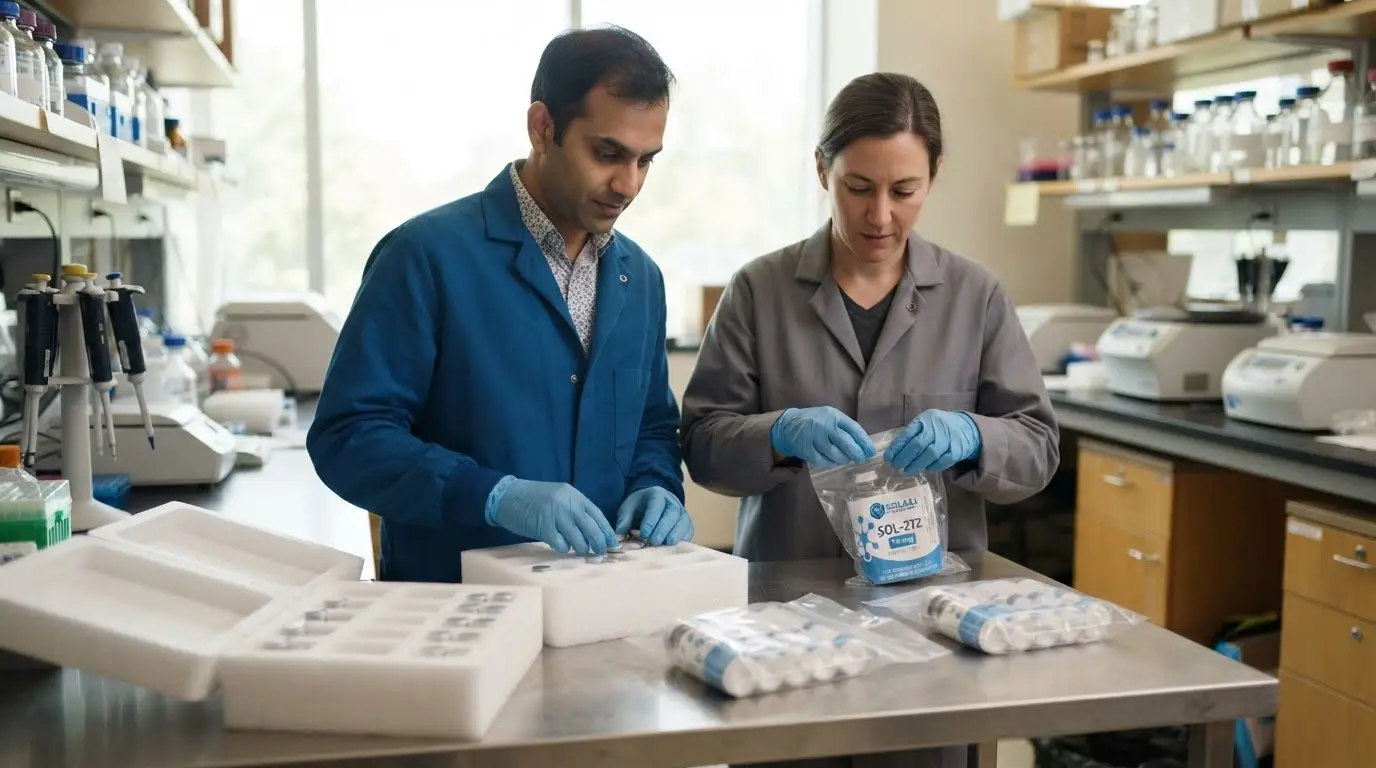
The research catalog includes SOL-3RT Retatrutide 10mg and SOL-2TZ Tirzepatide 10mg. Each is a distinct research material; select based on your laboratory’s research question, then review the associated product and batch information for your evaluation.
Solara Compounds also offers fast U.S. shipping for laboratory buyers. Shipping speed is one practical purchasing consideration, while analytical documentation helps researchers evaluate whether a material fits their work. Consider both alongside your lab’s defined requirements.
Products are for laboratory research only, not medicine or supplements, and are not for use in people or animals. For questions about research materials, contact Solara Compounds at [email protected] or 1 (877) 388-9178, Monday-Friday, 8 AM-5 PM Eastern, through the contact page.
Set Your Next Research Criteria
Before selecting a material, translate the research question into clear acceptance criteria. Decide which characteristics matter to the planned work, what evidence will support those criteria, and how the lab will record the selected batch. This keeps purchasing decisions connected to experimental needs rather than broad claims or a single headline figure.
A useful way to decide how to choose a peptide supplier for your lab is to make those criteria part of the selection process from the start. Align the requested material with the research purpose, then consider whether the available documentation gives your team a sound basis for its decision. That approach can also make future sourcing decisions more consistent across projects.
When you’re ready to consider materials for laboratory research, explore the research catalog. Take the next step with a defined research question and criteria your lab can apply with confidence.
Frequently Asked Questions
What criteria should labs use to evaluate a peptide supplier?
Start with criteria tied to your experiment, then apply them consistently to each candidate supplier. A comparison worksheet can record whether documentation identifies the batch, which properties the tests measure, and whether the material suits the planned laboratory work. Include record traceability and the clarity of technical responses. This gives research teams a repeatable way to assess suppliers across projects, rather than choosing on a single claim.
How can a lab verify peptide identity and purity using certificates of analysis and independent testing?
Match the lot number on the material to the batch-specific COA, then confirm that the report names the sample and describes its analytical results. Solara Compounds batches have unique lot numbers, and independent testing is performed by Kovera Labs. Retain the COA with the lab’s receiving records so the tested batch can be traced during later review. Independent results provide supporting evidence, not a substitute for the lab’s own acceptance criteria.
What questions should a lab ask before placing a peptide order?
Ask whether the available COA corresponds to the supplied lot, which analytical methods address your research requirements, and how the material should be stored. Clarify order processing, shipping, and the process for resolving damaged or incorrect shipments. Labs in Boston, San Diego, San Francisco, New York, Houston, Miami, Los Angeles, Austin, Raleigh, Seattle, Chicago, Philadelphia, Baltimore, Dallas, Phoenix, Tampa, Atlanta, and Denver can use the same questions to assess an order before purchase.