Research Articles
Why peptide sequence accuracy matters in research and drug development

A peptide may carry the expected name yet behave differently if its amino acid sequence is incorrect. The importance of peptide sequence accuracy lies in its direct connection to folding, stability, and molecular interactions: even a small sequence difference can alter how a peptide interacts with other molecules.
Sequence data is a starting point for understanding a peptide’s structure and properties. This guide explains how accurate identification supports structural analysis, research and development, quality control, and biological studies. It also outlines how sequencing methods, including tandem mass spectrometry, help researchers interpret peptide fragments and modifications.
Solara Compounds supplies research materials for laboratory research only. Products are not medicine or supplements and are not for use in people or animals. Learn more at solaracompounds.com.
Key Takeaways
- Trace how amino acid order can shape a peptide’s folding, stability, and biological activity.
- Learn how sequence information can support research into peptide-based drugs, antibodies, and vaccines.
- See why confirming both peptide identity and the position of sequence differences matters in analysis and quality control.
- Compare sequencing approaches, including tandem mass spectrometry, database searches, and de novo analysis.
- Understand how accurate peptide identification can help researchers interpret biological samples and investigate modifications.
Can peptide sequence identification accurately assess the structure and function of peptides?
Yes. Sequence identification establishes amino acid order, which helps researchers interpret structure and test possible function. It supports analysis, but sequence evidence alone doesn’t prove a peptide’s activity.
Amino Acid Order and Protein Function
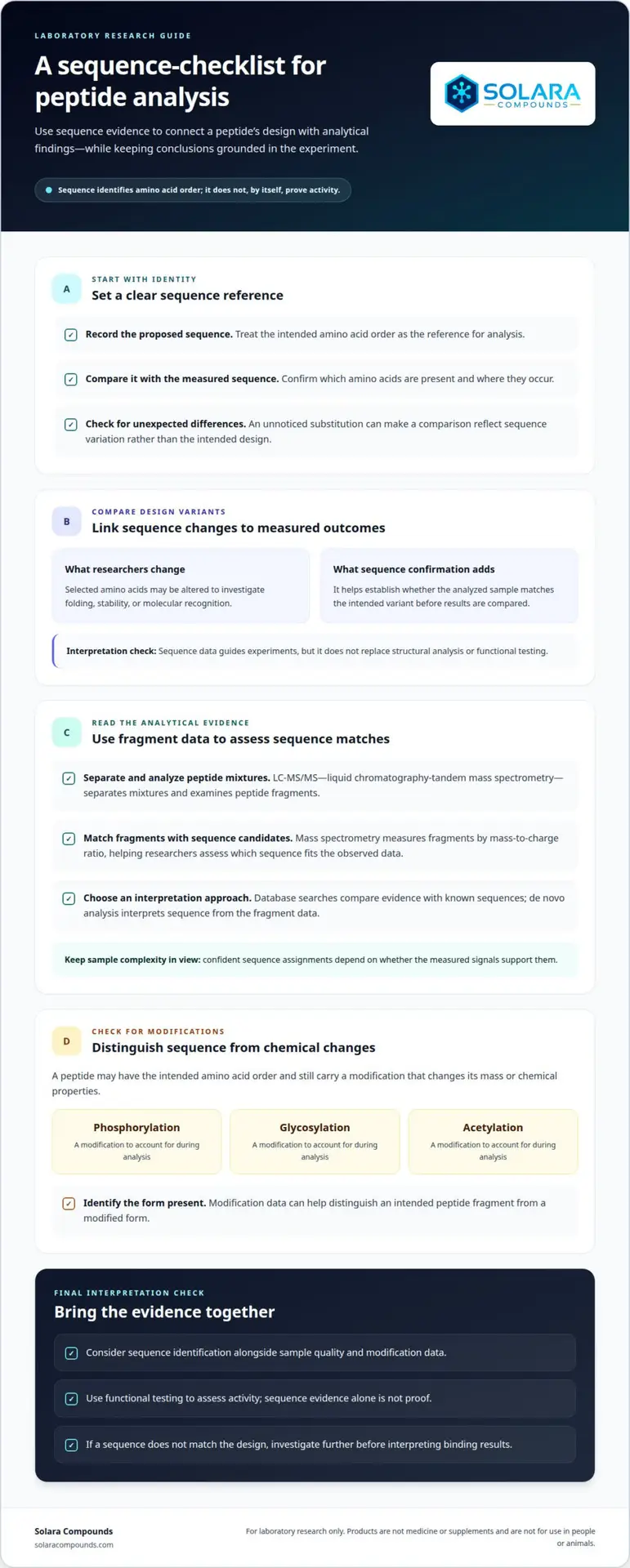
Amino acid order is the specific arrangement of amino acids in a peptide or protein. It affects how the chain folds, including whether regions form structures such as alpha helices or beta sheets. Folding influences stability and molecular interactions. For researchers, an accurate sequence provides a sound basis for predicting structure and designing functional tests.
In protein interaction research, sequence evidence helps researchers distinguish related molecules before testing how they bind. A change in one amino acid can alter a binding surface, the region that contacts another molecule. Comparing two sequence variants, for example, may help explain why one interacts with a target while another does not. This guides experiments but does not replace them.
Human proteomics uses methods such as liquid chromatography-tandem mass spectrometry (LC-MS/MS) to separate peptide mixtures and analyze their fragments. In a complex sample, performance depends on whether the resulting signals support confident sequence assignments. A yeast-proteome comparison examined three data-dependent MS/MS acquisition methods. Another study compared organism-specific matches using a mass difference threshold of 10 ppm or less.
In proteomics and biomarker discovery, researchers compare peptide evidence across biological samples to find patterns associated with different conditions. A candidate biomarker is a measurable feature that may help distinguish sample groups. Sequence accuracy helps separate genuine differences from mistaken identifications. For a named material such as the KPV research peptide, a label identifies the material, while sequence analysis addresses molecular identity.
Structure and Protein Engineering
Protein engineering uses sequence information to guide deliberate molecular changes. Researchers can alter selected amino acids, then assess how those changes affect folding, stability, or molecular recognition. Accurate identification of the starting sequence makes such comparisons meaningful. Otherwise, an observed structural difference might result from an unnoticed sequence variation rather than the intended design.
Sequence data also helps researchers decide what to test next. A predicted structural feature can suggest a region for targeted analysis, while experimental results show whether the prediction holds. Because protein structure is complex, sequence alone cannot fully describe the final shape under every condition. It provides a reference point for connecting design choices with measured outcomes.
Consequences of Sequence Errors
A sequence error can misidentify a peptide, distort a structure prediction, or lead to misinterpretation of binding or activity results. A single amino acid change may alter function, so an incorrect sequence can undermine comparisons between samples or experiments. It can also make it harder to distinguish a genuine sample difference from an analytical error.
The effort required for peptide sequence verification varies with the analytical method, sample complexity, and need to identify modifications. Errors can affect interpretation and require resources to repeat or correct an experiment. Sequence identification is most useful when considered alongside sample quality, modification data, and functional testing.
Peptide-based drug, antibody, and vaccine development
Sequence identification establishes which amino acids a candidate contains and where they occur. This reference matters when researchers compare a designed molecule with a synthesized sample. In peptide-based research and development, changing the sequence can alter stability, specificity, or measured activity. Accurate identification helps distinguish an intended design change from an unexpected difference in the material under study.
Researchers can modify bioactive peptide structures to investigate stability, efficacy, and specificity. Each design change needs a clear comparison point: the proposed sequence, the measured sequence, and the observed result. For example, a team studying a peptide’s stability can compare a modified candidate with its original sequence under the same test conditions. If sequence identification reveals an unexpected substitution, the result may not reflect the intended design.
Antibody research also relies on sequence information. Antibodies contain regions that recognize particular molecular targets, and sequence changes can affect that recognition. Researchers use identification data to connect a designed sequence with analytical results from a sample. Mass spectrometry measures peptide fragments by their mass-to-charge ratio, helping determine which sequence matches the observed data. A mismatch can prompt further analysis before binding results are interpreted.
In vaccine research, peptide sequences may represent selected parts of a target molecule. The exact fragment matters because its amino acid order provides the basis for evaluating the candidate. Post-translational modifications, including phosphorylation, glycosylation, and acetylation, can change a peptide’s mass and chemical properties. Identifying these changes helps researchers distinguish the intended fragment from a modified form and interpret results more precisely.
Sequence analysis can contribute to safety assessment during research and development. Identifying a candidate’s sequence helps researchers examine potential toxic sites and consider possible adverse reactions. This is an investigative input, not a standalone safety conclusion. Interpretation depends on the candidate’s structure, modifications, and experimental evidence. A sequence difference found during analysis, for example, may prompt researchers to reassess which sample produced a result.
In practice, teams connect sequence identification with design records, sample analysis, and functional testing. That comparison gives researchers a clearer basis for deciding whether a candidate behaves as expected or needs further study. To explore materials intended for laboratory research, browse the research peptide catalog. All products are for laboratory research only, not medicine or supplements, and not for use in people or animals.
Peptide-level and positional accuracy
Peptide-level accuracy asks whether an analysis identifies the correct peptide. Positional accuracy asks whether it locates each residue or modification correctly. Both matter in mass spectrometry, where fragment signals support sequence assignments. A result may identify a peptide overall yet misplace a modification, changing how researchers interpret the sample.
During tandem mass spectrometry, instruments measure peptide fragments and their mass-to-charge ratios. Algorithms compare these measurements with predicted fragments from candidate sequences. A close overall match can support identification, but researchers also need evidence for residue order and location. For example, two candidate sequences may contain the same amino acids arranged in a different order.
Position matters especially when a peptide carries a post-translational modification. Phosphorylation, glycosylation, and acetylation can change peptide mass and chemical properties. Identifying a modification is one task; determining its exact site is another. If a spectrum supports a modified peptide but not a specific residue, the result should not be treated as definitive site localization.
Consider a peptide with a phosphate group. If analysis identifies the peptide but assigns the phosphate to the wrong amino acid, later comparisons may attribute a measured difference to the wrong position. Researchers can assess localization by comparing fragment evidence on either side of the proposed site. Fragments that distinguish competing positions offer stronger support than an intact-peptide match alone.
Mass accuracy also affects comparisons. One study compared organism-specific peptide matches using a mass difference threshold of 10 ppm or less. That threshold describes the study’s comparison, not a universal guarantee of correct identification. The appropriate interpretation also depends on fragment coverage, sample complexity, reference database quality, and whether competing sequences produce similar evidence.
Algorithms help manage these comparisons, but their output depends on the input and search settings. Database searches match observed MS/MS data against reference sequences. If the reference database lacks the relevant sequence, de novo analysis can infer candidates from fragmentation patterns. Researchers can then compare candidate sequences and check whether observed fragments support the proposed residue order and modification site.
Positional confidence also matters in translational research, which connects laboratory findings with later development decisions. A biomarker comparison, for instance, may depend on whether a modification occurs at a particular site. Reporting peptide identity separately from site-localization confidence preserves that distinction. It also helps teams compare results across samples, methods, and follow-up experiments without treating every assignment as equally precise.
A practical interpretation separates three questions: does the peptide match, does the sequence order fit, and is each modification localized? Answering them separately makes proteomics results easier to reproduce and reduces ambiguity when peptide evidence informs later studies.
Biopharmaceutical quality control
Sequence verification is one part of quality control for synthesized peptides. It helps determine whether the observed material matches its intended composition.
Methods for Sequence Verification
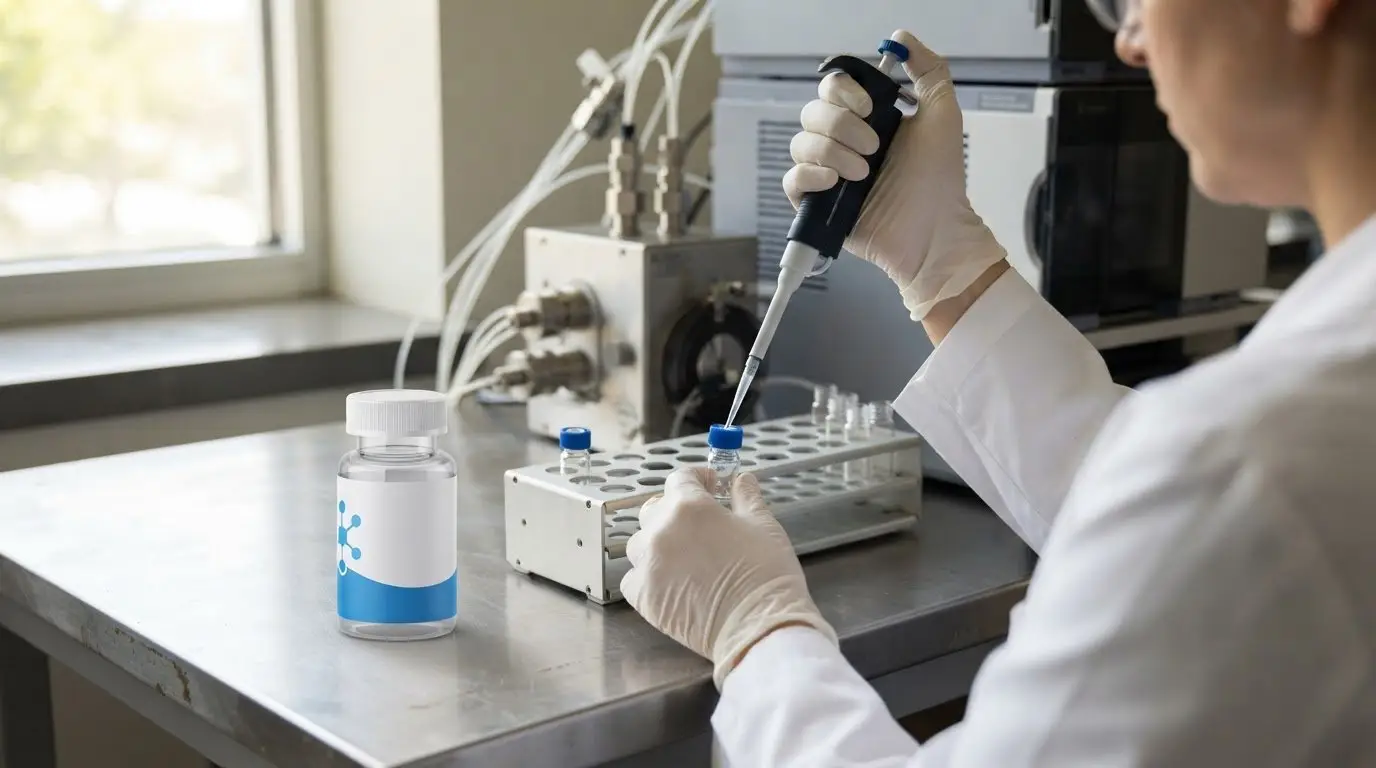
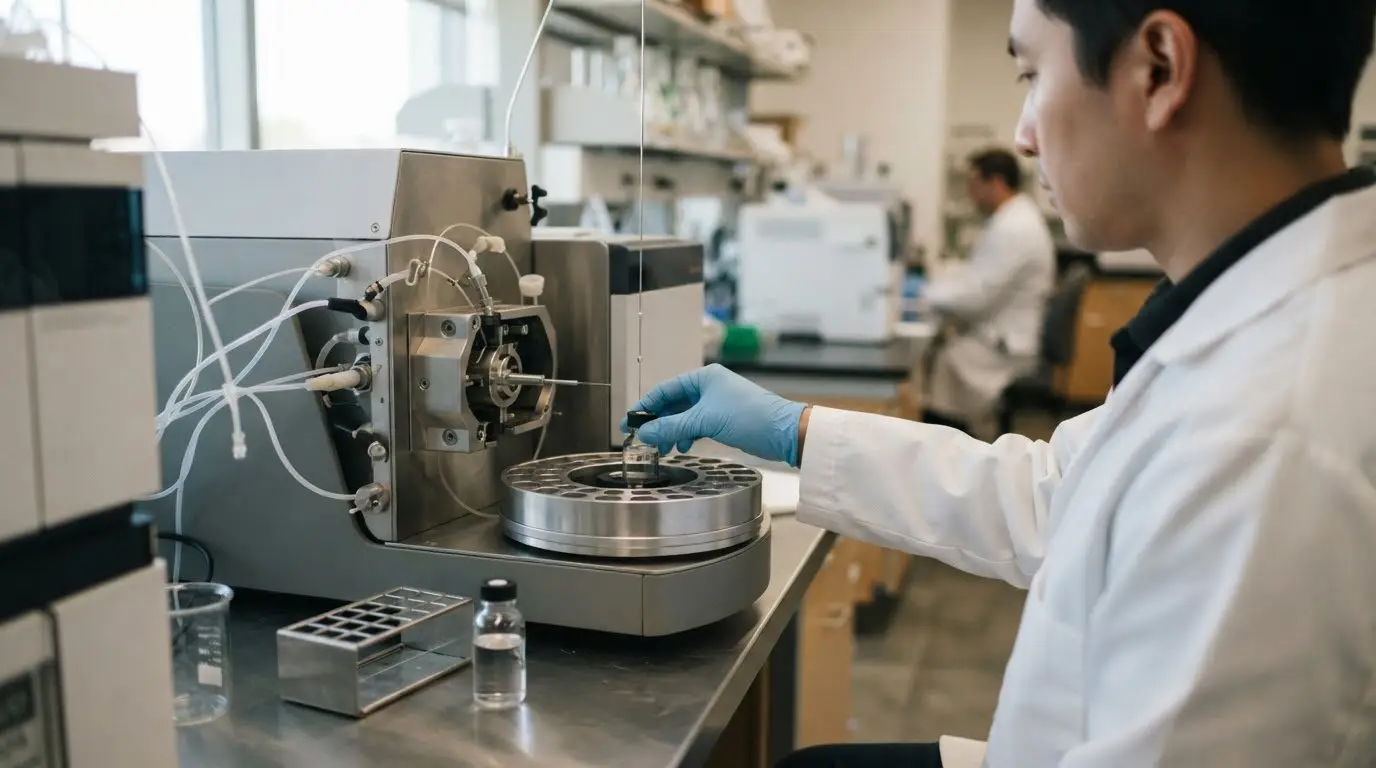
Researchers verify a synthesized peptide by comparing its expected sequence with analytical evidence. Liquid chromatography-tandem mass spectrometry separates sample components, then measures peptide fragments to support sequence identification. Edman degradation can sequence peptides under 50 amino acids long by removing one amino acid at a time from the N-terminus. These methods help detect differences that a product label alone cannot reveal.
Mass spectrometry can reveal modifications that change a peptide’s measured mass. Researchers compare observed fragmentation with predictions from the proposed sequence or reference databases. A match supports identification, while unexplained fragments may point to a modification or alternative composition. Purity analysis provides complementary information: detecting the intended sequence and measuring sample composition answer different quality questions.
Sequence Accuracy in Quality Control
Sequence verification in biopharmaceutical quality control checks whether a peptide’s identity matches its intended design. This matters when interpreting later tests: a functional difference is meaningful only if researchers know which material they analyzed. Comparing the expected sequence, measured fragments, and modification data provides a structured way to assess identity and document analytical findings.
Quality teams can use this evidence to distinguish identity from purity and consistency. A sample may contain a peptide with the expected sequence alongside other components. Sequence identification addresses whether the target peptide is present; composition analysis helps characterize the other components. Keeping these conclusions separate supports clearer records and more reliable comparisons between batches.
Effects on Synthesis, Purity, and Results
A synthesis error can create a peptide with an incorrect residue or sequence position. This unintended variant may have a different mass or fragmentation pattern, complicating identification. If it remains in the sample, purity measurements and subsequent experiments may reflect a mixture rather than the intended composition alone. Researchers then risk attributing a result to the wrong material.
Consider a study comparing an intended peptide with a modified candidate. If the first sample contains an unintended sequence variant, the comparison no longer isolates the planned modification. Analysis may need to distinguish synthesis-related differences from experimental effects. Accurate sequence records help researchers interpret results, build on findings across experiments, and assess a peptide’s suitability for its intended laboratory application.
Peptide sequencing in biological research
Biological research uses peptide sequencing to identify molecules in complex samples and connect them with experimental questions. The best method depends on sample purity, available reference data, and whether researchers expect an unknown sequence.
Liquid chromatography-tandem mass spectrometry (LC-MS/MS) is commonly used to separate peptide mixtures and analyze their mass. Tandem mass spectrometry uses two stages of mass analysis: one selects peptide ions, and another measures the fragments produced. Researchers interpret these patterns to reconstruct sequence candidates and compare them with experimental evidence.
Sample preparation shapes what the analysis can reveal. Researchers extract and purify peptides, then may cleave larger proteins into smaller fragments for analysis. Edman degradation removes one amino acid at a time from a peptide’s N-terminus. It is most effective for peptides under 50 amino acids long and requires highly purified samples, since impurities can interfere with its chemical reactions.
Database searches are useful when a suitable reference sequence exists. Algorithms compare measured MS/MS data with predicted fragments from protein databases. Their speed and usefulness depend partly on accurate reference data. If no reference sequence is available, de novo sequencing can infer a sequence from fragmentation patterns, helping researchers investigate novel peptides.
Post-translational modifications add another layer to biological interpretation. Phosphorylation, glycosylation, and acetylation can change peptide mass and chemical properties. De novo sequencing can help identify novel modifications, while mass spectrometry provides evidence of their presence. Researchers consider both the peptide sequence and its modifications when interpreting results.
Genetic data can support, but does not directly provide, protein sequences. Next-generation sequencing reads genetic information; it does not directly sequence proteins. Researchers can combine transcriptome sequencing, which measures RNA transcripts, with mass spectrometry to validate peptide sequences predicted from mRNA. This comparison connects a genetic prediction with peptide evidence found in a biological sample.
These methods answer different questions. Edman degradation can provide sequential residue information for suitable purified peptides. Database searching can rapidly test known candidates, while de novo analysis can help when references are absent. The choice depends on sample complexity, expected modifications, and the research question, such as identifying a candidate biomarker or comparing peptides across tissue samples.
For laboratory research involving peptide materials, browse research peptides. This distinction matters: sequencing results describe what researchers detect in a sample, while follow-up experiments test what that sequence may mean biologically.
Solara Compounds
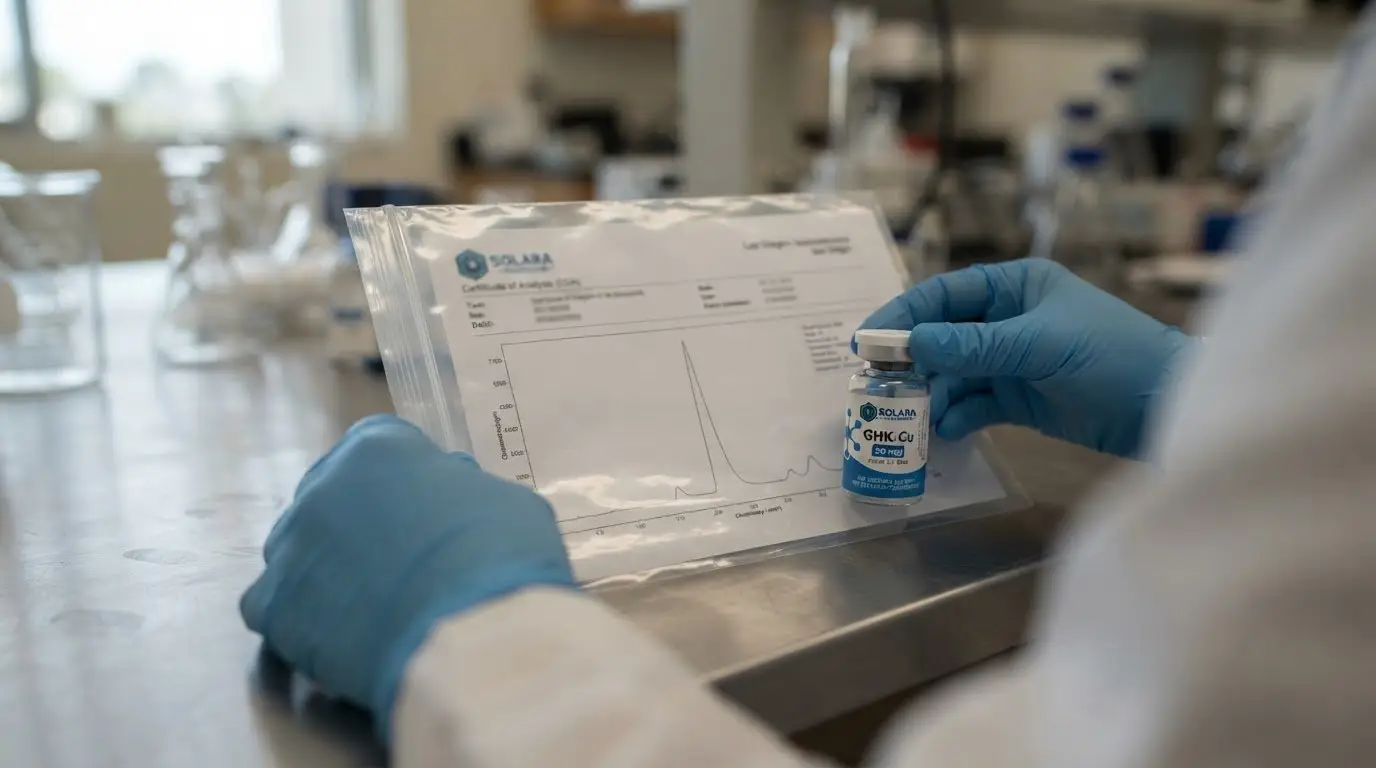
Solara Compounds supports laboratory researchers by supplying research peptides and batch-specific Certificates of Analysis (COAs). Products include SOL-3RT Retatrutide and SOL-2TZ Tirzepatide in several listed strengths.
Third-party testing and batch paperwork provide useful context for laboratory work, but they don’t replace sequence analysis performed as part of a research study. Products are for laboratory research only, not medicine or supplements, and not for use in people or animals.
For questions about research materials or batch documentation, contact Solara Compounds at [email protected].
Put sequence confidence into your next research decision
The importance of peptide sequence accuracy extends beyond identification: it shapes how researchers plan comparisons, interpret results, and choose what to investigate next. Align material selection with the question the laboratory study is designed to answer, while keeping analytical evidence distinct from functional conclusions.
Solara Compounds offers research materials including SOL-3RT Retatrutide 10mg, SOL-2TZ Tirzepatide 10mg, and GHK-Cu 50mg. These products are for laboratory research only, not medicine or supplements, and not for use in people or animals.
Explore the catalog to identify materials relevant to your laboratory research and review available product information before making a selection. A clear research question and carefully interpreted sequence data provide a considered foundation for the work ahead.
Explore research peptides at Solara Compounds and take your next research step with care.
Frequently Asked Questions
What is peptide sequence accuracy?
Peptide sequence accuracy describes how closely an identified or synthesized peptide matches its intended amino acid order. It can include confidence in residue identity, sequence position, and detected modifications. For example, a report may identify a peptide correctly but provide weaker evidence for a modification’s exact location. Researchers should interpret these findings separately when deciding whether an analytical result supports their experiment.
Why is accurate peptide sequencing important in research and medicine?
Accurate sequencing helps researchers establish which molecule they are studying and interpret results consistently. In laboratory research, it can support analysis of candidate molecules, protein interactions, or biological samples. Sequencing is an analytical tool, not a personal-use recommendation. Researchers can use sequence evidence to decide whether a sample suits a planned comparison or needs further characterization.
How does peptide sequence accuracy affect protein identification and function?
Sequence accuracy affects whether researchers assign experimental evidence to the correct protein or peptide. A useful practice is to compare the proposed sequence with observed data, then note unresolved residues or modifications. If two proteins share similar regions, for instance, evidence from a distinctive fragment can help distinguish them. The importance of peptide sequence accuracy is especially clear when researchers connect a specific molecular feature with a measured function.
How is peptide sequence accuracy measured and reported?
Researchers assess sequence assignments using evidence such as matching fragment patterns, sequence coverage, and support for modification sites. Reports can identify the method, reference database, assigned sequence, detected modifications, and confidence measures used. A practical record distinguishes a confirmed sequence from an uncertain residue or localization. This helps make later comparisons between samples easier to interpret without overstating what the data show.
How accurate are mass spectrometry and peptide sequencing methods?
Accuracy depends on the instrument, sample preparation, peptide complexity, modifications, and analysis approach. Mass spectrometry can provide strong sequence evidence when informative fragments are detected, while database searches depend on relevant reference entries. Edman degradation provides sequential information for suitable purified peptides. Researchers can improve interpretation by reviewing the evidence for each assignment, including whether alternative sequences or modification positions could explain the same data.
What quality-control standards or guidelines apply to peptide sequence verification?
Verification practices depend on the research setting and the material being characterized. A sound quality record documents the analytical method, sample identity, reference sequence, results, and interpretive limitations. Researchers can define acceptance criteria before comparing samples, including what evidence supports identity or modification localization. For purchased research materials, batch-specific documentation can complement laboratory analysis, but it does not replace experimental verification when the study requires it.