Research Articles
5 ways to improve lab procurement quality and control

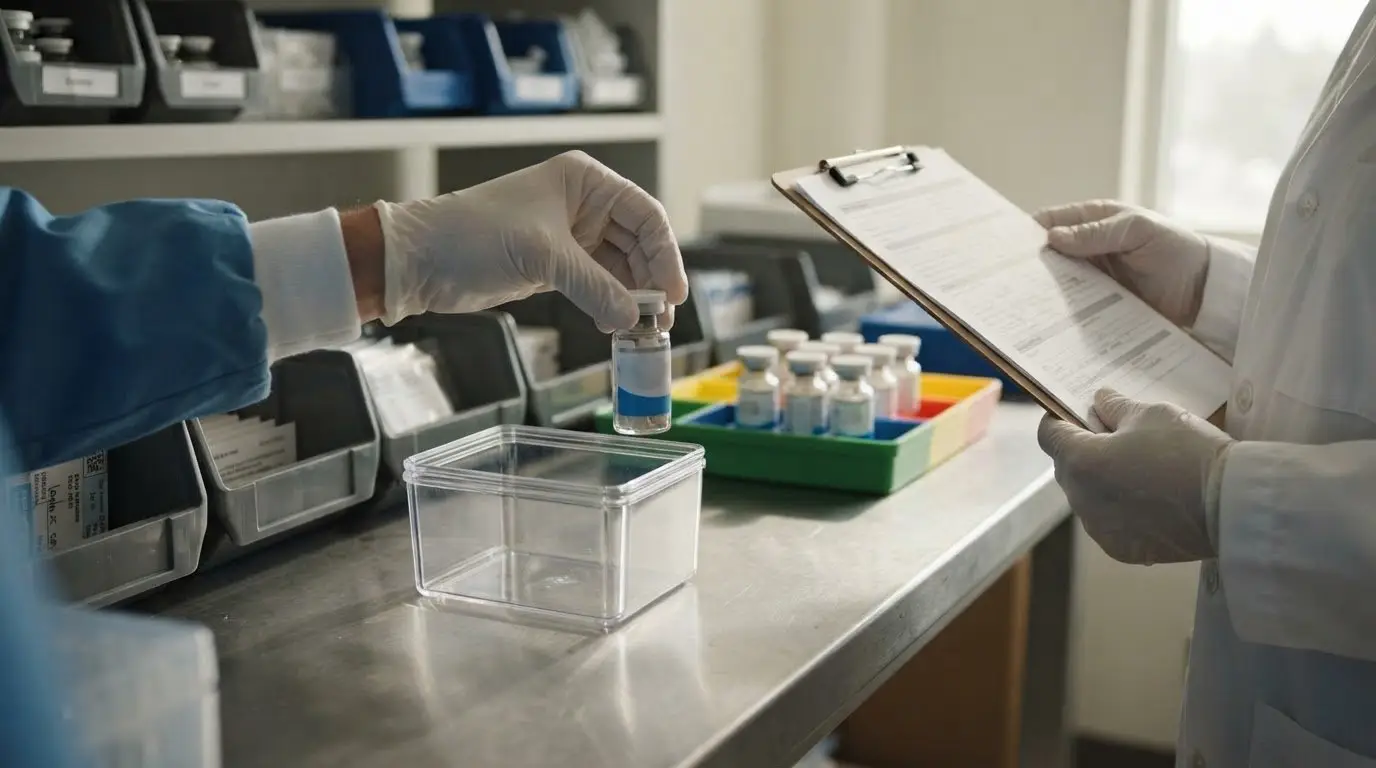
What if the most important procurement decision happens before a lab places an order? For research teams, lab procurement best practices start with defining scientific requirements, then matching suppliers, documentation, purchasing systems, and delivery checks to those needs. That approach helps keep purchasing decisions connected to research work rather than treating each order as a transaction in isolation.
Life sciences procurement covers the planning and purchasing of materials, equipment, and services that support laboratory research. It calls for more than comparing order details: teams need to consider supplier continuity, total equipment costs, documentation, approval workflows, and how well an item fits the intended research. This guide outlines five practical ways to improve procurement quality and control, from building supplier relationships to planning purchases and using digital systems. Solara Compounds supplies research compounds, including peptides, for laboratory research only; its products are not medicines or supplements and are not for people or animals. Learn more at solaracompounds.com.
Key Takeaways
- Build supplier relationships around clear requirements, consistent communication, performance reviews, and backup plans for essential materials.
- Connect purchasing plans to research goals, budgets, and expected demand instead of treating each order as an isolated transaction.
- Set research-specific quality and documentation criteria, including appropriate data integrity and system validation requirements.
- Use procurement systems to organize approvals, orders, receiving records, and invoices in a traceable workflow.
- Evaluate equipment and services by fit for purpose and total cost of ownership, including maintenance, calibration, consumables, and potential downtime.
1. Supplier relationship management
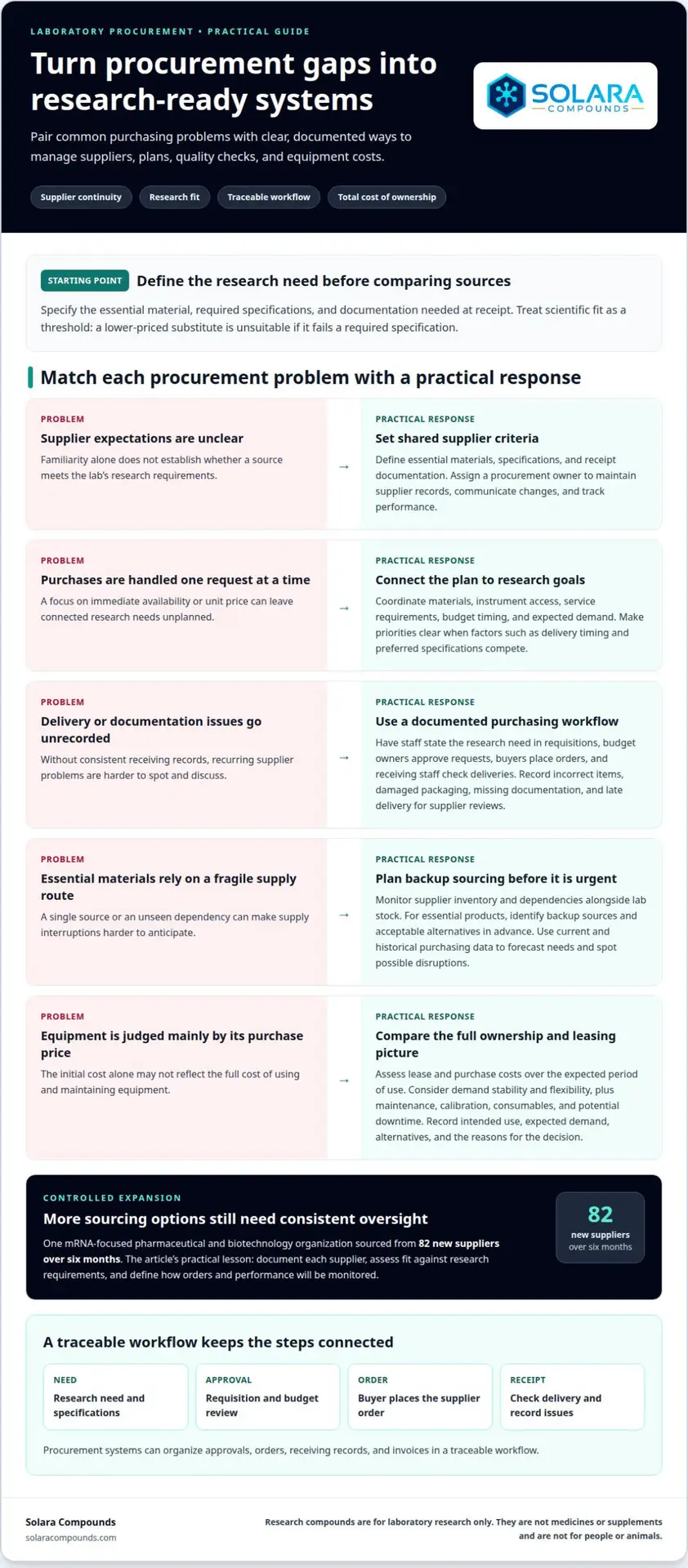
Strong supplier relationships support consistent research operations, but familiarity alone is not enough. Define essential materials, required specifications, and documentation needed at receipt. Assign a procurement owner to maintain supplier records, communicate changes, and track performance. This gives researchers and buyers a shared basis for evaluating sources and addressing problems before they interrupt work.
For U.S. laboratories, applicable requirements depend on research type, funding, materials, and institutional policy. FDA current Good Manufacturing Practice regulations govern pharmaceutical manufacturing, but they don’t apply universally to R&D purchasing.
Turn purchasing into a documented workflow. Staff submit requisitions that state the research need and required specifications; budget owners approve requests; buyers order from preferred suppliers; receiving staff check deliveries for accuracy and compliance. Record issues such as incorrect items, damaged packaging, missing documentation, or late delivery. Regular supplier performance reviews can use those records to identify recurring problems and guide corrective conversations.
Supplier aggregation can make comparisons more practical. Group purchases by product type or research requirement, then compare specifications, documentation, delivery performance, and ordering terms in one view. Treat scientific fit as a threshold: a lower-priced substitute is unsuitable if it fails a required specification. Supplier and product listings can also help buyers filter options according to institutional priorities, such as local, environmental, or diversity criteria.
Assess supply-chain risk at both ends. Monitor supplier inventory and dependencies alongside the laboratory’s own stock to identify items reliant on a single source or fragile supply route. For essential products, maintain a backup sourcing plan and define acceptable alternatives in advance. Historical and current purchasing data can help teams forecast needs and spot possible disruptions before stock runs low.
Choose suppliers using defined criteria, then manage the relationship through clear communication and regular review. Track product conformity, delivery, and applicable requirements, and share specific findings when performance falls short. Involving procurement early in product development can help teams identify scalable materials before needs become urgent. Supplier diversity programs can include outreach to underrepresented and minority-owned businesses while applying the same documented quality requirements to every source.
Supplier expansion should still be controlled. One mRNA-focused pharmaceutical and biotechnology organization sourced from 82 new suppliers over six months. The practical lesson is to pair new-source evaluation with a consistent onboarding process: document the supplier, assess fit against research requirements, and define how orders and performance will be monitored. This creates more sourcing options without losing visibility across the supply chain.
2. Procurement strategy versus transactional purchasing
Strategic procurement links each purchase to a defined research or organizational goal. Transactional purchasing handles requests individually, often focusing on immediate availability or unit price. For example, a laboratory planning a new assay can coordinate reagent needs, instrument access, service requirements, and budget timing before ordering. Planning reveals dependencies earlier than a series of separate, urgent purchases.
Useful lab procurement best practices begin by translating organizational goals into purchasing priorities. If a program requires reproducible research, define specifications and documentation needs before comparing options. If leadership prioritizes cost control, examine total spending and recurring demand, not just the price of one order. A procurement plan should explain which priorities take precedence when they conflict, such as delivery timing and a preferred specification.
Build purchasing visibility with spend analysis and performance measures. Group transactions by category, project, supplier, or department to see where funds go and where demand recurs. Compare purchase price with factors such as ordering effort, fulfillment reliability, and research delays. A frequently reordered supply may need different planning from a one-time equipment purchase.
Use performance measures to guide decisions, not merely report activity. For example, a laboratory could track whether a purchasing change reduces duplicate orders while maintaining delivery reliability. Review findings with research leads and budget owners, then adjust the plan as project needs change. These lab procurement best practices make tracking useful for future decisions, not just retrospective reporting.
Equipment decisions require a lease-versus-purchase analysis. Compare leasing and ownership costs over the expected period of use, then consider relevant nonfinancial factors. Ownership may suit equipment with stable, recurring demand; leasing may fit changing needs where flexibility matters. For a centrifuge, assess not only acquisition terms but also maintenance, calibration, consumables, and downtime.
Document the reasoning behind the decision. Record the equipment’s intended use, expected demand, alternatives considered, and the factors favoring a lease or purchase. This helps future reviewers understand why the option fit the project, even if research priorities or budgets change. It also creates a consistent basis for evaluating similar purchases across departments.
Electronic purchasing documents can strengthen workflow controls. Link each purchase order with its goods receipt and invoice so staff can trace what was ordered, received, and billed. A receiving record, for example, can flag a short shipment before the invoice proceeds. Keep related documentation connected to the purchase rather than scattered across separate records.
Strategic purchasing still needs room for justified exceptions. A specialized research requirement may not fit a standard buying pattern, so document the scientific need and its budget implications before approval. Review that exception alongside spend data during planning. This keeps individual decisions visible while helping procurement adapt as projects, requirements, and organizational goals evolve.
3. Research-specific quality and documentation requirements
A laboratory request for proposal should define the research need, technical specifications, required documentation, delivery conditions, evaluation criteria, and contract terms. Include acceptance criteria and the records vendors must provide so proposals can be assessed consistently. Researchers should help develop these requirements because they understand how material properties affect the work.
Qualify suppliers by assessing their ability to meet documented specifications and provide relevant product records. At receipt, compare the delivered item and its documentation with the purchase requirements, then record discrepancies for resolution. Apply regulatory requirements only when they govern the specific product, service, or research activity.
Start with market research, then distinguish market analysis from market intelligence. Research identifies potential sources and available options; analysis compares them with laboratory needs; intelligence tracks relevant changes in supplier capabilities and market conditions. For example, when sourcing a specialized reagent, assess available specifications, compare supporting documents, and monitor changes that could affect future ordering or delivery.
Translate research requirements into acceptance criteria before issuing a solicitation. State the required identity, technical properties, format, supporting documentation, and delivery conditions. Vague descriptions can produce proposals that appear comparable but differ in ways that affect experimental consistency. If standard purchasing rules do not fit a specialized scientific requirement, assign an owner to review and document the exception.
Laboratory data management software needs its own evaluation criteria. According to the U.S. Food and Drug Administration, procurement may need to account for ALCOA+, 21 CFR Part 11, ISO/IEC 17025, and computer system validation. Define which requirements apply to the intended system and use case; then include them in vendor evaluation and implementation planning.
Keep records accessible after purchase. Store specifications, supplier documents, approvals, receiving records, and exception decisions in a shared location that supports audit access. Reviewers should be able to follow the chain from the original research need to the selected supplier and received product without searching disconnected files.
Measure procurement outcomes by their effect on research continuity, not only by completed orders. Track whether materials arrive as specified, documentation supports their intended research use, and purchasing delays disrupt planned work. For a recurring assay, compare order and delivery records with the research schedule. These findings can inform future specifications, sourcing decisions, and supplier reviews.
4. EProcurement systems and procure-to-pay
A procure-to-pay system connects a purchase request to its payment record. In a laboratory, it can capture the requested item, route approvals, generate a purchase order, record receipt, and link an invoice. This creates a traceable record from initial need through payment while reducing handoffs among research, purchasing, receiving, and finance teams.
Supplier punchouts and hosted catalogs can make ordering more consistent. A punchout connects buyers to a supplier’s catalog before returning selected items to the procurement system. A hosted catalog stores approved product details within the purchasing platform. Configured supplier lists can also limit orders to selected vendors, helping organizations apply purchasing policies through the software.
Approval routing should reflect the organization’s decision process. A system can send a request to one or more approvers and follow up when approval is outstanding. Managers or finance approvers can review purchases above an internally defined threshold. Retain approval status, comments, and supporting documents in the request record so staff can see why an order proceeded or paused.
After approval, procurement software can connect the purchase order with receiving and invoice records. For three-way matching, link those records to support review. For example, receiving staff can record a partial delivery against its order, giving finance a clearer basis for assessing the invoice. Centralized activity records also make requests easier to sort, filter, and trace.
Inventory tools extend this workflow beyond individual orders. Record stock levels for frequently used consumables and set alerts for items nearing a reorder point. Automated reminders can prompt review before emergency ordering becomes necessary. For example, a stock alert can trigger a check of inventory, open orders, and expected project demand before another request is submitted.
Demand planning can draw on historical usage and current supplier information. Some systems use AI to analyze usage, market availability, and supplier fulfillment times, then recommend when to reorder. Treat these recommendations as inputs: confirm that projected needs match upcoming research activity and available storage. This connects stock management to laboratory operations rather than relying on isolated alerts.
Integration with ERP and P2P systems requires clear ownership of each record. A specialized procurement platform can complement existing systems rather than replace them. Define which system controls approvals, purchase orders, receiving, invoices, and reconciliation. Without that map, duplicate records or conflicting statuses can weaken compliance and complicate audits. Assign system owners, document data handoffs, and test a complete request-to-payment workflow before implementation.
5. Procurement guides for laboratory equipment and services
Equipment procurement should begin with the work the instrument must perform. Researchers, laboratory managers, and procurement staff can jointly define sample types, throughput, operating conditions, data outputs, and compatibility requirements. For example, a centrifuge specification should describe the research application and required performance, not just a preferred model. Clear criteria help organizations compare proposals for scientific fit.
Lead times and budget estimates vary with equipment configuration, supplier capacity, installation needs, and service requirements. Build estimates from selected specifications and ownership costs, including maintenance, calibration, consumables, and potential downtime.
Use the procurement process to control each handoff. First, document the research need and invite end users to refine specifications. Next, evaluate proposals against consistent technical criteria and compare total ownership costs. Then coordinate delivery, site readiness, installation, acceptance testing, and staff training. Record whether the instrument meets the agreed requirements before routine use.
Plan maintenance before purchase. Identify calibration intervals, service responsibilities, consumables, and downtime implications in the evaluation. For calibration services, ISO/IEC 17025 accreditation can be one criterion for assessing providers. Include relevant service expectations in the contract, then retain service and calibration records with the equipment documentation.
Service specifications should define the required outcome without unnecessarily prescribing one solution. A laboratory seeking testing services, for instance, can describe sample types, analytical needs, reporting requirements, and delivery expectations. Clear specifications help vendors respond meaningfully and evaluation teams compare proposals fairly. Public procurements should develop requirements with end users and use language potential offerors can understand.
Sustainable purchasing can be part of the same evaluation. Consider durability, repairability, packaging, and supplier practices alongside technical fit. Set practical packaging expectations in solicitations, and choose reusable or recyclable packaging when appropriate for the materials and handling requirements. For consumables, monitor expiration dates and align order quantities with actual usage to reduce waste. Maintain buffer stock for essential items while avoiding over-ordering products with limited shelf life.
A procurement platform can connect specifications, evaluations, contracts, delivery records, and maintenance documents. Review outcomes after implementation, including ordering effort, equipment reliability, researcher adoption, and delays to research work. A lower purchase price alone does not show whether a selection served the laboratory well. Use operational results to refine the next equipment or service request.
Maintain essential supplies to reduce the risk of costly last-minute purchases. Review historical usage and conduct regular financial reviews to forecast demand and identify high-volume items.
Solara Compounds
Solara Compounds supports lab buyers sourcing research compounds for laboratory work. Its catalog includes SOL-3RT Retatrutide and SOL-2TZ Tirzepatide in multiple listed strengths. Batch-specific Certificates of Analysis and third-party testing provide documentation for procurement records and research material review.
These products are for laboratory research only. They are not medicines or supplements and are not for people or animals. Researchers can use the same purchasing principles outlined above: define the research requirement, retain relevant batch documentation, and record materials within the lab’s procurement workflow.
Contact Solara Compounds with questions about research materials.
Build a More Deliberate Purchasing Cycle
Make your next purchasing decision a practical test of the process. Choose an upcoming research need, define the criteria for success, and record what the decision reveals about requirements, approvals, and supplier performance. Applying lab procurement best practices consistently helps turn individual purchases into useful feedback for future planning. Small, documented adjustments can strengthen procurement without disrupting established research workflows.
For research compounds, keep the intended laboratory use and supporting product documentation central to each purchasing decision. Solara Compounds products are for laboratory research only, not for people or animals, and not medicines or supplements. If research materials fit your requirements, explore research compounds at Solara Compounds. A clear next step can help your purchasing process stay aligned with the work your lab is designed to do.
Frequently Asked Questions
What is life sciences procurement?
Life sciences procurement is the organized sourcing of materials, equipment, and services for scientific research and development. It connects laboratory requirements with purchasing, finance, quality, and receiving processes. Acquiring a sequencing instrument, for example, may involve researchers defining technical needs, facilities preparing the installation site, and finance reviewing the funding plan. Effective procurement coordinates these decisions and records how selected resources support research.
What are the best practices for planning laboratory procurement?
Start with a forecast tied to the research plan, then distinguish routine consumption from project-specific needs. Before ordering for a new study, map required materials to milestones, storage capacity, and responsible budget owners. Record assumptions and review them when methods or project plans change. This keeps purchases responsive to laboratory needs and gives finance and operations a shared basis for prioritizing requests.
How should labs evaluate and select equipment and reagent suppliers?
Use a qualification matrix that separates essential pass-or-fail criteria from scored preferences. For a reagent, essential criteria might include identity, specifications, and required documentation; preferences could include ordering convenience or delivery options. Apply the same matrix to every candidate and retain the evaluation rationale. After selection, set a review schedule based on research importance so recurring quality or fulfillment issues receive timely attention.
How can laboratories compare vendor quotes, total cost of ownership, and pricing?
Normalize quotations before comparing them. Confirm that each proposal covers the same configuration, accessories, installation scope, service terms, consumables, and delivery conditions. Then estimate ownership costs over the expected use period, including calibration, maintenance, and downtime. A lower initial quotation may omit an essential accessory or service. Recording assumptions beside each estimate helps reviewers compare equivalent requirements.
What inventory management practices prevent laboratory stockouts and reagent waste?
Assign inventory ownership, record lot and expiration details, and use first-expiring, first-out rotation where suitable. Set reorder alerts based on consumption patterns and supplier replenishment needs, then review exceptions such as an upcoming study or delayed shipment. A regular stock review can flag reagents nearing expiration while checking whether planned experiments can use them. Keep quantities aligned with forecast demand and storage constraints.
How can laboratories manage procurement risks, including supply-chain disruptions and single-source suppliers?
Maintain a risk register that identifies critical items, single-source dependencies, likely disruption signals, and the response owner. For a single-source reagent, define an acceptable alternative in advance and assess its scientific suitability before a disruption occurs. Monitor supplier inventory, open orders, and internal stock together. If an item becomes constrained, the team can prioritize research demand, adjust purchasing plans, and communicate schedule impacts using current records.