Research Articles
Research Peptides: Procurement and Quality Guide


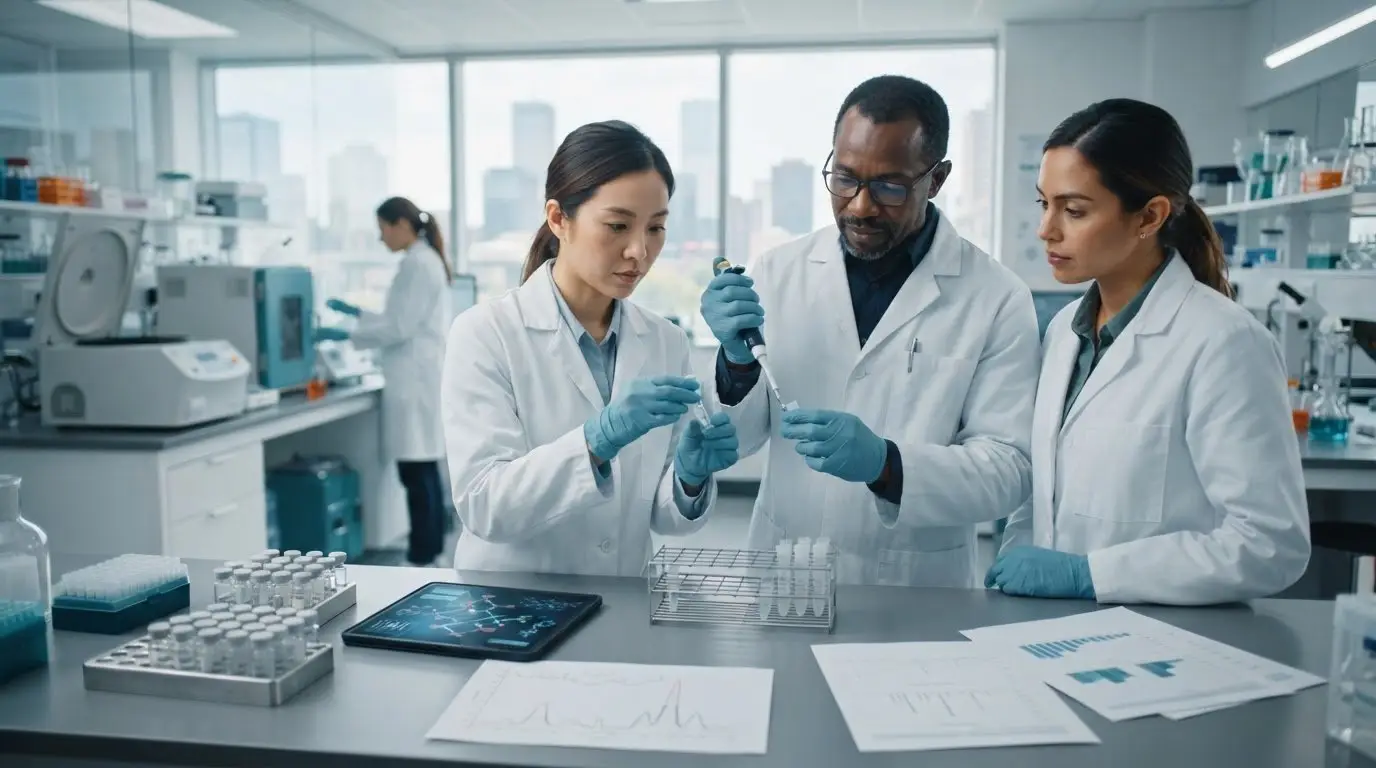
Experimental reproducibility depends on more than just a well-designed protocol. It requires a chemical foundation built on absolute purity and verifiable data, especially when sourcing research peptides for scientific institutions where even a minor impurity can skew months of data. Lab buyers often face the frustration of long lead times and generic paperwork that fails to reflect the specific batch in hand. Solara Compounds understands that your work’s integrity relies on the precision of your materials.
You likely agree that inconsistent material quality is the most common hurdle to achieving reliable results. This guide explains the essential criteria for sourcing high-purity compounds and verifying supplier claims through rigorous documentation. We’ll explore the necessity of batch-level Certificates of Analysis (COAs) and how a domestic supply chain at solaracompounds.com ensures your lab stays on schedule. These products are for laboratory research only and are not for human or animal consumption. By focusing on analytical verification, you can protect your experimental outcomes and maintain a stable research environment.
Key Takeaways
- Learn the essential criteria for sourcing high-purity research peptides for scientific institutions to eliminate variables and ensure data integrity.
- Understand why HPLC and LC-MS testing are the non-negotiable standards for verifying the structural integrity and purity of every compound.
- Master the evaluation of batch-specific Certificates of Analysis (COAs) to maintain lot-number traceability throughout long-term laboratory projects.
- Explore the benefits of a domestic supply chain via solaracompounds.com to reduce transit times and mitigate the risk of material degradation.
- Ensure compliance by utilizing these compounds strictly for laboratory research only, as they are not for human or animal consumption.
Establishing Procurement Standards for Institutional Research
Scientific institutions require more than just a chemical compound; they require a validated supply chain. Procurement for these organizations involves a rigorous vetting process to ensure that research peptides for scientific institutions meet specific biochemical criteria. These requirements focus on the structural integrity of amino acid chains, ensuring the synthesized sequence matches the intended design without truncated sequences or salt imbalances. When a lab buyer evaluates a supplier, they aren’t just looking for a product, they’re looking for a partner in data integrity.
The Reproducibility Crisis and Peptide Quality
Data integrity is the cornerstone of any successful laboratory project. When researchers utilize compounds with undisclosed impurities, the resulting biochemical data becomes skewed, leading to what is often called the reproducibility crisis. Consistent molecular weight and sequence identity are non-negotiable. Modern Peptide synthesis methods allow for high-precision manufacturing, but post-synthesis purification is where quality is truly defined.
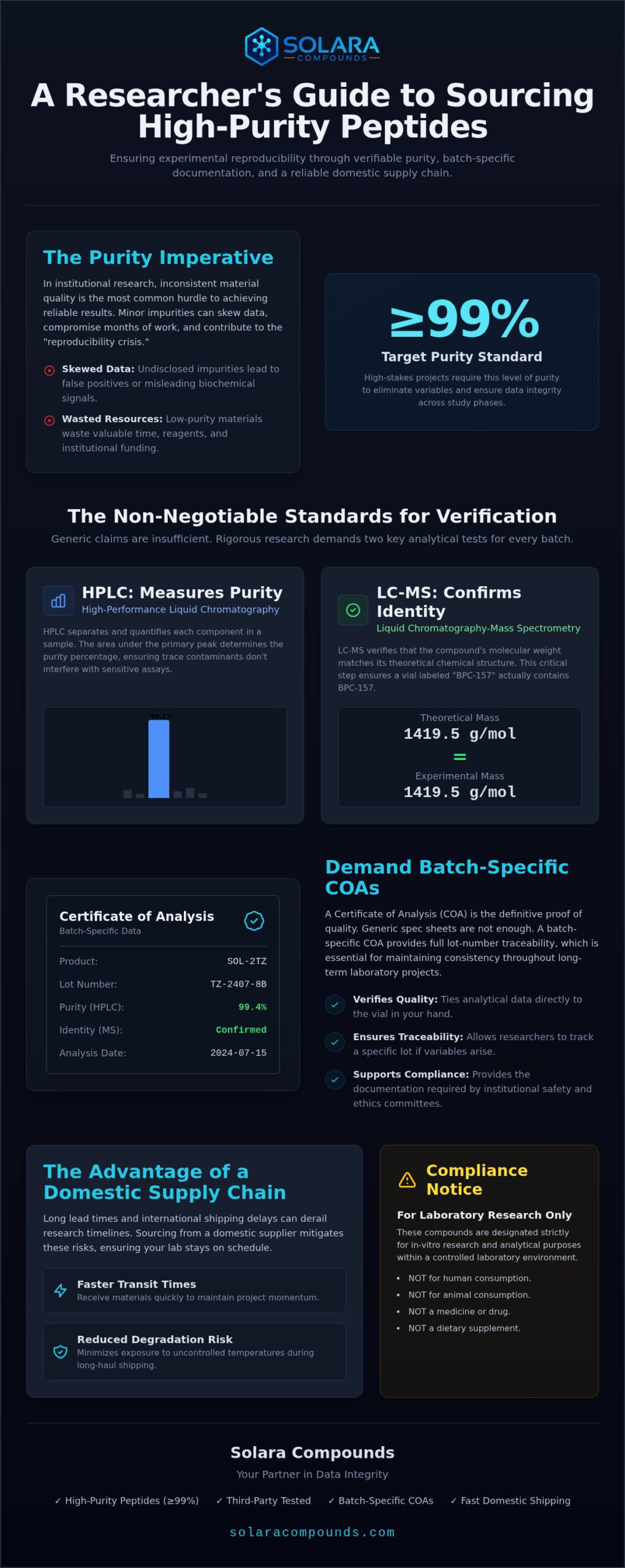
Institutions typically establish a baseline of High-Performance Liquid Chromatography (HPLC) results showing at least 98% purity. However, many high-stakes projects require 99% or higher to eliminate as many variables as possible. Solara Compounds targets these higher thresholds to ensure your lab’s baseline remains stable across different study phases. Low-purity materials don’t just waste time; they can lead to false positives or misleading results that compromise the entire research effort.
Regulatory Alignment for Laboratory Buyers
Institutional compliance requires a clear understanding of the Research Use Only (RUO) framework. This designation ensures that the compounds are used strictly within a controlled environment for analytical or experimental purposes. Lab buyers must distinguish these from clinical-grade materials to meet the documentation requirements of institutional safety and ethics committees. Transparent batch-level tracking is essential here. It allows for full lot-number traceability if an unexpected variable occurs during a project.
It’s vital to remember that these products are for laboratory research only. They are not medicine, not supplements, and are not for human or animal consumption. Solara Compounds provides batch-specific documentation at solaracompounds.com to support institutional transparency. By prioritizing suppliers who provide third-party verification, researchers can focus on their data rather than questioning the integrity of their raw materials. This documentation-first approach is the only way to satisfy the rigorous standards required by research peptides for scientific institutions.
Analytical Metrics: Verifying Peptide Purity and Identity
Procurement of research peptides for scientific institutions hinges on analytical validation. Generic specification sheets are insufficient for rigorous study. Lab buyers must demand batch-specific data to ensure the compound matches its theoretical profile. Relying on “typical” purity numbers can lead to significant errors in concentration calculations or unexpected cross-reactivity during an experiment. When results are on the line, the difference between a generic claim and a verified report is the difference between a successful project and a failed one.
Interpreting HPLC Chromatograms
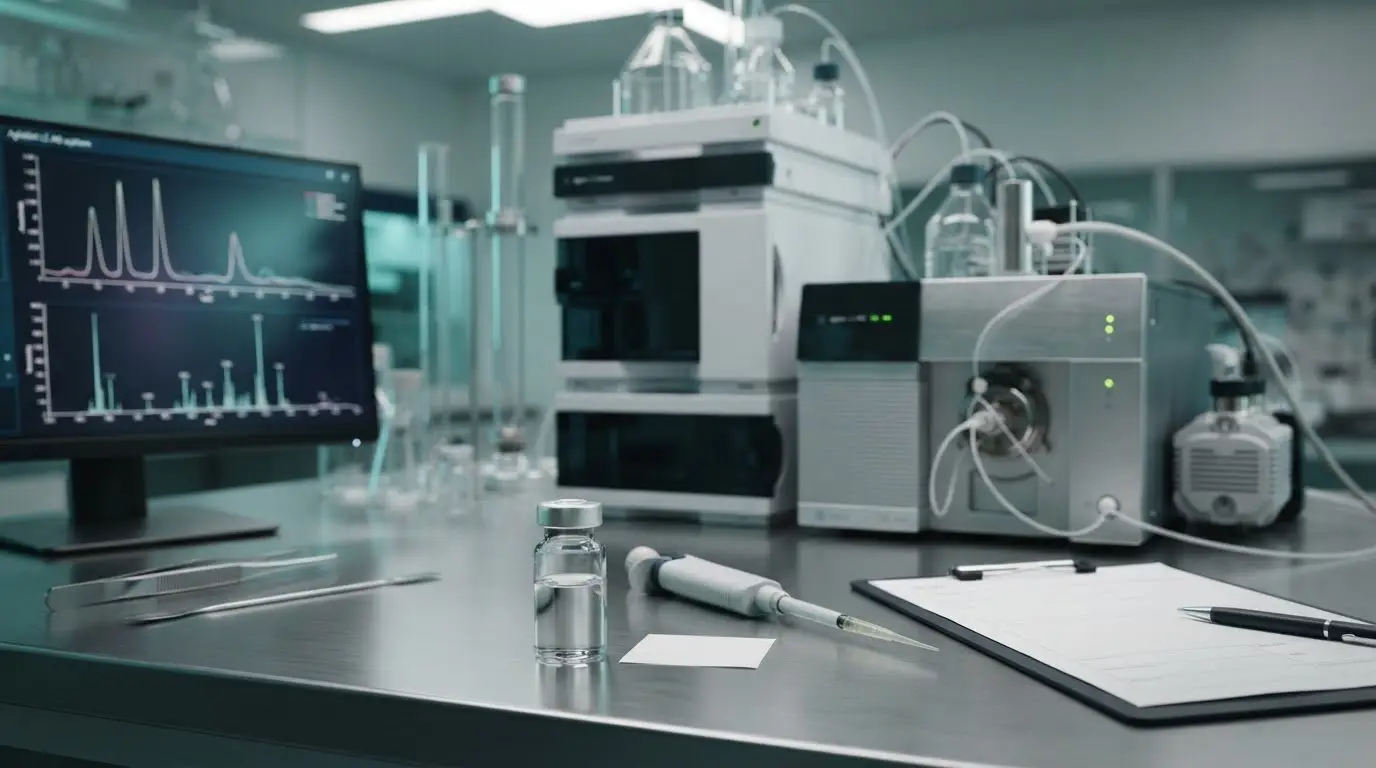
HPLC is a technique used to separate, identify, and quantify each component in a mixture. In a chromatogram, the primary peak represents the target peptide. The area under this peak relative to secondary peaks determines the total purity percentage. Scientific institutions often target a purity of ≥ 99% to minimize experimental noise and ensure that trace contaminants don’t interfere with receptor binding studies. Solara Compounds utilizes HPLC purification to reach these high-grade thresholds. This provides the stability needed for sensitive biochemical assays where even a 1% variance in purity could alter the observed outcome.
Mass Spectrometry and Molecular Confirmation
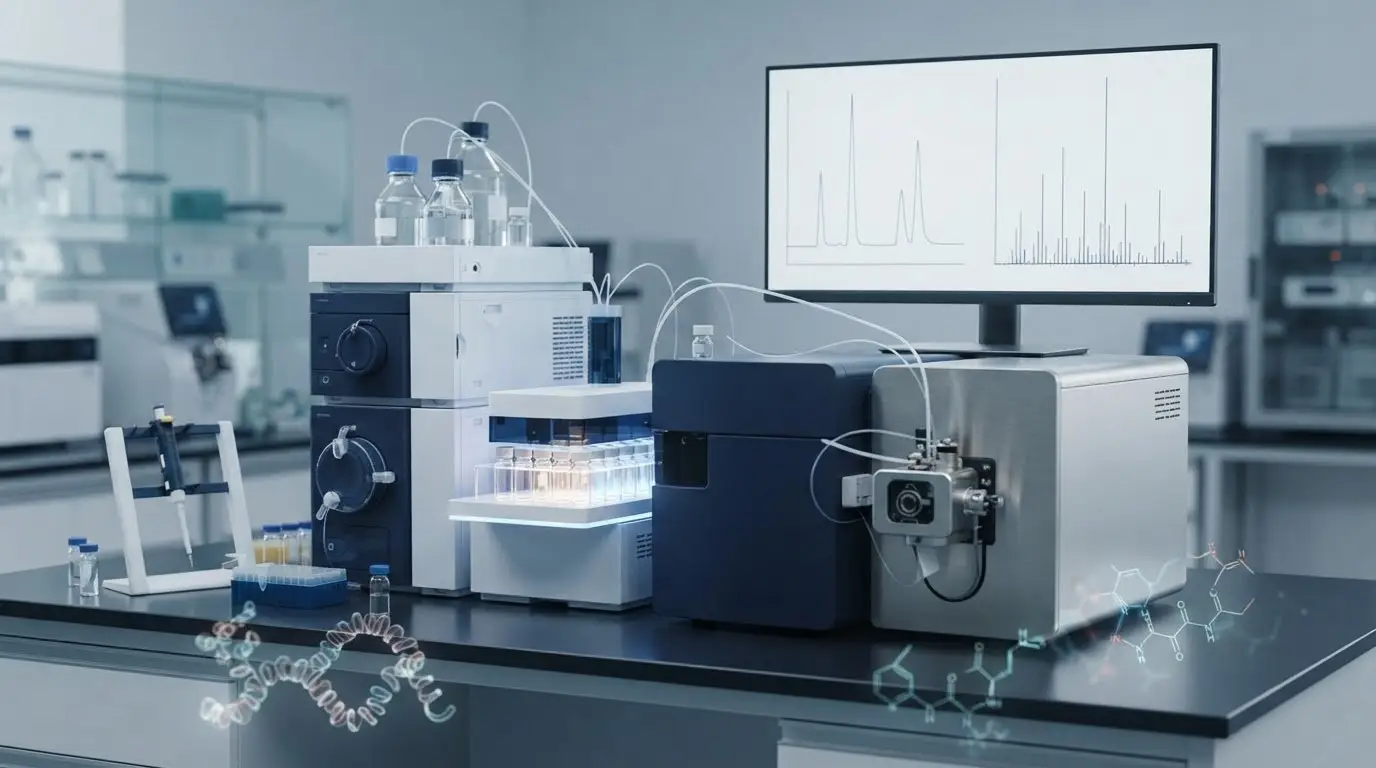
While HPLC measures purity, Liquid Chromatography-Mass Spectrometry (LC-MS) confirms identity. It measures the mass-to-charge ratio of the sample. By comparing the experimental mass to the theoretical mass, researchers verify that a vial labeled BPC-157 or SOL-3RT actually contains that specific sequence. This step is critical because two different peptides could theoretically show similar purity levels on an HPLC scan while being entirely different compounds. Identity verification ensures your lab isn’t wasting resources on the wrong material.
For more complex structures or long-chain amino acids, Matrix-Assisted Laser Desorption/Ionization-Time of Flight (MALDI-TOF) provides a detailed structural analysis of lyophilized powders. This method is especially useful for sequence verification in research peptides for scientific institutions. It ensures that the synthesis process completed every step correctly. These compounds are for laboratory research only and are not for human or animal consumption. Adhering to FDA Guidance on Research Use Only Products is vital for maintaining institutional compliance and ethical standards.
Reliable data starts with verified materials that have passed through these rigorous analytical filters. You can explore our current catalog of research compounds to see how we prioritize these analytical metrics for every batch we supply at solaracompounds.com.
Evaluating Batch-Specific Documentation for Experimental Consistency
Verification of chemical integrity concludes with the review of the Certificate of Analysis (COA). While analytical metrics define the quality of research peptides for scientific institutions, the COA serves as the official record of those metrics for a specific production lot. Relying on generic specifications is a risk that institutional researchers cannot afford. A professional COA provides the transparency required to justify the use of a compound in a controlled laboratory environment. It acts as a bridge between the manufacturer’s quality control and the researcher’s bench work.
Transparency is a core value at Solara Compounds. We provide public access to our documentation through the Solara Compounds COA portal, allowing lab buyers to verify batch data before a project begins. This documentation-first approach ensures that every vial meets the rigorous standards of modern science. These products are for laboratory research only and are not for human or animal consumption. By providing third-party verification through independent facilities like Kovera Labs, we remove the “black box” often associated with chemical procurement.
Essential Components of a Research COA
A comprehensive research COA must contain three primary elements to be considered valid for institutional use. First, it should display the Mass Spectrometry (MS) results to confirm the identity of the sequence. This ensures the molecular weight aligns with the theoretical value of the compound. Second, the High-Performance Liquid Chromatography (HPLC) chromatogram must be present to verify the purity percentage. Finally, the report should include physical appearance and solubility notes for the lyophilized powder. These details help researchers prepare their solutions accurately and identify any potential deviations in the material’s physical state upon arrival.
Lot Tracking and Batch Consistency
Lot-number traceability is a fundamental requirement for multi-phase laboratory projects. Each production run of research peptides for scientific institutions is assigned a unique identifier that tracks the material back to its specific synthesis and purification cycle. This tracking is essential for investigative transparency. If a researcher observes a specific biochemical response, they must be able to verify that the same material was used across all experimental replicates.
Consistency across multiple vials in a single research kit is managed through these lot numbers. We recommend that lab buyers archive a digital or physical copy of the COA alongside their experimental data. This practice supports the long-term integrity of the study and simplifies the peer-review process when documenting material sources. At solaracompounds.com, we prioritize this level of detail to support the stability of your laboratory’s supply chain and the reproducibility of your final results.
Strategic Sourcing: Domestic Supply Chains and Laboratory Compliance
Sourcing research peptides for scientific institutions often involves navigating the complexities of international logistics. Long transit times increase the risk of temperature fluctuations that can destabilize delicate molecular structures. By choosing a domestic supplier like Solara Compounds, laboratories reduce these variables significantly. We operate from a Florida-based facility, ensuring that materials move quickly from our ISO 7 cleanrooms to your bench. These cleanrooms are essential for maintaining a sterile environment during the lyophilization and vacuum sealing processes. This level of domestic quality control preserves the chemical integrity of the compounds before they ever leave our site.
Domestic supply chains eliminate the uncertainty of customs delays and international handling errors. It’s a matter of ensuring that the compound you receive matches the purity profile recorded at the point of synthesis. Every product we offer is for laboratory research only and is not for human or animal consumption. Maintaining this clear boundary is vital for institutional compliance and ethical research standards. By prioritizing a documentation-first approach at solaracompounds.com, we help researchers maintain the stability of their long-term projects.
Logistics and Cold Chain Considerations
Speed is a critical factor in maintaining the potency of research chemicals. While lyophilized powders are more stable than liquid solutions, prolonged exposure to heat during transit can still cause degradation of delicate amino acid chains. Fast, reliable shipping ensures your materials arrive in the same state they left the production facility. At Solara Compounds, we provide free shipping on orders over $200 for institutional buyers managing consistent procurement needs. Vacuum sealing provides an additional layer of protection. This process prevents moisture ingress and oxidative damage, ensuring the longevity of the peptides during storage.
Institutional Procurement and Bulk Agreements
Large-scale projects often require significant quantities of specific compounds like SOL-2TZ, BPC-157, or TB-500. For these high-volume requirements, tiered pricing structures provide a more cost-effective way to maintain a steady supply. Streamlining the acquisition process allows researchers to focus on their data rather than procurement delays. If your organization has specific documentation needs or volume requests, you can reach out to Solara Compounds support for tailored institutional inquiries. Establishing a reliable domestic partner ensures that your lab won’t face the supply gaps common with overseas vendors.
Reliable research depends on a foundation of high-quality materials and predictable logistics. You can Shop research peptides at solaracompounds.com to secure the high-purity compounds required for your next investigative phase.
Solara Compounds: High-Purity Peptides for Rigorous Scientific Study
Solara Compounds positions itself as a premier provider of research peptides for scientific institutions by prioritizing material integrity over marketing. We provide a specialized catalog of compounds synthesized through solid-phase methods and refined by HPLC purification targeting 99% or higher. This focus on purity ensures that your laboratory work isn’t compromised by baseline variations. Every batch we produce is a reflection of our commitment to technical precision and empirical data. We understand that in a laboratory setting, the quality of your raw materials is the primary determinant of your data’s reliability.
Signature Research Compounds
Our catalog features high-interest compounds like SOL-3RT and SOL-2TZ, which are frequently used in metabolic and regenerative signaling research models. Signaling models are simply the pathways cells use to communicate and respond to their environment. These compounds are essential for investigators studying cellular regulation and structural optimization. You can View the current research catalog to see the full range of available materials. Each item is vacuum-sealed to prevent degradation, ensuring that the structural integrity of the amino acid chains is preserved during storage.
The Solara Commitment to Transparency
What distinguishes Solara Compounds is our founder-led understanding of compound mechanisms and our documentation-first approach. We don’t just claim quality; we verify it through independent facilities like Kovera Labs. Every lot undergoes rigorous testing to produce batch-specific reports that are publicly accessible. This level of transparency supports the accountability required by research peptides for scientific institutions and academic investigators across the U.S. By removing the barrier to high-quality data, we act as a supportive partner in your long-term success.
We are dedicated to supporting the needs of independent laboratories with reliable, domestic shipping and expert consultation. If you have specific technical questions or institutional procurement requirements, our team is available at support@solaracompounds.com. All products listed at solaracompounds.com are for laboratory research only and are not for human or animal consumption. They are not medicine or supplements and must be handled according to standard laboratory safety protocols to ensure experimental reproducibility. Our goal is to provide the high-grade engineering your research deserves.
Advancing Experimental Integrity with Precision Materials
Reliable research depends on the stability and purity of your starting materials. By prioritizing batch-level transparency and third-party verification through Kovera Labs, you can ensure that your results remain reproducible across every phase of your project. Sourcing high-purity research peptides for scientific institutions requires a commitment to rigorous documentation and domestic supply chain reliability. Solara Compounds provides this foundation by offering batch-specific COAs for every lot, ensuring you have the data needed to satisfy institutional safety and ethics committees.
Don’t leave your experimental outcomes to chance with generic specifications. All products at solaracompounds.com are for laboratory research only and are not for human or animal consumption. They’re not medicine or supplements. By maintaining a domestic supply chain in Florida, we mitigate transit-related degradation and provide free shipping on orders over $200 to support consistent procurement. You can trust that our commitment to solid-phase synthesis and HPLC purification will provide the high-grade engineering your bench work requires. We’re here to support your next investigative phase with the precision and reliability your lab deserves.
Shop high-purity research peptides at solaracompounds.com
Frequently Asked Questions
What is the minimum purity level for research peptides at Solara Compounds?
Solara Compounds targets a minimum purity level of 98% for all research peptides, with many batches achieving 99% or higher. We utilize High-Performance Liquid Chromatography (HPLC) to verify these levels, ensuring that researchers in hubs like San Diego and Boston receive materials that meet high analytical standards. These research peptides for scientific institutions are synthesized in ISO 7 cleanrooms to maintain structural integrity and minimize trace contaminants that could interfere with biochemical assays.
How can I access the batch-specific COA for my order?
You can access batch-specific Certificates of Analysis (COAs) directly through our dedicated portal at solaracompounds.com/coa/. Every production lot is assigned a unique identifier that links your specific vial to its analytical test results, including HPLC and Mass Spectrometry data. This transparency allows lab buyers in cities like San Francisco and Seattle to verify the identity and purity of their compounds before beginning any experimental protocols or multi-phase laboratory studies.
Are Solara Compounds products intended for human consumption?
No, Solara Compounds products are strictly for laboratory research only and are not intended for human or animal consumption. These compounds are not medicines, drugs, or dietary supplements and should never be used for diagnostic or therapeutic purposes. We provide these materials exclusively to qualified researchers and institutions in locations like New York and Houston who adhere to professional laboratory safety standards. Proper handling requires a controlled environment to ensure experimental reproducibility and safety.
Do you offer bulk pricing for scientific institutions and universities?
We offer tiered pricing structures and bulk purchase agreements for scientific institutions, universities, and independent laboratories requiring high-volume orders. Institutional buyers in research centers like Raleigh and Austin can streamline their procurement by establishing wholesale contracts tailored to their specific project needs. For specialized inquiries or large-scale laboratory requirements, please contact our support team at support@solaracompounds.com to discuss customized pricing for compounds like SOL-3RT, SOL-2TZ, and BPC-157.
What is the typical shipping time for domestic laboratory orders?
Domestic orders are processed and shipped quickly from our Florida-based facility to ensure minimal transit time for laboratories across the United States. While specific arrival dates depend on the destination city, such as Chicago or Philadelphia, we prioritize fast shipping to mitigate potential degradation of delicate amino acid chains. We offer free shipping on orders over $200, helping research teams in Phoenix and Tampa maintain a consistent and cost-effective supply of high-purity materials.
How should lyophilized peptides be stored for maximum stability?
Lyophilized peptides should be stored in a cool, dry environment, such as a laboratory refrigerator or freezer, to ensure maximum long-term stability. While our vacuum-sealed vials protect the powder from moisture and oxidation during transit to labs in Miami or Dallas, maintaining a consistent temperature of -20°C is generally recommended for extended storage. Researchers should avoid frequent freeze-thaw cycles after reconstitution, as this can break down the peptide bonds and affect the accuracy of experimental data.
What third-party laboratory conducts the purity testing?
All independent third-party testing for Solara Compounds is conducted through Kovera Labs to ensure objective verification of purity and identity. This external validation provides researchers in Baltimore and Denver with confidence that their research peptides for scientific institutions meet the specific molecular weight and sequence requirements documented on the COA. Utilizing an independent facility for HPLC and LC-MS analysis is a cornerstone of our commitment to transparency and the integrity of the scientific process.
What is the return policy for damaged research materials?
Solara Compounds accepts returns and provides refunds for damaged goods, incorrect items, or confirmed lost shipments if the request is made within 14 days of delivery. Researchers in Atlanta or Los Angeles should contact our support team immediately if a shipment arrives with compromised vacuum seals or physical damage. We understand that laboratory timelines are sensitive, so we work to resolve these issues within 24 to 48 business hours to ensure your research remains on schedule.