Research Articles
Cell Culture Grade Peptides: A Technical Reference for Laboratory Research

What if the primary variable stalling your in-vitro model isn’t the experimental design, but the hidden impurities in your chemical reagents? Researchers often face the frustration of batch-to-batch inconsistency that threatens the integrity of long-term studies. It’s a common challenge in the lab; you invest weeks into a cellular assay only to find that results don’t align with previous data. Achieving reproducible research results starts with sourcing high-quality cell culture grade peptides that are backed by transparent, verifiable data. At Solara Compounds, we understand that precision is the foundation of every successful experiment.
This technical reference will help you master the requirements for selecting, verifying, and handling high-purity peptides for laboratory research. You’ll learn how to interpret HPLC and MS data to ensure your compounds meet the rigorous standards your work demands. We’ll also cover the importance of stable, lyophilized compounds and batch-specific COAs available at solaracompounds.com. All products mentioned, including BPC-157 and SOL-3RT, are for laboratory research only and are not for human or animal consumption. By focusing on validated purity and methodical handling, you can eliminate variables and focus on your findings.
Key Takeaways
- Define the technical standards for cell culture grade peptides, focusing on the 99% purity levels required for consistent in-vitro results.
- Identify the critical role of HPLC and LC-MS verification in confirming the molecular weight and identity of your research compounds.
- Learn optimal handling procedures for vacuum-sealed, lyophilized peptides to maintain chemical stability and prevent moisture-related degradation.
- Streamline laboratory procurement by utilizing batch-specific COAs and domestic shipping options available through Solara Compounds at solaracompounds.com.
Defining Cell Culture Grade Peptides for Laboratory Research
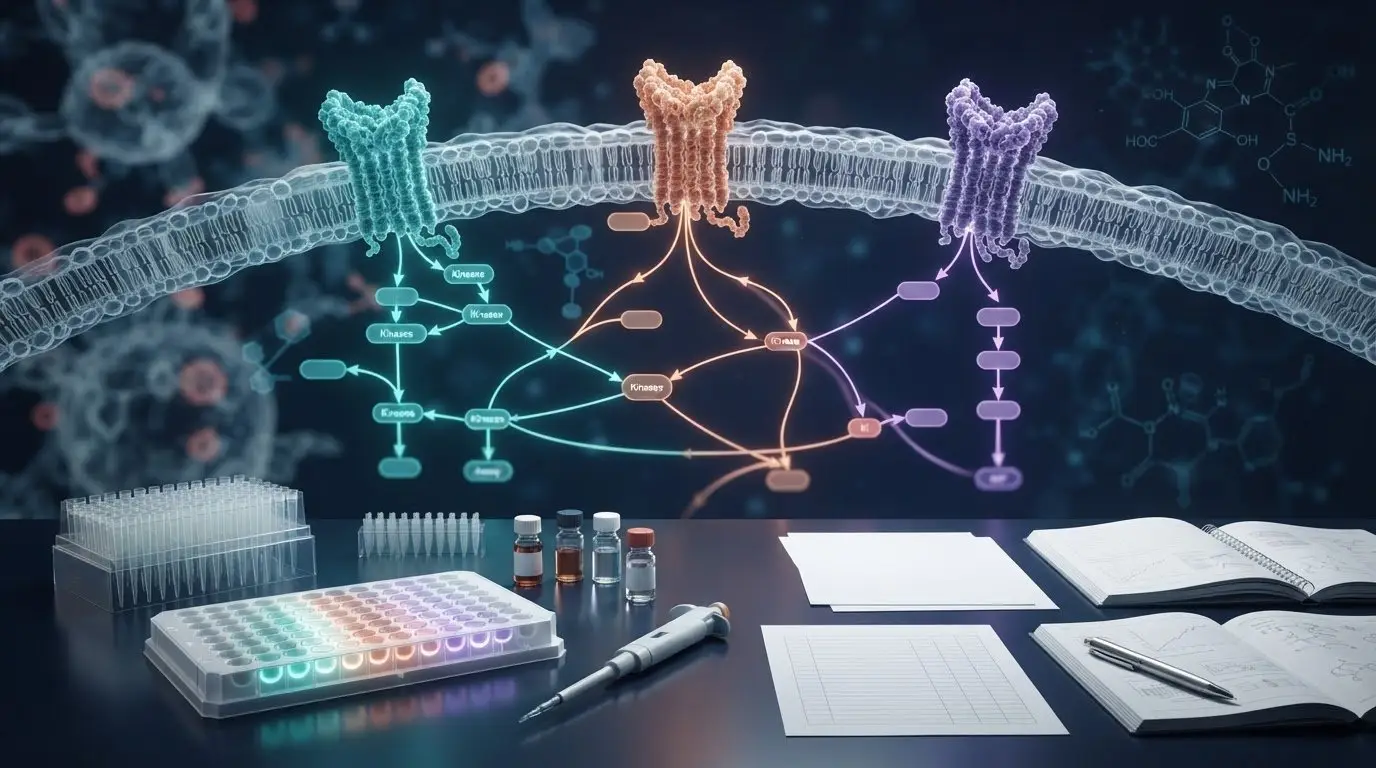
Cell culture grade peptides are high-purity amino acid chains specifically synthesized for in-vitro and biochemical experimental models. These compounds serve as critical tools for researchers investigating cellular signaling and metabolic pathways. To achieve reliable results, a deep understanding of peptide structure and function is necessary, as even minor sequence variations can alter biological activity. While recombinant proteins are expressed in biological systems, synthetic peptides are produced via solid-phase synthesis in ISO 7 cleanrooms. This method provides superior control over the molecular sequence, ensuring that the final product is free from host cell proteins or DNA often found in recombinant alternatives.
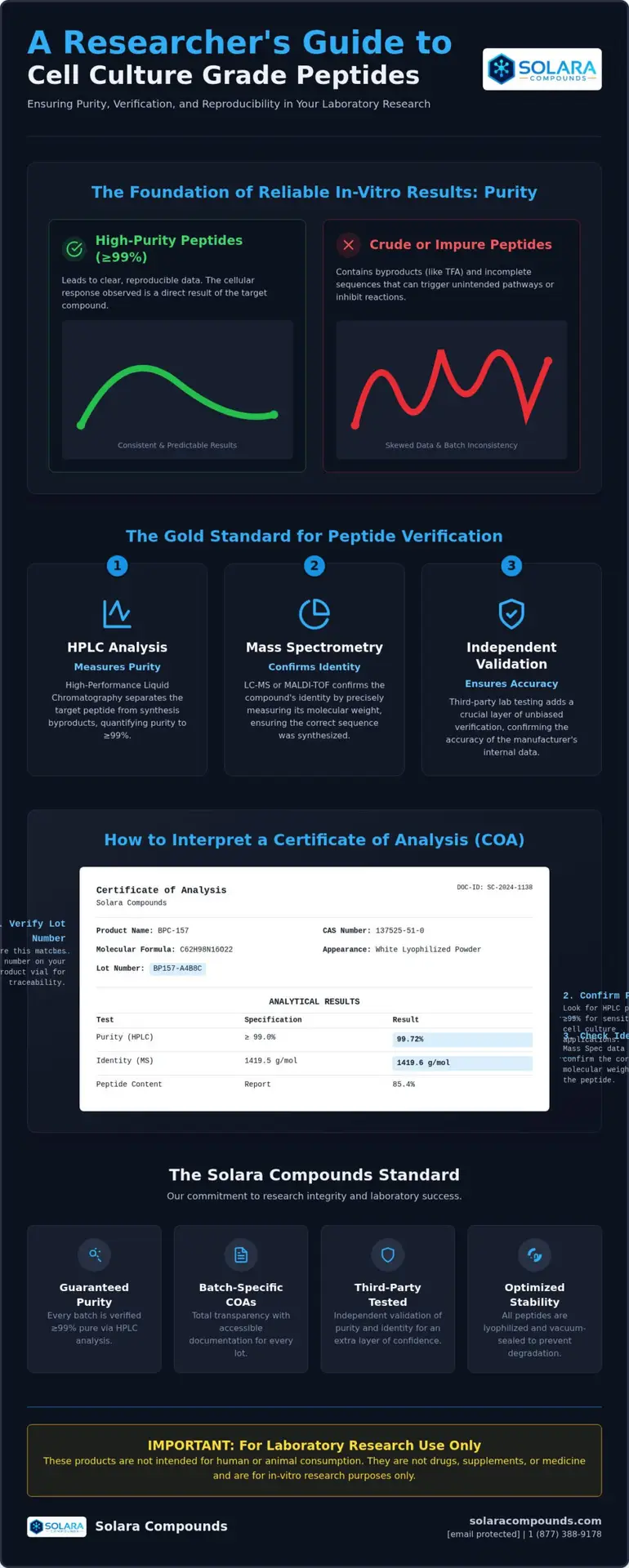
Using “crude” peptides in sensitive assays is a common pitfall that can derail an entire project. Crude preparations contain synthesis byproducts and incomplete sequences that can mask true cellular responses or trigger unexpected biological pathways. These contaminants often interfere with ligand-receptor interactions, making it impossible to determine if an effect is caused by the target peptide or an impurity. For metabolic pathway studies, where precision is paramount, only high-purity synthetic options provide the necessary clarity for accurate data interpretation.
The Role of Purity in Experimental Reproducibility
Impurities in a peptide batch can act as competitive inhibitors or unintended agonists during receptor binding assays. Residual solvents or trifluoroacetic acid (TFA), a common byproduct of the synthesis process, can significantly impact cell viability and alter gene expression. These hidden variables are often the root cause of batch-to-batch inconsistency in the lab. High-purity reagents ensure that the cellular response is a direct result of the compound being studied, rather than a reaction to chemical leftovers. Cell culture grade peptides are defined by a 99% purity benchmark verified through rigorous high-performance liquid chromatography.
Research Use Only: A Regulatory Framework
It’s vital to recognize that these compounds are classified under a Research Use Only (RUO) regulatory framework. This means the products are intended solely for laboratory research and not as dietary supplements, medicine, or for any form of human or animal application. Sourcing from a domestic supplier like Solara Compounds provides an additional layer of security, as materials don’t face the stability risks or delays associated with long-distance international transit. Lab buyers should always verify their materials via batch-specific paperwork at solaracompounds.com to ensure experimental integrity. All products, including specialized compounds like BPC-157 and SOL-3RT, are for laboratory research only.
Purity Metrics and Verification: HPLC, LC-MS, and MALDI-TOF
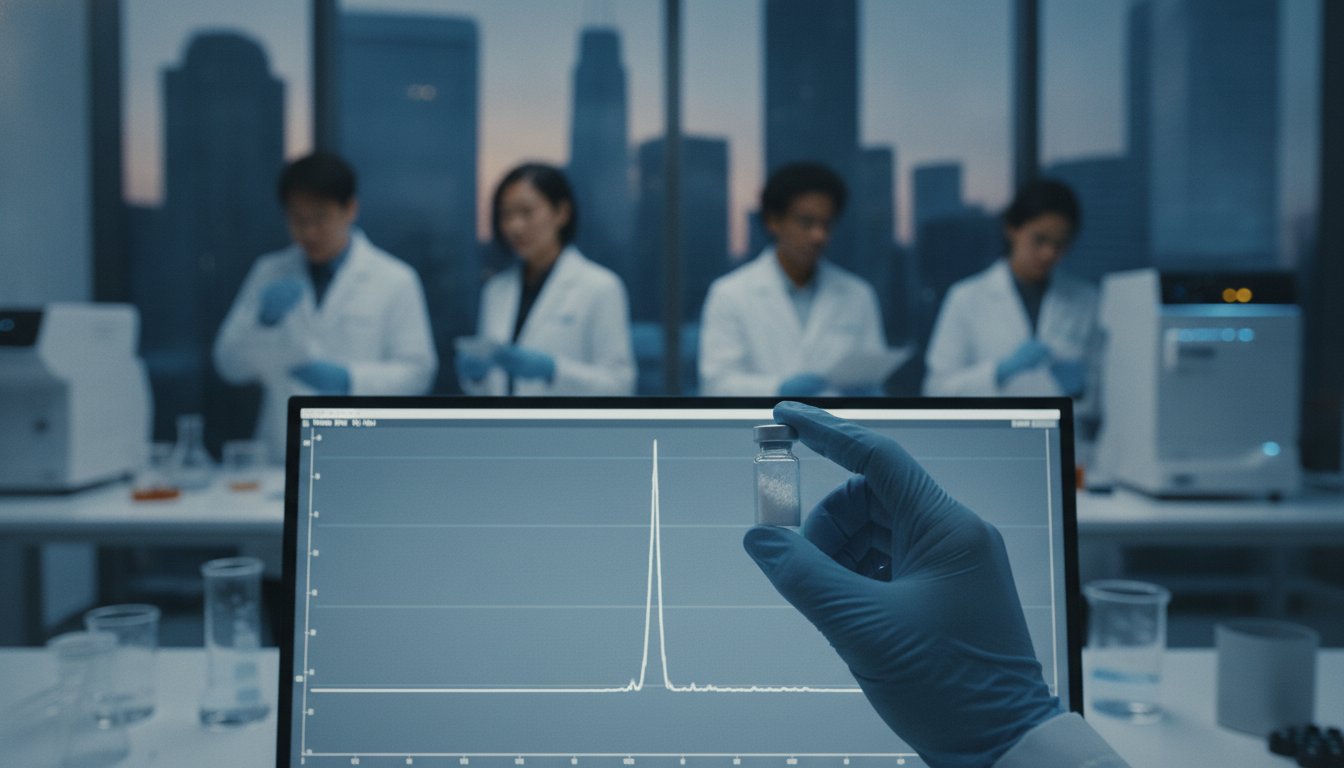
Verification of cell culture grade peptides requires more than a simple guarantee; it demands empirical evidence through analytical chemistry. High-Performance Liquid Chromatography (HPLC) is the industry gold standard for assessing the purity of a synthetic compound. Peptide purification via RP-HPLC allows researchers to separate the target sequence from synthesis byproducts, ensuring that the final material is free from interfering substances. While HPLC measures purity, Liquid Chromatography-Mass Spectrometry (LC-MS) confirms the identity of the compound by measuring its molecular weight. MALDI-TOF further refines this by verifying the exact amino acid sequence, providing a fingerprint of the synthesized material. Third-party testing through independent facilities like Kovera Labs adds an essential layer of security, validating that the manufacturer’s internal data is accurate.
Interpreting a Certificate of Analysis (COA)
Reading a COA is a fundamental skill for lab buyers. You should prioritize the lot number, purity percentage, and molecular weight confirmation. Solara Compounds provides batch-specific COAs for every lot, ensuring that the documentation you receive matches the specific vial in your lab. For high-sensitivity in-vitro work, targeting ≥ 99% purity is often the difference between a successful assay and a failed one. This level of transparency allows you to review the current research catalog with confidence in the material’s integrity.
Identity Confirmation via Mass Spectrometry
Mass spectrometry ensures the synthesized sequence matches the intended molecular profile. By analyzing the MS peaks, researchers can identify potential contaminants or truncated sequences that might have occurred during the solid-phase synthesis process. These peaks act as a diagnostic tool, revealing any deviations from the target mass. HPLC peaks determine the percentage of the target peptide in a sample by measuring the area under the curve relative to impurities. This rigorous verification process is vital for maintaining the reproducibility of your data. All compounds, including SOL-2TZ and TB-500, are for laboratory research only and are not intended for human or animal use.
Stability and Solubility: Handling Lyophilized Peptides in Vitro
Lyophilization isn’t just a storage convenience. It’s a technical necessity for maintaining the bioactivity of synthetic compounds over time. This freeze-drying process removes moisture through sublimation, creating a stable “cake” that preserves the chemical integrity of cell culture grade peptides. By eliminating water, researchers can prevent the hydrolytic degradation that typically plagues peptides in aqueous solutions. Vacuum sealing further protects these compounds from oxidation and ambient moisture during transit. Sourcing from Solara Compounds ensures that these materials arrive in a stable, lyophilized state, ready for precise reconstitution in your laboratory environment. For researchers at solaracompounds.com, maintaining this stability is the first step toward achieving reproducible experimental outcomes.
Reconstitution Protocols for Laboratory Use
Proper reconstitution is a critical juncture in any in-vitro study. For initial solubility, researchers often rely on sterile laboratory reagents like BAC Water to create concentrated stock solutions. It’s vital to calculate final concentrations carefully before integrating these compounds into complex media alongside Bioactive Small Molecules and Research Peptides. Solubility challenges often arise with hydrophobic sequences, which contain a high proportion of non-polar amino acids. These sequences don’t always dissolve easily in purely aqueous buffers and might require gentle sonication or specific pH adjustments to reach a fully clear solution. Always ensure the peptide is completely dissolved before adding it to cell culture media to avoid inconsistent exposure levels across your samples.
Long-Term Integrity in Laboratory Storage
Stability doesn’t end with successful reconstitution. For the best results, store lyophilized vials in a -20°C or -80°C environment to prevent long-term degradation. It’s a best practice to aliquot reconstituted peptides into single-use volumes to avoid repeated freeze-thaw cycles, which can lead to physical aggregation or chemical breakdown. Lot-number traceability is equally important for longitudinal research projects, allowing you to correlate specific results with independent laboratory verification data. Maintaining a detailed log of storage conditions and reconstitution dates ensures that your data remains valid over the course of the study. All products, including BPC-157 and MOTS-C, are for laboratory research only and are not for human or animal consumption.
Procurement Criteria: Sourcing Domestic Research Peptides
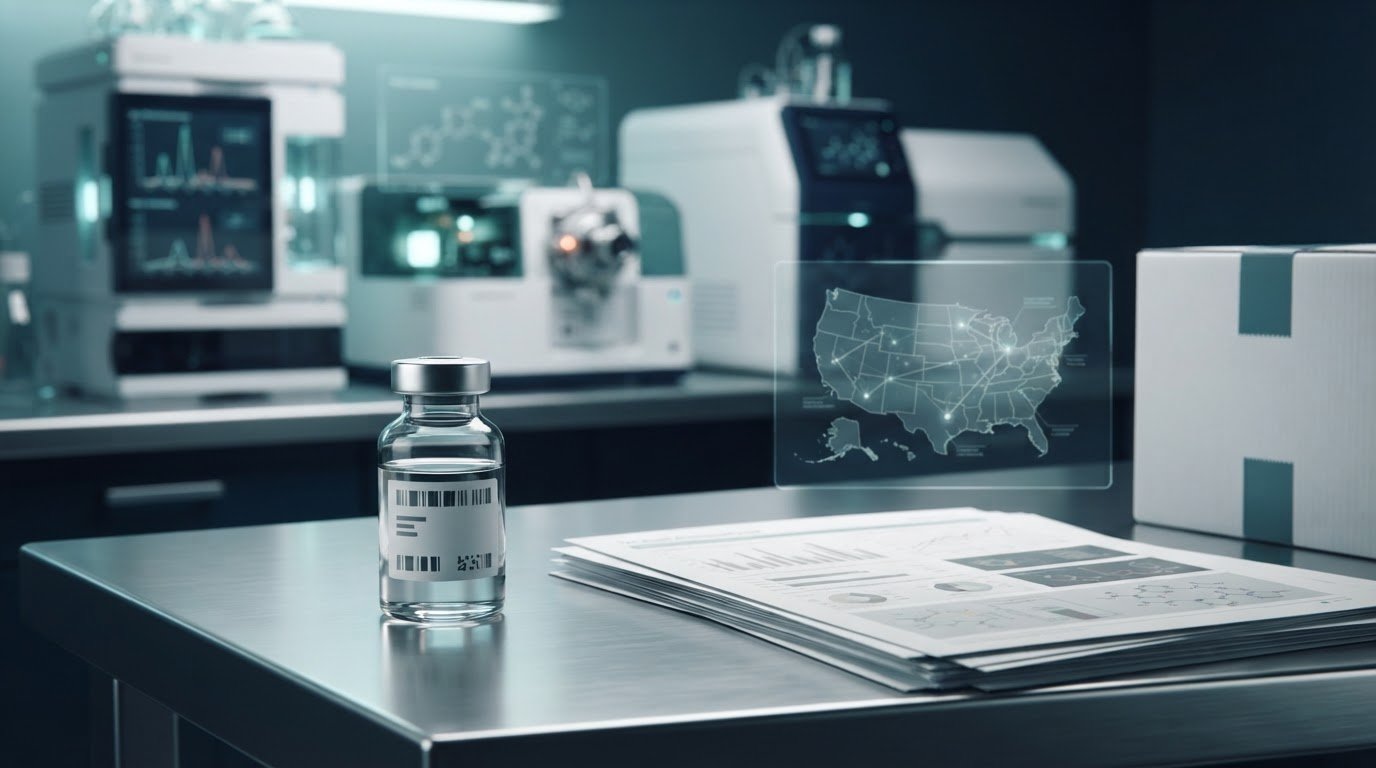
Sourcing cell culture grade peptides requires a focus on logistical stability. International transit often subjects sensitive compounds to uncontrollable temperature shifts and customs delays, which can degrade the chemical structure of lyophilized powders. Domestic U.S. sourcing mitigates these risks by ensuring shorter transit times and consistent handling. At Solara Compounds, we prioritize a documentation-first approach. This means providing batch-level transparency through third-party testing partnerships with Kovera Labs. Reliable procurement isn’t just about the product; it’s about the data that travels with it.
Evaluating vendor transparency is a critical step in the procurement process. Lab buyers should look for suppliers who provide immediate access to batch-specific COAs and detailed HPLC/MS data. This level of openness ensures that the material you receive meets the exact specifications required for your in-vitro models. Secure, fast U.S. delivery further protects the integrity of your reagents, allowing you to maintain strict experimental timelines without the uncertainty of global shipping logistics.
Institutional and University Supply
Streamlining the supply chain is essential for academic investigators and biotech labs managing tight project timelines. We offer procurement tiers designed for bulk and wholesale agreements, ensuring that high-volume research remains cost-effective. Budgets are often a concern in the lab, so we provide free shipping on orders over $200 to help reduce overhead. If you have specific technical inquiries regarding compound synthesis or batch availability, you can contact our research support team at support@solaracompounds.com. Our goal is to act as a supportive partner in your long-term research success. Shop research peptides at solaracompounds.com to see our current inventory.
Verifying Supplier Standards
Quality assurance starts in the cleanroom. Our cell culture grade peptides are synthesized using solid-phase methods in ISO 7 environments to prevent environmental contamination. It’s not enough for a supplier to simply list a catalog; they must understand the specific chemical mechanisms and structural requirements of each item. This expertise ensures that compounds like SOL-3RT or BPC-157 maintain their intended properties upon arrival. Researchers should always verify these standards by reviewing the High Purity Research Peptides documentation available on our site. All materials are intended solely for laboratory research and are not for human or animal use.
The Solara Compounds Standard for Research Integrity
Solara Compounds functions as a specialized partner for laboratories that require high-precision material science without the wait times of custom synthesis. While many global suppliers focus on the potential of custom orders, we prioritize a ready-to-ship catalog of cell culture grade peptides that meet a 99% purity benchmark. This documentation-first approach ensures that your reagents aren’t a variable in your experimental design. We’ve built our reputation on providing the empirical data necessary for metabolic and neurological research, where even minor sequence deviations can compromise an entire study.
Our mission is grounded in the belief that researchers deserve compounds they can trust. We achieve this through rigorous third-party testing and a commitment to batch-level transparency. By providing clear HPLC and MS data for every lot, we help lab buyers navigate the technical challenges of in-vitro modeling with quiet competence. This standard of excellence is what defines the Solara Compounds catalog as a reliable resource for the scientific community.
Featured Research Compounds
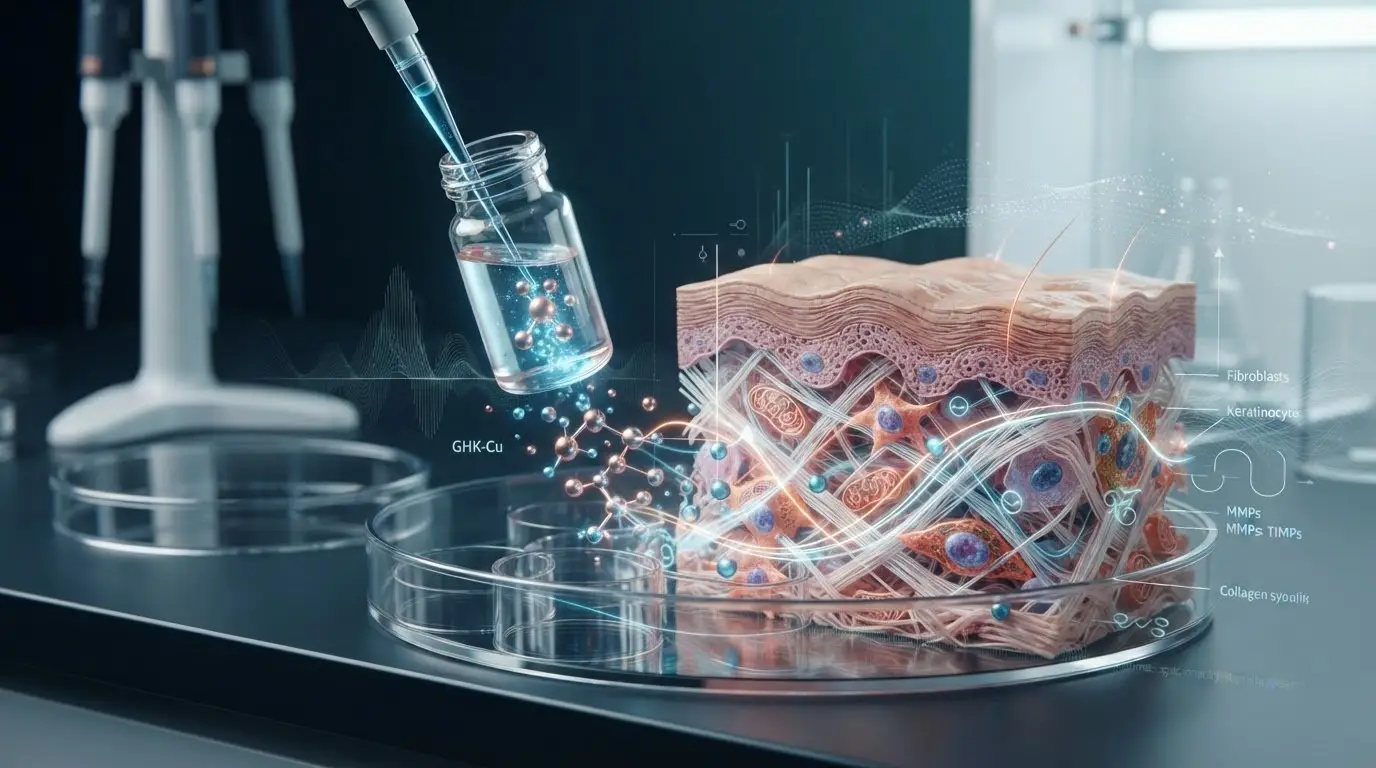
Our catalog includes a diverse range of high-purity tools designed for specific laboratory applications. Researchers focusing on cellular signaling and tissue models often utilize BPC-157 10mg for its consistent performance in in-vitro studies. For investigations into complex metabolic pathways, SOL-3RT provides the structural integrity required for sensitive assays. We also support cellular response studies with GHK-Cu, a compound frequently used to investigate receptor binding and biochemical pathways. Laboratories analyzing mitochondrial function can rely on the precise molecular profile of MOTS-C to ensure their data is both accurate and reproducible across multiple batches.
Secure Your Research Materials
Maintaining a steady supply of high-quality reagents is essential for longitudinal research projects. You can access our full research catalog to find the specific compounds your laboratory requires for immediate use. All products provided by Solara Compounds are intended solely for laboratory research and are not for human or animal consumption. These compounds are not medicines, supplements, or for any form of clinical application. By adhering to these strict Research Use Only standards, we ensure the integrity of your work and the safety of the research environment. Shop research peptides at solaracompounds.com to secure the materials you need for your next experiment.
Advancing Precision in Cellular Research
Success in the laboratory depends on the reliability of your reagents. High-purity cell culture grade peptides provide the structural consistency needed to ensure that cellular responses result from the target compound rather than synthesis byproducts. By prioritizing materials with 99% purity and verifying identity through HPLC and mass spectrometry, you eliminate the variables that often stall progress. It’s about building a foundation of data you can trust for every in-vitro model.
Solara Compounds supports your work with a documentation-first approach. We provide batch-specific COAs for every lot and validate our catalog through independent third-party testing via Kovera Labs. Every product we offer is for laboratory research only and is not for human or animal consumption. Our domestic shipping ensures that sensitive materials arrive quickly, and we offer free shipping on laboratory orders over $200. View the current research catalog at Solara Compounds to find the precise tools needed for your next study. We look forward to supporting your long-term research success at solaracompounds.com.
Technical Frequently Asked Questions
What exactly defines a cell culture grade peptide?
A cell culture grade peptide is defined by its high purity and suitability for in-vitro experimental models. Within the industry, this typically implies a purity level of 99% or higher as verified by high-performance liquid chromatography. These compounds are synthesized to be free from synthesis byproducts and residual solvents that could interfere with cellular signaling assays. This technical standard ensures that researchers in hubs like Boston or San Francisco can maintain consistent results across multiple experimental batches.
How do I verify the purity of a peptide batch from Solara Compounds?
You can verify the purity of any batch by accessing documentation at solaracompounds.com/coa/. Solara Compounds provides:
- Batch-specific COAs for every lot.
- Third-party testing results from Kovera Labs.
- Raw HPLC and MS data for molecular confirmation.
This transparency is vital for lab buyers in Seattle or New York who require empirical proof before beginning sensitive biochemical studies.
Why is lyophilization preferred for research peptides?
Lyophilization, or freeze-drying, is the preferred method for research peptides because it significantly enhances long-term chemical stability. By removing moisture through sublimation, the process prevents hydrolytic degradation that occurs in aqueous solutions. The resulting lyophilized powder is then vacuum-sealed to protect against oxidation and ambient moisture during transit. This ensures that researchers in Austin or Raleigh receive stable compounds like BPC-157 that are ready for precise reconstitution in the laboratory environment.
Can I use these peptides for animal or human studies?
No, these products are strictly for Research Use Only (RUO) and are not intended for human or animal consumption. They are not medicines, drugs, or dietary supplements; they should never be used for diagnostic or therapeutic purposes. Solara Compounds supplies these materials exclusively for in-vitro, biochemical, and controlled laboratory work. All products, including SOL-2TZ and MOTS-C, are for laboratory research only. Researchers in Philadelphia or Tampa must adhere to these strict safety and regulatory standards.
What is the difference between SOL-3RT and other research peptides?
SOL-3RT is a specific research compound in our catalog, often investigated in metabolic pathway models. Unlike generic research peptides, it’s synthesized with a documentation-first approach, ensuring that its molecular profile is verified through LC-MS and MALDI-TOF. It’s available in 10mg, 20mg, and 30mg sizes to accommodate various experimental scales. Laboratories in Chicago or Houston utilize SOL-3RT when they require highly characterized materials that are backed by batch-level lot number traceability for longitudinal studies.
How should I store peptides once they arrive at my laboratory?
Upon arrival at your laboratory, lyophilized peptides should be stored in a -20°C or -80°C freezer to maintain their structural integrity. It’s best to keep them in their original vacuum-sealed vials until they are needed for reconstitution. For liquid stock solutions, researchers in Denver or Phoenix should aliquot the material into single-use volumes. This practice prevents repeated freeze-thaw cycles, which can lead to peptide aggregation or chemical breakdown, potentially compromising the validity of your experimental data.
Does Solara Compounds provide bulk pricing for institutional research?
Yes, Solara Compounds offers tiered pricing structures and wholesale agreements for institutional clients and biotechnology labs. These bulk procurement options are designed to support large-scale research projects in major hubs like San Diego, Atlanta, or Los Angeles. Institutional buyers can contact our technical support team at support@solaracompounds.com to discuss specific project requirements. Additionally, we provide free shipping on laboratory orders over $200, helping research institutions manage their budgets while securing high-purity cell culture grade peptides.
What should I look for in a peptide HPLC report?
When reviewing a peptide HPLC report, you should focus on the following technical indicators:
- The purity percentage, which should target 99% or higher.
- The main peak clarity, indicating the presence of the target compound.
- The area under the curve relative to synthesis byproducts.
Researchers in Miami, Baltimore, or Dallas use this data to confirm that their cell culture grade peptides meet the necessary specifications for reproducible results.