Research Articles
Validated Research Peptides: A Laboratory Procurement Checklist for 2026


A single batch of sub-standard material can invalidate months of sensitive in-vitro modeling and waste thousands in laboratory resources. You already understand that the integrity of your data depends entirely on the structural integrity of your compounds. Yet, evaluating the market for validated research peptides often feels like a gamble where the stakes are your project’s credibility. Inconsistent batch quality from unregulated sources remains a primary cause of experimental failure in modern bioscience.
At Solara Compounds, we believe that precision isn’t a marketing claim; it’s a verifiable documentation trail. This guide serves as a rigorous procurement checklist for 2026, designed to help lab buyers verify 99%+ purity and identity before any compound reaches the bench. You’ll learn how to interpret complex HPLC/MS reports and ensure batch-to-batch consistency for sensitive models. Please remember that all products, such as SOL-3RT and BPC-157, are for laboratory research only and are not for human or animal consumption. By following this repeatable protocol at solaracompounds.com, you can eliminate chemical variability and focus on your results.
Key Takeaways
- Learn to identify validated research peptides by verifying documented proof of identity and purity for every laboratory lot.
- Master the interpretation of HPLC and Mass Spectrometry reports to confirm a compound’s molecular fingerprint and purity before experimental use.
- Understand how sterile lyophilization and vacuum sealing prevent moisture contamination to maintain the long-term stability of your research materials.
- Establish a procurement protocol that prioritizes US-based suppliers and specialized logistics to ensure batch-to-batch consistency.
- Explore the Solara Compounds standard for accessing batch-specific COAs at solaracompounds.com to ensure lot-number traceability for laboratory research only.
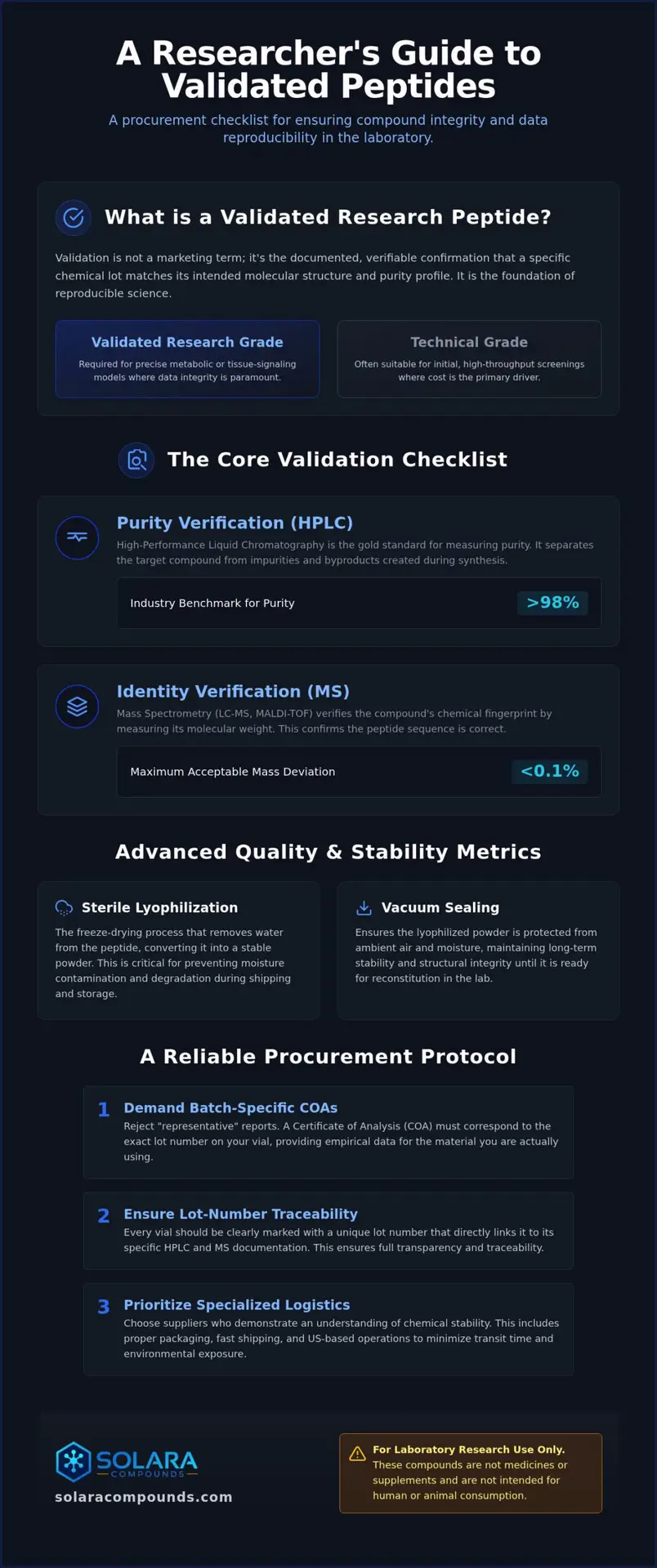
The Definition of Validated Research Peptides in a Laboratory Setting
Validation isn’t a vague marketing term or a generic promise of quality. It’s the documented confirmation that a specific chemical lot matches its intended molecular structure and purity profile. For laboratory buyers, validated research peptides represent a commitment to data integrity and structural integrity. This process ensures that the compound used in a study today will produce the same baseline results as the one used next year. It’s essential to remember that all materials from Solara Compounds are for laboratory research only. They are not medicine, not supplements, and are not for human or animal consumption.
Many suppliers offer technical grade materials. These are often suitable for initial high-throughput screenings where cost is the primary driver. However, validated research grade materials are necessary for precise metabolic or tissue-signaling models. These compounds undergo rigorous Peptide Synthesis and post-production analysis to ensure that secondary metabolites or residual solvents don’t interfere with cellular assays. Without this verification, researchers risk observing off-target effects that stem from impurities rather than the peptide itself.
Identity Verification: Ensuring the Peptide Sequence is Correct
Identity verification is the first step in any procurement protocol. It confirms that the peptide sequence synthesized in the lab actually matches the order. Researchers use molecular weight analysis to verify this chemical fingerprint. Technologies like MALDI-TOF (Matrix-Assisted Laser Desorption/Ionization-Time of Flight) and LC-MS (Liquid Chromatography-Mass Spectrometry) measure the mass-to-charge ratio of the molecule. If the measured mass deviates from the theoretical value by more than 0.1%, the batch is rejected. This level of scrutiny is why institutional buyers visit solaracompounds.com/coa/ to review lot-specific data for compounds like SOL-3RT or BPC-157.
Purity Benchmarks for Scientific Research
High purity standards are the backbone of reproducible science. The industry benchmark for validated research peptides is a minimum of >98% purity as measured by High-Performance Liquid Chromatography (HPLC). This metric separates the target compound from any byproducts created during synthesis. It’s also important to distinguish between total purity and specific peptide content. While HPLC measures the ratio of the target peptide to other organic impurities, peptide content accounts for the total weight of the powder, including essential stabilizers or salts. Solara Compounds targets these high thresholds to ensure that compounds like SOL-2TZ provide consistent results across multiple experimental runs.
- Purity measures the absence of truncated sequences or leftover reagents from the manufacturing process.
- High purity prevents the activation of unintended cellular pathways that could skew experimental outcomes.
- Validated batches allow for precise calculation of molar concentrations in sensitive in-vitro models.
Inconsistent batch quality remains a significant barrier to scientific progress. By prioritizing validated materials backed by empirical data, researchers protect their projects from the variables that lead to experimental failure.
The Core Validation Checklist: HPLC and MS Documentation
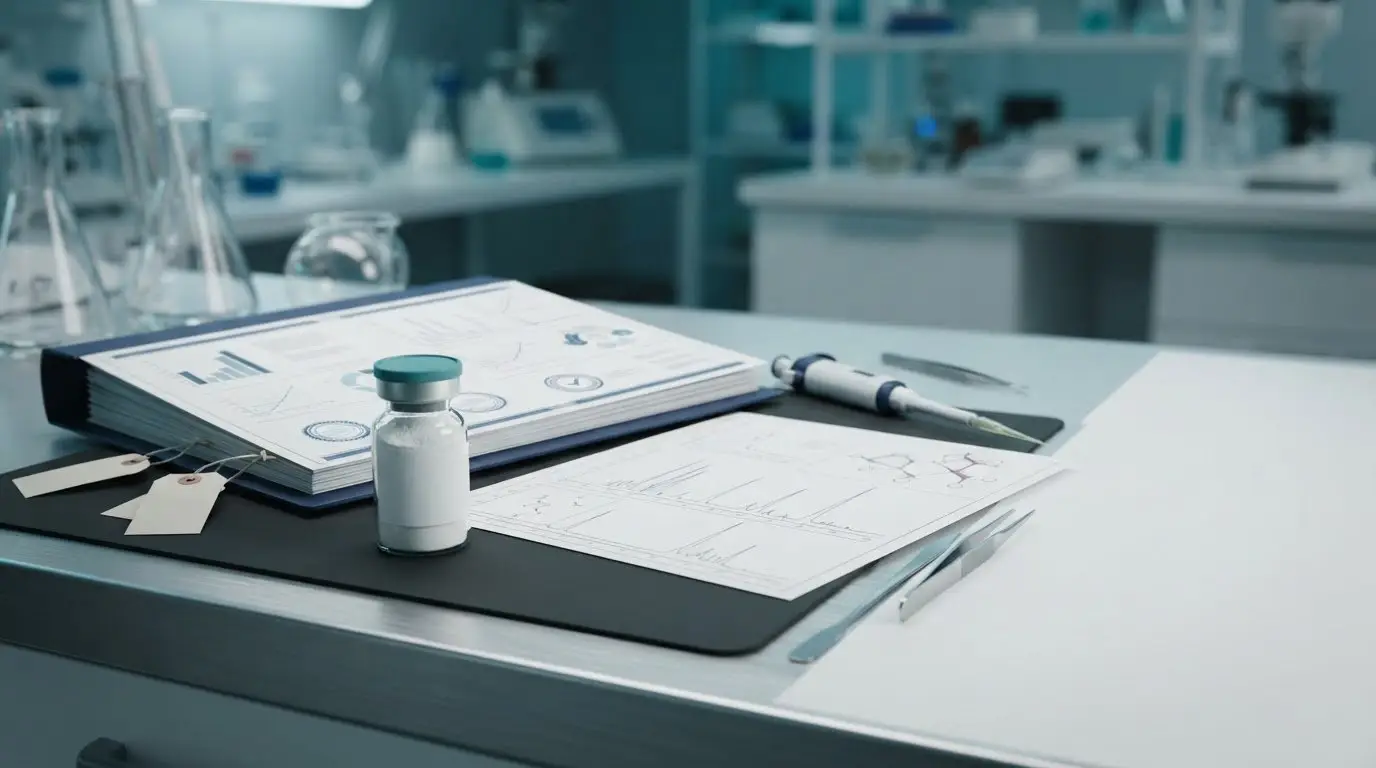
To secure validated research peptides, lab buyers must move beyond surface-level specifications. A true validation checklist begins with a transparent documentation trail that links a specific physical vial to its chemical analysis. Many suppliers provide “representative” reports, which are merely historical data from past successes. This practice creates significant risk for experimental reproducibility. For reliable results, you need batch-specific data that confirms the exact properties of the material on your bench. Every vial from Solara Compounds includes a lot number that matches its specific paperwork, ensuring that the material you use is the material that was tested.
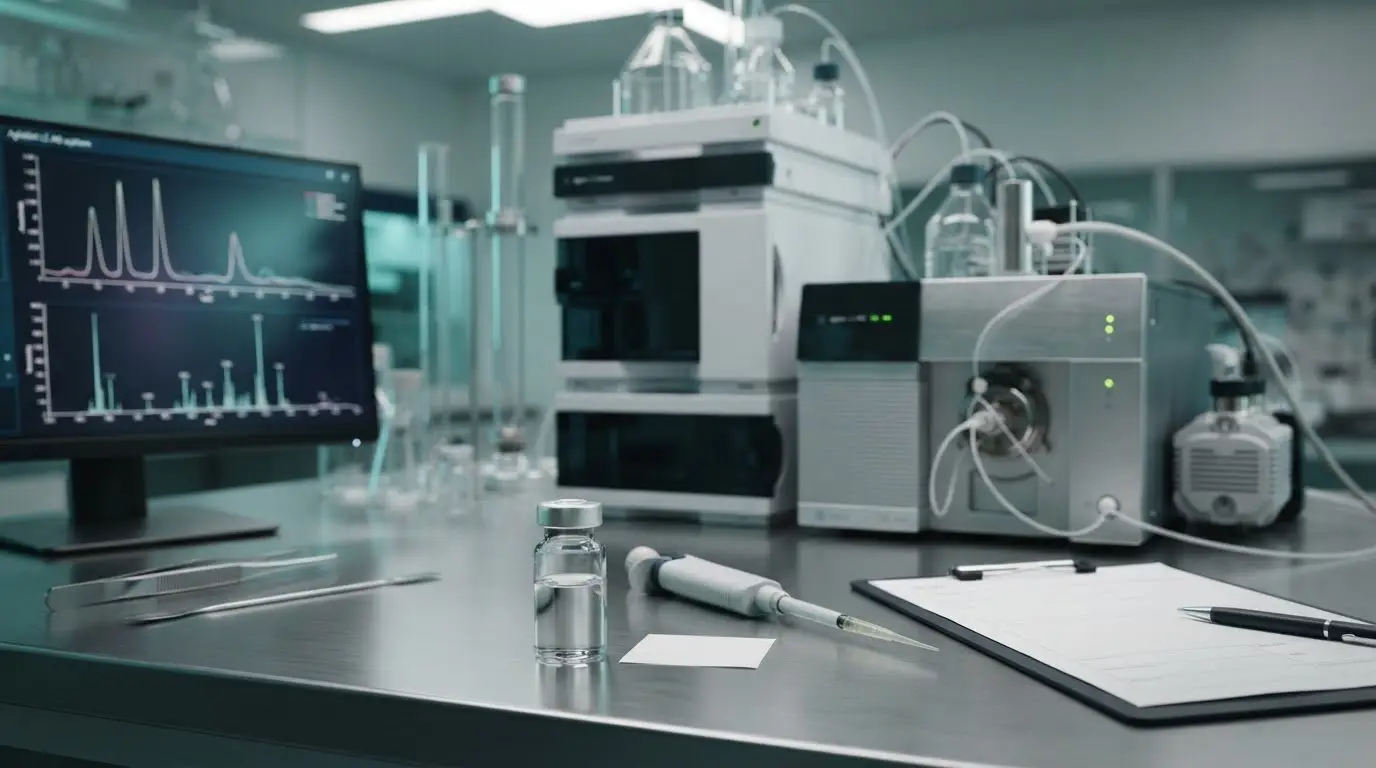
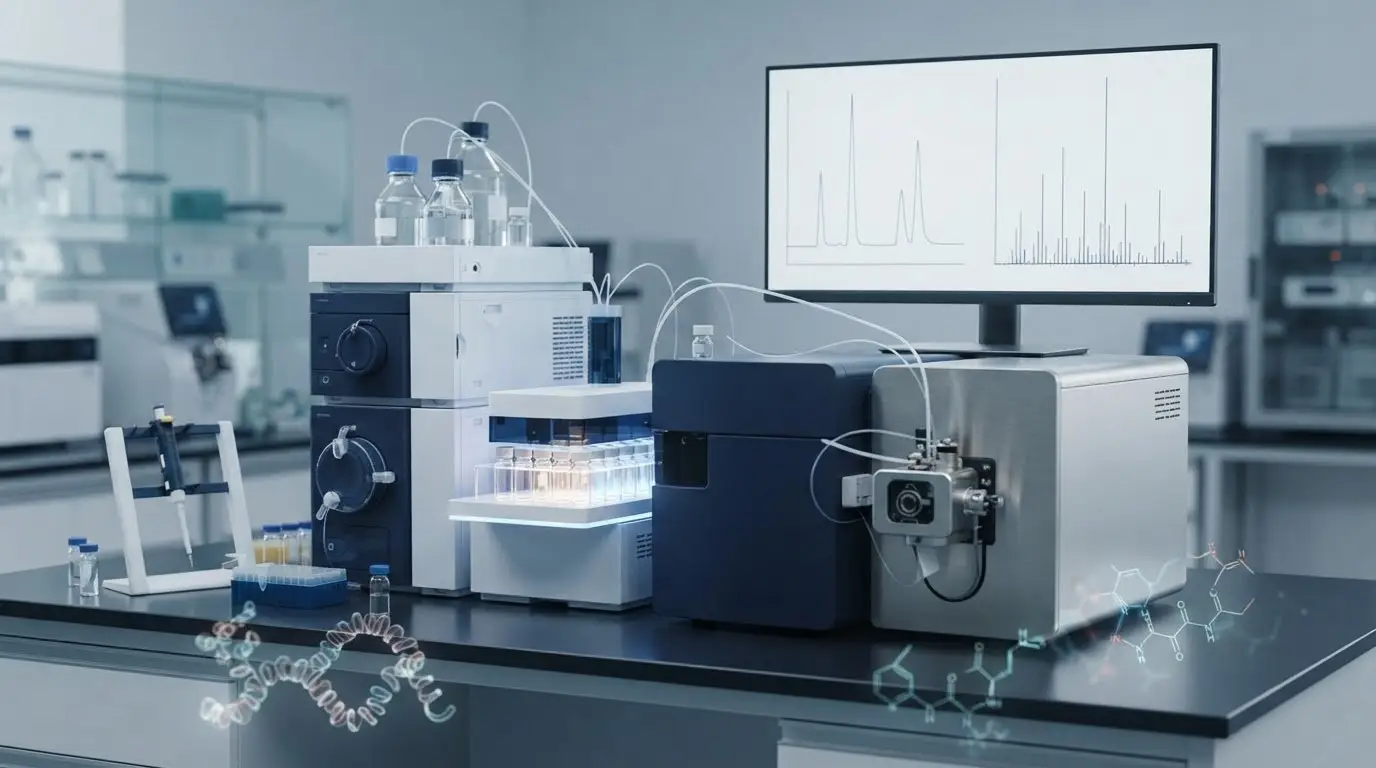
High-Performance Liquid Chromatography (HPLC) is the gold standard for measuring purity in the industry. HPLC is a technique used to separate and quantify components in a mixture. By passing the peptide through a specialized column under high pressure, analysts can identify any impurities or truncated sequences that might skew your data. This level of control is vital because organic impurities can interfere with cellular signaling. The FDA Guidance on Synthetic Peptides emphasizes that controlling these impurities is critical for maintaining the integrity of the compound’s profile in a laboratory setting.
How to Read an HPLC Chromatogram
When reviewing an HPLC report, focus on the primary peak. This peak represents the target peptide, and its area relative to the total area of all peaks determines the purity percentage. A report showing 99% purity means 99% of the detected organic material is the intended compound. Look for a clean, stable baseline with minimal “noise” or secondary spikes. High-grade reports will show a single, sharp vertical line, indicating a highly concentrated and uniform substance that won’t introduce variables into your research.
Analyzing Mass Spectrometry (MS) Reports
While HPLC measures purity, Mass Spectrometry (MS) confirms identity. This process generates a molecular fingerprint by measuring the mass-to-charge ratio of the peptide. Researchers must compare the observed mass in the report to the theoretical molecular weight of the sequence. Any significant deviation suggests a synthesis error or the presence of a different compound entirely. For a deeper look at this process, you can review our guide on mass spectrometry peptide testing. It’s essential that the peak clarity in these results is high, as blurred or multiple peaks can indicate degradation.
Traceability is the final link in the chain. At solaracompounds.com, we provide batch-specific COAs for every lot, including compounds like SOL-3RT and BPC-157. This ensures your lab work is backed by empirical proof. Please remember that all products are for laboratory research only and are not for human or animal consumption. If you’re ready to secure high-purity materials for your next study, you can shop research peptides with confidence in their documentation.
Advanced Quality Metrics: Lyophilization and Vacuum Sealing
Chemical purity is only one half of the validation equation. The physical state of the compound determines its shelf-life and reactivity during the experiment. For validated research peptides, the finishing process is just as critical as the synthesis. Solara Compounds ensures every lot is finished under stringent conditions to prevent degradation before the product reaches your laboratory. All materials are for laboratory research only and are not for human or animal consumption. Maintaining structural integrity isn’t just about the sequence; it’s about how that sequence is preserved.
The Science of Sterile Lyophilization
Lyophilization, or freeze-drying, is a dehydration process that involves freezing the peptide and then reducing the surrounding pressure to allow the frozen water to sublimate directly from the solid phase to the gas phase. This method preserves the delicate amino acid chains and maintains the structural integrity of the compound. According to the EMA peptide manufacturing guidelines, characterization and analytical control during this stage are vital for ensuring stability. Finishing these lyophilized peptides in ISO 7 cleanrooms prevents environmental contaminants from entering the vial, ensuring the powder remains sterile and ready for reconstitution.
Stability and Handling for Research
Peptides are inherently hygroscopic, meaning they readily absorb moisture from the atmosphere. Vacuum sealing is the most effective defense against this moisture. By removing oxygen and humidity from the vial, the manufacturer creates an inert environment that protects the peptide from atmospheric degradation. This is especially important for sensitive compounds like BPC-157 and SOL-3RT, which require precise environmental controls to remain viable. When a vial is vacuum-sealed, the risk of hydrolysis, a chemical reaction where water breaks down the peptide bonds, is significantly reduced.
Proper storage and handling are the final steps in the procurement checklist. Researchers should store lyophilized powders in a dedicated laboratory freezer at -20°C for short-term use or -80°C for long-term preservation. Repeated freeze-thaw cycles must be avoided as they cause mechanical stress on the peptide structure. It’s also vital to allow vials to reach room temperature before opening to prevent condensation from forming inside. By maintaining these standards and reviewing lot-specific stability data for validated research peptides at solaracompounds.com, lab buyers can ensure their compounds remain viable for the duration of their studies.
Procurement Strategy for US-Based Research Institutions
Selecting a supplier is a critical decision for any principal investigator or laboratory manager. For US-based institutions, domestic sourcing isn’t just about speed; it’s about maintaining a transparent chain of custody. Validated research peptides require rigorous oversight from the moment of synthesis until they are placed in your laboratory freezer. Solara Compounds provides this transparency by shipping directly from within the United States, eliminating the variables associated with international transit. It’s vital to remember that all products, including SOL-2TZ and TB-500, are for laboratory research only. They are not medicine, not supplements, and are not for human or animal consumption.
Domestic Sourcing and Shipping Logistics
International shipments often face unpredictable customs delays and extreme temperature fluctuations. These variables can compromise the structural integrity of lyophilized powders before they even reach your facility. By choosing a US based peptide supplier, researchers in major hubs like Boston, San Diego, and Raleigh ensure their materials arrive within days. This reliability is essential for maintaining strict experimental timelines and avoiding the degradation risks associated with long-haul transit. Solara Compounds utilizes specialized logistics to minimize environmental stress, ensuring that the batch-specific data provided in our COAs remains accurate upon arrival at your bench.
Institutional Procurement and Bulk Agreements
Large-scale studies and multi-phase laboratory projects require a stable, predictable supply chain. Tiered pricing and bulk agreements allow institutions to manage research budgets while securing consistent lots. When evaluating wholesale research peptides USA options, lab buyers must prioritize lot-number traceability. This ensures that every vial in a large order comes from the same validated batch, which is critical for experimental reproducibility. Solara Compounds utilizes Kovera Labs for independent third-party testing, providing the empirical proof needed for grant proposals and institutional documentation. This documentation-first approach allows researchers to cite their material sources with confidence in peer-reviewed publications.
Establishing a repeatable procurement protocol reduces the risk of experimental failure due to chemical variability. By focusing on domestic reliability and third-party verification, your lab can maintain the highest standards of scientific rigor. Orders over $200 qualify for free shipping, making it easier to maintain a steady inventory for long-term studies. You can shop research peptides at solaracompounds.com to secure validated materials for your next institutional project.
The Solara Standard: Validated Compounds for Modern Research
The Solara Standard represents a shift from marketing-led supply chains toward a documentation-first model. We understand that the precision of your results depends on the precision of our chemistry. Procuring validated research peptides requires a rigorous approach to data, and every compound in our curated catalog, from GHK-Cu and TB-500 to NAD+, undergoes the same high-level validation protocols. By prioritizing empirical data over generic claims, we act as a reliable partner in your long-term research success. Please remember that all Solara Compounds products are for laboratory research only. They are not medicine, not supplements, and are not for people or animals.
We maintain a strict HPLC purity minimum of >98% for every batch. This commitment ensures that your in-vitro models remain free from the variables introduced by synthesis byproducts or residual solvents. Fast US shipping ensures your materials arrive without the environmental stressors often found in international transit. Orders over $200 qualify for free shipping, allowing lab managers to maintain a consistent inventory of high-quality compounds without excessive logistical overhead.
Transparency Through Batch-Specific COAs
Verification is only useful if it’s accessible. Our lot-tracking system at solaracompounds.com/coa/ allows researchers to download the exact HPLC and MS reports for the vials on their bench. This level of transparency is a core part of providing validated research peptides to the scientific community. By matching the lot number on your vial to the report on our website, you establish a verifiable audit trail for your institutional documentation. For a deeper look at how to use these documents to protect your data, you can review our guide on batch specific COA peptides.
Supporting the Scientific Community
Precision research requires more than just high-purity materials; it requires reliable technical support. Our team is available to assist with inquiries regarding batch specifications or procurement logistics for your laboratory. You can reach our support desk at support@solaracompounds.com or call us directly at 1 (877) 388-9178, Monday–Friday, from 8 AM to 5 PM Eastern. Whether your work involves sourcing SOL-3RT for metabolic studies or SOL-2TZ for signaling research, we are here to ensure your procurement process is seamless. You can shop research peptides at solaracompounds.com to secure materials that meet the highest standards of laboratory validation.
Securing Data Integrity Through Rigorous Procurement
The transition toward a documentation-first procurement model is the most effective way to ensure experimental reproducibility in 2026. By prioritizing validated research peptides that feature batch-specific COAs and independent third-party testing through Kovera Labs, you eliminate the chemical variables that often lead to project failure. It’s essential to remember that all materials from Solara Compounds are for laboratory research only and are not for human or animal consumption. They are not medicine, not supplements, and are not for people.
Establishing a repeatable verification protocol allows your team to focus on results rather than troubleshooting inconsistent materials. High-purity compounds with a minimum of >98% HPLC purity provide the stable baseline required for sensitive in-vitro modeling. At solaracompounds.com, we provide the empirical proof you need to cite your sources with confidence in any grant proposal or institutional documentation. With fast domestic shipping and free shipping on orders over $200, maintaining a reliable supply of research-grade materials has never been more accessible.
View the current research catalog at solaracompounds.com
We look forward to supporting your next scientific breakthrough with the precision and reliability your research demands.
Frequently Asked Questions
What are validated research peptides?
Validated research peptides are chemical compounds whose identity and purity have been empirically confirmed through laboratory analysis for a specific production lot. Validation ensures that the material matches its theoretical molecular weight and meets strict purity benchmarks, typically >98%. These compounds are intended solely for laboratory research and are not for human or animal consumption. They serve as reliable tools for investigators in hubs like Boston and San Diego who require high-purity materials for metabolic or tissue-signaling models.
How do I verify the purity of a peptide batch?
To verify the purity of a peptide batch, researchers must review the lot-specific Certificate of Analysis (COA). This document provides a High-Performance Liquid Chromatography (HPLC) chromatogram, which separates the target compound from any synthesis byproducts. You should identify the primary peak and calculate its area relative to the total area of all detected peaks. Solara Compounds provides these reports for every batch, including SOL-3RT and BPC-157, at solaracompounds.com/coa/ to ensure transparency for laboratory use.
Why is HPLC testing important for research peptides?
HPLC testing is the gold standard for measuring purity because it separates and quantifies each component within a mixture. In a laboratory setting, even minor impurities can trigger unintended cellular pathways or skew experimental data. By using HPLC, suppliers confirm that validated research peptides meet the necessary thresholds for precision work. This process allows researchers in cities like Raleigh and Austin to maintain the highest levels of scientific rigor in their mitochondrial or cellular models.
Can I use these peptides for human or clinical applications?
No, these peptides are strictly for Research Use Only (RUO) and are not for human or animal consumption. They are not manufactured as medicines, dietary supplements, or diagnostic tools. It’s a violation of laboratory standards to use these compounds for clinical applications or personal use. Solara Compounds is a specialized laboratory supplier, not a pharmacy or medical provider. All products are intended solely for in-vitro, biochemical, and controlled laboratory work conducted by qualified scientific professionals.
What is the role of mass spectrometry in peptide validation?
Mass spectrometry (MS) serves as the primary method for confirming the identity of a peptide by measuring its precise molecular weight. While HPLC measures purity, MS generates a chemical fingerprint that must match the theoretical mass of the intended amino acid sequence. This step is critical to ensure that no synthesis errors occurred during production. Researchers rely on this data to verify that compounds like SOL-2TZ and TB-500 are structurally correct before beginning sensitive experiments.
How should validated peptides be stored in a lab?
Validated peptides should be stored as lyophilized powders in a dedicated laboratory freezer to maintain their structural integrity. For short-term use, -20°C is generally sufficient, while long-term preservation often requires -80°C. Vials must remain vacuum-sealed to prevent moisture absorption, which can lead to hydrolysis. It’s also important to allow vials to reach room temperature before opening. This practice prevents condensation from forming inside the vial, which could degrade the compound during reconstitution for experimental use.
Does Solara Compounds provide batch-specific COAs?
Yes, Solara Compounds provides batch-specific Certificates of Analysis (COAs) for every lot in our catalog. We utilize a documentation-first approach that links each physical vial to its specific HPLC and MS laboratory reports. Researchers can access these reports by visiting solaracompounds.com/coa/ and searching for their unique lot number. This system ensures that investigators in Seattle, Chicago, and Philadelphia have the empirical proof required for institutional documentation and grant proposals for their laboratory research.
Where can I find reliable research peptide vendors in the US?
Reliable research peptide vendors are typically US-based suppliers that offer transparent third-party testing and lot-number traceability. Solara Compounds operates out of Florida and provides secure shipping across the United States, serving major research hubs from New York to Houston. We utilize Kovera Labs for independent verification of our compounds. By choosing a domestic supplier, lab buyers reduce the risks of transit-related degradation and ensure their validated research peptides arrive with the documentation necessary for modern scientific research.