Research Articles
Batch-Specific COA Peptides: A Researcher’s Guide to Quality Verification

A generic Certificate of Analysis is often little more than a placeholder that fails to reflect the actual chemical profile of the material in your hands. For rigorous laboratory work, relying on outdated or representative data introduces unacceptable variables that can jeopardize months of data collection. Finding a supplier that provides batch specific COA peptides is not just a preference for researchers in hubs like San Diego or Boston; it’s a fundamental requirement for maintaining experimental integrity. At Solara Compounds, we recognize that the gap between a representative report and a lot-matched verification is where research risk lives.
You likely already know that even minor impurities can alter the results of your in-vitro assays. It’s frustrating to receive a vial only to find the documentation doesn’t match the current lot number. This guide will provide a reliable framework for interpreting HPLC and Mass Spectrometry data to ensure every compound, from BPC-157 to SOL-2TZ, meets a minimum 98% purity threshold. We’ll show you how to verify your specific batch at solaracompounds.com so you can proceed with confidence. All products discussed are for laboratory research only and are not for human or animal consumption.
Key Takeaways
- Understand the critical difference between generic reports and batch specific COA peptides to ensure every vial matches its analytical data.
- Learn how to interpret HPLC and Mass Spectrometry data to verify a minimum 98% purity and correct molecular identity for laboratory use.
- Discover a simple two-step process to authenticate lot numbers and access third-party verification reports at solaracompounds.com.
- Identify the risks associated with representative documentation and why lot-matched traceability is essential for repeatable scientific results.
- Establish a reliable quality verification framework for your laboratory research involving compounds like SOL-3RT, SOL-2TZ, and TB-500.
Understanding Batch-Specific COAs in Peptide Research
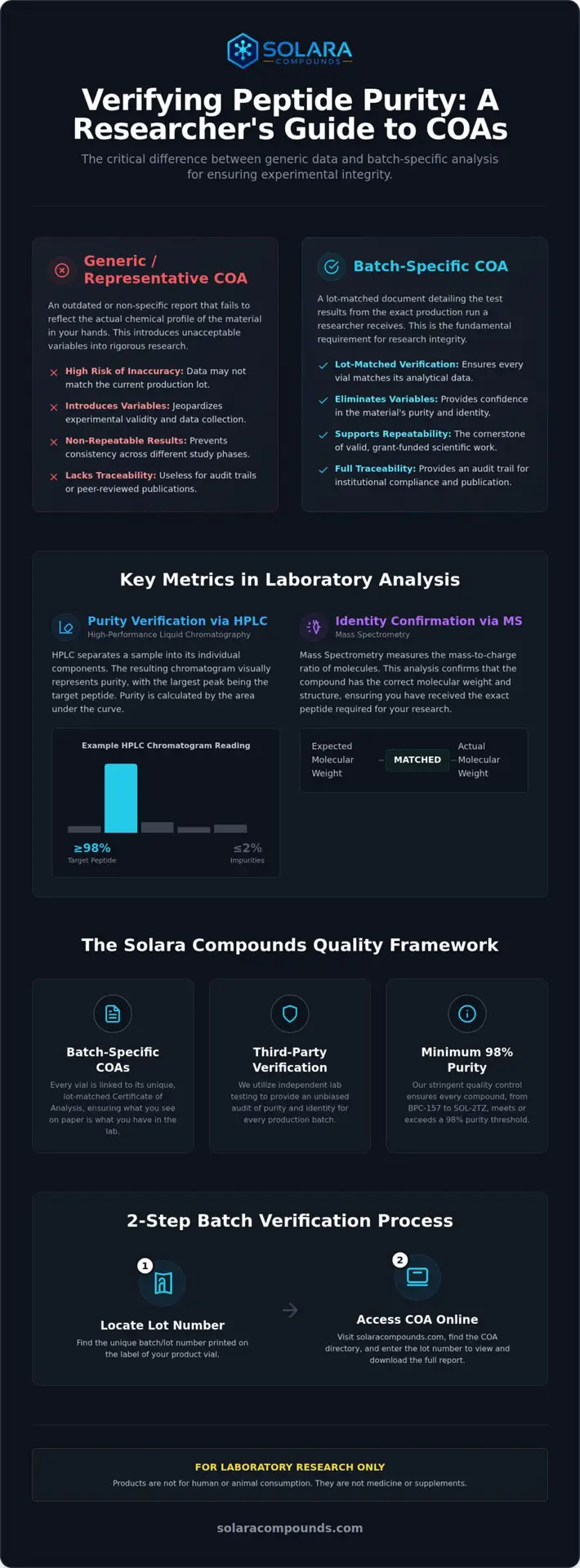
A Certificate of Analysis (COA) serves as the primary verification document for chemical identity and purity in the laboratory environment. In the context of peptide procurement, a batch-specific report is a lot-matched document that details the results of testing performed on the exact production run a researcher receives. Generic documentation often fails the rigorous standards of modern laboratory research. It provides a generalized snapshot that may not account for subtle variations in synthesis or purification between different manufacturing cycles. By prioritizing batch specific COA peptides, lab buyers can eliminate extraneous variables during in vitro and biochemical modeling. All peptides from Solara Compounds are for laboratory research only. They are not medicine, not supplements, and are not for human or animal consumption.
The Difference Between Catalog and Batch-Specific Data
Catalog data represents a theoretical “best-case” purity for a compound. It’s an idealized target rather than a measured result of a physical product. Conversely, batch-specific data reflects the actual measured metrics of the vial present in the laboratory. Researchers in major innovation hubs like San Diego and Boston require lot-matched transparency to ensure their materials meet exact specifications for structural integrity. Relying on theory is a significant risk in complex research. Relying on data is the only way to ensure precision. When a supplier provides a generic report, they’re asking the researcher to assume the current lot matches a previous success. Solara Compounds removes this assumption by providing data for the specific lot in your hand.
Why Documentation Integrity Matters for Grant-Funded Research
Repeatability is the cornerstone of scientific advancement. Ensuring consistency in experimental results across different study phases requires precise documentation that stands up to scrutiny. Using independent lab testing for peptides supports institutional compliance by providing an unbiased third-party audit of the material. Many “generic” reports found online lack unique lot identifiers, specific test dates, or signatures from the analyzing chemist. These omissions make the documents useless for audit trails or peer-reviewed publication data.
Solara Compounds maintains a transparent batch COA directory at solaracompounds.com to ensure every researcher has immediate access to the data they need. This documentation-first approach allows for the verification of products like BPC-157, TB-500, and SOL-3RT before they’re introduced into a research workflow. It’s about more than just a number on a page; it’s about the intersection of material science and real-world utility. High-grade engineering requires high-grade verification, and batch-level traceability is the only reliable bridge between a supplier’s claim and a laboratory’s reality.
Key Metrics in Laboratory Analysis: HPLC Purity and MS Identity
Analytical chemistry provides the empirical evidence required to validate a compound’s quality for laboratory use. High-Performance Liquid Chromatography (HPLC) serves as the primary tool for measuring chemical purity percentages. It works by separating a sample into its individual components as they pass through a pressurized column. For researchers, the goal is a singular, dominant peak on the resulting graph. Solara Compounds prioritizes the distribution of batch specific COA peptides to ensure that the material received matches the specific analytical results of its production lot. All compounds are for laboratory research only and are not intended for human consumption, medicine, or supplements.
Interpreting the HPLC Chromatogram
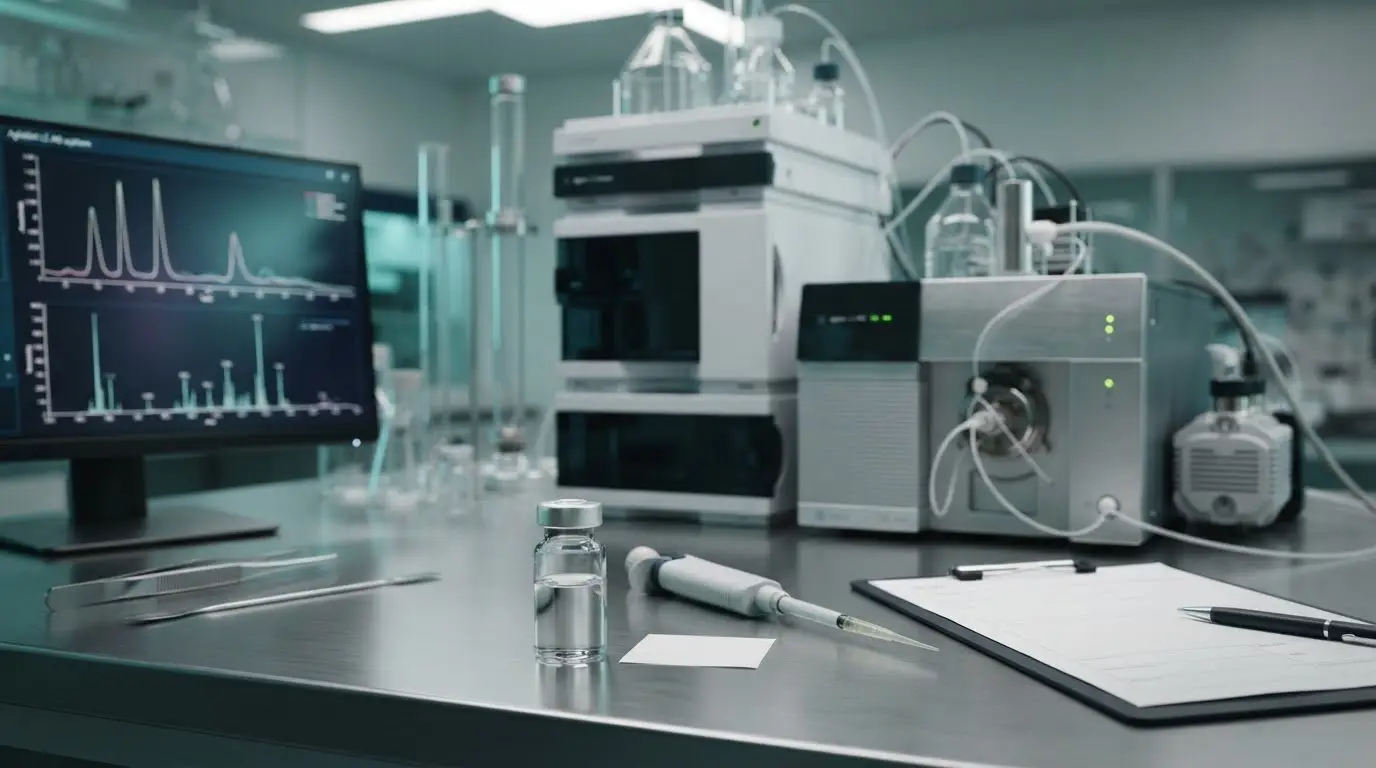
A chromatogram is a visual representation of the separation process. The largest peak represents the target peptide. Any smaller peaks appearing along the baseline indicate secondary impurities or residual solvents. Purity is calculated using the Area Under the Curve (AUC). If the primary peak accounts for 99% of the total area, the purity is recorded as 99%. A single-sentence summary on a supplier website is insufficient for rigorous work. You need the raw data graph to verify the baseline is clean and the peak is symmetrical. This level of detail aligns with the principles found in the FDA Good Manufacturing Practice Guidance regarding material traceability and authentic analysis.
Molecular Confirmation via LC-MS and MALDI-TOF
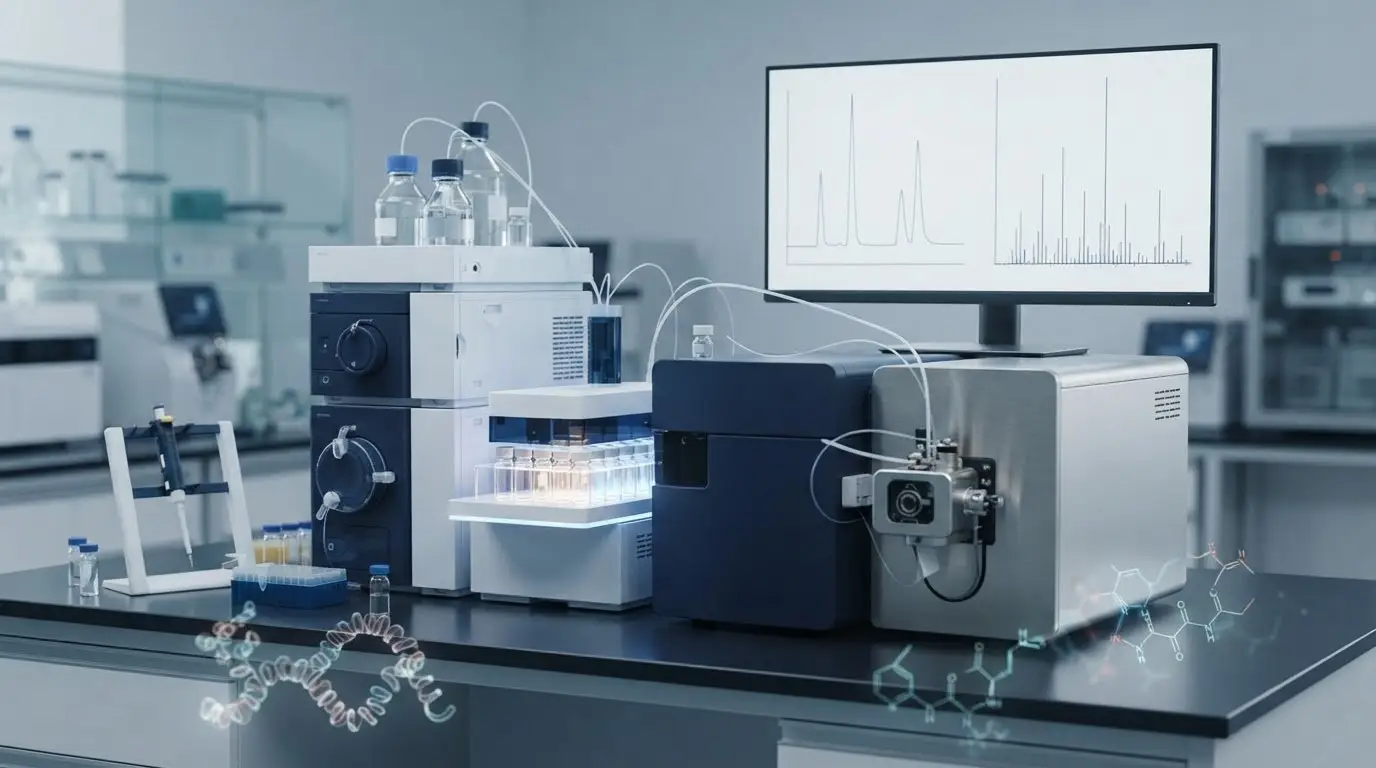
High purity alone doesn’t prove you have the correct substance. Mass Spectrometry (MS) confirms the chemical identity by measuring the molecular weight of the ions. Technologies like MALDI-TOF or LC-MS compare the measured mass against the theoretical weight of the peptide sequence. If the measured mass aligns with the theoretical value, the identity is confirmed. Without this step, a researcher might have a very pure vial of the wrong material. For a deeper technical dive, you can review our guide on mass spectrometry peptide testing.
While the industry standard often rests at 98%, Solara Compounds targets ≥99% HPLC purity for high-demand research materials like SOL-3RT and SOL-2TZ. This commitment to precision ensures that your lab work isn’t compromised by unknown contaminants or inconsistent synthesis. You can see the current research catalog at solaracompounds.com to review the specific analytical targets for our full range of compounds. Maintaining this standard protects the integrity of your data and ensures repeatability across different study phases.
Batch-Specific vs. Representative COAs: Identifying Documentation Gaps
The distinction between a representative report and a batch-specific one is the difference between an educated guess and empirical certainty. Many suppliers use “representative” COAs, which are often months or years old, to describe a current product line. This practice assumes that synthesis conditions remain identical across every production cycle. Even minor fluctuations in reagent quality or temperature can impact the final result. Researchers should insist on batch specific COA peptides to ensure the data on the screen reflects the peptide in the vial. Solara Compounds assigns a unique lot number to every batch for full traceability. This ensures that every compound, including SOL-3RT and BPC-157, is tied to its specific analytical history. All products are for Research Use Only and not for human or animal consumption.
Batch matching creates a secure chain of custody. It connects the physical vial to digital verification through standard identifiers like lot numbers and production dates. This methodology mirrors the rigorous standards discussed in the FDA Guide to Pharmaceutical Quality Control Labs. While Solara Compounds operates in the research space, adopting these rigorous documentation standards is essential for maintaining a high-grade laboratory environment. It’s the only way to guarantee that the structural integrity of the material hasn’t shifted between manufacturing runs.
Red Flags in Peptide Documentation
Identifying documentation gaps is a critical skill for lab buyers. One major red flag is a report with redacted laboratory names or missing signatures from the lead chemist. If a supplier hides the origin of their testing, it’s impossible to verify the data’s authenticity. Discrepancies between the product name on the vial and the report also signal a breakdown in quality control. A reliable supplier provides a direct verification path to the third-party analytical lab without obfuscation. If you can’t verify the source, you can’t verify the purity.
Comparison Framework for Lab Buyers
When evaluating a supplier, use a structured framework to assess their documentation. First, determine if the report is truly third-party, such as those provided by Kovera Labs, or merely an in-house summary. In-house reports lack the objective oversight of an independent auditor. Second, confirm the report includes both HPLC and MS data. One without the other provides an incomplete picture of the material science. Finally, check if the report can be verified via a public ledger or direct contact with the lab. Solara Compounds makes this easy by hosting a batch COA directory at solaracompounds.com. This transparency ensures that your research is built on a foundation of repeatable, verified data. It builds a logical argument for the brand’s quality through consistent, lot-matched evidence.
How to Authenticate a Peptide Analysis Report
Authenticating the documentation for your research materials is a straightforward process that ensures the integrity of your experimental data. At Solara Compounds, we prioritize transparency by making our batch specific COA peptides easily verifiable through a structured lot-tracking system. This methodology allows researchers to confirm that the chemical properties of their specific vial match the independent laboratory results. By providing access to batch specific COA peptides, we eliminate the uncertainty often associated with generic, representative documentation. All products are for laboratory research only and are not for human or animal consumption.
The authentication process follows four essential steps:
- Step 1: Locate the unique lot number printed directly on your Solara Compounds vial label.
- Step 2: Access our batch COA directory at solaracompounds.com to find the corresponding report.
- Step 3: Cross-reference the HPLC purity and Mass Spectrometry identity data with your specific laboratory requirements.
- Step 4: If additional verification is required, you may contact the third-party laboratory listed on the report to confirm the authenticity of the findings.
The Role of Independent Third-Party Labs
Solara Compounds utilizes Kovera Labs for unbiased, third-party verification of every production lot. Unlike in-house testing, which can be subject to internal bias, an independent lab provides an objective audit of the material’s purity and identity. Maintaining batch consistency begins long before the testing phase. Our synthesis partners utilize ISO 7 cleanrooms to minimize the risk of environmental contamination. Verifying the credentials of the analytical facility is just as important as the data itself; it ensures the equipment is calibrated and the chemists follow standardized protocols.
Vial-Level Traceability and Storage History
The integrity reported in a COA is preserved through precise post-synthesis processing. Lyophilization, or freeze-drying, removes moisture to stabilize the peptide structure for long-term storage. When combined with vacuum sealing, this process prevents degradation caused by oxidation or humidity. Sterile processing in a controlled environment ensures that no biological contaminants are introduced into the research-grade materials. To maintain the COA-verified purity, lab buyers should store vials in a temperature-controlled environment, typically between -20°C and 4°C depending on the compound’s stability profile. If you’re ready to secure verified materials for your next study, you can shop research peptides at solaracompounds.com to view our full inventory.
Solara Compounds: Batch-Level Traceability and Research Integrity
Solara Compounds operates with a documentation-first philosophy. We don’t just provide chemicals; we provide the analytical proof required for repeatable science. By offering batch specific COA peptides, we ensure that your laboratory procurement process is grounded in empirical data rather than theoretical averages. Our curated catalog includes high-demand research materials such as SOL-3RT, SOL-2TZ, BPC-157, and TB-500. Every production lot undergoes rigorous third-party testing to verify that purity and identity meet our strict internal benchmarks. This commitment to transparency is designed to inspire trust through expertise and quiet competence.
Efficiency in procurement is as vital as the research itself. We provide fast U.S. shipping to major research hubs, including Miami, Houston, and Seattle, ensuring your materials arrive when needed. To support institutional budgets and streamline laboratory procurement, Solara Compounds offers free shipping on orders over $200. This combination of analytical transparency and operational reliability makes us a preferred partner for serious investigators who cannot afford variables in their supply chain. All materials are for laboratory research only and are not for human or animal consumption.
Sourcing Research Peptides with Confidence
Researchers require stable, high-purity lyophilized powders to ensure the integrity of their in vitro models. Solara Compounds supports academic and independent investigators by providing materials that have been vacuum-sealed and protected from environmental degradation. These powders are engineered for stability, allowing for consistent results when reconstituted in a controlled laboratory setting. You can shop research peptides at solaracompounds.com to explore our full inventory of verified compounds. Every product we offer is strictly for laboratory research only; they are not medicine, not supplements, and not for people.
Support and Verification Services
If you have specific questions regarding a lot number or need assistance interpreting a complex chromatogram, our research support team is available to provide technical clarity. You can contact us at support@solaracompounds.com or call 1 (877) 388-9178. We’re available Monday through Friday, from 8 AM to 5 PM Eastern Time. For those currently reviewing specific materials for upcoming studies, you can examine the SOL-3RT 10mg or BPC-157 10mg batch reports directly on our product pages. Our goal is to act as a knowledgeable guide, helping you navigate technical challenges with ease while maintaining the highest standards of research integrity. We prioritize the integrity of the final result over marketing hype, framing our brand as a partner in your long-term scientific success.
Advancing Research with Verified Analytical Data
Maintaining experimental integrity requires a shift from relying on representative reports to insisting on empirical, lot-matched evidence. By utilizing batch specific COA peptides, researchers eliminate the variables that often compromise longitudinal studies. You’ve learned how to interpret HPLC chromatograms for purity and verify molecular identity through mass spectrometry. These technical steps ensure that the material in your vial aligns with the data on your screen. Precision is the only path to repeatable results.
Solara Compounds remains dedicated to this documentation-first approach. We provide third-party testing through Kovera Labs and offer batch-specific COAs for every lot in our inventory. To support your procurement needs, we provide free shipping on orders over $200. Every compound we offer is strictly for laboratory research only and is not for human or animal consumption. It’s our goal to act as a reliable partner in your long-term success by providing materials that meet the highest standards of structural integrity.
View the current research catalog at solaracompounds.com to secure the high-purity materials your next project demands. We look forward to supporting your commitment to scientific excellence with precision and quiet competence.
Frequently Asked Questions
What is a batch-specific COA for peptides?
A batch-specific Certificate of Analysis is a lot-matched document that verifies the chemical properties of a single production run. Unlike generic reports, batch specific COA peptides ensure that the vial in your laboratory matches the analytical data provided by the supplier. This transparency is critical for researchers in hubs like Boston and San Francisco who require precise material science. All compounds from Solara Compounds are for laboratory research only and not for human or animal consumption.
Why is HPLC purity important for laboratory research?
HPLC purity is essential because secondary peaks or impurities can introduce variables into biochemical models. High-Performance Liquid Chromatography measures the percentage of the target compound relative to contaminants. In centers like San Diego and Raleigh, researchers rely on a minimum 98% purity standard to ensure repeatability. Solara Compounds targets ≥99% purity for materials like SOL-2TZ and BPC-157 to maintain the highest standards of research integrity in institutional settings.
How do I verify a Solara Compounds COA with Kovera Labs?
You can verify any Solara Compounds report by accessing our batch directory at solaracompounds.com/coa/. Every report includes a unique lot number that corresponds to the testing performed by Kovera Labs. For researchers in Houston or Seattle requiring additional confirmation, the third-party lab can be contacted directly to validate the authenticity of the chromatogram. This documentation-first approach provides a secure chain of custody for every compound in our curated research catalog.
Does a COA guarantee experimental success in my lab?
No, a COA verifies the purity and identity of the chemical but doesn’t guarantee specific experimental outcomes. Success in a lab depends on experimental design, methodology, and the researcher’s expertise. Our documentation ensures you aren’t working with unknown contaminants that could skew data. All materials, including SOL-3RT and TB-500, are supplied as lyophilized powders for Research Use Only and are not medicine, supplements, or for people.
What is the difference between LC-MS and HPLC?
HPLC measures purity while LC-MS confirms the molecular identity of the compound. HPLC separates components to determine what percentage of the sample is the target peptide. LC-MS (Liquid Chromatography-Mass Spectrometry) measures the molecular weight to ensure the sequence matches the theoretical target. Both tests are required for a complete profile. Researchers in New York and Chicago use this combined data to validate materials before starting complex in-vitro signaling assays.
Can I request a COA before purchasing research peptides?
Yes, Solara Compounds makes all batch documentation publicly available for review before procurement. We believe transparency should precede the purchase to support institutional compliance. Researchers in Austin and Tampa can browse the directory at solaracompounds.com/coa/ to examine HPLC and MS data for our current lots. This allows lab buyers to confirm that a specific batch of CJC-1295 or MOTS-C meets their project’s stringent purity requirements.
Why do some peptides show 99% purity while others show 98%?
Variations in purity percentages often result from the complexity of the peptide sequence or the difficulty of the purification process. While Solara Compounds targets a minimum 98% purity, many of our compounds achieve ≥99% HPLC purity. Longer sequences or those with specific chemical modifications may behave differently during synthesis. Researchers in Los Angeles and Philadelphia should review the specific chromatogram in the COA to understand the nature of any baseline noise.
How long is a batch-specific COA valid for a lyophilized peptide?
The validity of a COA depends on the storage conditions and the stability of the peptide structure. When vacuum-sealed and stored at -20°C, most lyophilized peptides remain stable for 24 to 36 months. However, once a vial is reconstituted, the stability profile changes rapidly. Lab buyers in Seattle and Denver should follow best practices for handling and storage to preserve the integrity reported in the COA. All products are for laboratory research only.