Research Articles
Independent Peptide Lab Testing: Purity & Verification


What if the 99% purity claim on your peptide vial is technically accurate but scientifically meaningless? It’s a sobering reality in the research community where a high purity percentage doesn’t always guarantee that you’re working with the correct molecule. You’ve likely felt the frustration of a failed study or inconsistent results between batches, even when the paperwork looked perfect. You aren’t alone in your skepticism; many researchers find interpreting complex HPLC chromatograms to be a significant barrier to verifying their compounds. Reliable independent lab testing for peptides is the only way to bridge the gap between a supplier’s claim and empirical truth.
We understand that the integrity of your work depends on the precision of your materials. This article provides a clear framework for reading Certificates of Analysis (COAs) and mastering the technical nuances of HPLC and Mass Spectrometry. You’ll learn to distinguish between purity and identity to ensure absolute structural integrity. We’ll examine how to identify suppliers that prioritize transparency, providing you with the tools to ensure your research remains consistent and repeatable. By moving beyond surface-level metrics, you can secure the data-driven confidence necessary for successful laboratory outcomes.
Key Takeaways
- Learn how independent lab testing for peptides serves as a non-negotiable safeguard by providing unbiased, ISO-accredited verification of chemical composition.
- Understand the technical distinction between HPLC for quantitative purity and Mass Spectrometry for qualitative identity to ensure you’re working with the correct molecule.
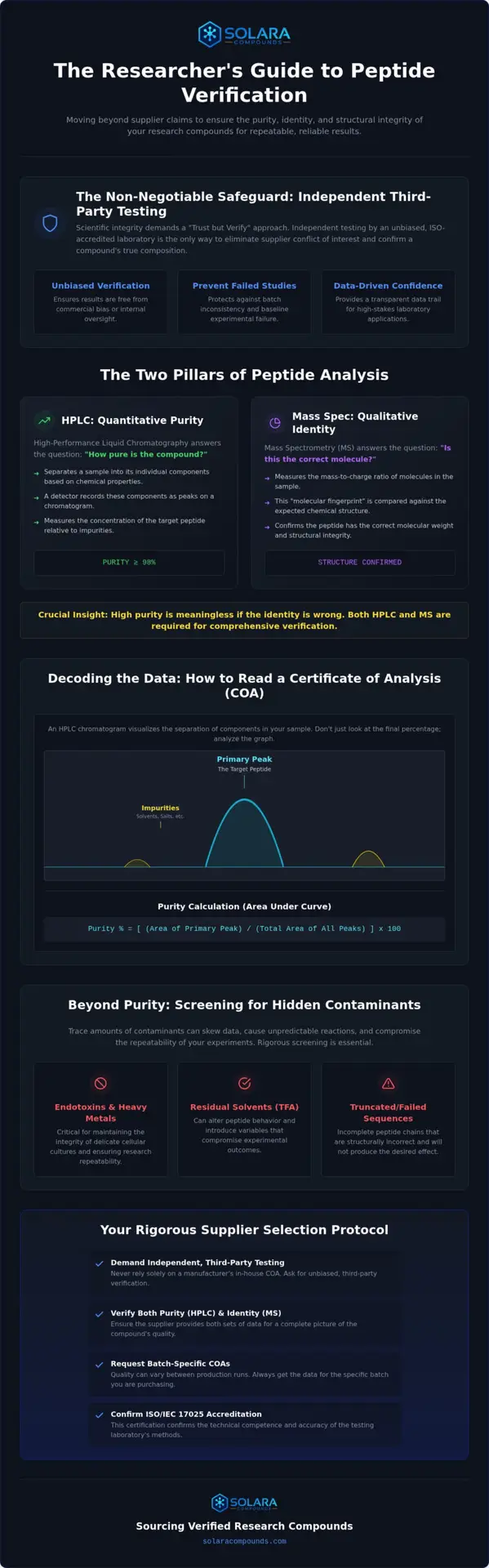
- Master the ability to interpret complex Certificates of Analysis, including how to identify primary peaks and secondary impurities within a chromatogram.
- Discover why screening for endotoxins and heavy metals is essential for maintaining the integrity of your cellular environment and overall research repeatability.
- Establish a rigorous supplier selection process based on batch-specific transparency and a commitment to 100% third-party verification protocols.
Why Independent Third-Party Testing is Critical for Research Peptides
Scientific integrity begins long before the first pipette is drawn. In the specialized field of peptide synthesis, third-party testing refers to the unbiased verification of a compound’s purity and identity by an ISO-accredited laboratory. This process operates entirely separate from the manufacturing entity. It ensures that the results remain free from commercial bias or internal oversight. For modern researchers, independent lab testing for peptides is the primary defense against batch inconsistency and baseline experimental failure. Precision is non-negotiable.
The chemical procurement model follows a strict “Trust but Verify” protocol. Relying solely on a manufacturer’s internal data creates a significant conflict of interest, as the supplier is naturally incentivized to overlook minor deviations to maintain production speed. Independent verification eliminates this risk. It provides a transparent data trail that confirms whether a batch meets the rigorous standards required for high-stakes laboratory applications. Data doesn’t lie. Without this objective oversight, the risk of research failure increases exponentially because you’re essentially flying blind.
The Impact of Impurities on In Vitro Research
Residual solvents, salts, or truncated sequences can fundamentally alter peptide behavior in a laboratory environment. Even trace amounts of contaminants like trifluoroacetic acid (TFA) can skew baseline data or cause unpredictable reactions within a delicate cellular culture. These impurities introduce variables that compromise the repeatability of scientific experiments. This makes it impossible to determine if an outcome was caused by the peptide or a residual contaminant. We define research-grade as a specific metric of both high-purity thresholds and consistent molecular identity across multiple production cycles.
Regulatory Compliance and Laboratory Standards
Not all testing facilities are created equal. High-stakes institutional studies require data from labs holding ISO/IEC 17025 accreditation, which confirms the technical competence and accuracy of their analytical methods. While “in-house” testing might suffice for preliminary screenings, it lacks the rigorous validation necessary for peer-reviewed publication or advanced development. Using High-Performance Liquid Chromatography (HPLC) and other advanced techniques, these labs distinguish between industrial-grade materials and the scientific-grade amino acid chains required for precise in vitro work. This distinction ensures that the compounds you source, such as Retatrutide 10mg or Tirzepatide 10mg, possess the structural integrity required for your specific protocols. Consistent results require consistent materials.
The Gold Standards of Peptide Analysis: HPLC and Mass Spectrometry
Verification requires a dual-pronged analytical approach. High-Performance Liquid Chromatography (HPLC) and Mass Spectrometry (MS) represent the definitive methods for validating research compounds. While HPLC measures the concentration of the target molecule relative to impurities, MS confirms that the molecule itself is correct. Relying on one without the other is a significant technical oversight. Comprehensive independent lab testing for peptides must include both to ensure the material matches the researcher’s requirements. Precision is the foundation of repeatable data.
HPLC: Measuring Peptide Purity Levels
HPLC functions by separating a sample into its individual components. The process involves a mobile phase, which is a solvent containing the peptide, being pumped through a stationary phase, typically a packed column. As the mixture interacts with the column material, different molecules elute at different times based on their specific chemical properties. A detector then records these elutions as peaks on a chromatogram. This separation is the first step in identifying exactly what is contained within a vial.
To calculate quantitative purity, technicians utilize the Area Under the Curve (AUC) method. By comparing the area of the primary peptide peak to the total area of all detected peaks, the lab determines a percentage of purity. For research compounds like Retatrutide or Tirzepatide, a purity threshold of 98% or higher is generally considered the standard for high-fidelity in vitro studies. If the AUC reveals significant secondary peaks, the batch is considered sub-standard for precision research. Researchers investigating tissue repair mechanisms, such as those focused on BPC-157 5mg laboratory use, require this same rigorous purity threshold to ensure their experimental outcomes are attributable to the peptide alone.
Mass Spectrometry: Confirming Molecular Identity
Purity reports are essentially incomplete without identity confirmation. Mass spectrometry peptide testing measures the mass-to-charge ratio of ionized particles to determine the exact molecular weight of the compound. This allows researchers to compare the observed molecular weight against the theoretical weight of the intended peptide sequence. It’s the only way to detect sequence errors or truncated chains that might otherwise appear as “pure” peaks on an HPLC report. Without MS data, you cannot be certain the 99% pure substance in your vial is actually the peptide you ordered.
If the observed mass deviates from the theoretical value, the batch is compromised. This level of scrutiny is why we prioritize batch-specific verification for every compound in our catalog. This technical mapping ensures that the structural integrity of the peptide is preserved from synthesis to the laboratory bench. By confirming both how much of a substance is present and exactly what that substance is, researchers can proceed with the confidence that their baseline variables are controlled and their results are attributable to the peptide alone.
How to Interpret a Peptide Certificate of Analysis (COA)
A Certificate of Analysis (COA) serves as the definitive empirical record for any research compound. It isn’t merely a summary; it’s a data-rich document that bridges the gap between synthesis and application. For researchers conducting independent lab testing for peptides, the COA provides the necessary verification of batch-specific integrity. A valid report must include three foundational elements: a unique lot number, the specific date of analysis, and authorized signatures from the testing facility. If any of these are missing, the document’s validity is fundamentally compromised. Evidence-based research requires absolute transparency.
Reading the HPLC Chromatogram Peaks
The HPLC chromatogram is a visual representation of chemical purity. When you examine the graph, the x-axis represents retention time, which is the duration it takes for a substance to pass through the column. This value is unique to specific compounds under controlled conditions. Any “noise” or irregular fluctuations at the baseline typically indicate chemical instability or the presence of residual solvents. A 99% purity claim must be supported by a single, sharp dominant peak. Secondary peaks, even if small, represent impurities that can introduce unwanted variables into your laboratory environment. Precision in the chromatogram translates to precision in your data.
Verifying the MS Spectra and Identifying Red Flags
Mass Spectrometry data confirms that the substance is exactly what it claims to be. You should look for the “parent peak,” which corresponds to the theoretical molecular weight of the peptide. Ionization patterns around this peak provide additional structural context. If the observed mass-to-charge ratio deviates from the known sequence, the identity is unverified. Be alert for red flags that suggest document tampering or negligence. Blurry graphics, mismatched dates between the COA and the purchase date, or the absence of raw data tables are immediate reasons for concern. Legitimate independent lab testing for peptides should always provide high-resolution, verifiable data. Researchers who want to develop a deeper understanding of how to interpret these reports can consult a dedicated mass spectrometry peptide testing research guide to master the verification process with greater confidence.
Cross-Referencing Batch Numbers with Supplier Data
Batch-specific testing is superior to “representative” testing because it accounts for the inherent variability in synthesis cycles. A representative report only shows what a lab is capable of producing, not what is actually in your specific vial. You can often confirm authenticity through COA lookup tools provided by the testing laboratory. This step is crucial for verifying that the report wasn’t fabricated or recycled from an older batch. For a comprehensive framework on how to evaluate batch specific COA peptides and ensure your documentation matches the exact lot in your laboratory, researchers can consult a dedicated quality verification guide. Proper lyophilized peptide storage is also vital; a report is only valid if the compound has been maintained under stable conditions to prevent degradation. Consistency is the hallmark of professional research, and it begins with a verified batch number.
Beyond Purity: Screening for Contaminants and Structural Integrity
High purity percentages on a report mean little if the remaining 1% contains cytotoxic agents or heavy metals. While HPLC and MS confirm the concentration and identity of the molecule, they don’t always detect the subtle contaminants that can ruin a delicate in vitro environment. Comprehensive independent lab testing for peptides must extend into secondary screening to ensure the compound is free from biological and chemical interference. Protecting the integrity of your cellular assays requires a broader analytical scope. Data accuracy depends on it.
Endotoxin testing is a critical component of this secondary screening process. Endotoxins, specifically lipopolysaccharides, are common byproducts of the manufacturing process that can trigger inflammatory responses in laboratory cultures. These responses introduce uncontrolled variables that skew results and compromise research repeatability. Similarly, heavy metal screening for Lead, Arsenic, and Cadmium is essential. These elements can interfere with enzymatic pathways or cause cellular signaling errors, leading to baseline data that is essentially unusable for high-fidelity scientific work. Precision is as much about what is absent as what is present.
Residual Solvent and Salt Analysis
Residual salts like Trifluoroacetic acid (TFA) are frequently used during the peptide purification stage. While necessary for the process, excessive TFA levels can significantly lower the pH of a reconstituted solution. This acidity can damage sensitive biological systems or alter the peptide’s expected behavior during reconstitution. Moisture content, often referred to as water weight, must also be strictly monitored. If a lyophilized powder has high moisture levels, the recorded mass of the peptide is artificially inflated. This means a 10mg vial might actually contain less active compound than the researcher intends to use. High-grade laboratory compounds must maintain residual solvent levels within strict parts-per-million (ppm) limits to ensure dosing accuracy.
Stability Testing and Lyophilization Quality
Lyophilization, or freeze-drying, is the gold standard for preserving the structural integrity of peptides. A high-quality lyophilized “cake” should be uniform and stable, preventing the molecule from unfolding or degrading. Improper handling during shipping can degrade even the purest batches if the lyophilization process was subpar or if temperature controls failed. To maintain COA-verified purity, labs should implement best practices for storage, typically maintaining compounds at -20°C or -80°C. To ensure your protocols aren’t compromised by these invisible variables, you can source verified compounds that have undergone rigorous multi-stage contaminant screening. Consistency in storage and sourcing is the only way to ensure long-term laboratory success.
Sourcing Verified Research Compounds: The Solara Compounds Protocol
Solara Compounds views independent lab testing for peptides as a foundational requirement rather than an optional secondary check. Every batch in our inventory undergoes a rigorous verification cycle before it’s released for distribution. This protocol eliminates the ambiguity often found in the research chemical market. We don’t rely on “representative” samples or outdated reports from previous synthesis runs. Instead, we mandate a unique, lot-specific analysis for every single production cycle. This commitment ensures that institutional researchers receive materials that align exactly with their experimental parameters. Transparency isn’t a marketing slogan; it’s a technical standard.
Our approach to transparency is designed to meet the needs of high-stakes laboratory environments. We provide comprehensive HPLC and MS data for our core offerings, including Retatrutide 10mg and GHK-Cu 50mg for research. By making these Certificates of Analysis (COAs) easily accessible, we remove the burden of verification from the researcher. This allows you to focus on your experimental objectives with the assurance that your materials have already been vetted by ISO-accredited professionals. We act as a bridge between complex material science and your practical laboratory application.
Our Batch-Specific Verification Process
The journey of a Solara compound begins with synthesis and immediately moves to an independent, ISO-accredited US laboratory. We specifically partner with facilities that demonstrate technical excellence in High-Performance Liquid Chromatography and Mass Spectrometry. Our standards are absolute. We reject any batch that fails to meet a minimum 98% purity threshold as determined by the Area Under the Curve (AUC) method. By providing the raw data tables alongside the visual chromatograms, we give researchers the documentation required for peer-review standards. Whether your work involves GHK-Cu 50mg for research or other specialized sequences, the data is specific to the vial in your laboratory. We don’t compromise on precision.
Supporting the US Research Community
Precision logistics are just as vital as chemical purity. We’ve optimized our national shipping and secure handling protocols to protect the structural integrity of sensitive research materials during transit. For universities and scientific institutions, we offer specialized bulk procurement protocols that maintain the same level of batch-specific transparency across larger orders. This ensures that large-scale studies remain consistent from the first vial to the last. Our goal is to act as a supportive partner in long-term scientific success. You can Review our latest batch-specific COAs and research catalog at Solara Compounds to verify the integrity of our current inventory. Reliability isn’t claimed; it’s proven through data.
Advancing Research Through Analytical Precision
Precision in the laboratory starts with the verification of raw materials. We’ve explored how dual-stage analysis using HPLC and Mass Spectrometry serves as the gold standard for confirming both purity and molecular identity. Beyond these metrics, screening for endotoxins and residual solvents ensures that your cellular environments remain stable and free from uncontrolled variables. Mastering the interpretation of these data sets allows you to select suppliers that view independent lab testing for peptides as a non-negotiable requirement rather than a marketing addition.
Solara Compounds supports this level of scientific rigor by providing batch-specific HPLC and MS reports with every order. Our commitment to US-based laboratory verification and secure national shipping ensures that your compounds arrive with their structural integrity intact. By prioritizing these empirical standards, you protect the repeatability of your data and the long-term success of your studies. Browse Third-Party Tested Peptides for Research at Solara Compounds. We look forward to being your partner in achieving precise and verifiable research results.
Frequently Asked Questions
What is the difference between peptide purity and peptide identity?
Purity refers to the quantitative percentage of the target molecule relative to impurities in a sample. Identity confirms that the molecule possesses the specific amino acid sequence intended. While HPLC measures purity, Mass Spectrometry (MS) is required to verify identity. You need both metrics to ensure the compound is correct. A sample could technically be 99% pure but consist of the entirely wrong peptide sequence if identity isn’t confirmed.
Why is HPLC the preferred method for testing peptide purity?
High-Performance Liquid Chromatography (HPLC) is the gold standard because it provides exceptional resolution and sensitivity. It effectively separates the target peptide from truncated sequences, residual solvents, and other synthesis byproducts. By calculating the Area Under the Curve (AUC), labs determine a precise quantitative percentage of the main compound. This level of detail is essential for independent lab testing for peptides in high-stakes institutional research.
Can I rely on a COA that is more than six months old?
Generally, you shouldn’t rely on outdated reports. A Certificate of Analysis is a snapshot of the compound’s state at the specific time of testing. Peptides are sensitive to environmental factors like temperature and moisture. Even if stored correctly, older reports don’t reflect the current stability of the batch. Researchers should always look for batch specific COA peptides with recent, lot-matched testing to ensure the structural integrity of the material hasn’t degraded.
What are the most common impurities found in research-grade peptides?
Common impurities include truncated sequences, which are incomplete chains, and residual solvents like acetonitrile. Other contaminants include salts such as Trifluoroacetic acid (TFA), moisture (water weight), and trace heavy metals. Each of these can interfere with delicate cellular assays. Identifying these through independent lab testing for peptides is vital for maintaining a controlled laboratory environment and ensuring that your experimental results remain repeatable and accurate.
How do I verify if a third-party lab report is authentic?
You can verify authenticity by cross-referencing the report’s lot number on the testing laboratory’s official website or COA lookup tool. Check for authorized signatures, high-resolution chromatograms, and clear dates. If a report looks blurry or lacks raw data tables, it may have been tampered with. Contacting the lab directly to confirm the batch results is the most reliable way to ensure the transparency of your materials.
What does “99% purity” actually mean in a laboratory context?
In a laboratory context, 99% purity means that 99% of the total peptide content detected by HPLC is the target molecule. It doesn’t mean the vial is 99% peptide by weight. Lyophilized powders always contain residual moisture and counter-ions like TFA. The percentage specifically refers to the relative concentration of the intended sequence compared to other peptide-related impurities detected during the chromatographic separation process.
Why do some peptides show multiple peaks on an HPLC report?
Multiple peaks indicate the presence of impurities or degradation products within the sample. The primary peak represents the target peptide, while smaller secondary peaks represent contaminants like truncated sequences or oxidized forms of the molecule. If these secondary peaks are significant, the overall purity percentage drops. A high-quality research compound should show a single, sharp dominant peak with minimal baseline noise to ensure consistent experimental results.
How does TFA content affect my research reconstitution protocol?
Trifluoroacetic acid (TFA) is a residual salt that can lower the pH of your reconstituted solution. If the TFA content is too high, the resulting acidity might damage sensitive cell cultures or alter the peptide’s solubility. Researchers must account for this when choosing buffers for reconstitution. High-grade compounds aim for minimal residual TFA to maintain the stability of the cellular environment and prevent unintended biochemical interference during assays.