Research Articles
Peptides with Certificate of Analysis: The Laboratory Buyer’s Verification Guide (2026)

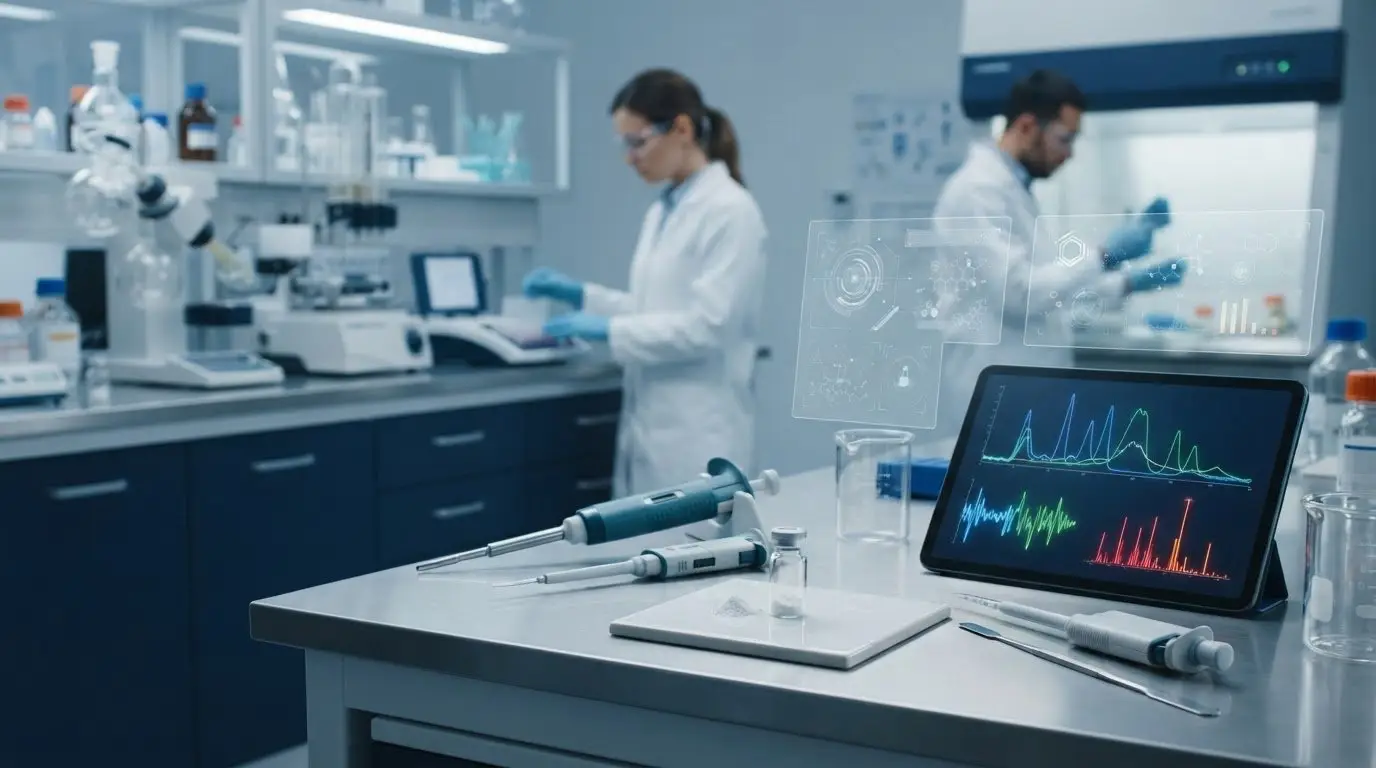
A Certificate of Analysis isn’t administrative paperwork; it’s an active experimental control variable. Every lab buyer knows the frustration of receiving synthetic compounds with unverified purity claims or secondary degradation peaks that quietly invalidate weeks of assay work. Sourcing research peptides with certificate of analysis documentation should guarantee baseline reproducibility, yet generic PDF templates and batch-mismatched reports often obscure what’s actually in the vial. All compounds discussed are strictly for laboratory research only, not for human or animal use.
You shouldn’t have to guess whether vendor testing matches your physical lot. In this guide, you’ll master how to evaluate HPLC chromatograms, cross-reference mass spectrometry data, and confirm third-party verification before sub-grade materials disrupt your bench work. Responsible domestic suppliers like Solara Compounds (solaracompounds.com) treat lot traceability as standard practice, working with independent labs to ensure analytical consistency. Here’s your systematic framework for inspecting every analytical report with confidence.
Key Takeaways
- Learn why sourcing peptides with certificate of analysis records is essential for establishing reliable experimental baselines and avoiding assay disruption.
- Master the technical difference between HPLC peak area integration for purity and mass spectrometry for precise molecular weight confirmation.
- Spot common vendor red flags quickly, such as cropped chromatogram axes, redacted testing headers, and batch-mismatched analytical reports.
- Execute a dependable four-step procurement audit to cross-reference physical vial lot numbers directly against certified testing repositories.
- Understand how independent third-party verification through facilities like Kovera Labs guarantees authentic lot traceability for laboratory research.
What Is a Peptide Certificate of Analysis and Why Does Laboratory Integrity Require It?
Analytical integrity defines successful laboratory experimentation. When procurement teams order synthetic compounds, an authenticated Certificate of Analysis (COA) serves as the primary verification of a batch’s molecular identity and physical purity. Rather than relying on static product descriptions, this document presents empirical testing data generated directly from a specific production lot. Sourcing peptides with certificate of analysis documentation ensures that researchers aren’t introducing uncontrolled chemical variables into delicate test environments. All materials referenced are intended strictly for laboratory research only, never for human or animal application.
The Role of Analytical Documentation in In-Vitro and Preclinical Research
Every synthetic run can yield unintended sequence deletions, truncated chains, or residual protective groups. If unverified reagents enter in-vitro models or receptor-binding assays, these structural artifacts can distort binding affinity measurements and yield false kinetic baselines. The peptide receptor might bind to a truncated chain instead of the intended target sequence, generating conflicting data. In cell-culture work, unreacted cleavage scavengers or residual organic solvents can disrupt cell viability entirely. Verified batch documentation guarantees baseline repeatability across multi-stage protocols, preserving valuable cell lines and safeguarding sensitive analytical instrumentation.
Research Use Only (RUO) Mandates and Supplier Accountability
Clear documentation establishes a verifiable chain of custody for institutional research. Under strict Research Use Only (RUO) standards, laboratory suppliers must document authentic testing to ensure chemical consistency. Unfortunately, arbitrary graphic badges that simply claim “99% pure” fail to meet institutional standards.
- Empirical vs. Promotional Claims: A reliable report displays raw instrument data, showing integration tables rather than unsupported marketing badges.
- Batch-Specific Traceability: Lot numbers printed on vial labels must match the analytical run dates and sample IDs listed on the report.
- Supplier Transparency: Suppliers like Solara Compounds host a transparent COA library directly on solaracompounds.com, allowing researchers to inspect full lot documentation prior to initiating bench work.
Procuring verified reagents protects institutional compliance, eliminates synthetic batch variance, and keeps your laboratory focused on valid experimental outcomes.
Anatomy of an Analytical Report: How to Interpret HPLC and Mass Spectrometry
A complete analytical report bridges raw chemical synthesis and experimental reliability. When reviewing peptides with certificate of analysis paperwork, laboratory buyers must distinguish between purity calculations and molecular identity confirmation. These two attributes are entirely separate. A sample can test at 99% purity on a detector while containing the entirely wrong sequence. Authentic documentation always pairs High-Performance Liquid Chromatography (HPLC) with Mass Spectrometry (MS) to verify both properties simultaneously. All compounds referenced are strictly for laboratory research only, not for human or animal use.
Decoding High-Performance Liquid Chromatography (HPLC) Chromatograms
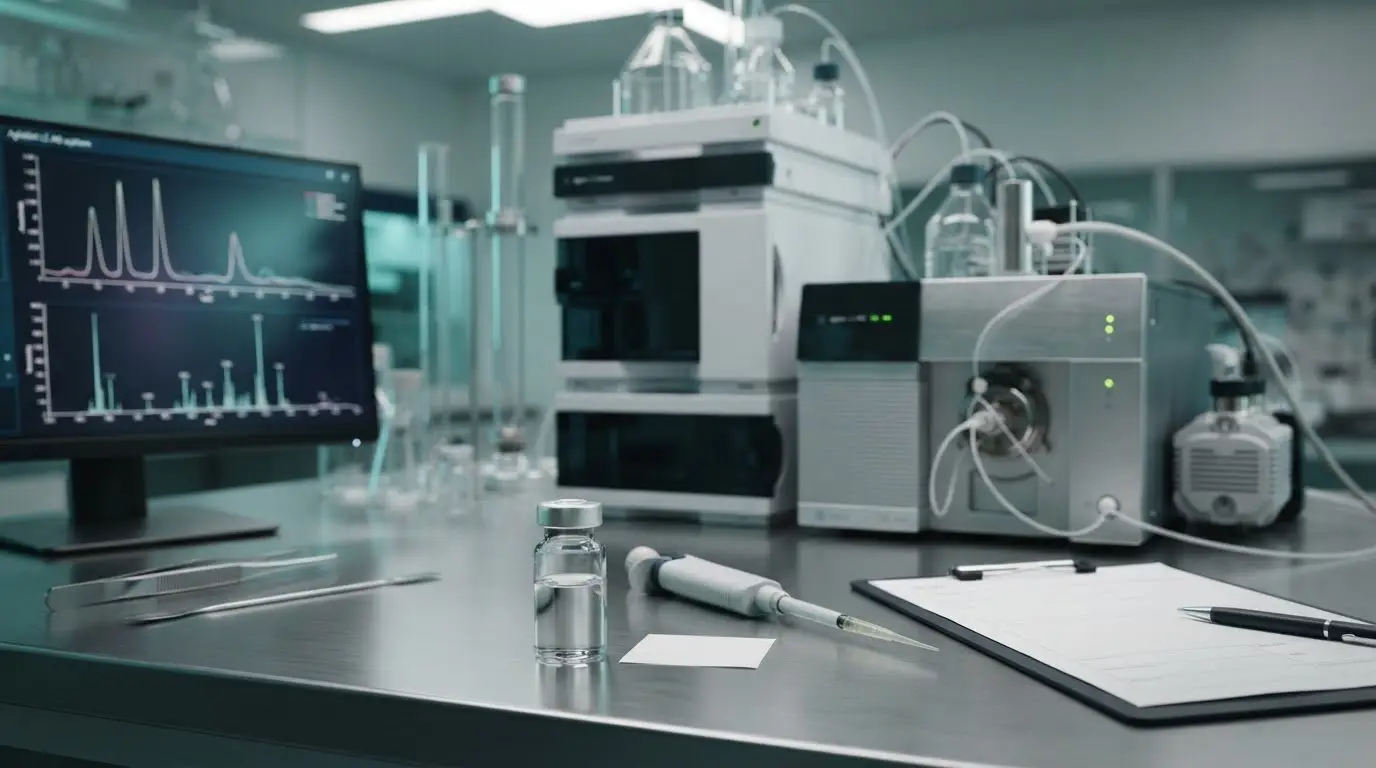
HPLC measures quantitative purity by separating chemical components across a specialized column. As the solvent carries the dissolved peptide through the stationary phase, individual molecules elute at specific retention times based on their polarity and size. The detector registers these materials as peaks on a chromatogram.
- Area Under the Curve: Purity isn’t an arbitrary score. Analysts calculate it by dividing the target compound’s peak area by the total integrated area of all detected peaks.
- Secondary Elution Peaks: Shoulders or minor peaks flanking the main signal reveal impurities, such as deletion sequences or unremoved protecting groups.
- Purity Thresholds: Sensitive in-vitro work demands a minimum of >98% purity, with standard research protocols prioritizing lots tested at ≥99%.
Verifying Molecular Mass via Mass Spectrometry (MS)
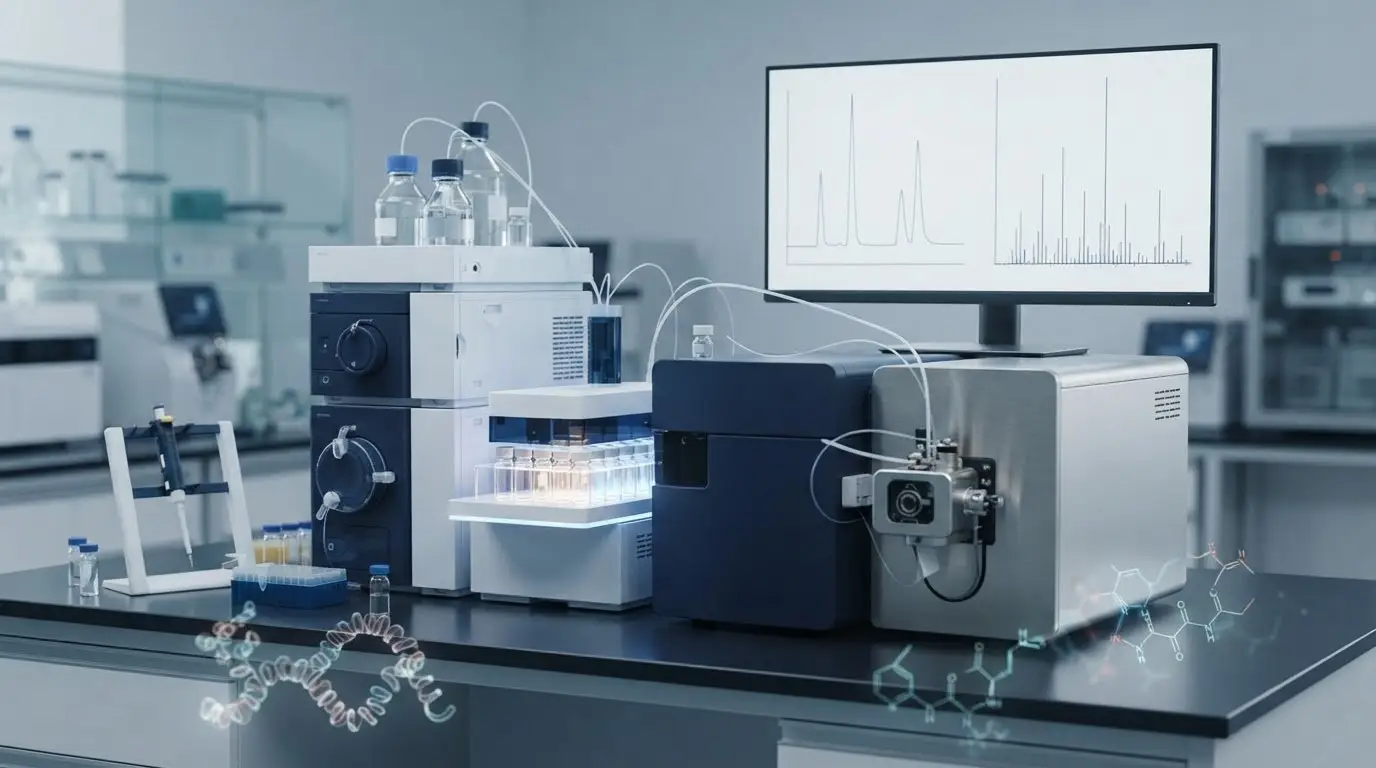
Mass spectrometry verifies chemical identity. While HPLC tracks how clean a sample is, methods like LC-MS or MALDI-TOF confirm what the compound actually is. The instrument ionizes the sample and measures the mass-to-charge ratio (m/z) of the molecules.
Lab buyers should compare the observed molecular weight against the calculated theoretical mass. A precise match confirms the correct sequence length and rules out bulk salt adducts. Aligning analytical standards with frameworks like the FDA Good Manufacturing Practice Guidance ensures that received documentation reflects authentic testing controls rather than unverified internal claims.
Physical and Chemical Secondary Attributes on a Complete COA
Thorough documentation extends past baseline spectra to quantify practical handling characteristics:
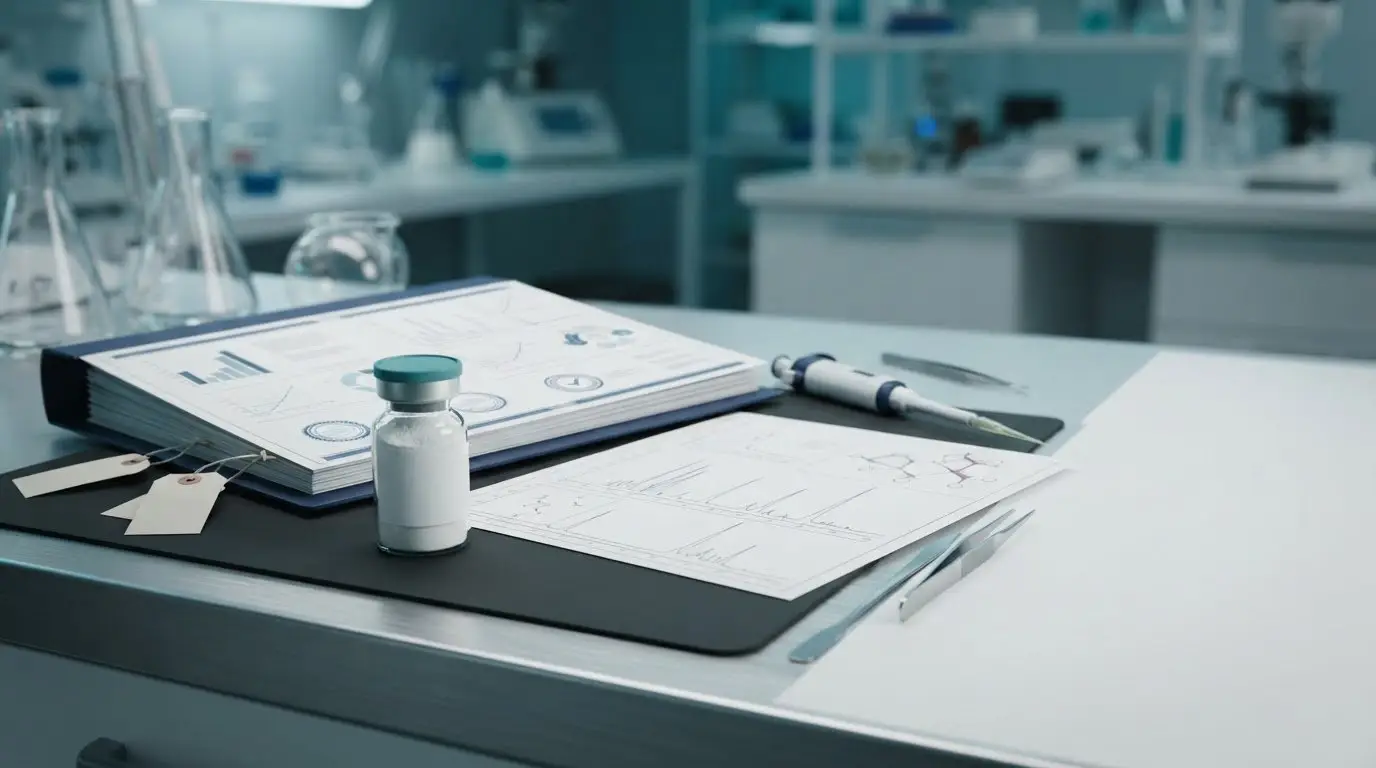
- Lyophilized Appearance: Reports should document a uniform, white-to-off-white cake, indicating proper freeze-drying cycles without moisture collapse.
- Gross Powder vs. Net Peptide: Total lyophilized weight includes counter-ions like acetate or trifluoroacetate. Complete reports clearly distinguish the total cake mass from the actual net peptide content.
Before launching sensitive assays, take time to review the batch COA across available lots to confirm baseline analytical alignment.
Supplier Analytical Red Flags: Identifying Falsified or Inadequate Documentation
Document fraud remains an ongoing challenge in the research chemical sector. When sourcing peptides with certificate of analysis records, lab buyers frequently encounter recycled paperwork, modified chromatograms, or generic documentation applied to distinct production batches. Identifying these discrepancies early prevents compromised materials from entering your workflow. Remember that all chemical compounds discussed are intended strictly for laboratory research only, never for human or clinical consumption.
Critical Indicators of Questionable Analytical Reports
Falsified analytical documents often leave clear visual and contextual markers. Spotting them requires looking beyond the stated purity percentage at the margins of the report:
- Missing or Redacted Testing Facilities: Legitimate testing labs sign their work. If an analytical report conceals the testing laboratory’s name, physical address, or analyst credentials, the data cannot be verified.
- Cropped Chromatographic Axes: Dishonest vendors often crop the horizontal time axis on HPLC printouts. Truncating the run window conceals delayed secondary elution peaks, hiding late-eluting impurities and unreacted synthesis fragments.
- Resolution Artifacts and Mismatched Typography: Look closely at the lot numbers and analytical dates. Disparate font weights, pixelated text blocks, or misaligned headers often reveal where an older report was modified using graphic editing software.
- Lot Disconnects: A document lacks validity if its sample identifier fails to match the physical lot code stamped on the vial.
In-House Testing vs. Independent Third-Party Laboratory Verification
Internal quality control sheets carry an inherent conflict of interest. When a manufacturer handles its own testing, commercial pressures can influence baseline peak integrations and purity grading. True analytical accountability requires third-party blind testing, where an accredited laboratory receives samples identified only by blind lot codes.
To eliminate testing bias, Solara Compounds submits every synthesis batch to Kovera Labs, an independent third-party analytical facility. This protocol guarantees that reported HPLC purity targets of ≥99% and molecular weights confirmed by mass spectrometry reflect objective, uncompromised testing.
| Analytical Parameter | Authentic Third-Party Documentation | Compromised or Internal Paperwork |
|---|---|---|
| Facility Transparency | Unredacted lab name, address, and analyst signature | Obscured headers, white-out redactions, or absent contact data |
| Chromatogram Axes | Full baseline shown with visible time and mAU scales | Cropped axes, flattened baselines, or missing retention scales |
| Lot Traceability | Direct match between physical vial and tested sample ID | Static, legacy batch report recycled across different shipments |
Evaluating these parameters protects research validity before reagents reach the bench.
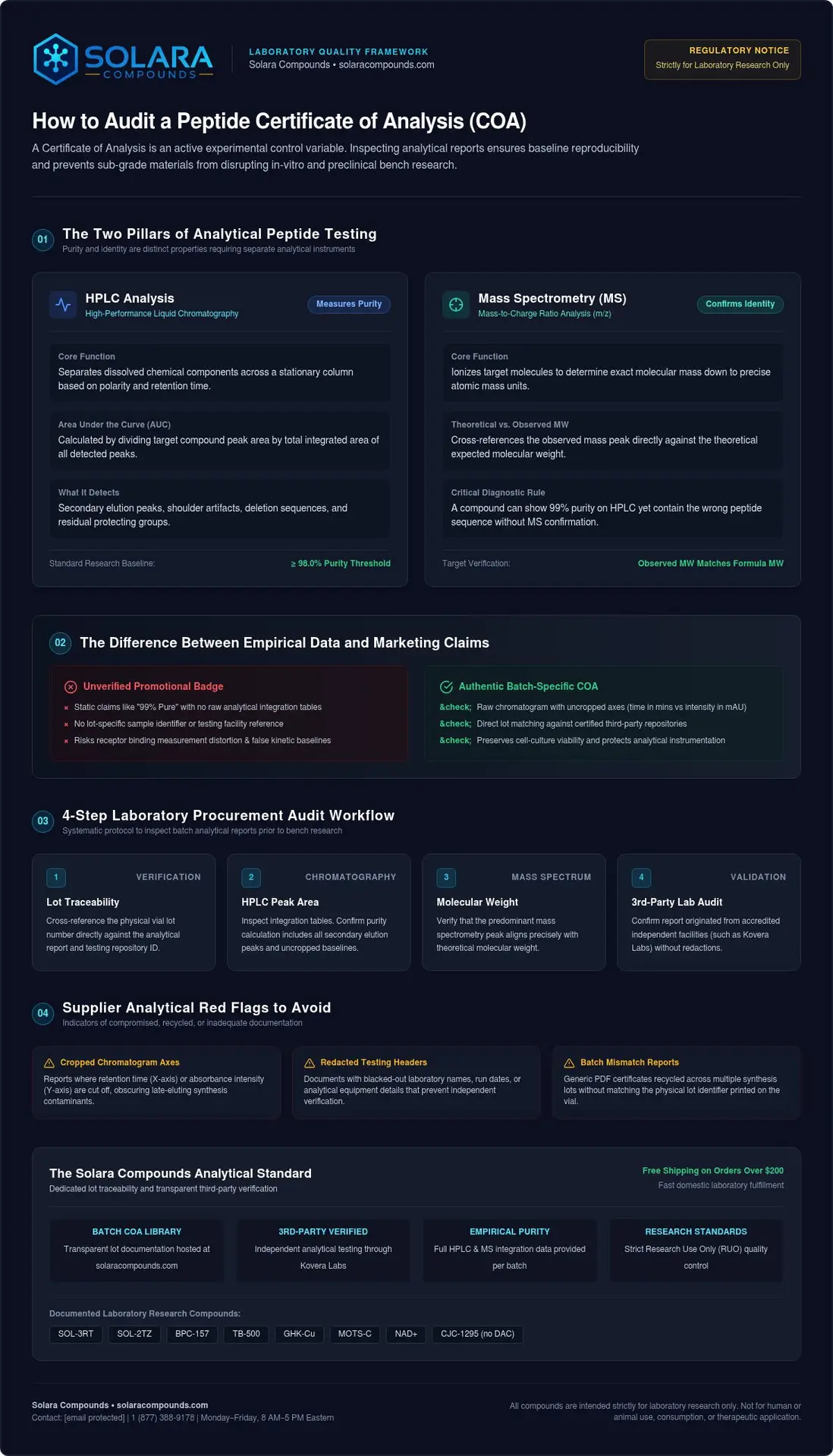
Laboratory Procurement Checklist: How to Audit Peptide COAs in Four Steps
Establishing an incoming inspection protocol prevents compromised reagents from disrupting laboratory workflows. When procuring research peptides with certificate of analysis paperwork, bench scientists should follow a reproducible four-step verification audit. Every compound discussed is strictly for laboratory research only, never for human or clinical use.
- Step 1: Match Vial Lots to the Repository: Compare the lot code on the physical vial crimp seal directly against the vendor’s database to confirm true batch correspondence.
- Step 2: Cross-Examine Molecular Weight: Verify that the observed mass spectrometry value aligns with the peptide’s calculated theoretical monoisotopic mass.
- Step 3: Audit HPLC Peak Integration: Inspect the baseline resolution to confirm that the primary peak integration accounts for the entire target purity calculation.
- Step 4: Check Analytical Test Dates: Confirm that testing occurred close to the synthesis run date to ensure material stability and avoid degraded inventory.
Cross-Referencing Physical Lot Numbers and Digital Repositories
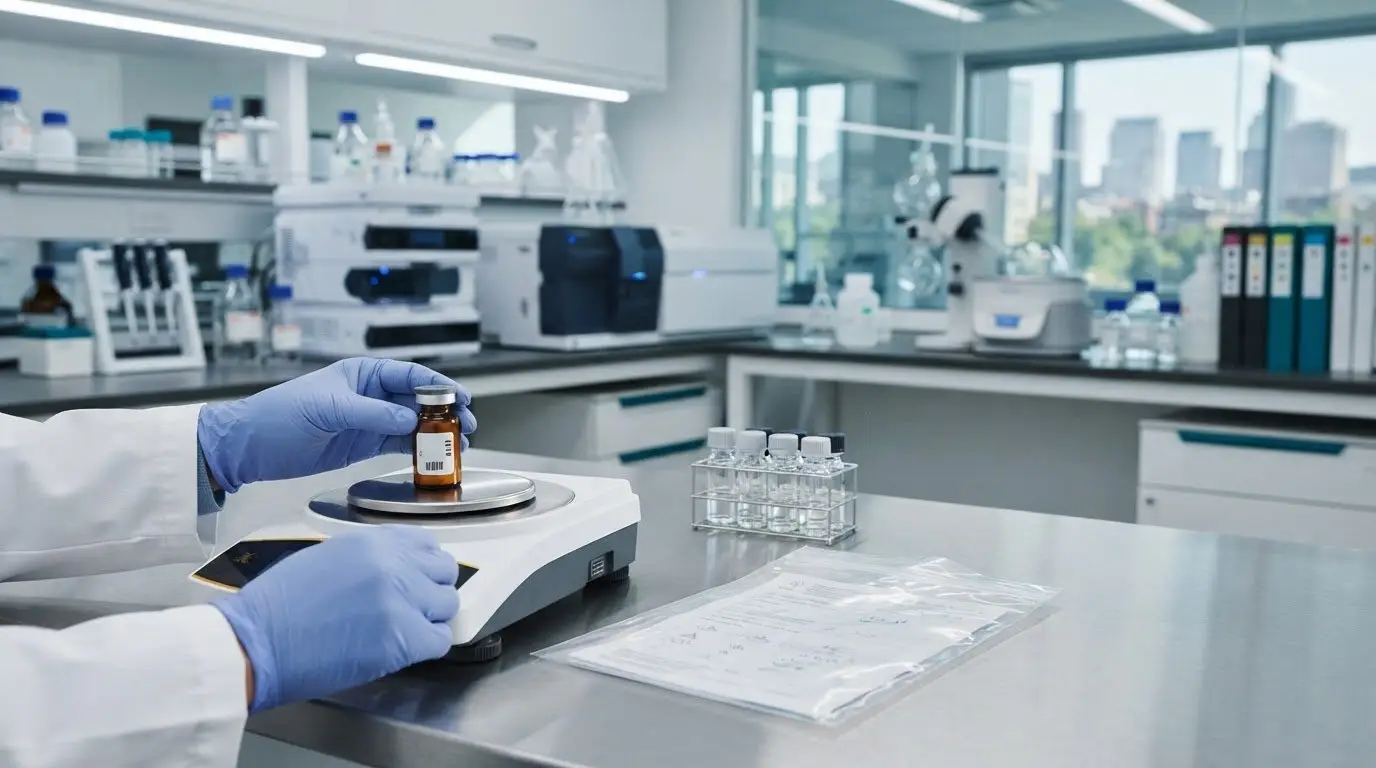
Every received vial should feature a durable label displaying a unique lot identifier. Reliable vendors maintain indexed digital archives where researchers can enter this batch code and pull unredacted analytical files on demand. Reviewing verified records through independent lab testing for peptides confirms that the documentation reflects a genuine third-party audit rather than an unverified vendor summary.
Evaluating Lyophilization Stability and Synthesis Controls
High-grade peptide stability depends entirely on upstream manufacturing controls. Solid-phase peptide synthesis (SPPS) conducted in ISO 7 cleanroom environments controls particulate contamination during critical chain assembly. Once synthesized, the material undergoes controlled lyophilization to form a stable, moisture-depleted cake under vacuum-sealed rubber stoppers.
Procuring verified high purity research peptides requires inspecting both the physical appearance of this lyophilized cake and its underlying batch documentation before reconstitution. When you are ready to restock your bench supplies, shop research peptides at solaracompounds.com to inspect batch documentation across our entire scientific catalog.
Sourcing Documented Research Compounds: The Solara Compounds Purity Standard
Solara Compounds operates on an uncompromising documentation-first framework. For researchers conducting critical in-vitro assays, sourcing research peptides with certificate of analysis validation isn’t an optional perk; it’s a vital experimental control. Every lot is synthesized using solid-phase chemistry inside controlled ISO 7 cleanroom environments, targeting ≥99% HPLC purity. Production batches then undergo independent third-party testing through Kovera Labs to verify purity percentages and confirm molecular identity. All catalog compounds are strictly for laboratory research only, never for human or animal application.
Lot-Specific Verification Across Core Research Catalog Offerings
Every compound in the scientific catalog maintains uncompromised lot traceability tied directly to its analytical report. For laboratories investigating cellular models, compounds like BPC-157 and TB-500 feature comprehensive chromatograms demonstrating clean single-peak elution. In metabolic receptor pathway research, multi-target compounds including SOL-3RT and SOL-2TZ are verified to confirm precise amino acid sequence integrity.
The same empirical testing applies across all specialty research reagents. Whether your laboratory protocol requires mitochondrial assays with MOTS-C, cellular coenzyme studies using NAD+, or receptor binding with GHK-Cu and CJC-1295 (no DAC), lot-matched testing data remains accessible before purchase. Sourcing research peptides with certificate of analysis paperwork directly from an open repository prevents unwanted synthesis artifacts from disrupting your experimental baseline.
Transparent Logistics and Laboratory Support Infrastructure
Reliable procurement requires dependable shipping alongside robust analytical data. Solara Compounds manages fast domestic fulfillment from its Florida facility, ensuring cold-chain stability and predictable delivery schedules across North American research facilities. Domestic orders over $200 qualify for free shipping, helping laboratory buyers optimize procurement budgets without sacrificing reagent purity.
Technical questions regarding analytical integration tables or batch lot codes receive direct support from knowledgeable representatives. Researchers can contact the team directly at support@solaracompounds.com or call 1 (877) 388-9178, Monday through Friday, 8 AM to 5 PM Eastern. Explore the current research peptide inventory on solaracompounds.com to review batch COAs and secure verified compounds for your bench work.
Elevate Your Bench Standards with Verified Analytical Documentation
Reliable experimental science demands uncompromising chemical standards. Sourcing research peptides with certificate of analysis verification protects your bench assays from sequence truncations, residual solvent contamination, and synthetic batch drift. Auditing both HPLC peak purity and mass spectrometry identity gives your team the baseline control required for reproducible results. All compounds are strictly for laboratory research only, never for human or animal application.
At Solara Compounds, every synthesis run reflects a documentation-first commitment to bench utility. Materials are produced using solid-phase peptide synthesis in ISO 7 cleanroom environments, consistently targeting ≥99% chromatographic purity. Independent third-party testing through Kovera Labs validates each batch before distribution, accompanied by transparent, lot-matched analytical reports. With free domestic shipping available on laboratory orders exceeding $200, upgrading your reagent procurement is simple and dependable. Take control of your experimental baseline today: View the current research catalog and batch-specific COAs at solaracompounds.com.
Frequently Asked Questions
What is the difference between an in-house COA and third-party laboratory verification?
An in-house COA is generated by the manufacturer’s own internal equipment, creating an inherent commercial conflict of interest. In contrast, third-party laboratory verification sends blind-coded production lots to an independent testing facility like Kovera Labs. This independent workflow provides unbiased peak integration, accurate solvent detection, and uncompromised mass verification. For research laboratories across biotech hubs like Boston and San Diego, independent testing ensures empirical objectivity before assays begin.
Can an HPLC report show 99% purity for an incorrect or degraded peptide sequence?
Yes. High-Performance Liquid Chromatography measures sample homogeneity and peak separation rather than sequence identity. A sample containing a single truncated sequence or an entirely different compound can display a sharp 99% primary peak if other impurities aren’t present. That’s why procurement teams purchasing peptides with certificate of analysis paperwork must confirm that HPLC purity data is paired with mass spectrometry to validate both chemical purity and molecular mass simultaneously.
How do researchers cross-reference an observed mass spectrometry peak against expected weight?
Researchers calculate the compound’s theoretical monoisotopic mass from its amino acid sequence and compare it directly to the observed mass-to-charge (m/z) ratio. In LC-MS or MALDI-TOF spectra, the dominant peak should match the calculated mass within the instrument’s calibrated tolerance, typically within one Dalton for intact peptides. Significant mass deviations or secondary clusters suggest incomplete deprotection, chemical adducts, or sequence deletions that compromise baseline in-vitro experimental controls.
What happens if a peptide lot number does not match the published analytical documentation?
If a physical vial lot code doesn’t match the analytical report, the material should be quarantined immediately. A batch mismatch breaks the documented chain of custody and leaves the compound’s purity unverified. Laboratory buyers in research centers from San Francisco to Raleigh should contact the supplier to obtain the lot-specific report. Solara Compounds indexes batch records publicly to ensure every received vial matches its verified third-party laboratory testing.
Is a Certificate of Analysis required for institutional research compliance?
Yes, institutional procurement rules and standard operating procedures regularly mandate batch-specific documentation. Academic and commercial facilities require empirical testing records to substantiate experimental reproducibility, audit reagent chemical composition, and maintain grant compliance. Using verified research peptides with certificate of analysis documentation ensures that investigators meet safety and chain-of-custody requirements without introducing undocumented chemical variables into multi-stage preclinical cell studies or analytical workflows.
How does vacuum-sealed lyophilization preserve peptide purity verified on a COA?
Lyophilization removes water content under high vacuum, converting synthesized peptide solutions into stable, moisture-depleted cakes. Sealing these vials under vacuum with inert stoppers prevents atmospheric moisture and oxygen from triggering peptide bond hydrolysis or methionine oxidation during storage. This preservation process ensures that the chromatographic purity and net peptide mass validated during initial third-party testing remain intact through delivery to research laboratories in Seattle, Chicago, or Austin.