Research Articles
The Essential Chemical Supplier Vetting Checklist for Research Labs (2026)

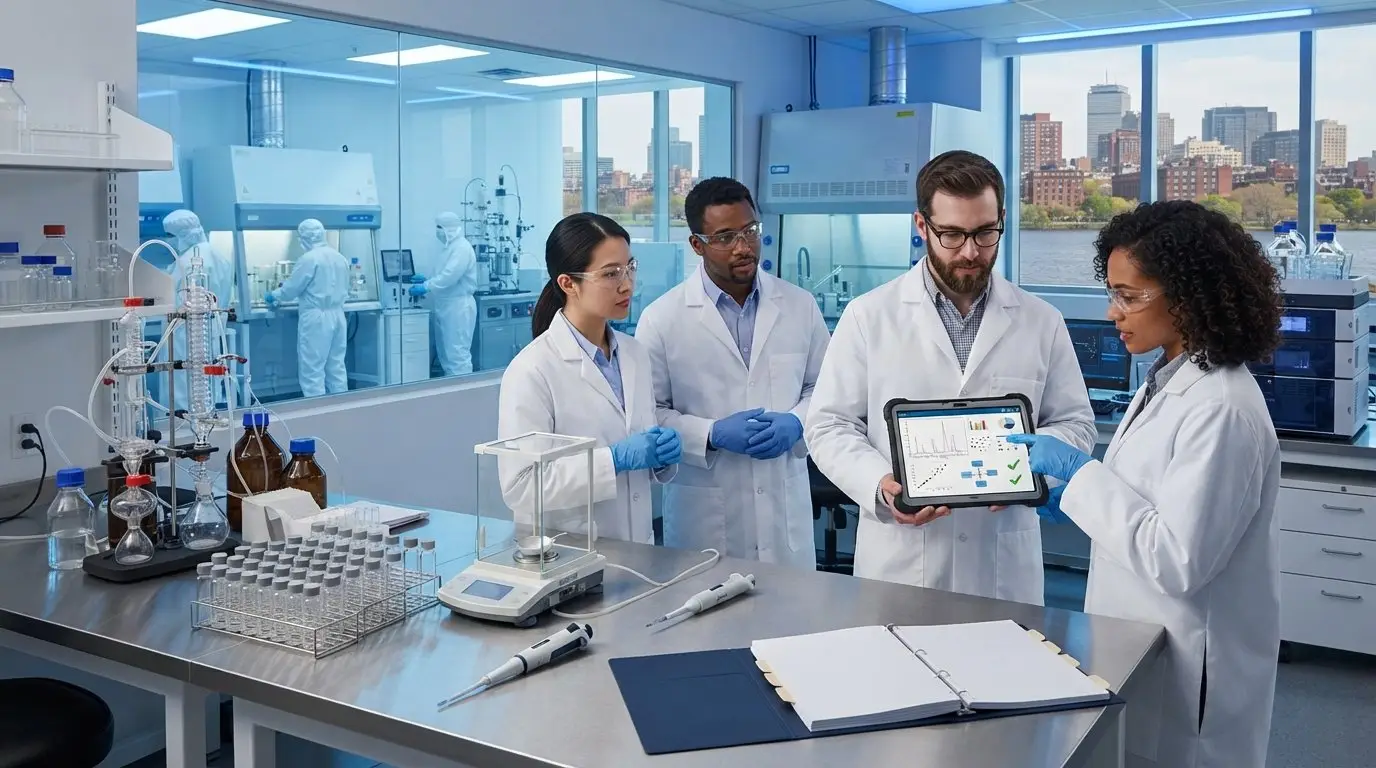
A single inconsistent chemical batch can invalidate months of precision research and thousands of dollars in laboratory resources. Many lab buyers face the reality of opaque documentation that fails to match the delivered compound, leading to skewed results and lost time. Implementing a rigorous chemical supplier vetting checklist for labs is a critical step for maintaining the integrity of your experimental data. We recognize that your research outcomes depend on the structural consistency of your materials and the technical transparency of your vendor.
At Solara Compounds, we support these high standards by offering batch-specific COAs and independent third-party testing through Kovera Labs for products like SOL-3RT and BPC-157. This 2026 framework provides a repeatable auditing process to ensure your materials meet HPLC purity standards and arrive via reliable US-based shipping. You’ll learn how to verify supplier transparency and ensure batch-to-batch consistency before a single vial reaches your facility. Please remember that all products from solaracompounds.com are for laboratory research only and are not intended for human or animal use.
Key Takeaways
- Learn how to verify batch-specific Certificates of Analysis (COA) to confirm that chemical identity and purity levels match your specific shipment.
- Understand the impact of ISO 7 cleanroom standards and HPLC purification on preventing confounding variables in your laboratory research models.
- Use this 2026 chemical supplier vetting checklist for labs to establish a repeatable auditing process for every new vendor in your procurement pipeline.
- Discover why domestic US-based shipping and responsive technical support are essential for avoiding the delays and degradation common with international vendors.
- See how Solara Compounds maintains data integrity through independent third-party testing and transparent documentation available at solaracompounds.com.
The Critical Risks of Substandard Chemical Vetting
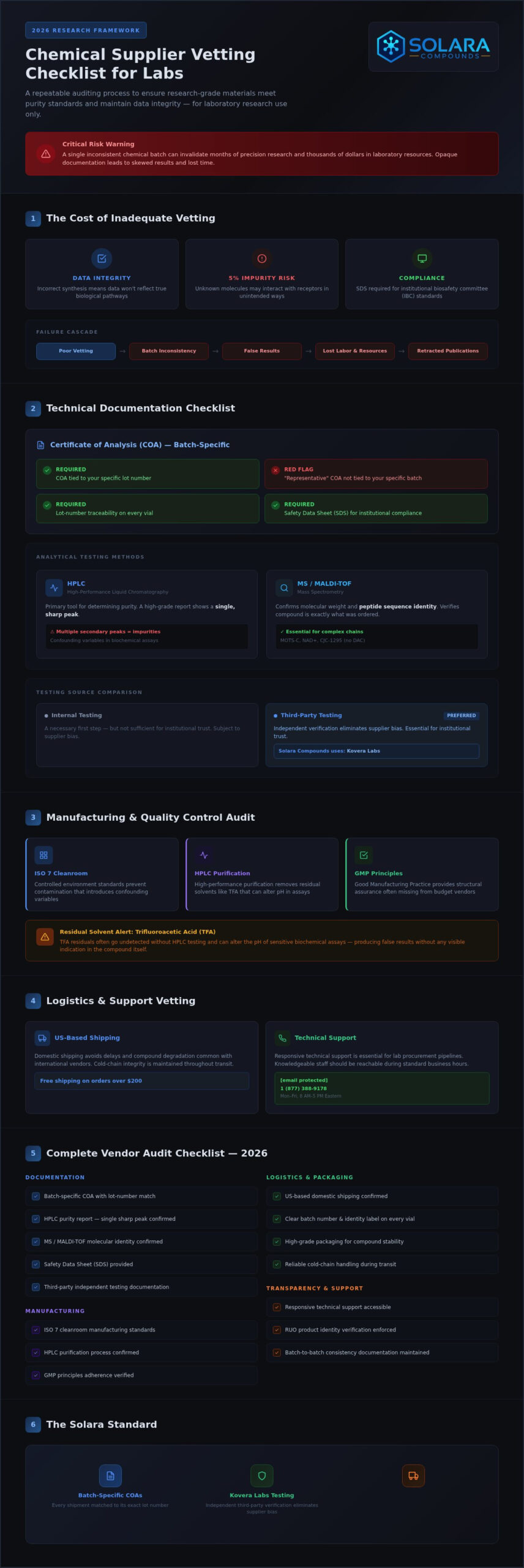
Substandard chemical vetting introduces hidden variables that can silently dismantle a research project. When a supplier lacks transparency, the researcher inherits the risk of batch-to-batch inconsistency. This isn’t a minor administrative hurdle. It’s a fundamental threat to data integrity. If a peptide batch contains 5% impurities, those unknown molecules may interact with receptors in ways the researcher didn’t intend. The cost of a failed experiment extends far beyond the price of the compound. It includes the loss of specialized labor, overhead, and the potential for retracted publications. Using a rigorous chemical supplier vetting checklist for labs ensures that these variables are identified before the research begins.
Research Use Only (RUO) status is not a license for lower quality. In many ways, RUO materials require stricter identity verification because they’re used in sensitive systems where even minor deviations can produce false positives. Suppliers that adhere to Good Manufacturing Practice (GMP) principles provide a level of structural assurance that is often missing from budget vendors. At Solara Compounds, we prioritize this transparency by providing batch-specific documentation to ensure that every vial of BPC-157 or SOL-3RT meets the specific needs of the laboratory environment. All products sold at solaracompounds.com are for laboratory research only and are not for people or animals.
Data Integrity and Reproducibility Challenges
Peptide sequence accuracy is vital for cellular signaling research. If a sequence is incorrectly synthesized, the resulting data won’t reflect the true biological pathway. Residual solvents, such as trifluoroacetic acid (TFA), can also impact results by altering the pH of sensitive biochemical assays. These impurities often go undetected without high-performance liquid chromatography (HPLC) testing. Identity verification prevents “wrong compound” errors that can occur in multi-phase studies, especially when managing multiple lyophilized powders. A comprehensive chemical supplier vetting checklist for labs must include a requirement for third-party verification to avoid these reproducibility traps.
Institutional Compliance and Safety Standards
Safety Data Sheets (SDS) are mandatory for institutional compliance. Proper documentation ensures that laboratory storage meets local safety codes and the standards of institutional biosafety committees (IBC). Without accurate SDS, a lab risks non-compliance during safety audits. Clear labeling is equally critical. Lyophilized research powders often look identical to the naked eye. If a vial lacks a clear batch number or identity label, it becomes a liability in a shared research space. Reliable suppliers provide high-grade engineering in their packaging and documentation to support the long-term stability and safety of the research environment.
Technical Documentation Checklist: Purity and Identity
A rigorous chemical supplier vetting checklist for labs begins with empirical evidence. Without verifiable data, a compound’s identity is merely a claim. High-purity research materials like SOL-2TZ or BPC-157 require specific analytical methods to confirm their molecular integrity. Every procurement cycle must include a thorough review of batch-specific Certificates of Analysis (COA). If a vendor offers a “representative” document instead of one tied to your specific lot number, the risk of batch-to-batch inconsistency increases significantly. Lot-number traceability on every vial is the only way to ensure the material in your hands matches the data on your screen.
Interpreting HPLC and MS Reports
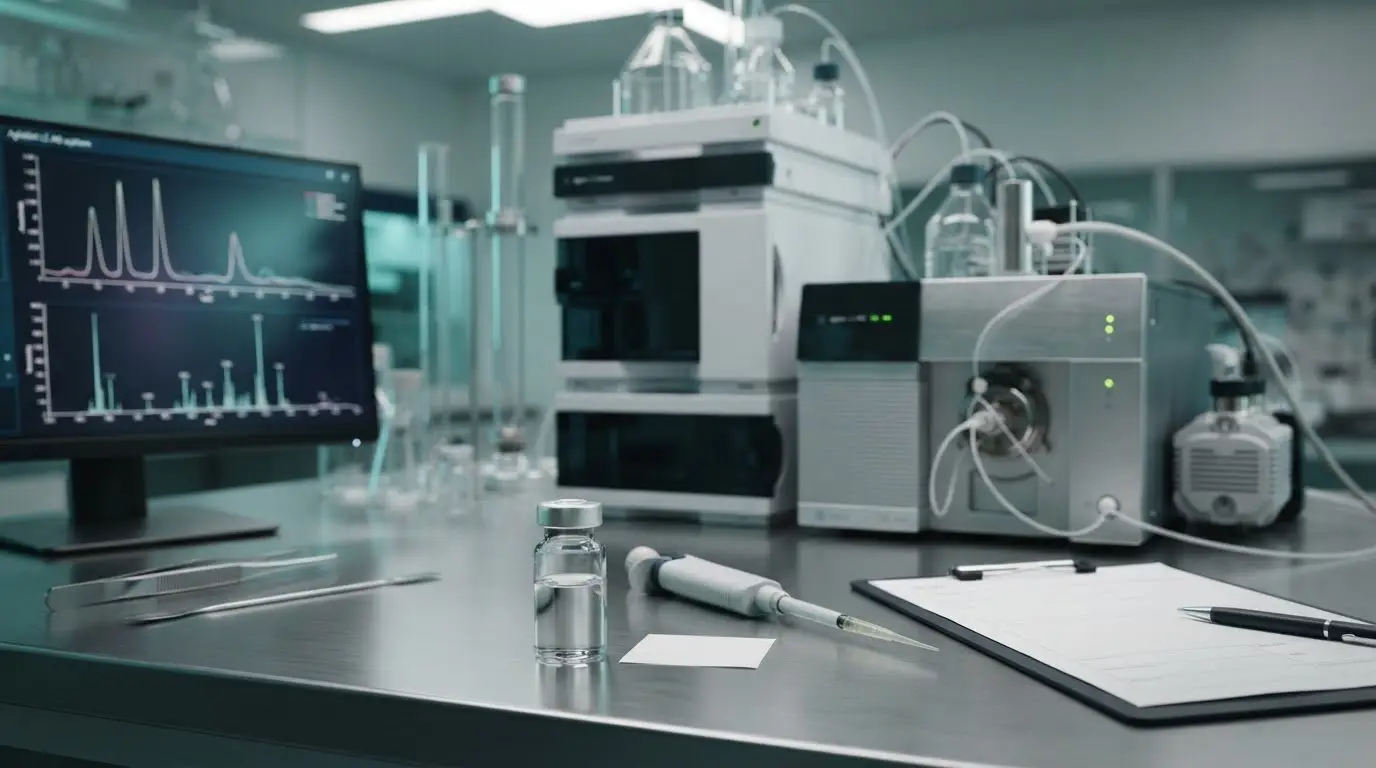
HPLC (High-Performance Liquid Chromatography) serves as the primary tool for determining purity. In a high-grade report, you should see a single, sharp peak. Multiple secondary peaks indicate impurities that can introduce confounding variables into your biochemical assays. Mass Spectrometry (MS) complements this by confirming the molecular weight and peptide sequence identity. Using methods like MALDI-TOF, researchers can verify that the compound is exactly what was ordered. For those studying complex chains like MOTS-C or NAD+, these reports provide the technical “why” behind the compound’s performance. Please remember that all products from Solara Compounds are for laboratory research only and are not for human or animal use.
Third-Party vs. Internal Testing Protocols
Internal testing is a necessary first step, but it’s not sufficient for institutional trust. Supplier bias is a real concern in the research chemical industry. Independent validation from facilities like Kovera Labs provides an objective layer of scrutiny that internal labs cannot match. This commitment to transparency aligns with the spirit of FDA Current Good Manufacturing Practice regulations, which emphasize the importance of rigorous quality control systems. Red flags in documentation include missing dates, blurred signatures, or generic templates that lack specific batch data. If the documentation feels like an afterthought, the manufacturing likely was as well. A reliable partner will always provide clear, dated, and signed reports that reflect the specific lot in your shipment.
Reliability is built through consistent documentation and structural precision. At Solara Compounds, we ensure every batch is verified for purity and identity before it enters our catalog. Researchers can view the current research catalog at solaracompounds.com to review the standards we maintain for every compound.
Manufacturing and Quality Control Auditing
While documentation proves what is in the vial, the manufacturing process dictates the vial’s consistency. An effective chemical supplier vetting checklist for labs must probe the synthesis environment to ensure it meets technical benchmarks. Standardized manufacturing reduces the risk of truncated peptides or deletion sequences that can silently corrupt a study’s results. By auditing the quality control steps during production, labs can verify that the supplier isn’t just checking boxes but is following high-grade engineering protocols. This level of scrutiny is what separates a professional vendor from a budget supplier that may cut corners in the synthesis phase.
Synthesis and Purification Standards
Solid-phase peptide synthesis (SPPS) is the industry standard for creating high-grade chains like SOL-3RT or SOL-2TZ. This method allows for the sequential addition of amino acids with high precision, which is critical for maintaining the specific molecular structure required for metabolic research. Once the chain is complete, the removal of byproducts like trifluoroacetic acid (TFA) via HPLC purification is mandatory. The final step of lyophilization, the freeze-drying process, converts the compound into a stable powder while maintaining the exact concentration in 10mg, 20mg, or 30mg vials. This repeatability is what allows researchers to audit their procurement process without worrying about concentration shifts between lots.
Environmental Controls and Contamination Prevention
ISO 7 cleanrooms serve as the benchmark for research peptide manufacturing by limiting particulate matter and preventing microbial ingress. Adhering to Current Good Manufacturing Practice (CGMP) regulations ensures that every phase, from raw precursor storage to aseptic fill-finish, is documented and controlled. Solara Compounds utilizes these rigorous environments to protect the structural integrity of compounds like BPC-157. Vacuum sealing the vials immediately after lyophilization further prevents oxidation and moisture ingress, which are the primary causes of compound degradation during long-term storage.
All materials sold at solaracompounds.com are for laboratory research only and are not intended for human or animal use. Maintaining temperature-controlled storage for raw precursors is another necessary pillar that prevents chemical degradation before the synthesis process even begins. By verifying these environmental controls, lab buyers can ensure that the lyophilized research powders they receive will remain stable throughout the duration of their multi-phase projects.
Logistics and Support: The Institutional Vetting Pillar
Project continuity in a high-stakes laboratory setting depends as much on the vendor’s operational infrastructure as it does on the purity of the compound. Even the most precisely synthesized material is a liability if it degrades during a three week customs delay or arrives with a compromised vacuum seal. Implementing a chemical supplier vetting checklist for labs requires an audit of the transit pipeline to ensure that environmental controls remain consistent from the cleanroom to the lab bench. This institutional pillar focuses on the logistical reliability and technical accessibility necessary to support long term research cycles across the United States.
- Step 1: Confirm US-based shipping to mitigate the risks of international customs delays and radiation exposure.
- Step 2: Evaluate the supplier’s response time for technical inquiries, targeting a 24 to 48 hour window for expert feedback.
- Step 3: Review the refund and return policy for damaged research materials, ensuring a minimum 14 day window for reporting transit issues.
- Step 4: Audit institutional pricing tiers and bulk procurement options for multi-phase projects that require lot consistency.
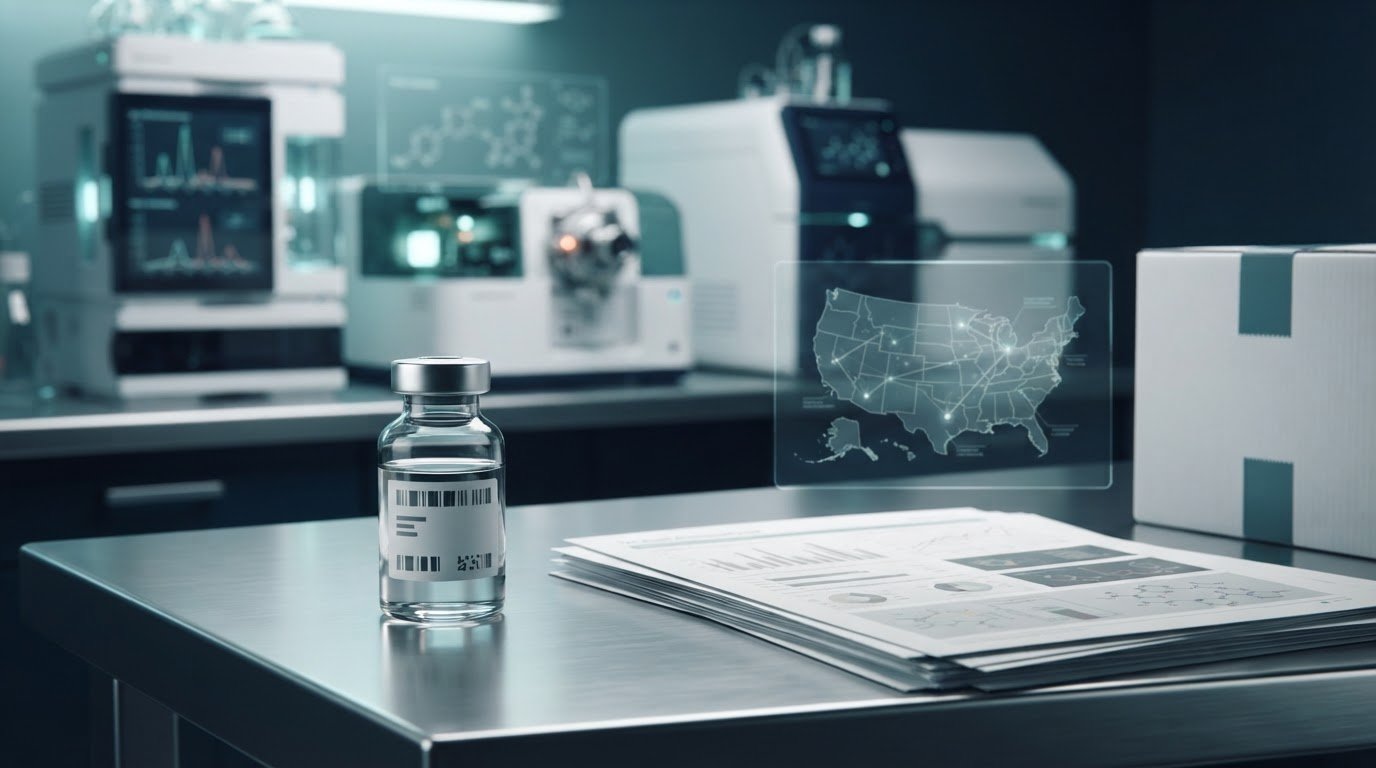
- Step 5: Verify shipping speed to major research hubs such as Boston, San Francisco, San Diego, and Raleigh.
Domestic Shipping and Stability
Domestic shipping is the only way to avoid the unpredictable conditions of international transit. When research peptides like BPC-157 or TB-500 are shipped from within the US, they’re less likely to face extreme temperature fluctuations or physical mishandling that can occur at border crossings. Solara Compounds operates from Florida, providing reliable delivery to laboratories in major hubs like Houston, Austin, and Seattle. We offer free shipping on orders over $200, which helps institutional buyers manage overhead while securing high grade materials. Our handling protocols ensure that lyophilized powders remain stable and vacuum-sealed until they reach your facility.
Technical Support and Institutional Relationships
Direct access to expert support is vital when technical challenges arise during an experiment. Whether you need a specific batch COA or have questions about the synthesis of SOL-3RT or SOL-2TZ, a founder-led company provides a level of depth that automated systems cannot match. Researchers can contact our support team at support@solaracompounds.com for assistance with bulk procurement or custom technical queries. Please remember that all products from Solara Compounds are for laboratory research only and are not for human or animal use. We prioritize long term institutional relationships by providing the data and support required for reproducible science in cities from New York to Los Angeles.
To ensure your next project starts with verified materials and reliable support, you can shop research peptides at solaracompounds.com today.
The Solara Standard: Integrating Vetting into Procurement
Integrating a rigorous chemical supplier vetting checklist for labs into your procurement workflow is the only way to safeguard your research data. At Solara Compounds, we’ve built our operations to align with these exact institutional standards. We provide the structural evidence and logistical reliability that modern laboratories demand for high-stakes projects. By prioritizing transparency and domestic fulfillment, we remove the common friction points that often compromise experimental results. Every compound we supply is a reflection of our commitment to technical precision and repeatable outcomes.
Our process begins with the structural verification of every batch before it enters our inventory. We recognize that researchers don’t just need chemicals; they need data integrity. This is why we make it simple to access our batch-specific COA database at solaracompounds.com/coa/. This transparency allows lab buyers to verify purity levels and identity markers before a study commences. If you have custom institutional inquiries or require assistance with bulk procurement, our research support team is available Monday through Friday at support@solaracompounds.com or 1 (877) 388-9178. Please remember that all products sold by Solara Compounds are for laboratory research only and are not intended for human or animal use.
Transparency as a Core Competency
We employ a “Documentation-First” strategy to ensure that your lab never has to guess about the quality of its materials. This approach includes comprehensive lot-number traceability for every compound, such as GHK-Cu and MOTS-C batches. This ensures that the material used in your biochemical assay is the exact material verified by independent third-party testing. Researchers in major hubs like San Diego and Raleigh rely on our US-based infrastructure to maintain project timelines and avoid the risks of international shipping. By maintaining a domestic supply chain, we provide a level of stability that budget vendors simply cannot match.
Securing High-Purity Compounds for 2026 Projects
Metabolic research in 2026 requires precise compounds like SOL-3RT, SOL-2TZ, and NAD+. Our synthesis protocols utilize ISO 7 cleanrooms and HPLC purification to target purity levels that typically exceed 99%. For labs requiring reconstitution materials, we provide BAC Water (10ml) to support standard laboratory protocols. Consistency in these raw materials is what allows a multi-phase study to remain reproducible over several months. We invite you to View the current research catalog at solaracompounds.com to see our full range of high-purity peptides and research compounds. Our focus remains on being a reliable partner in your long-term research success by delivering the structural integrity your work deserves.
Securing the Future of Laboratory Precision
Maintaining the integrity of a research project requires more than high-grade equipment; it demands absolute certainty in the chemical compounds used. Implementing a rigorous chemical supplier vetting checklist for labs is a foundational step for protecting your data from the risks of impurity and inconsistency. We’ve established that prioritizing batch-specific COAs, ISO 7 cleanroom manufacturing, and reliable domestic shipping is essential for long-term study success. These standards ensure that every vial of SOL-3RT or BPC-157 meets the structural requirements of your laboratory environment.
Solara Compounds remains committed to these principles through independent testing via Kovera Labs and a documentation-first approach. We provide batch-specific paperwork for every lot, ensuring your procurement process is as precise as your science. We also offer free shipping on research orders over $200 to support multi-phase institutional projects. All products from solaracompounds.com are for laboratory research only and are not for human or animal use. Your work deserves materials that are as reliable as your methodology. Shop high-purity research peptides at solaracompounds.com to secure the consistency your laboratory requires.
Frequently Asked Questions
What is the minimum purity required for research peptides?
Research-grade peptides typically require a minimum HPLC purity of >98% to ensure experimental accuracy. At Solara Compounds, our synthesis protocols target ≥99% purity to minimize confounding variables in biochemical assays. Lower purity levels often contain truncated sequences or residual solvents that can interfere with sensitive cellular signaling studies. Every item in a chemical supplier vetting checklist for labs should mandate this threshold to maintain data integrity throughout the research lifecycle.
How do I verify if a COA is batch-specific or generic?
You can verify a Certificate of Analysis by matching the unique lot number printed on the product vial directly to the documentation. A batch-specific report includes the exact date of testing and a unique chromatogram for that specific synthesis cycle. Generic or “representative” reports are a significant red flag in the chemical supplier vetting checklist for labs. Solara Compounds ensures every lot has its own verified data accessible through our dedicated COA database.
Why is HPLC testing more important than simple purity claims?
HPLC testing is superior to simple claims because it provides a visual chromatogram of the compound’s chemical profile. This allows researchers to identify the presence of secondary peaks, which represent impurities or byproducts from the synthesis process. A simple percentage claim doesn’t reveal the nature of these impurities. High-performance liquid chromatography offers the technical “why” behind the purity, ensuring that materials like SOL-3RT meet the rigorous standards required for modern laboratory work.
Can I use Mass Spectrometry to identify a research compound’s sequence?
Mass Spectrometry is the standard method for confirming the molecular weight and structural identity of a research compound. Techniques like MALDI-TOF or LC-MS compare the observed mass of the peptide to its theoretical value based on the amino acid sequence. This verification is a critical technical step because it prevents identity errors that could invalidate multi-phase studies. Without MS data, a researcher cannot be certain the sequence is synthesized correctly for their specific assay.
What are the storage requirements for lyophilized research powders?
Lyophilized research powders should be stored in a temperature-controlled environment, ideally between -20°C and -80°C for long-term stability. It’s essential to keep the vials vacuum-sealed and protected from light and moisture ingress to prevent chemical degradation or oxidation. Solara Compounds provides vacuum-sealed vials to ensure structural integrity during transit and storage. Researchers in high-humidity regions like Miami or Tampa must be particularly diligent about maintaining these storage conditions to prevent moisture-related degradation during their studies.
Does Solara Compounds provide third-party verification for every batch?
Solara Compounds provides independent third-party verification for every batch through Kovera Labs. We believe that supplier transparency is the foundation of a reliable institutional relationship. By using an external facility for HPLC and MS analysis, we eliminate supplier bias and provide an objective layer of scrutiny for our research peptides. This commitment to transparency is a core feature of our “documentation-first” approach, supporting researchers in major research hubs from Boston to San Diego.
How long does domestic shipping take for research labs in the US?
Domestic shipping from our Florida facility typically reaches major research hubs like San Francisco, Seattle, or New York within a few business days. We prioritize fast U.S. shipping to avoid the degradation risks associated with long international transit times or customs delays. Solara Compounds also offers free shipping on orders over $200 to help laboratories manage their procurement budgets effectively. Our logistics are designed to support the fast-paced timelines of modern biotechnology and academic research projects.
What is the difference between ISO 7 and standard lab environments for synthesis?
ISO 7 cleanrooms maintain a strictly controlled level of particulate matter per cubic meter, which is essential for preventing contamination during the peptide fill-finish stage. Standard laboratory environments lack the HEPA filtration and air pressure controls necessary to meet these rigorous standards. Synthesizing compounds like SOL-2TZ in an ISO 7 environment ensures that the final lyophilized powder is free from environmental pollutants. All products from solaracompounds.com are for Research Use Only (RUO) and not for human or animal consumption.