Research Articles
Research Grade Peptide Costs by Sequence and Synthesis Fees


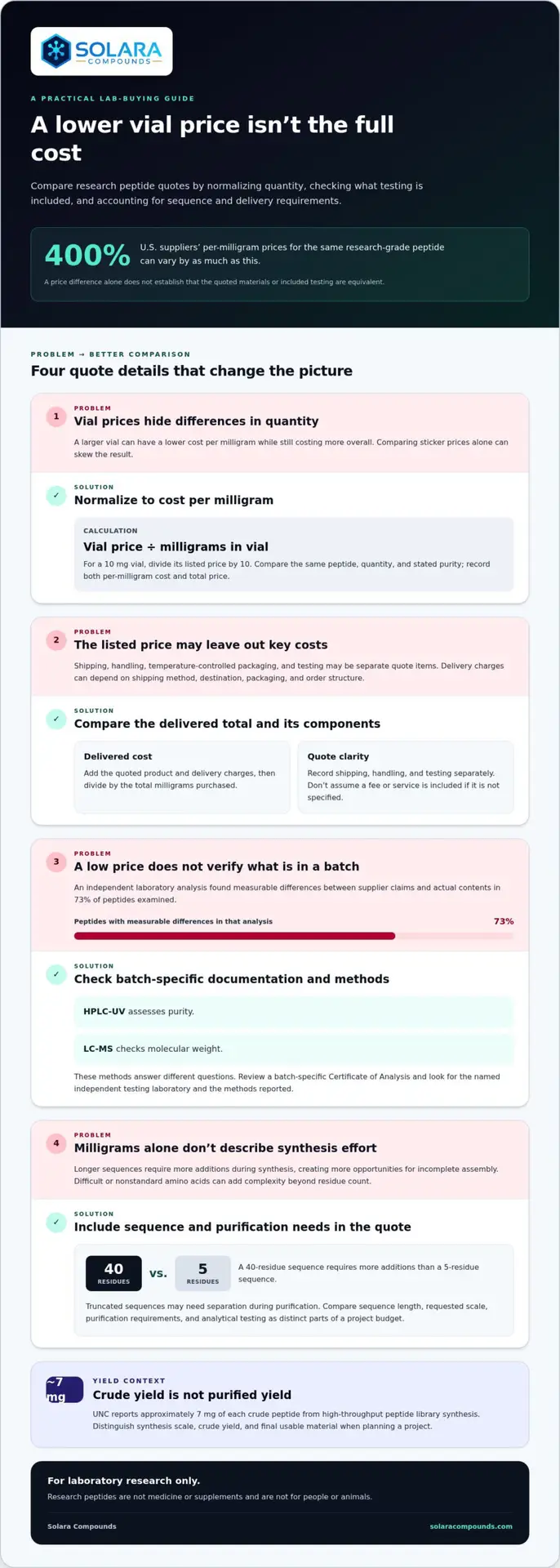
The same research-grade peptide can have per-milligram prices that vary by as much as 400% between U.S. suppliers. A useful cost analysis of research grade peptides compares cost per milligram while accounting for sequence length, synthesis difficulty, and testing needs, not just the listed vial price.
Price variation can make budgeting difficult, particularly when a low listing price leaves unclear what is included or how sequence complexity affects production. Research peptides are for laboratory research only, not for use in people or animals.
This guide shows how to compare costs on a consistent per-milligram basis, why longer or more complex sequences can require more synthesis work, and how purification and characterization affect a project budget. It also explains how batch documentation helps researchers assess research-grade materials.
Key Takeaways
- Compare supplier listings by cost per milligram, then account for what the quoted amount includes.
- Sequence length and difficult amino acids can increase synthesis work and affect the final material cost.
- Separate one-time setup charges from sequence-specific surcharges to understand how a custom synthesis quote is built.
- Assess purification and characterization requirements alongside the usable yield, not just the crude material’s price.
- For laboratory research only, use batch-specific documentation to evaluate research materials; they are not for people or animals.
Price variation between suppliers
U.S. suppliers can show per-milligram prices for the same research-grade peptide that vary by as much as 400%. Compare the material, documentation, and delivery terms alongside the listed vial size.
Compare Supplier Quotes by Peptide Type and Quantity
Peptide type, sequence, stated purity, and order quantity all shape supplier quotes. Market comparisons report differences of up to 400% for the same compound, so a lower quote alone doesn’t establish equivalent material. Compare the same peptide and amount, then note whether each quote describes purity testing, identity testing, or batch documentation.
For a practical comparison, record the compound, quantity per vial, stated purity, and included testing. Bundles can also affect the total: compare the combined quantity with the quantities of the individual vials instead of assuming a bundle represents a saving.
Normalize Peptide Prices per Milligram
Divide the listed price by the milligrams in the vial to calculate cost per milligram. For example, a quote for a 10 mg vial uses the vial price divided by 10. Apply the same calculation to every quote, then compare equivalent peptide types and stated purity levels.
This prevents vial size from skewing the comparison. A larger vial may cost less per milligram while having a higher total price. Record both figures, along with any separate testing or delivery charges, to compare the full order consistently.
Account for Shipping and Cold-Chain Fees
Shipping and handling can change the delivered total. Charges depend on the shipping method, packaging, destination, and order structure. Compare these as separate quote items, and don’t assume the listed product price includes temperature-controlled handling.
For a fair comparison, calculate the full delivered total, then divide it by the milligrams purchased. If quotes use different delivery arrangements, record the difference rather than treating the totals as equivalent. Don’t assume a fee amount that isn’t specified.
U.S. purchasing and laboratory work must comply with applicable federal, state, and institutional requirements. Requirements depend on the material and the research context, so the label “research grade” alone does not establish whether a purchase or use is permitted.
Testing costs are separate from peptide prices. HPLC-UV assesses purity, while LC-MS checks molecular weight; the methods answer different questions.
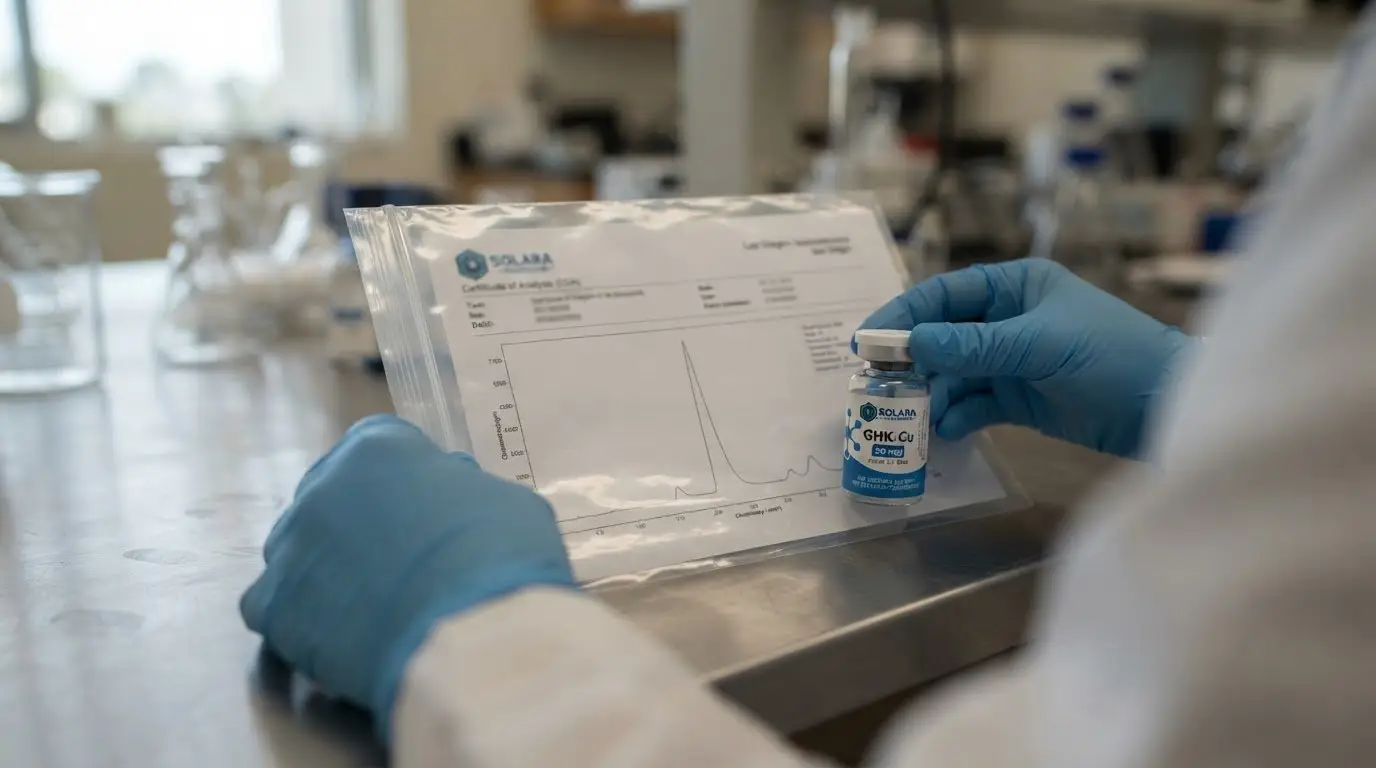
Low-cost, unverified material carries a documentation risk. An independent laboratory analysis found measurable differences between supplier claims and actual contents in 73% of peptides. Use a batch-specific Certificate of Analysis to assess stated purity, and look for the named independent testing laboratory and the methods reported.
Price is only one point of comparison. A cost analysis of research-grade peptides should align the peptide type, quantity, purity claim, testing scope, and delivered total. This gives laboratory buyers a consistent basis for evaluating quotes without assuming that the lowest price represents equivalent material.
Peptide sequence length and synthesis difficulty
Sequence length affects the number of synthesis steps and the chance of incomplete assembly. A 40-residue sequence requires more additions than a 5-residue sequence, so synthesis demands and purification needs can differ substantially. The final cost reflects more than the compound’s molecular weight; it also reflects how reliably each amino acid can be joined.
Each synthesis cycle adds a residue to the growing chain. An incomplete step can produce truncated sequences that may need to be separated during purification. Longer chains create more opportunities for incomplete products. Sequence composition matters too: difficult or nonstandard amino acids can add complexity beyond the number of residues.
Standard synthesis pricing shows how sequence length can affect a quote.
For example, a 40-residue sequence has 30 residues beyond the first 10. This calculation illustrates the schedule, not a universal supplier quote.
Scale describes the quantity of starting material used for synthesis; it doesn’t guarantee the same amount of finished peptide. According to UNC, high-throughput peptide library synthesis yields approximately 7 mg of each crude peptide. Crude material is not the same as purified material, so researchers should distinguish synthesis scale, crude yield, and final usable volume in project planning.
PEG resin supports peptide-on-bead assays, in which peptides remain attached to resin during experimental use. UNC states that deprotected peptides on PEG resin for these assays cost the same as crude peptides. This comparison applies to that synthesis context; resin-bound material and purified, free peptide are not interchangeable for every experiment.
Before comparing custom synthesis quotes, record the sequence length, requested scale, resin format, and purification requirements. Then separate the synthesis charge from characterization and analytical testing. An independent analytical test can assess identity or purity, while synthesis pricing covers preparation of the sequence. Keeping these items distinct makes project budgets easier to interpret.
For laboratory research only, research peptides are not medicines or supplements and are not for people or animals. Researchers reviewing sequence-specific materials can browse the research peptide catalog as a separate reference point for laboratory purchasing.
Setup fees and nonstandard amino acid surcharges
A custom synthesis quote may separate sequence preparation, synthesis, purification, and analytical verification. Note which steps are listed as separate items. A clear breakdown helps researchers distinguish a one-time setup charge from costs tied to each compound or batch.
Setup work may include reviewing the sequence, confirming the requested scale, and selecting a synthesis approach. A sequence with a nonstandard amino acid may need additional planning to fit the intended chain and synthesis process. The quote should state whether this work is included in the base synthesis price or charged separately.
Nonstandard residues can affect more than the material cost. They may change reagent selection, coupling conditions, purification needs, or the testing required to verify the sequence. Compare quotes using the same specification: list each modified residue, its position, the requested scale, and the final form. This gives each laboratory a consistent basis for pricing.
Keep synthesis charges separate from analytical verification. Mapping examines sequence identity, while composition analysis assesses amino acid makeup; these tests answer different questions.
Other characterization methods may appear as separate items. These figures describe analysis services, not synthesis setup fees or charges for a particular nonstandard amino acid.
For a useful quote comparison, sort charges into three groups:
- Preparation: sequence review, synthesis planning, and any stated setup work.
- Production: synthesis scale, standard residues, and any nonstandard residue costs.
- Verification: identity, composition, molecular weight, or structural analysis.
Compare the certificate of analysis with the requested work. A certificate reports batch-specific results, which should be read alongside the named tests and methods. Molecular weight confirmation, for example, checks whether the measured mass matches the expected structure; it does not replace every form of sequence verification.
Compare the full scope, not just the first figure in a quote. If one laboratory includes sequence review and another lists it separately, align those items before comparing totals. For research-grade materials, this review clarifies setup and nonstandard-residue charges without confusing production costs with verification fees.
Peptide sequencing and composition analysis are listed as core requirements for regulatory characterization. Confirm that both are explicitly included in the final quote.
Cost per milligram
Cost per milligram helps researchers compare materials offered in different vial sizes and with different purification yields. Divide the relevant total cost by the usable peptide quantity, not automatically by the crude starting amount.
Keep material and analysis costs separate. For each quote, record the synthesis or purchase total, quantity supplied, purification status, and any peptide testing. This makes the calculation traceable and prevents a testing charge from being mistaken for the value of the peptide.
Characterization costs also vary with complexity. These are analysis ranges, not peptide prices.
Purification yield can change the effective cost per milligram.
That example shows why the denominator matters. Dividing by the 20 mg crude input would understate the cost of each milligram of purified output. For a laboratory budget, use the expected purified yield when the experiment requires purified material, and keep the crude amount as a separate production figure.
Use the same worksheet for each candidate material. Include these fields:
- Amount: milligrams of crude material and expected purified yield.
- Scope: synthesis, purification, and any requested testing.
- Evidence: batch certificate, method names, and reported results.
- Timing: any quoted turnaround in business days, recorded separately from cost.
A certificate of analysis supports documentation review, but it does not make different tests equivalent. HPLC purification describes a processing step; identity confirmation requires analytical evidence suited to that question. Compare the certificate’s stated results with the project’s material requirements before calculating the usable-material cost.
For a sound cost comparison, calculate both the listed cost per milligram and the effective cost per milligram after purification. Keep peptide testing and timing as separate items. This clarifies how much material is available for laboratory work without conflating vial quantity, purity, and analytical confirmation.
Peptide prices should be normalized to cost per milligram before comparing suppliers. Assess each quote on the same usable-material basis, with purification and testing recorded separately. The global peptide synthesis sector was projected to reach up to $860.99 million by late 2026, underscoring the value of consistent price comparisons.
Peptide complexity and molecular weight
Molecular weight is one measurable property, not a complete measure of synthesis difficulty. Sequence length, modifications, and structural features also affect production and characterization. A semaglutide sequence and a modified peptide sequence may therefore require different analytical work, even when their listed quantities appear comparable.
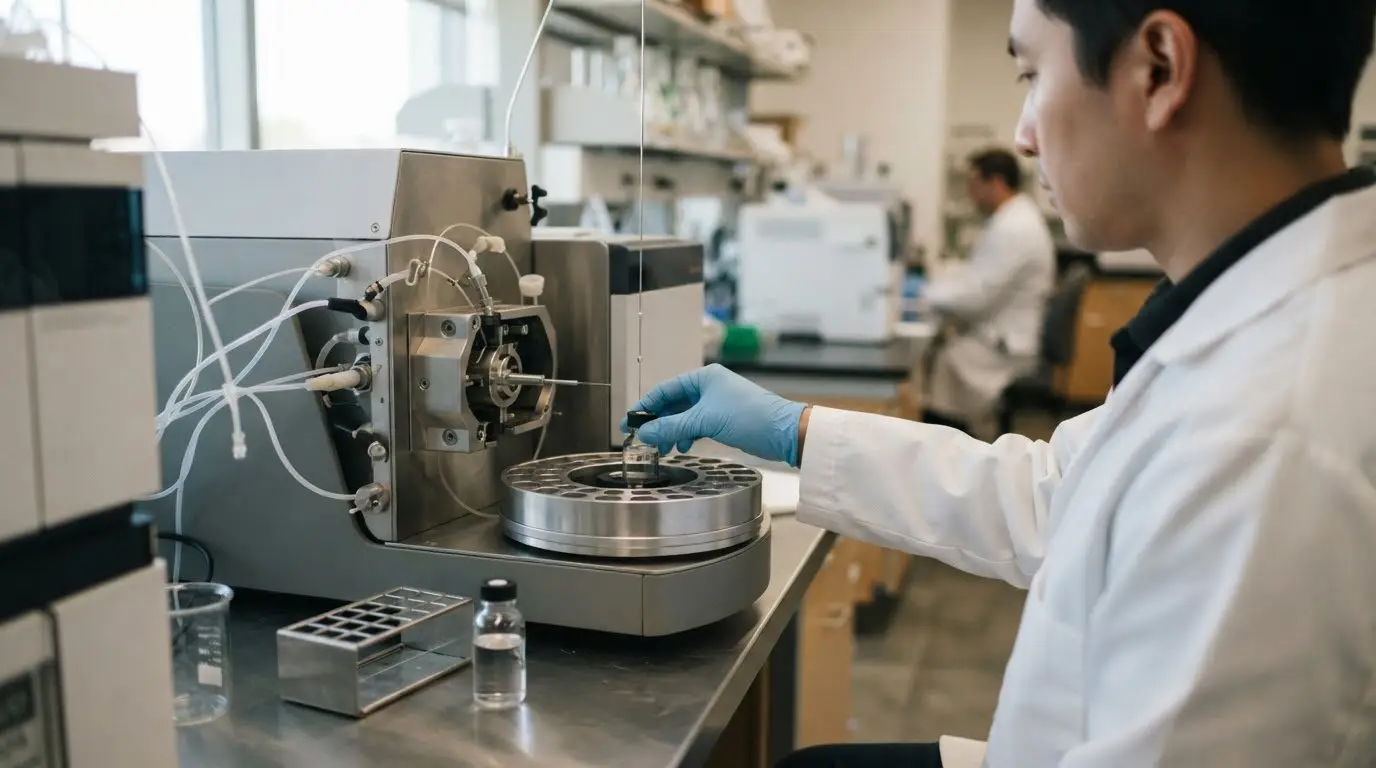
High-resolution mass spectrometry determines peptide molecular weight by measuring the mass of detected molecules. Researchers can compare the measured result with the expected molecular weight for the specified sequence. This helps assess whether the measured mass matches the design, but it does not establish every detail of sequence identity or purity.
Complexity can change the scope of an analysis package. These figures describe characterization, not peptide purchase prices or a universal supplier quote.
A conjugate links a peptide to another chemical component, creating additional structural features to examine. Biosimilar analysis can also involve comparisons beyond molecular weight. In either case, match the requested tests to the material and research question instead of treating one mass measurement as complete characterization.
For a practical comparison, use the same four-step review for each supplier package:
- Record the stated sequence, modifications, and expected molecular weight.
- Identify which analytical methods the package includes.
- Separate identity, purity, and structural characterization results.
- Compare the listed turnaround and deliverables across quotes.
A published molecular weight is a useful reference, but the certificate and analytical report show what was measured for a particular sample. Check that the report names the method and links the results to the supplied material. This helps distinguish basic molecular-weight confirmation from broader characterization.
For example, one supplier package might include mass spectrometry, while another also includes structural analysis. Compare test names, sample basis, and reported results before assessing the total. A lower package price may cover fewer methods, while a broader package may address more questions about a complex compound.
Turnaround also belongs in the comparison, but it should remain separate from the analytical scope. Record the supplier’s stated timeline in business days only when provided, and compare equivalent deliverables. For laboratory research only, use these criteria to assess whether a peptide package fits the project’s characterization needs. Browse research peptide materials for laboratory purchasing.
Solara Compounds: SOL-3RT Retatrutide 10mg
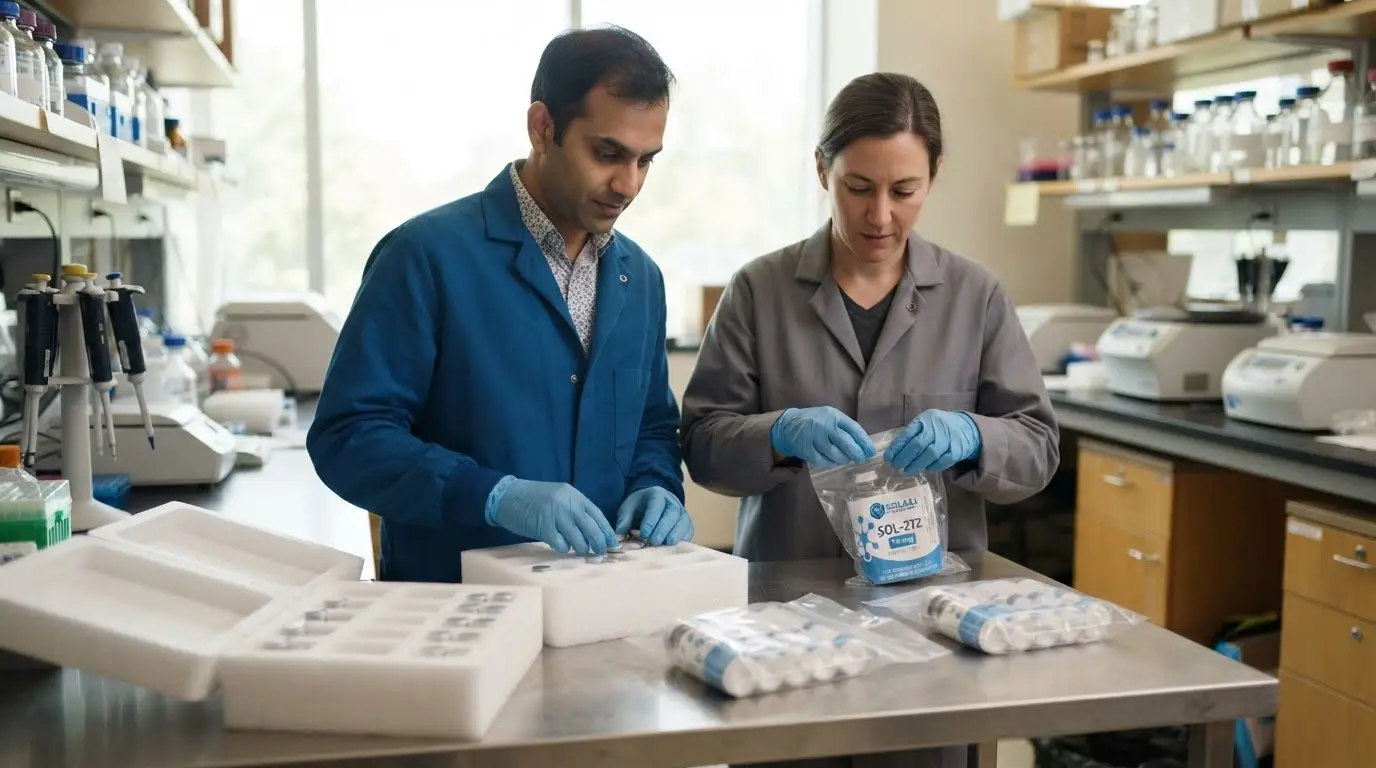
SOL-3RT Retatrutide 10mg from Solara Compounds gives laboratory buyers a defined listed quantity to consider against their project requirements. Batch-specific Certificates of Analysis and third-party testing documentation support review of the material for research purchasing.
SOL-2TZ Tirzepatide 10mg is another listed research option. Products are for laboratory research only, not medicines or supplements, and not for use in people or animals.
For product questions, contact [email protected], Monday-Friday, 8 AM-5 PM Eastern, or visit solaracompounds.com.
Make the Next Research Purchase More Repeatable
Use the next procurement decision to create a clear internal record. Document the project’s material requirements, the reason for the chosen specification, and who will review the paperwork. This gives colleagues a shared reference when they consider the material again or plan a study requiring a comparable input.
A disciplined cost analysis of research-grade peptides can support this process by connecting purchasing decisions to laboratory requirements. Focus the record on research needs rather than treating one price as the decision. Clear documentation also helps teams explain why a particular material fits the planned work.
When you’re ready to review research materials for laboratory use, explore the research peptide catalog. A considered next step can make purchasing decisions easier to explain and repeat.
Frequently Asked Questions
What is the average cost of research-grade peptides per milligram in the United States?
There is no single reliable per-milligram average for peptides with different sequences and specifications. For a useful estimate, divide the full material cost by the amount suitable for the planned laboratory work. If purification changes the usable yield, calculate from that yield rather than the starting quantity. Keep analytical testing and delivery charges separate so the comparison reflects equivalent materials and purchasing terms.
What are typical price ranges for common research peptides from US suppliers?
No single price range fairly covers all common research peptides. A short, unmodified sequence and a longer or modified one can have different synthesis and purification requirements. For a practical comparison, group quotes by exact compound, stated quantity, purity specification, and included documentation. Compare matching listings within each group rather than treating different peptides or vial sizes as equivalent.
How much do peptide synthesis, purification, and analytical testing add to the cost?
These charges reflect separate project choices: sequence length and scale affect synthesis, while the required yield affects purification. Analytical testing adds costs based on the method and characterization scope. For budgeting, list each item separately, then calculate the total for the material and tests the project needs. This prevents added costs from being attributed solely to the peptide.
How do academic, bulk, and small-quantity pricing compare?
Academic, bulk, and small-quantity quotes can differ in purchasing terms and order structure, but those labels alone do not establish a lower per-milligram cost. Compare the same sequence, specification, and usable quantity. Academic purchases may involve an institutional process; for bulk orders, consider whether the full quantity suits the planned work. A small order can limit unused material, even when unit-cost comparisons differ.
What certificates and quality tests should be included in a research-grade peptide price?
Review a batch-specific Certificate of Analysis that identifies the material and links results to its lot. Check which methods support the identity and purity results, and whether an independent laboratory performed the testing. The certificate should make findings interpretable, not merely display a purity claim. All products are for Research Use Only (RUO), intended solely for laboratory research and not for human or animal consumption.