Research Articles
Peptide Aggregation Prevention: How to Measure and Reduce Risk


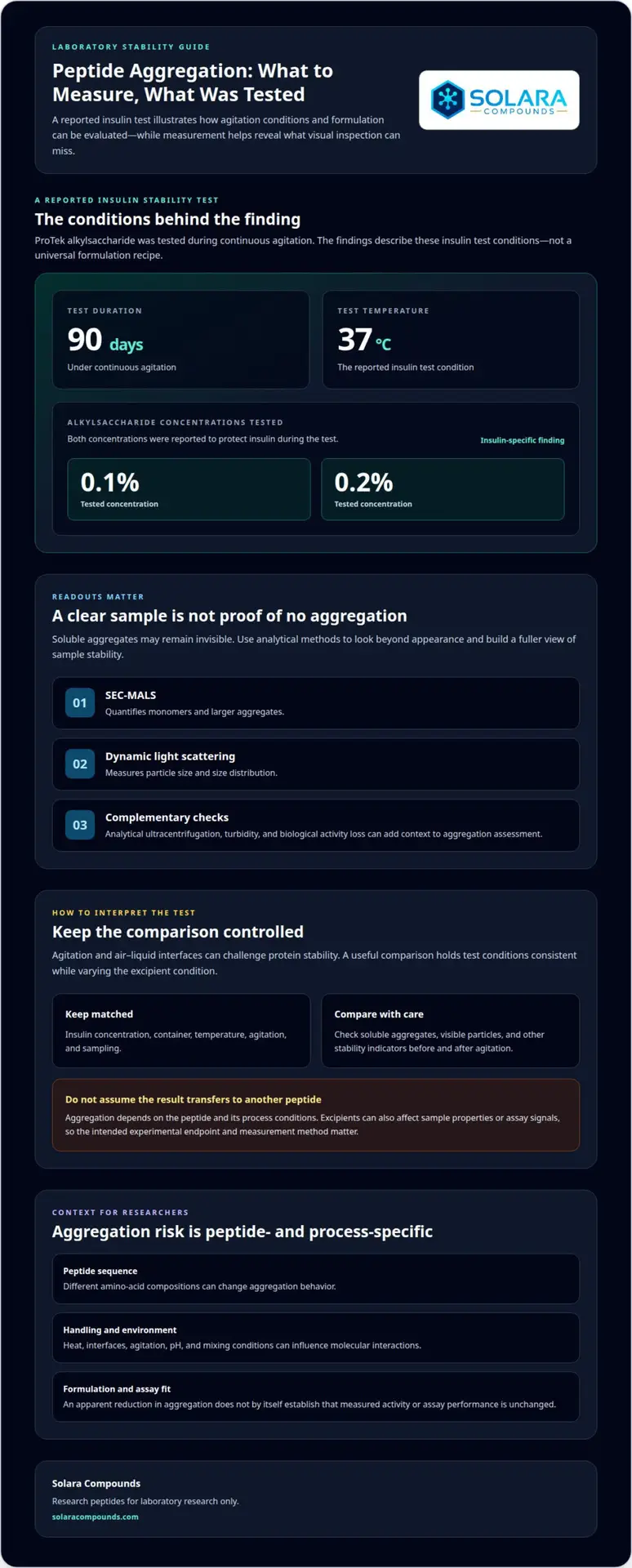
A clear solution can still contain peptide aggregates, so visual inspection alone cannot establish stability. Effective peptide aggregation prevention starts with measurement: researchers can use SEC-MALS to quantify monomers and larger aggregates, while dynamic light scattering measures particle size and distribution.
It’s also reasonable to look beyond the peptide itself. Agitation can contribute to aggregation, and alkylsaccharide excipients have been studied as a way to protect insulin under continuous agitation. In one reported test, alkylsaccharide concentrations of 0.1% and 0.2% protected insulin during 90 days of agitation at 37 °C.
This guide explains what aggregation measurements reveal, how agitation affects peptide and insulin stability, and how alkylsaccharides may fit into a laboratory formulation strategy. It also shows why aggregation risk depends on the peptide and process conditions, rather than on one universal prevention method. Solara Compounds supplies research peptides for laboratory use only. They are not intended for human or veterinary use, clinical trials, or diagnostic applications, and have not been evaluated by the FDA for safety or efficacy.
Key Takeaways
- Visible particles are only one warning sign; soluble aggregates can require analytical methods to detect.
- Combine complementary measurements, such as analytical ultracentrifugation and checks for turbidity or biological activity loss, to build a fuller picture of aggregation.
- Aggregation risk depends on the peptide and its handling conditions, so synthesis and purification choices matter alongside formulation.
- For lyophilized proteins, consider how formulation and processing conditions affect stability when the material is returned to solution.
- Assess pH and mixing conditions during dissolution, since these can influence interactions that contribute to aggregation.
What Is Protein Aggregation?
Protein aggregation occurs when peptide or protein molecules associate into larger assemblies. For laboratory researchers, distinguishing soluble aggregates from visible particles helps assess stability and interpret experimental results.
Aggregation in Lyophilized Products
Lyophilized products are dried preparations, but drying does not guarantee that proteins remain aggregation-free. During drying and subsequent reconstitution, environmental changes can affect molecular interactions and solubility. Assess the material after it returns to solution: soluble aggregates may remain invisible, while insoluble material can appear as particles or precipitate.
Causes, Risks, and Protein Stability
Aggregation is a complex, peptide-specific process influenced by sequence and conditions such as heat, interfaces, and agitation. Protein stability describes how well a molecule retains its structure and properties; solubility describes how readily it remains dispersed in solution. These measures are related, but one doesn’t establish the other. Aggregates can sequester active material, reduce measured activity, and complicate assay interpretation.
Human amylin, a 37-amino-acid hormone secreted alongside insulin, illustrates why sequence matters: different amino-acid compositions can change aggregation behavior. Both soluble assemblies and visible particles matter. A clear-looking sample may still contain aggregates, while turbidity signals larger particles or precipitates. For a research example involving a defined peptide sequence, see KPV peptide research material.
Prevention During Synthesis and Purification
Prevention during synthesis and purification means reducing conditions that encourage peptide chains to associate. Backbone-protecting groups such as Hmb and Dmb can interrupt hydrogen bonding, which otherwise helps chains interact. In synthesis, incorporating an Hmb moiety every six to seven residues can disrupt aggregation. Sequence-aware design and process choices matter because aggregation depends on the peptide, not on one universal trigger.
Researchers can screen sequences for aggregation-prone regions, including exposed stretches that favor intermolecular contact, and then evaluate design changes. Substitutions may reduce that tendency, but they can also alter structure or activity. A changed sequence, for example, may no longer behave like the original assay target. Computational predictions can guide decisions, but experimental measurements remain necessary to assess the resulting material.
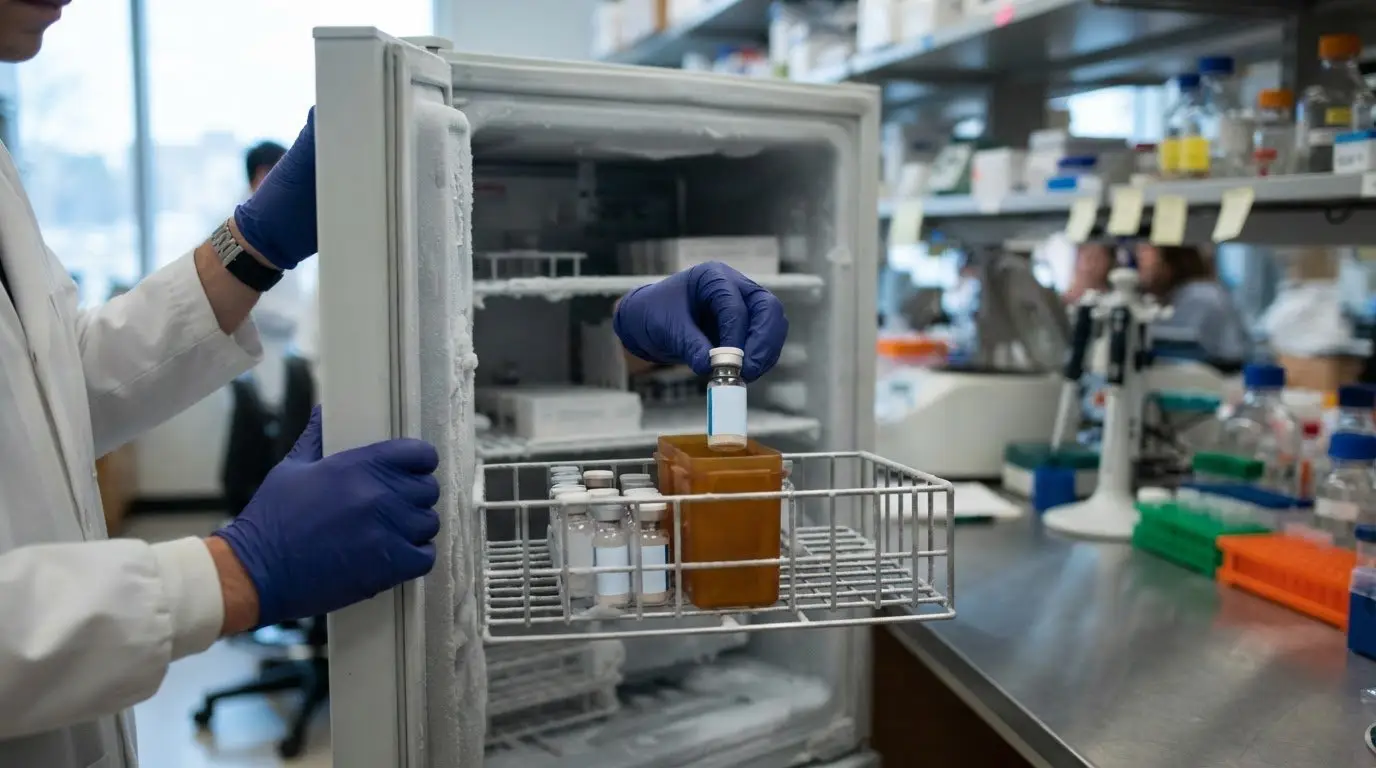
For storage, keep lyophilized peptides under cold-chain conditions and use low-temperature processing to limit heat stress. Avoid repeated freeze-thaw handling, which can add variability; the appropriate storage temperature and allowable cycles depend on the specific material and its stability data.
Aggregation inhibitors also require evaluation against the intended assay. Excipients can change peptide interactions, measured activity, or assay signals, so an apparent reduction in aggregation does not necessarily mean performance is unchanged. Compare relevant activity and aggregation readouts, and consider additive compatibility and toxicity within the experimental system.
Alkylsaccharide excipients for aggregation prevention
Alkylsaccharides are sugar-based excipients studied for their ability to help protect proteins during stress. Their relevance is practical: formulations can experience agitation during handling, and insulin provides a specific example of how these excipients have been evaluated under that condition.
In a reported insulin stability test, ProTek alkylsaccharide at 0.1% and 0.2% protected insulin during 90 days of continuous agitation at 37 °C. These values describe the tested insulin conditions, not a universal recipe for every peptide. Researchers should treat them as formulation-specific findings, rather than assume the same concentration or result transfers to another sequence.
Agitation can expose a protein to repeated movement and air-liquid interfaces. Those conditions may challenge structural stability, so the experimental setup matters alongside the excipient. A useful comparison keeps insulin concentration, container, temperature, agitation, and sampling consistent while varying the alkylsaccharide condition. This design helps separate an excipient effect from changes caused by handling or measurement.
For research peptides, therapeutic peptides, and amyloid-forming peptides, aggregation control serves different objectives. Research peptide studies should match the formulation to the assay; therapeutic formulation research prioritizes product stability and performance; amyloid studies may need aggregation to occur because it is the process under investigation.
Alkylsaccharides should therefore be evaluated against the intended experimental endpoint. For insulin, researchers can compare the 0.1% and 0.2% conditions with an appropriate control under matched agitation. Measurements before and after agitation can show whether a condition changes soluble aggregates, visible particles, or other stability indicators. A clear appearance alone cannot establish that aggregation was prevented.
Excipients can also affect the assay itself. A sugar-based additive may change sample properties or interact with the measurement method, creating an apparent difference that does not reflect aggregation alone. Test excipient-only blanks and confirm findings with complementary analytical methods. This is especially important when comparing insulin with a peptide that has different sequence properties or solubility.
Interpret results within their limits. The ProTek insulin observation used continuous agitation, 37 °C, and a 90-day test period. It does not establish performance under different storage conditions, for another peptide, or in a different assay. Replication under the study’s own formulation and handling conditions gives researchers a more relevant basis for comparison.
For lab buyers sourcing materials for peptide experiments, the research peptide catalog is a practical next step. Products are for laboratory research only, not for people or animals, and are not medicines or supplements.
Avoid overgeneralizing across processes. Ethane dithiol (EDT) in a cleavage cocktail can suppress S-alkylated side-product formation during cysteine cleavage from Wang resin. Weak-interaction aggregates may sometimes be reversed with buffer changes or excipients; irreversible aggregation typically requires reformulation.
Aggregation measurement methods
No single measurement captures every aggregate size or behavior. Researchers can combine SEC-MALS, dynamic light scattering, analytical ultracentrifugation, and activity or turbidity checks to distinguish changes in peptide samples.
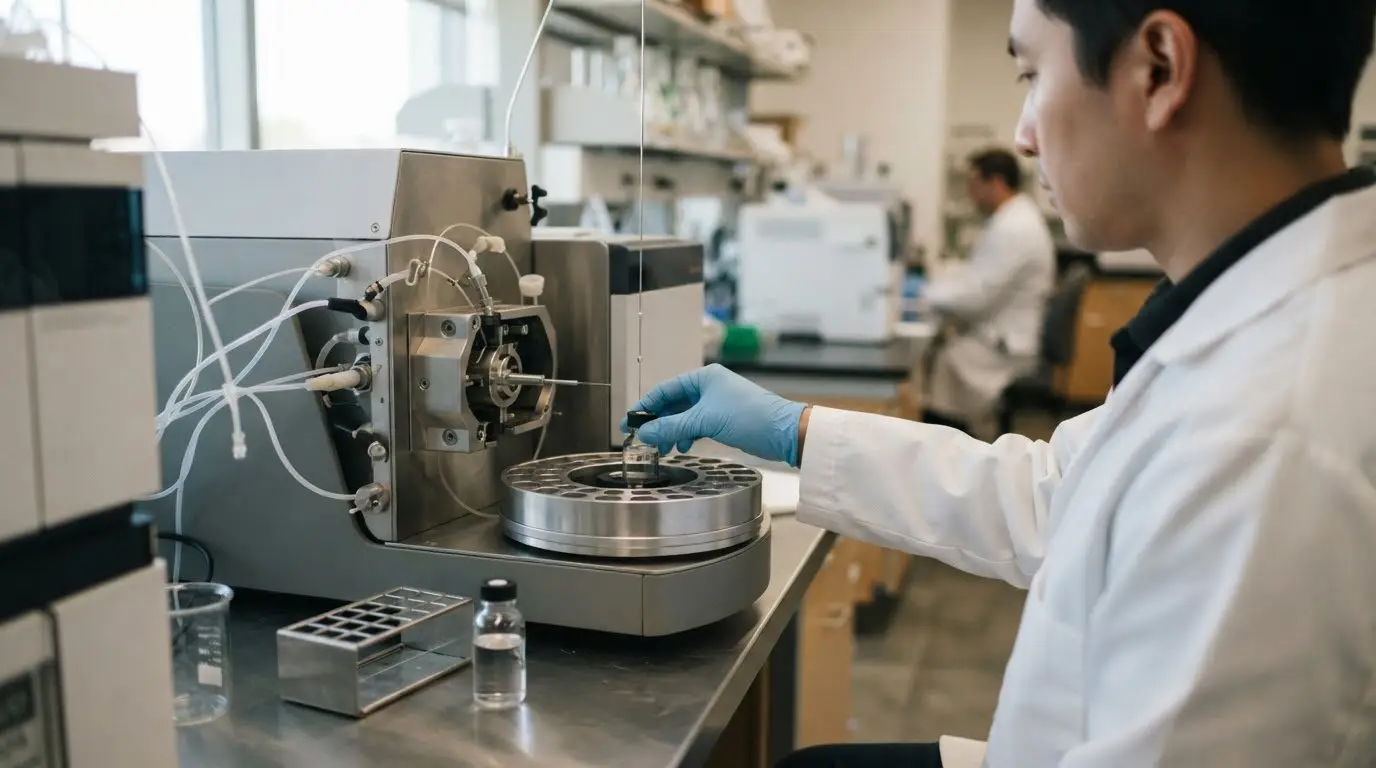
Size-exclusion chromatography with multi-angle light scattering, or SEC-MALS, separates molecules by their movement through a porous column and measures scattered light. It can quantify monomers, dimers, trimers, and larger aggregates in solution. The result shows how much material appears in each measured group, rather than relying on a sample’s appearance alone.
Dynamic light scattering, or DLS, estimates hydrodynamic radius from how particles move in solution. It also reports polydispersity, which describes the spread of measured particle sizes. A shift in radius or distribution can flag a change during storage or handling. DLS provides a size profile, but does not identify each particle’s chemical structure.
Analytical ultracentrifugation separates species according to sedimentation rates. Researchers can use those rates to quantify monomers, dimers, trimers, and larger aggregates in solution. Because it uses a different measurement principle from SEC-MALS, it can provide a useful comparison when chromatographic separation may affect the sample or its observed distribution.
Spectroscopic and chromatographic techniques also support studies of peptide chemical and physical stability. Spectroscopy examines how a sample interacts with light, while chromatography separates components for analysis. These methods can complement SEC-MALS or DLS by tracking changes in sample composition alongside shifts in particle size. The right combination depends on the peptide and the question being tested.
Simple indicators add context. Visible turbidity can signal suspended particles, while a loss of biological activity can indicate a functional change. Analytical methods may detect high-molecular-weight species that are not visible in the sample. These observations answer different questions: turbidity describes appearance, activity assays assess function, and chromatography or light-scattering methods characterize molecular size or distribution.
A practical comparison begins with a defined baseline sample. Researchers can measure it before a storage or handling condition, then repeat the same assay afterward. For example, SEC-MALS can compare aggregate distributions, while DLS tracks changes in hydrodynamic radius and polydispersity. Consistent preparation and measurement conditions make results easier to interpret.
Interpret results together, not in isolation. A clear sample with altered DLS results may contain dispersed particles; increased turbidity may point to larger suspended material. If activity also changes, the combined results support a stronger assessment than appearance alone. Selecting complementary methods makes aggregation measurements more informative for peptide stability studies.
What are the most effective ways to prevent peptide aggregation during synthesis and purification?
Aggregation control starts before purification. Peptide sequence, synthesis chemistry, temperature, and mixing all influence whether chains associate. No single adjustment fits every sequence. Reduce risk by identifying likely trouble spots, then controlling the process conditions that expose them.
Sequence screening can help flag aggregation-prone peptides before synthesis. Machine-learning models can identify sequences with a higher tendency to aggregate, giving researchers a chance to evaluate design options early. These predictions guide planning, but do not replace measurements of the synthesized material. Amino-acid composition and local sequence features both inform the risk assessment.
During solid-phase peptide synthesis, aggregation can hinder production, particularly when growing chains interact and become less accessible to incoming reagents. Backbone modifications such as Hmb or Dmb can interrupt hydrogen bonding. Chaotropic salts, including CuLi, NaClO4, and KSCN, are also used to reduce peptide aggregation. Their suitability depends on the peptide and the synthesis system.
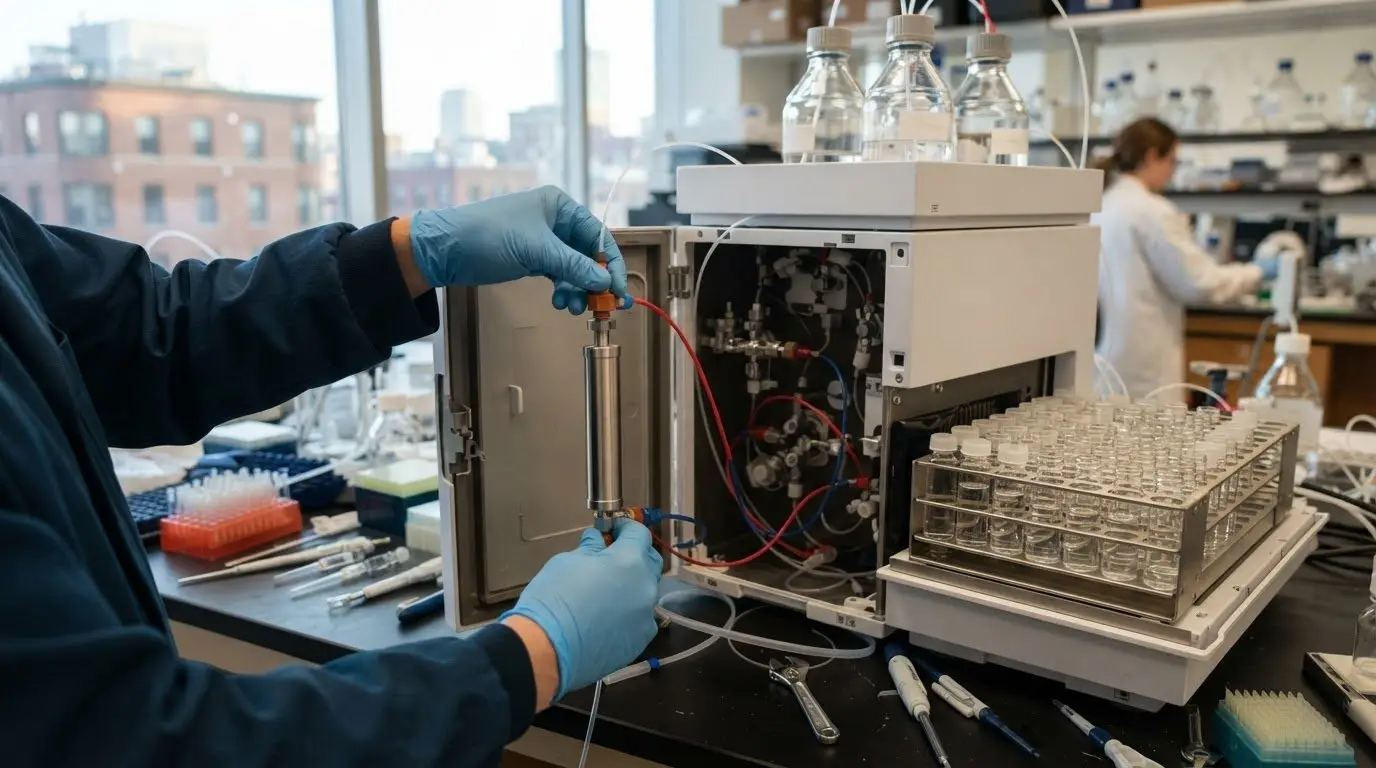
Purification adds another control point. Optimized downstream conditions can limit aggregation as peptides move through separation and recovery. Temperature, solvent environment, and handling affect how chains behave during these stages. Assess the complete manufacturing process rather than treating synthesis and purification as isolated operations.
- Sequence: Use prediction tools to identify aggregation-prone regions before synthesis.
- Chemistry: Evaluate backbone-protection strategies and suitable chaotropic salts.
- Processing: Control temperature and downstream conditions during purification.
- Handling: Use gentle mixing and low-shear pumps to reduce mechanical stress.
Mechanical stress deserves attention during transfers and mixing. Gentle mixing protocols and low-shear pumps can reduce mechanical unfolding, a change in protein structure that may encourage aggregation. These choices matter when repeated handling or pumping is part of the process. They also support more consistent comparisons between batches and process conditions.
Temperature control is another practical measure. Cold-chain storage and low-temperature processing help minimize aggregation risk from heat stress. Keep temperature conditions consistent across synthesis, purification, and sample handling, then compare the resulting material with analytical methods suited to the study.
Effective peptide aggregation prevention combines sequence assessment with controlled chemistry and processing. A change that helps one peptide may affect another differently, so process adjustments need to be evaluated against the target molecule. In laboratory research, the goal is a repeatable material state that supports the intended experiment, not the assumption that one reagent or handling change works universally.
Evaluating and managing the manufacturing process is important for producing physically stable peptide materials. Consider how sequence choices, synthesis chemistry, temperature, mixing, purification conditions, and handling work together, rather than adjusting one stage in isolation. A useful approach is to identify likely aggregation-prone regions, choose suitable backbone-protection or salt strategies, and keep processing conditions consistent. Assess the recovered material to determine whether these choices are effective for that peptide and process.
How should peptides be dissolved and reconstituted to minimize aggregation?
Reconstitution can quickly change a peptide’s local environment. Reduce avoidable stress by matching the solvent and buffer to the peptide, controlling pH, and mixing gently. A clear solution is useful, but appearance alone does not show whether soluble aggregates remain.
Start with the peptide’s intended laboratory conditions and applicable material documentation. Different sequences respond differently to pH, ionic strength, and solvent composition. A buffer that works for one peptide may reduce another’s solubility. For repeatable results, keep the selected conditions consistent across comparison samples.
pH is a key variable. The isoelectric point is the pH at which a molecule has no net electrical charge. Maintaining pH close to a protein’s isoelectric point to reduce net-charge interactions. Because peptide-specific behavior varies, assess solubility and aggregation alongside pH rather than treating one value as universal.
During preparation, gentle handling helps limit mechanical stress. Add the selected liquid carefully, allow the material to wet, then mix with slow, controlled movement instead of vigorous agitation. If undissolved material remains, do not assume that stronger mixing will solve the problem; reassess solvent compatibility and pH first. Record each condition so later measurements can be compared.
- Control pH: Record buffer composition and pH for each sample.
- Limit stress: Use gentle mixing rather than vigorous agitation.
- Keep conditions consistent: Match solvent, buffer, and handling across comparison samples.
- Assess the result: Pair visual observations with analytical measurements.
Temperature and storage history also affect comparisons. Heat stress can raise aggregation risk, so low-temperature processing and cold-chain storage are useful controls. Avoid repeated freeze-thaw handling where possible, and document each storage or thawing event. There is no universal freeze-thaw limit across all peptide sequences.
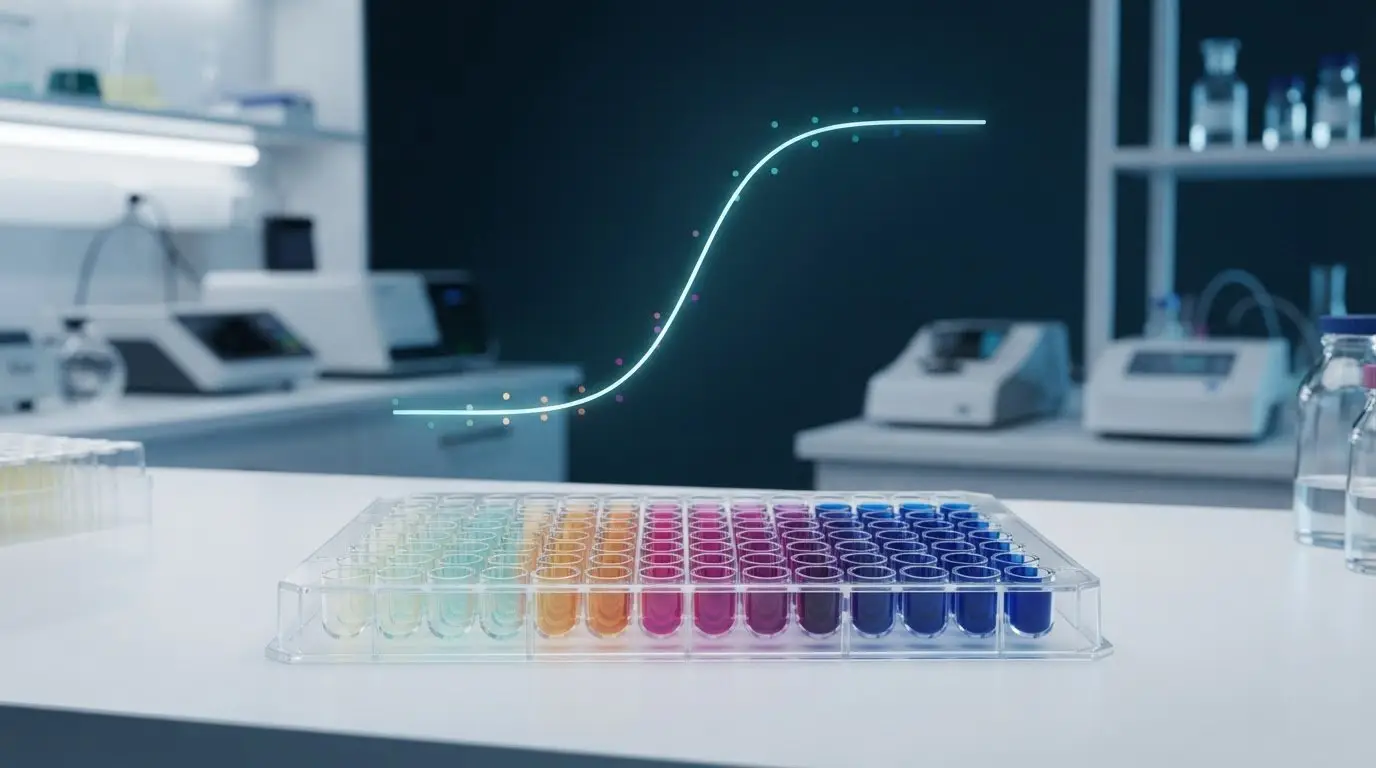
Choose measurements that address the research question. Turbidity can reveal visible particles, while dynamic light scattering can track changes in particle size distribution. SEC-MALS can quantify monomers and larger aggregates in solution. Combining these observations helps distinguish incomplete dissolution from aggregation that remains dispersed.
Excipients may alter both peptide behavior and assay readings. If a formulation includes an aggregation inhibitor, compare samples with and without that additive, using the same preparation and measurement conditions. An excipient-only blank can help identify assay interference. Interpret measured activity alongside aggregation data, since a changed signal may reflect the assay or formulation.
For research materials used in these experiments, browse laboratory research peptides. Products are for laboratory research only, not for people or animals, and are not medicines or supplements.
Solara Compounds
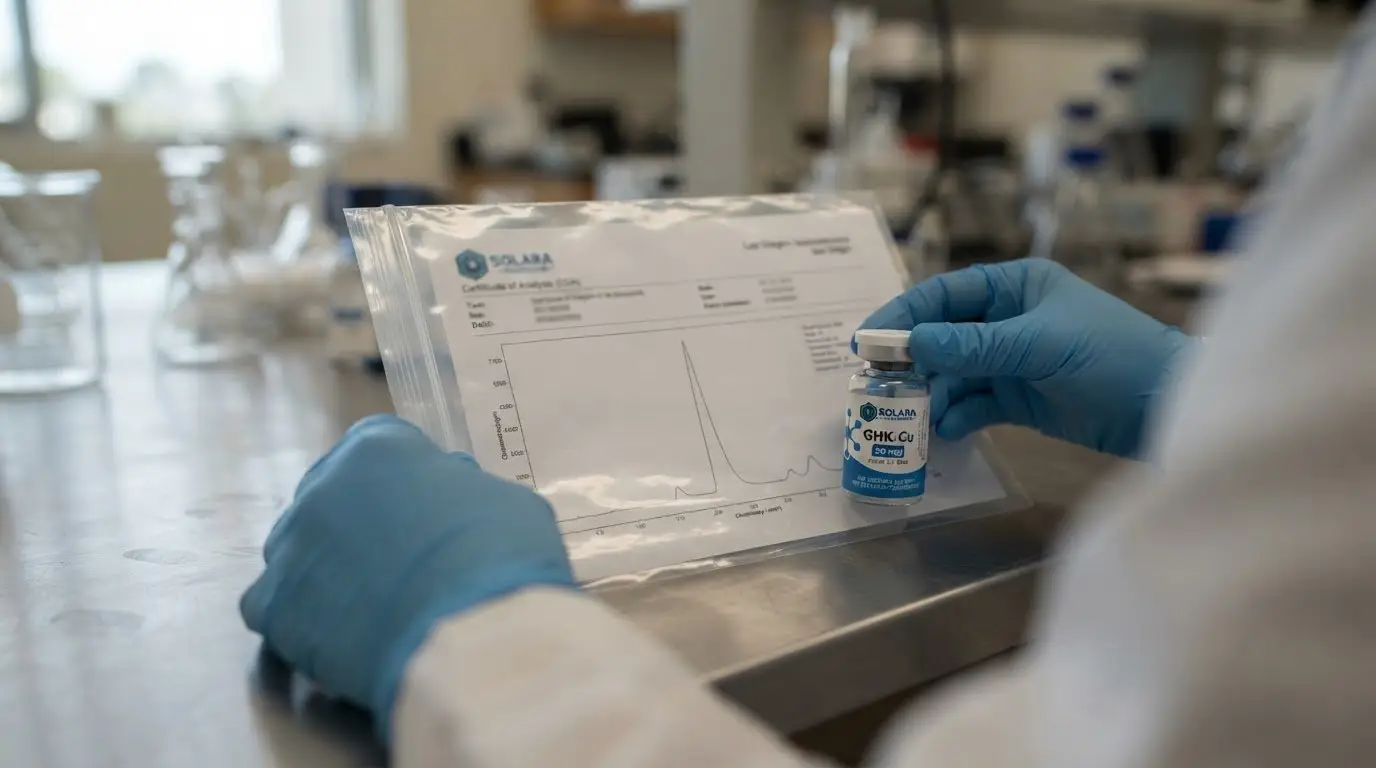
Solara Compounds supplies laboratory buyers with research peptides and chemical compounds for controlled studies. For aggregation-related work, consistent material sourcing and batch documentation can help researchers maintain clear records across experiments. Products undergo third-party testing by Kovera Labs, and each batch has a unique lot number and a batch-specific Certificate of Analysis (COA) available for verification.
Researchers can use these materials in laboratory studies examining peptide behavior, including solubility and aggregation. Product selection doesn’t replace sequence-specific formulation work or analytical measurement. All products are for laboratory research only, not medicines or supplements, and are not for people or animals.
For questions about research materials or batch paperwork, contact Solara Compounds at [email protected] or 1 (877) 388-9178, Monday-Friday, 8 AM-5 PM Eastern.
Build a More Reproducible Research Plan
Your next step is to define what a useful aggregation result looks like for the specific peptide and assay. Set the measurement approach, sample-handling conditions, and comparison criteria before starting, so later observations have a clear experimental context. A repeatable plan makes peptide aggregation prevention a measurable part of laboratory study, rather than an assumption based on appearance.
Solara Compounds offers research materials including SOL-3RT Retatrutide 10mg, SOL-2TZ Tirzepatide 10mg, and GHK-Cu 50mg. These products are for laboratory research only, not for people or animals, and are not medicines or supplements. They are research materials, not a substitute for peptide-specific formulation design or analytical validation.
To identify materials for a laboratory project, explore the research catalog. A well-defined study starts with a clear question and consistent methods. With those in place, researchers can evaluate results with greater precision.
Frequently Asked Questions
How Can You Measure Aggregation Effectively?
Use complementary measurements selected for the aggregate types and changes under study. For example, pair a size-distribution method with an activity assay, then compare matched samples before and after a defined storage or handling condition. This approach can distinguish changes in particle size from changes in function. Include a control sample so researchers can separate aggregation-related shifts from background variation.
What causes peptides to aggregate?
Peptides aggregate when molecular interactions encourage separate chains to associate. Triggers vary by sequence and can include hydrogen bonding, hydrophobic contacts, heat, agitation, and contact with air-liquid interfaces. Manufacturing or purification conditions can also contribute. For example, a sequence that folds or associates readily may behave differently during mixing than a more soluble peptide, so researchers assess risk for each molecule.
Which factors affect peptide aggregation, including sequence, concentration, pH, temperature, and salts?
Sequence composition influences how peptide chains interact, while concentration affects how often molecules encounter one another. Temperature and salt conditions can shift those interactions. pH changes molecular charge; maintaining it close to a protein’s isoelectric point is one formulation consideration. Evaluate these variables together, since a pH or salt condition that supports one peptide may not produce the same solubility for another.
Which buffers, cosolvents, surfactants, or stabilizers prevent peptide aggregation, and what concentrations are used?
No single additive or concentration applies to every peptide. Sucrose or trehalose can provide thermal protection, while polysorbate 20 or 80 can reduce interface stress in protein formulations. A reported insulin test used ProTek alkylsaccharide at 0.1% and 0.2% during continuous agitation. Those concentrations describe that insulin test, not a general formulation recommendation for other peptides.
How can peptide aggregation be detected and measured using microscopy, spectroscopy, chromatography, or light scattering?
Microscopy can help inspect visible particles, but it will not reveal every dissolved aggregate. Spectroscopic methods examine sample properties through light interactions. Chromatography separates molecular species; SEC-MALS can quantify monomers and larger aggregates. Dynamic light scattering estimates hydrodynamic size and polydispersity. Researchers can combine these approaches to distinguish visible particulates from changes in dissolved aggregate populations and particle-size distribution.