Research Articles
Evaluating Research Chemical Vendors: A Laboratory Buyer’s Checklist


What if a confident purity claim tells you less than the paperwork behind it? For lab buyers, evaluating research chemical vendors means checking whether quality claims connect to evidence for the specific batch under consideration. A Certificate of Analysis (COA) that doesn’t match the lot can’t answer the question that matters.
It’s reasonable to expect clear records and purchasing details before placing an order. This guide offers a repeatable, documentation-first checklist for comparing suppliers. You’ll learn what to verify in a batch-specific COA, including the lot number, testing date, laboratory, and analytical data, then assess whether shipping and support information meet your laboratory’s needs.
Solara Compounds states that it provides batch-specific COAs and uses independent third-party testing through Kovera Labs. Treat those details as examples to verify, not as a substitute for reviewing the relevant records yourself. Products from Solara Compounds are for laboratory research only. They are not medicine or supplements and are not for use in people or animals. Visit solaracompounds.com for company information.
Key Takeaways
- When evaluating research chemical vendors, compare the evidence behind quality claims, not just product descriptions.
- Check that a COA identifies the compound and exact lot, names the testing methods, and provides findings you can review.
- Use HPLC results as information about chromatographic purity, not proof of every quality attribute.
- Compare disclosed quality controls, third-party testing, lot traceability, shipping details, and support before selecting a supplier.
- Solara Compounds describes batch-specific COAs, unique lot numbers, and third-party testing through Kovera Labs. Products are for laboratory research only, not medicine or supplements, and not for use in people or animals.
Evaluating research chemical vendors: start with evidence, not promises
Supplier descriptions can sound remarkably similar. One page may call a product high quality; another may use the same words, while offering very different documentation to support them. For laboratory buyers, evaluating research chemical vendors starts with the records and purchasing information they can actually inspect.
A research chemical vendor supplies materials for laboratory research. The term research chemicals describes substances associated with research use, but a label alone doesn’t establish the quality or suitability of a specific batch. Confirm the intended laboratory-use context and assess the available evidence directly.
Evidence-led vendor evaluation means comparing a supplier’s product claims with batch records, disclosed testing information, and clear procurement terms. A Certificate of Analysis (COA) can support review of reported results for a batch. It isn’t a guarantee of experimental outcomes or proof of every quality attribute.
What should a laboratory buyer verify first?
Start with the basics: does the supplier identify the compound clearly and frame it for laboratory use? Then check whether documentation relates to a specific batch, rather than relying only on a general statement about quality. Before ordering, look for accessible information about purchasing, shipping, and how to contact support with a technical or order question.
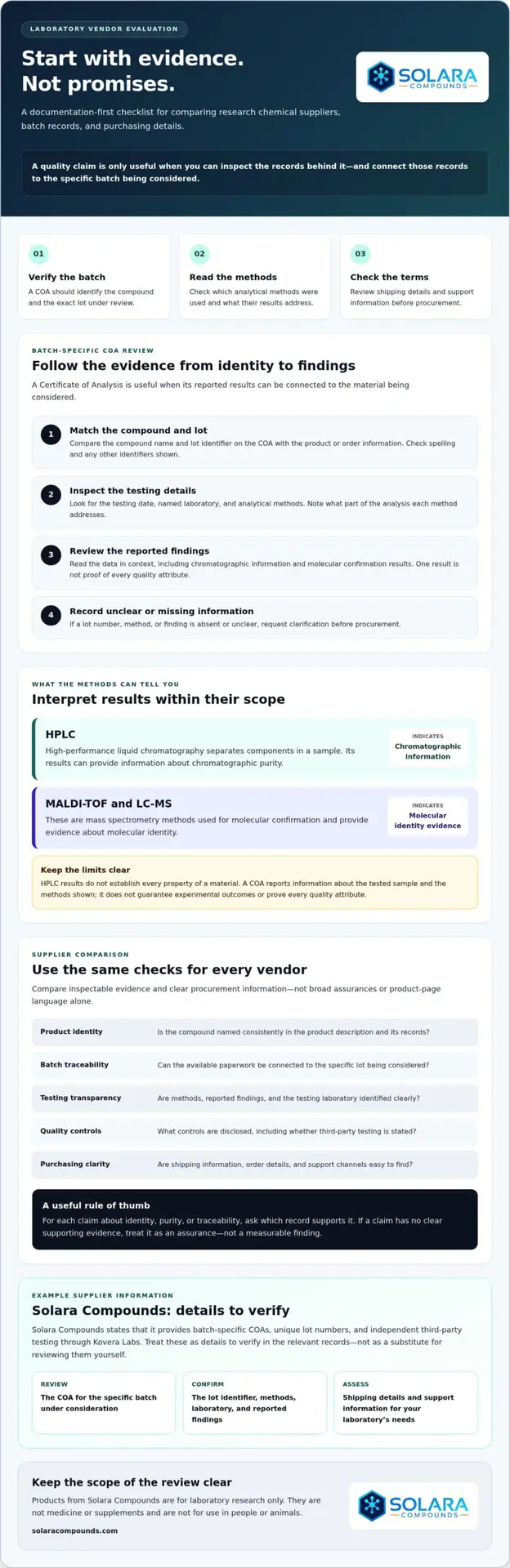
- Product identity: Is the compound named consistently in the product description and its records?
- Batch documentation: Can the available paperwork be connected to the lot being considered?
- Procurement clarity: Are shipping coverage, order information, and support channels easy to find?
These checks help Boston-area laboratories compare suppliers using the same criteria, rather than letting a polished product page set the standard.
How to separate substantiated claims from broad assurances
For each claim about identity, purity, or traceability, ask what record supports it. Look for named analytical methods, reported findings, and a clear connection between the document and the batch. Words such as “premium” or “superior” may describe a seller’s positioning, but without supporting records they aren’t measurable evidence.
Keep the scope of each record in view. A COA reports information about the tested sample and methods shown; it doesn’t establish how a material will perform in a researcher’s particular experiment. If a detail is missing or unclear, record the question and request clarification before purchasing.
Solara Compounds states that its products are for laboratory research only. As with any supplier, lab buyers should review the relevant records and procurement details at Solara Compounds’ COA page rather than treating a general assurance as a substitute. Products are not medicine or supplements and are not for use in people or animals.
Check the COA: confirm batch identity, methods, and traceability
A Certificate of Analysis (COA) is useful only if you can connect its findings to the material being considered. A batch-specific COA is more useful than a generic document because it identifies the lot whose reported results you’re reviewing.
Does the COA match the product batch?
Use this sequence to review the document:
- 1. Match the compound and lot. Compare the compound name and lot identifier on the COA with the product or order information. Check spelling and any other identifiers shown.
- 2. Inspect the methods. Note which analytical methods were used and what part of the analysis each method addresses. If the report names a testing laboratory, record that information too.
- 3. Review the reported findings. Read the data in context, including any chromatographic information and molecular confirmation results. Don’t treat one result as proof of every quality attribute.
- 4. Record questions. If a lot number, method, or finding is absent or unclear, ask the supplier for clarification before procurement.
HPLC, or high-performance liquid chromatography, separates components in a sample. Its results can provide chromatographic purity information, but they don’t establish every property of a material. MALDI-TOF and LC-MS are mass spectrometry methods used for molecular confirmation. They provide evidence about molecular identity, but a result from either method doesn’t establish suitability for every experimental design.
What do HPLC and mass spectrometry reports show?
Read each result according to its method and scope. A chromatogram can help a researcher interpret the separation of detected components; mass spectrometry data can support molecular confirmation. Neither should be read as a blanket guarantee of batch quality or experimental performance.
The U.S. Environmental Protection Agency describes how EPA evaluates chemical safety. That risk-evaluation framework addresses a different question from a supplier COA, which reports analytical findings for a batch. Don’t treat a COA as a safety assessment.
Solara Compounds states that it provides batch-specific COAs and uses third-party testing through Kovera Labs, with molecular confirmation by MALDI-TOF and LC-MS. Lab buyers can review the available batch-specific COA documentation and check that the record matches the lot under consideration. Products are for laboratory research only, not medicine or supplements, and not for use in people or animals.
As part of evaluating research chemical vendors, assess the document itself before relying on a product description. For a supplier’s product listings, see the research compound catalog.
Compare vendor quality controls and lot-level transparency
Quality claims become easier to assess when buyers compare the underlying disclosures side by side. In evaluating research chemical vendors, separate information about a supplier’s process from analytical evidence tied to an actual batch. A described process can explain how materials are made; it doesn’t replace a batch record or independently generated test results.
Which quality-control details are useful to compare?
Use a simple comparison table to note what each supplier discloses and what documentation is available to check those claims. Treat missing details as questions to resolve, not as evidence that a process or test does not exist.
| Comparison point | What to look for | Solara Compounds states |
|---|---|---|
| Process | Whether synthesis and purification steps are described clearly. | Peptides are produced using solid-phase synthesis in ISO 7 cleanrooms. |
| Analytical methods | Which methods are used and what information each is intended to provide. | HPLC purification, with MALDI-TOF and LC-MS for molecular confirmation. |
| Third-party testing | Whether the independent laboratory is named and related batch information is accessible. | Third-party testing through Kovera Labs. |
| Batch traceability | Whether a unique lot identifier connects the product to its associated records. | Unique lot numbers and batch-specific COA documentation. |
Solara Compounds describes its HPLC purification target as greater than 98% minimum. Buyers should confirm the current wording and applicable details on the relevant product page and batch records. A stated target is useful context, but it isn’t a substitute for reviewing the underlying documentation.
How do lot numbers support research traceability?
A unique lot number acts as a reference point connecting product identification with the associated batch documentation. Check that the identifier on the material or purchasing record corresponds to the lot shown on the COA. Retain both with procurement records so researchers can identify which batch documents were reviewed if questions arise later.
Third-party testing and COAs provide evidence for review, not a guarantee of results in a particular experiment. Assess whether the report is specific to the lot, whether the methods and findings are stated, and whether the supplier’s process claims can be distinguished from test results. Products from Solara Compounds are for laboratory research only, not medicine or supplements, and not for use in people or animals.
Assess purchasing, shipping, and support before choosing a vendor
Clear procurement information is part of supplier transparency. Before ordering, check whether the vendor states where it ships, explains order processing, and provides a support channel. For Boston-area laboratories, confirm that the stated shipping territory includes the intended destination. A general shipping estimate isn’t a guaranteed delivery date.
What should buyers confirm about ordering and delivery?
Review the current shipping information and checkout terms before submitting an order. Check whether shipping charges or any free-shipping threshold are clearly presented, and whether order processing details are available. Solara Compounds currently states that free shipping applies to orders over $200; confirm current eligibility and terms during checkout. Review the live policy page for the current process for damaged, incorrect, or reported-lost orders.
Product descriptions also need to be specific. Confirm the exact compound name and any specifications the supplier provides, and make sure the page maintains a laboratory-use frame. Products are for laboratory research only, not medicine or supplements, and not for use in people or animals.
Is supplier support responsive and transparent?
Look for a published contact method and stated business hours. Before procurement, send a focused question about a missing COA, lot identification, shipping coverage, or an unclear product detail. The clarity of the response can help you decide whether the supplier’s information is sufficient for your purchasing process. Solara Compounds lists support@solaracompounds.com and 1 (877) 388-9178, Monday through Friday, 8 AM to 5 PM Eastern. Verify contact details on the live site before relying on them.
Use a simple record to compare vendors and identify unresolved issues:
| Check | Evidence to record | Buyer’s note |
|---|---|---|
| Shipping and processing | Territory, stated processing information, checkout terms | Does it fit the lab’s purchasing needs? |
| Product information | Exact name, listed specifications, laboratory-use framing | Are any details unclear? |
| Support and policies | Contact channel, business hours, current order policies | Which questions remain unanswered? |
This record turns a quick website review into a repeatable procurement check. For a starting point, see the current research catalog and review the available product and ordering information.
Apply the vendor checklist to Solara Compounds
The same standards apply whether you’re considering Solara Compounds or another supplier: review documentation, analytical methods, lot traceability, purchasing details, and available support. Company statements are useful starting points, but buyers should check current product information and batch records before procurement.
A practical final review before laboratory procurement
Before proceeding, confirm that the product description names the intended research material and that the available batch documentation corresponds to the lot being considered. Check the methods and reported findings in the COA, then note any information you still need about ordering or delivery. If a document or product detail is unclear, ask supplier support and resolve the question before completing procurement.
Solara Compounds states that it assigns unique lot numbers, provides batch-specific Certificates of Analysis (COAs), and uses third-party testing through Kovera Labs. Buyers can inspect the available COA documentation and compare its identifiers with the current product information. These are company-stated features to verify against the relevant record, not a substitute for a researcher’s own assessment.
What Solara’s documentation-first approach offers buyers
Lot numbers provide a reference for connecting a product with its associated paperwork. A batch-specific COA can help buyers review reported results for that lot, while disclosed testing information adds context about how those results were obtained. Neither documentation nor third-party testing predicts outcomes or establishes suitability for every research design.
Solara Compounds supplies research materials through solaracompounds.com for laboratory research only. Products are not medicine or supplements and are not for use in people or animals. Keep that intended-use context clear as you review product descriptions and procurement information.
Before procurement, verify that the batch record matches the product lot, then resolve any unanswered questions with the supplier.
For laboratory buyers ready to review available product information, shop research peptides.
Make your next supplier review evidence-led
Evaluating research chemical vendors is more consistent when you use the same checks each time. Match the COA to the specific compound and lot, review what the stated analytical methods can and can’t show, and compare documented quality controls with clear purchasing and support information.
Solara Compounds states that it provides batch-specific supplier COAs, unique lot-number traceability, and third-party testing through Kovera Labs. Review the relevant records for the batch under consideration rather than treating documentation as a promise of experimental results.
Materials from Solara Compounds at solaracompounds.com are for laboratory research only. They are not medicine or supplements and are not for use in people or animals.
Ready to apply the checklist? See the current research catalog and review product information as part of your laboratory procurement process. A clear, repeatable evaluation helps your team make a more informed supplier decision.
Frequently Asked Questions
What should I look for when evaluating research chemical vendors?
Prioritize records you can verify over broad quality claims. Check that the supplier identifies the compound and laboratory-use context, provides documentation for the relevant batch, and explains its analytical methods. Compare lot traceability, purchasing terms, shipping information, and support access as well. For Boston laboratory buyers, applying the same checklist to each supplier makes it easier to compare evidence and identify unanswered questions before procurement.
How can I verify that a COA matches a specific research chemical batch?
Compare the compound name and lot identifier on the Certificate of Analysis (COA) with the product or order information. Confirm that the document is explicitly associated with the batch under consideration, then review its stated methods and findings. If the lot number is missing, inconsistent, or difficult to connect to the product, ask the supplier for clarification before ordering. Keep the relevant COA with laboratory procurement records.
What does HPLC purity information tell a laboratory buyer?
HPLC, or high-performance liquid chromatography, separates components in a sample and provides chromatographic data that can inform a purity assessment. Review the report’s method and findings rather than relying only on a headline percentage. HPLC data does not establish every quality attribute, confirm all aspects of identity, or determine whether a material suits a particular experimental design. Interpret the result within the scope of the test reported.
Can a COA guarantee the outcome of a laboratory experiment?
No. A COA documents reported analytical findings for a tested batch; it cannot predict results in a specific experiment. Outcomes also depend on the research question, experimental conditions, and the researcher’s methods. Use the COA to assess the information it provides, such as batch identification and stated test results. Treat it as one part of procurement review, not as a promise of performance or reproducibility.
How do MALDI-TOF and LC-MS reports help assess compound identity?
MALDI-TOF and LC-MS are mass spectrometry methods used for molecular confirmation. Their reported results can provide evidence relevant to whether the measured material corresponds to the stated molecule. Review the method and data provided, and connect the report to the batch being considered. These methods support identity assessment, but no single result establishes every quality attribute or proves suitability for every laboratory research design.
Why does lot-number traceability matter when comparing suppliers?
A unique lot number gives buyers a reference that can connect a product with its batch paperwork, including the associated COA. This makes it easier to confirm which record was reviewed during procurement and to keep documentation organized for laboratory work. Compare the lot identifier across product information and records, and retain both with purchasing files. Solara Compounds states that it assigns unique lot numbers to batches.
What should I confirm about a research chemical vendor’s shipping and support?
Check the vendor’s stated shipping territory, current processing information, checkout charges, and policies for order issues. Don’t interpret a general shipping estimate as a guaranteed delivery date. Confirm that support contact details and hours are published; Solara Compounds lists support@solaracompounds.com and 1 (877) 388-9178, Monday through Friday, 8 AM to 5 PM Eastern. Buyers in Boston, San Diego, San Francisco, New York, Houston, Miami, Los Angeles, Austin, Raleigh, Seattle, Chicago, Philadelphia, Baltimore, Dallas, Phoenix, Tampa, Atlanta, and Denver should verify current terms directly.
Solara Compounds products are for laboratory research only, not medicine or supplements, and not for use in people or animals. Visit solaracompounds.com for current product and procurement information.