Research Articles
Academic Research Peptide Sourcing: Lab Guide


What makes a research peptide purchase defensible after the package reaches your lab? Academic research peptide sourcing can be difficult to evaluate when supplier claims vary and a generic Certificate of Analysis (COA) may not match the batch being purchased.
That concern is reasonable. Laboratory buyers need records they can compare, verify, and retain, not just broad claims about quality. A clear sourcing framework can help researchers assess supplier transparency, connect batch documentation to received materials, and create a practical procurement record for institutional use.
This guide walks through the evidence to review, from lot-number traceability and batch-specific COAs to independent testing and receiving checks. A COA is documentation describing a material’s identity and analytical results; it supports evaluation, but doesn’t guarantee experimental outcomes. Solara Compounds provides batch-specific supplier COAs and independent third-party testing through Kovera Labs, with documentation available at solaracompounds.com.
All products are for laboratory research only and are not for human or animal consumption.
Key Takeaways
- Start academic research peptide sourcing by documenting study and institutional purchasing requirements, so investigators, procurement staff, and receiving teams can work from clear records.
- Review batch records in sequence: match the lot number, check identity data, assess purity results, and retain the documentation with the purchase record.
- Compare suppliers using observable evidence, including lot traceability, COA access, identity testing, purity reporting, and supporting documentation.
- Use a consistent receiving workflow to reconcile the order, product description, lot identifier, and matching COA when materials arrive.
- Solara Compounds provides batch-specific supplier COAs and independent third-party testing through Kovera Labs. All products are for laboratory research only and not for human or animal consumption.
Why Academic Research Peptide Sourcing Starts With Study Requirements
Procurement begins before a supplier is selected. First, the research team defines the material the study requires. That decision is separate from choosing an experimental method or interpreting study outcomes: sourcing establishes what is being purchased and what records will accompany it, while the study design and analysis remain the researchers’ responsibility.
Academic research peptide sourcing is a documented procurement process that connects laboratory requirements to material identity, batch traceability, and retained records; it is not a guarantee of quality or experimental results.
Different people involved in a university or institutional purchase may need different information. Investigators need to specify the research material and relevant characteristics. Procurement staff may need a clear product description and supplier documentation for the purchasing file. Receiving teams need records that let them reconcile the delivered material with the order. Agreeing on these needs in advance can reduce confusion later.
Translate the research question into purchasing criteria
Start with the study’s requirements, not the wording of a catalog. Identify the compound and material form required, then note the identity evidence and documentation the team needs to review or retain. If the work concerns custom rather than catalog-sourced material, Custom peptide synthesis in academic research offers background on how synthesized peptides are used in research.
Keep study-specific criteria separate from supplier marketing language. A phrase such as “research grade” is a description, not a complete purchasing specification. Teams can instead document the exact material name, the required form, and which supporting records must accompany the purchase. For example, a buyer sourcing KPV research material can preserve the listed product description alongside the institution’s own purchasing requirements, without treating the catalog wording as a substitute for study design.
Institutional purchasing rules vary. A department, grant, or procurement office may require particular forms or approvals, so use the institution’s own process rather than assuming one checklist applies everywhere.
Separate product claims from evidence
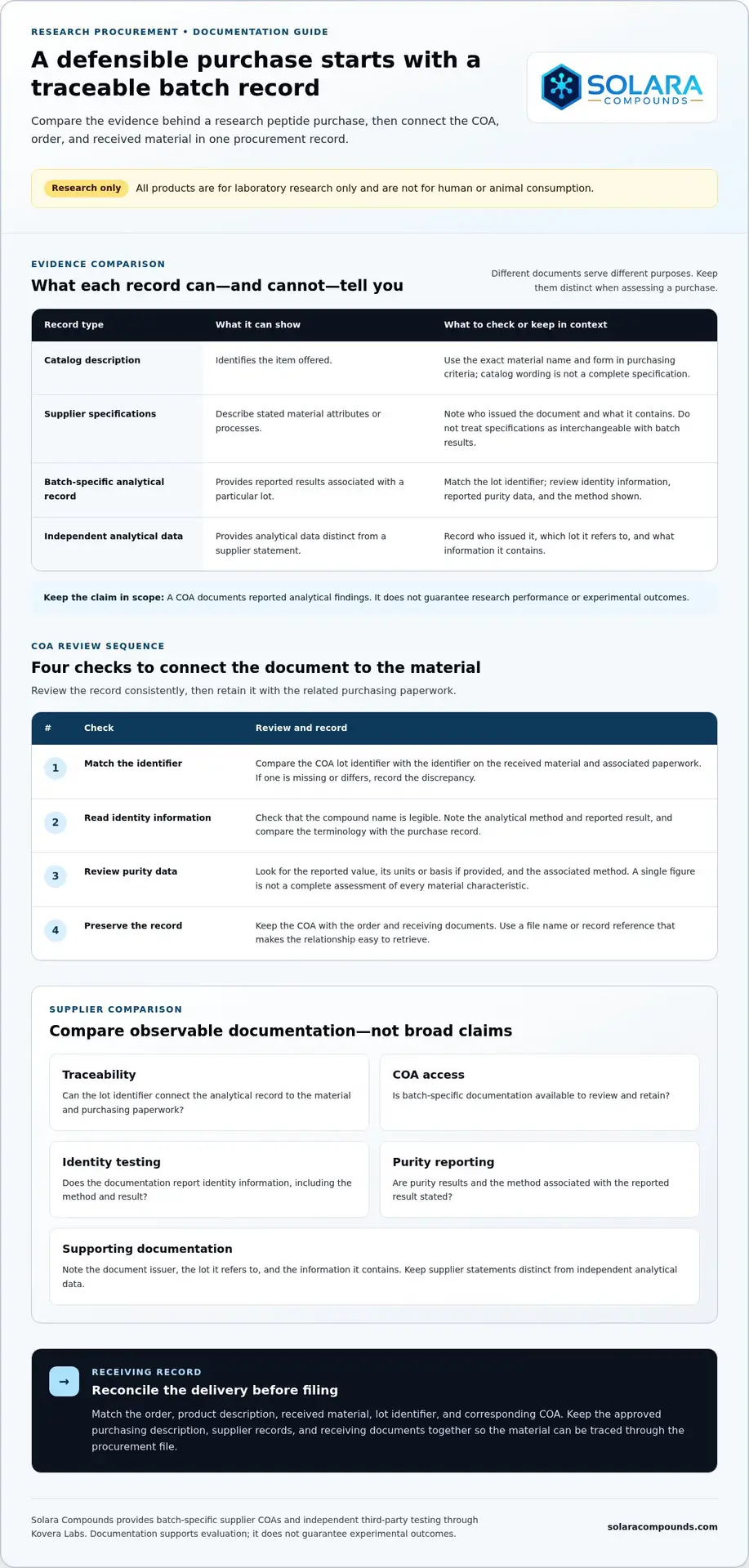
Review each record according to what it can show. A catalog description identifies the item offered. Supplier specifications describe stated material attributes or processes. Batch-specific analytical documents provide results associated with a particular lot. These records serve different purposes and shouldn’t be treated as interchangeable.
A supplier statement is also distinct from independent analytical data. Record who issued each document, which lot it refers to, and what information it contains. This is a neutral way to assess the evidence without assuming that broad claims prove or disprove a particular batch’s characteristics.
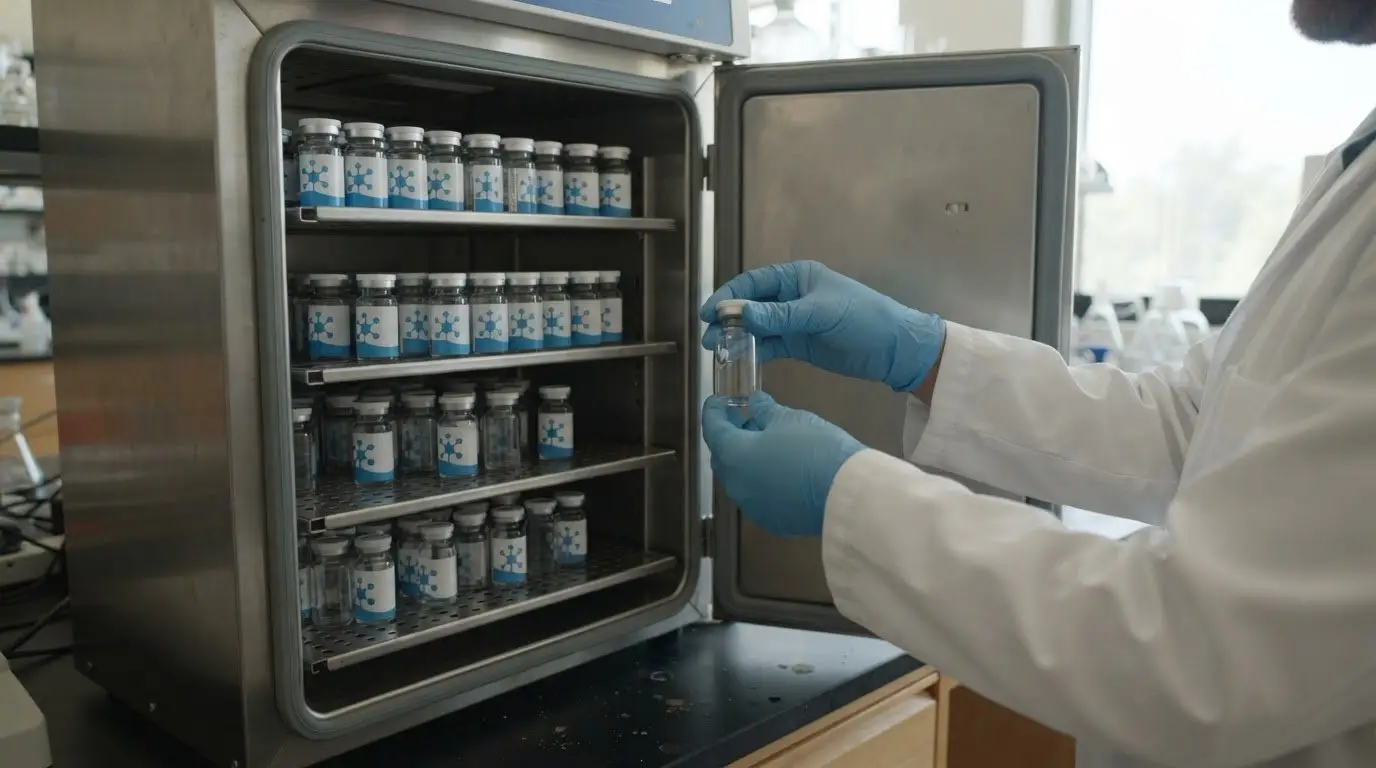
Set a retention plan before ordering. Keep the approved purchasing description, relevant supplier records, and later receiving documents together so the laboratory can trace the material through its procurement file. Solara Compounds supplies research materials for laboratory research only; they are not for human or animal consumption. Its research catalog is one place to begin reviewing available product descriptions and documentation.
How to Evaluate Batch-Specific COAs and Analytical Records
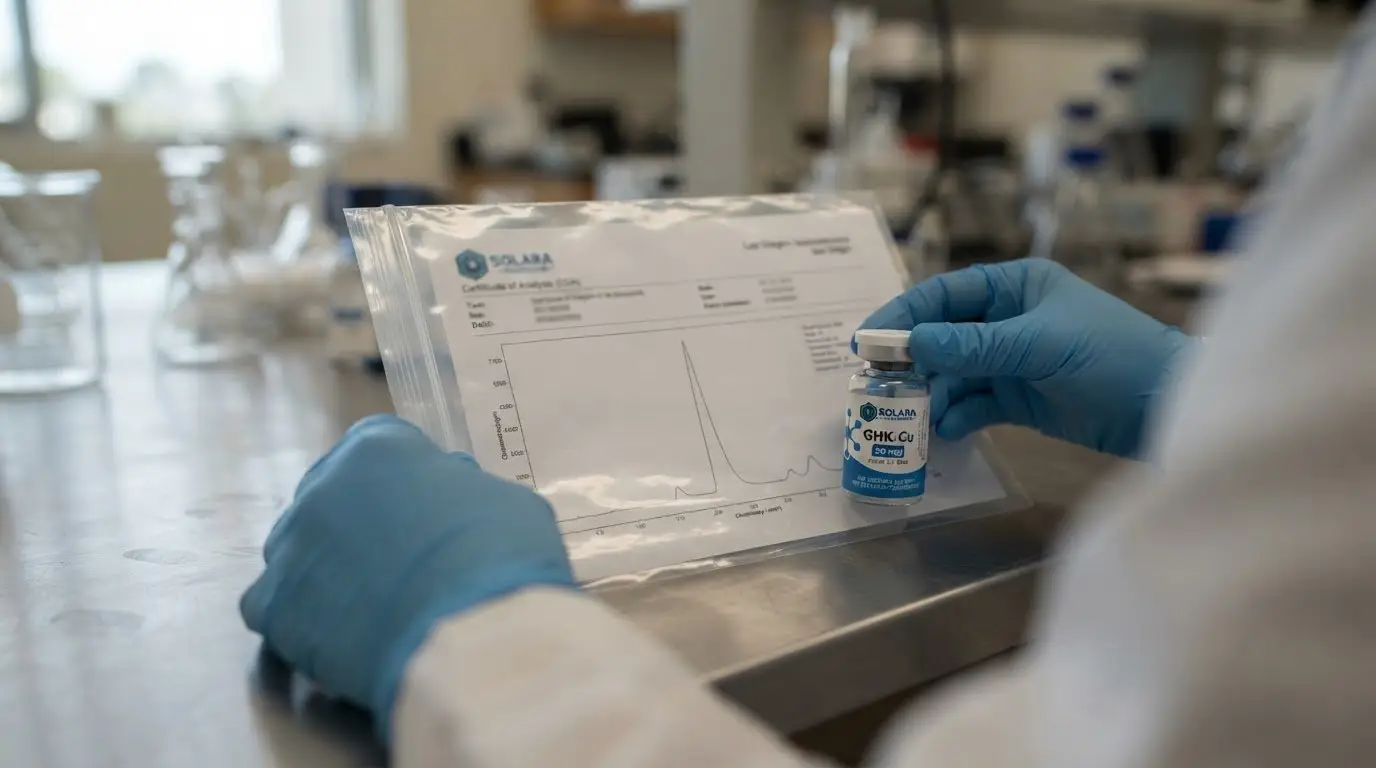
A Certificate of Analysis (COA) is useful only when its contents can be interpreted in context. Review it in a consistent sequence: connect the document to the material, assess identity information, read the reported purity data, and file the record with related purchasing documents. This helps a laboratory distinguish what the report states from what it does not establish.
- Check the identifier. Compare the lot identifier shown on the COA with the identifier on the received material and associated paperwork. If they differ or one is missing, record the discrepancy rather than assuming the documents refer to the same batch.
- Read the identity information. Confirm the compound name is legible and note the analytical method and reported result. Check that the document’s terminology corresponds to the material description used in the purchase record.
- Review the purity data. Look for a reported value, its units or basis if provided, and the method associated with the result. Avoid treating a single figure as a complete assessment of all material characteristics.
- Preserve the record. Retain the COA with the order and receiving documents, using a file name or record reference that makes the relationship easy to retrieve.
A batch COA records reported analytical findings; it does not guarantee research performance or experimental outcomes. Its meaning depends on the information shown, the lot it identifies, and the limits of the reported analysis.
Understand what the methods report
High-performance liquid chromatography (HPLC) separates components in a sample so their relative amounts can be assessed. A purity result is an analytical measurement based on that method. It describes the sample in the scope of the reported test, not every feature that could matter to a laboratory’s work.
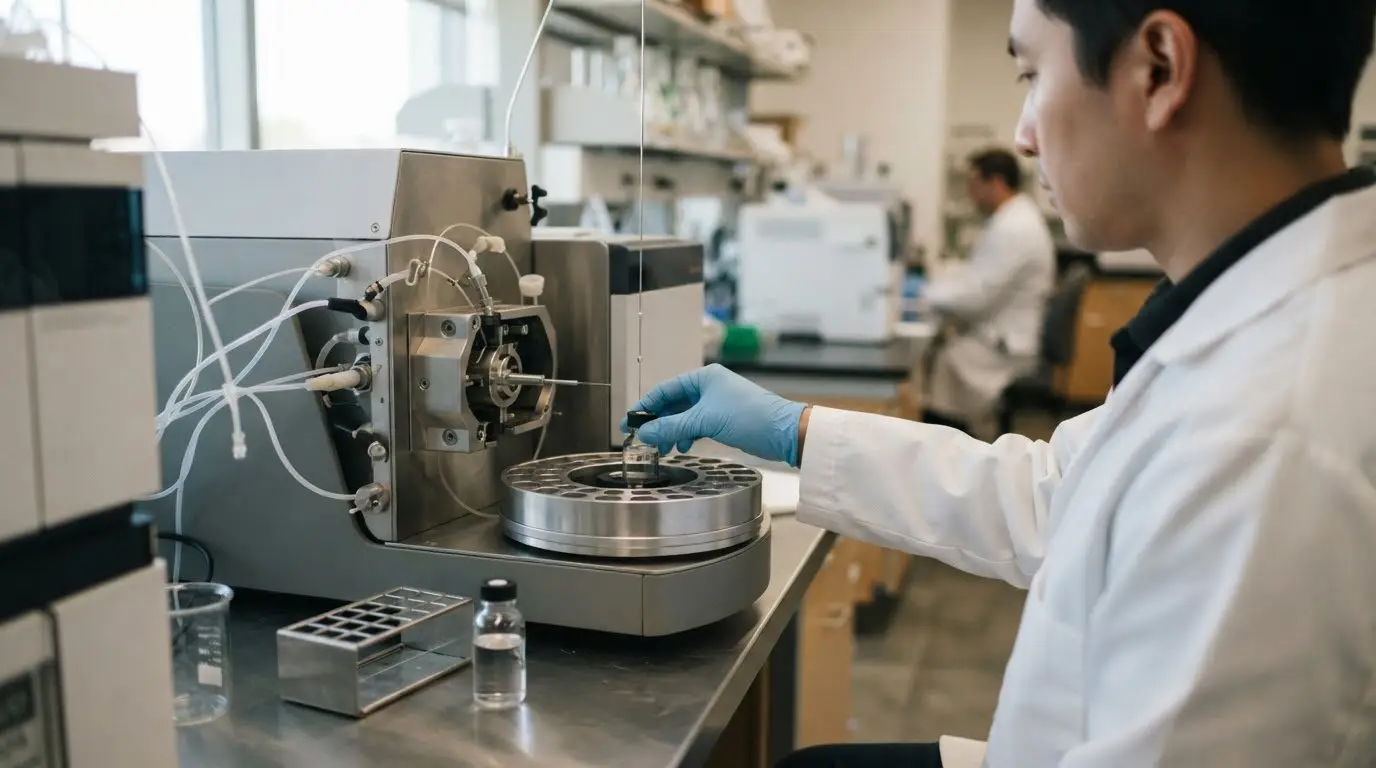
Mass spectrometry provides evidence used to assess molecular identity by measuring properties such as molecular mass. MALDI-TOF and liquid chromatography-mass spectrometry (LC-MS) are methods that can support this assessment. Their findings help evaluate identity; they do not show how a material will perform in a specific experiment. For additional background, researchers can consult information on independent peptide testing methods while keeping each report’s stated scope in view.
For record access, the COA documentation page can help buyers locate available analytical records. Review the document itself and compare its details with the identifiers in the laboratory’s purchasing file.
Once the team has defined what it needs to assess, review the current research catalog alongside the records relevant to its purchasing requirements. All products are for laboratory research only and are not for human or animal consumption.
Compare Peptide Suppliers by Traceability, Testing, and Documentation
A neutral supplier comparison starts with observable records, not broad impressions. For academic research peptide sourcing, use the same criteria for each supplier and note whether each point appears in a document, a product description, or a supplier statement. This creates a review that procurement staff can explain and researchers can relate to their own purchasing requirements.
Use these questions as a comparison framework:
- Traceability: Do the available records identify a specific lot, and is that identifier connected to the product information?
- COA access: Can buyers review analytical documentation, and does the document describe the material or batch it covers?
- Identity testing: Do records name an analytical approach and provide identity-related findings?
- Purity reporting: Is a result presented with enough context to identify the reported method and its scope?
- Supporting records: Are product descriptions and purchasing documents available in a format the lab can retain and retrieve?
Record the evidence plainly. For instance, a catalog statement may describe a general product attribute, while a laboratory report may contain analytical results. Mark each item as documented, stated by the supplier, or not addressed in the materials reviewed. This is more useful than treating a supplier’s marketing language as equivalent to a test result, or assuming that missing detail proves a problem.
Interpret testing records in context
An independent test report provides an external source of analytical information. That additional source can inform a buyer’s review, but it doesn’t establish that a material is suitable for a particular study. The laboratory still needs to judge whether the reported evidence addresses its defined purchasing criteria.
Keep the conclusion within the limits of the records. Identity and purity findings describe the reported analyses; they do not establish experimental performance or verify every handling, storage, or study variable. A COA or test report should therefore be treated as one part of a documented review, rather than as a complete assessment of every factor relevant to laboratory work.
For further context, researchers can consider high-purity research peptide sourcing criteria alongside the evidence available for the material under review. A COA documentation resource can also help buyers locate records to evaluate. Apply the institution’s own purchasing and record-retention procedures when documenting the review.
A consistent comparison file can preserve the criteria used, the supporting materials reviewed, and the purchasing decision. This helps colleagues understand how the decision was made without overstating what any single document proves.
A Practical Academic Peptide Procurement and Receiving Workflow
A reliable purchase record starts before an order is placed and continues through receipt. In academic research peptide sourcing, connecting the study’s documented purchasing need to supplier records and received material helps procurement staff and laboratory teams maintain a clear trail without assuming every institution uses the same process.
Before placing an institutional order
Begin with the approved purchasing need. Confirm that the requested compound and material form match the study’s documented requirements. Then review available supplier records and identify which documents the laboratory plans to retain. This gives the buyer a clear basis for comparing the order details with the paperwork received later.
Next, follow the institution’s own approval, purchasing, and supplier onboarding processes. Requirements can differ between institutions and departments, so use the applicable internal workflow rather than relying on a universal checklist. Keep the product description used for purchasing consistent across the request, approval record, and order documentation wherever the institutional process allows.
A simple sequence can keep responsibilities clear:
- Document the need. Record the requested compound and material form as they relate to the study’s purchasing requirement.
- Review supplier records. Note the documents available for the material and which ones the laboratory will retain.
- Complete the institutional order. Use the relevant purchasing approvals and supplier onboarding steps.
- Reconcile receipt. Compare the received material identifiers with the order and applicable lot-specific records.
At receipt and during recordkeeping
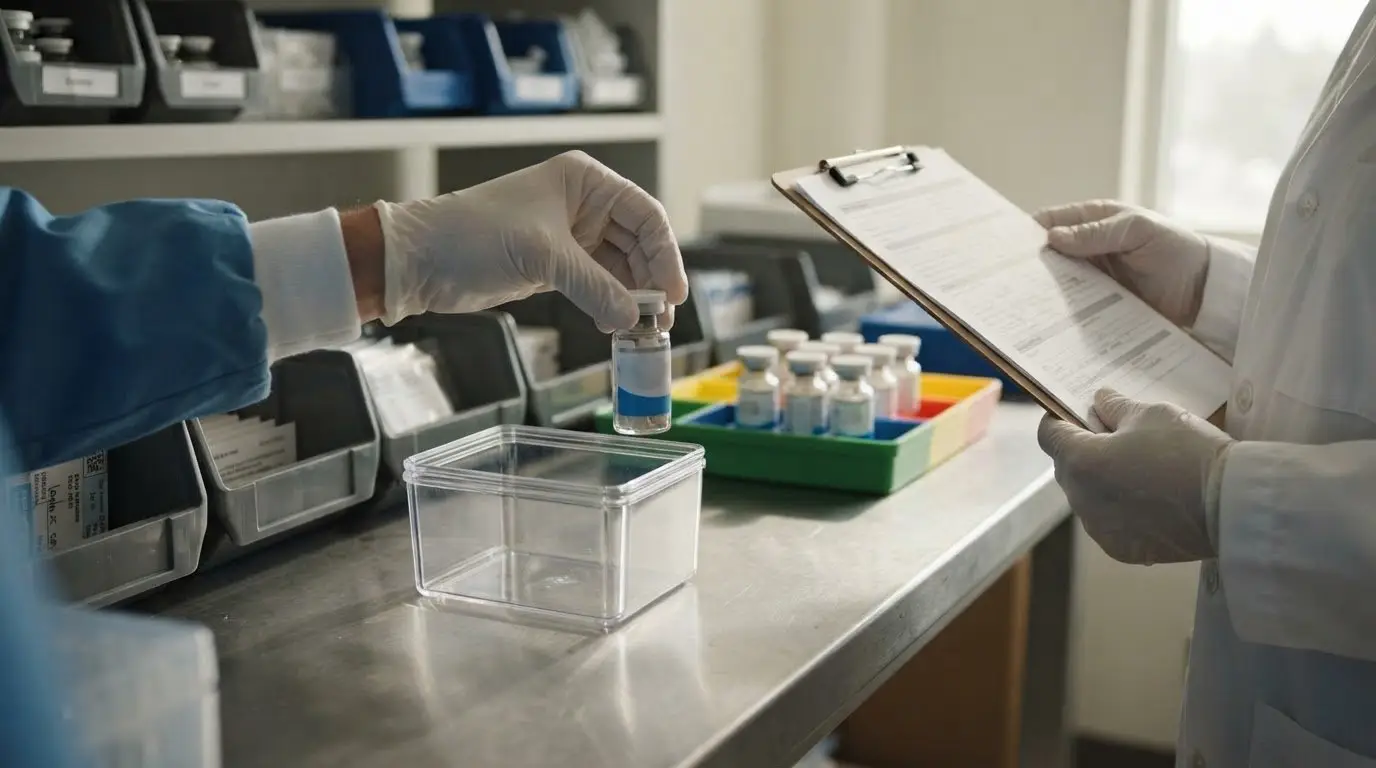
When the shipment arrives, compare the supplied product description and lot identifier with the purchase record and available batch documentation. If the identifiers align, file the records together. If a detail does not match or cannot be read, document the discrepancy through the laboratory’s usual receiving process before treating the file as complete.
A practical record set can include the product description, order record, received lot identifier, and matching batch COA, subject to the institution’s own purchasing and retention requirements. This is a useful working checklist, not a universal regulatory rule. Keeping these items together helps colleagues trace the received material back to the order without searching across separate files.
Choose a consistent location for the documents, such as the institution’s designated procurement or laboratory record system, and use a clear file name that connects the purchase to its lot. The appropriate system and retention period depend on institutional procedures. The key is that authorized team members can retrieve the relevant records when needed.
For sourcing questions, Solara Compounds can be reached at [email protected] or 1 (877) 388-9178, Monday-Friday, 8 AM-5 PM Eastern. All products are for laboratory research only and are not for human or animal consumption. Once purchasing criteria and receiving records are organized, review the research catalog as part of the sourcing process.
How Solara Compounds Supports Documentation-First Research Sourcing
A documentation-first review works best when buyers apply consistent criteria to each purchase. At Solara Compounds, laboratory buyers can use the product information and records on solaracompounds.com as inputs to their own sourcing review, then assess whether those materials align with the study’s documented purchasing needs and institutional procedures.
Connect Solara’s documentation to the buyer’s review
When reviewing a product, start with the description used for the purchase and compare it with the records associated with the material received. Keep the documents together in the laboratory’s purchasing file, and note which information supports the team’s review. For researchers locating relevant paperwork, the COA documentation page provides a place to consult during that process.
Use the analytical information only for the question it addresses. A record may help a buyer assess the reported characteristics of a material, but it doesn’t determine whether that material fits a study’s design or establish experimental performance. Those judgments remain with the research team, guided by its requirements and institutional process.
This approach keeps the supplier’s product information, laboratory criteria, and purchasing records distinct. It also gives procurement and research staff a shared basis for reviewing the same documentation without treating a supplier description as a substitute for the lab’s own assessment.
Keep the research-use boundary explicit
Solara Compounds materials are intended solely for laboratory research. Keep that purpose clear in purchasing and receiving records, and do not interpret product information as supporting personal, medical, diagnostic, veterinary, or performance applications.
With the documentation criteria in hand, See the current research catalog to review research materials for laboratory purchasing.
All products are for Research Use Only (RUO) – intended solely for laboratory research and not for human or animal consumption, not a drug, medicine, or dietary supplement.
Make the Next Purchase Easier to Review
A sourcing process becomes more useful when it can be followed by someone beyond the original buyer. For academic research peptide sourcing, that means making the rationale and records clear enough for colleagues to understand what was requested, what arrived, and how the purchase connects to laboratory needs.
Use your next procurement review to identify one point where information could be easier to trace, such as linking the order description to the receiving file. Small improvements to that handoff can make future purchasing reviews more consistent while leaving study design and interpretation with the research team.
Solara Compounds materials are for laboratory research only and are not for human or animal consumption. For your next sourcing review, See the current research catalog and consider how its product information fits your laboratory’s purchasing requirements.
A clear, evidence-led process gives your team a practical foundation for the next order.
Frequently Asked Questions
What does Research Use Only mean when sourcing peptides for an academic laboratory?
Research Use Only means the material is intended solely for laboratory research, not for people or animals. For lab buyers, that boundary should be reflected in how the material is requested, purchased, received, and documented. It does not describe a study’s methods or guarantee that a material is appropriate for a particular experiment. Researchers should follow their institution’s own purchasing and laboratory procedures.
What should an academic buyer check on a peptide COA?
Check that the document names the compound, identifies the relevant lot, and presents legible analytical findings with the methods used. Then compare its information with the product and purchasing records available to your team. For example, if the compound name is clear but the lot identifier is absent, the document may not establish a direct connection to the received batch. Retain the COA with the order file.
Does third-party testing alone establish that a peptide is suitable for a study?
No. Third-party testing provides an additional source of analytical information, but it does not determine whether a material fits a study’s design or research question. A lab team still needs to consider its own study requirements and the information actually reported in the test record. Treat external results as evidence to review, not as a substitute for scientific judgment or a prediction of experimental findings.
Why does lot-number traceability matter in academic peptide sourcing?
Lot-number traceability lets a laboratory connect a specific received material to its related documentation. That connection can help colleagues distinguish records for separate purchases, particularly when a lab orders the same compound at different times. In academic research peptide sourcing, preserving the lot identifier with the order and receiving records also makes it easier to review which batch was associated with a particular procurement file.
What is the difference between a supplier COA and an independent test report?
A supplier COA is documentation issued by the supplier that reports analytical findings for a material or batch. An independent test report presents findings from an external testing source. Their issuer and purpose differ, so review each document’s lot reference, methods, and reported results rather than treating one label as a complete quality assessment. Neither document, by itself, establishes experimental performance.
Can a laboratory use a generic COA when the received lot has a different identifier?
A generic COA should not be treated as batch-specific evidence for a received lot with a different identifier. The mismatch leaves the link between the report and material unclear. Record the discrepancy, preserve the documents with the order and receiving file, and follow the institution’s process for resolving purchasing or receipt questions before relying on the record as lot-matched documentation.