Research Articles
GHK-Cu 50mg for Research: Molecular Properties and Laboratory Applications

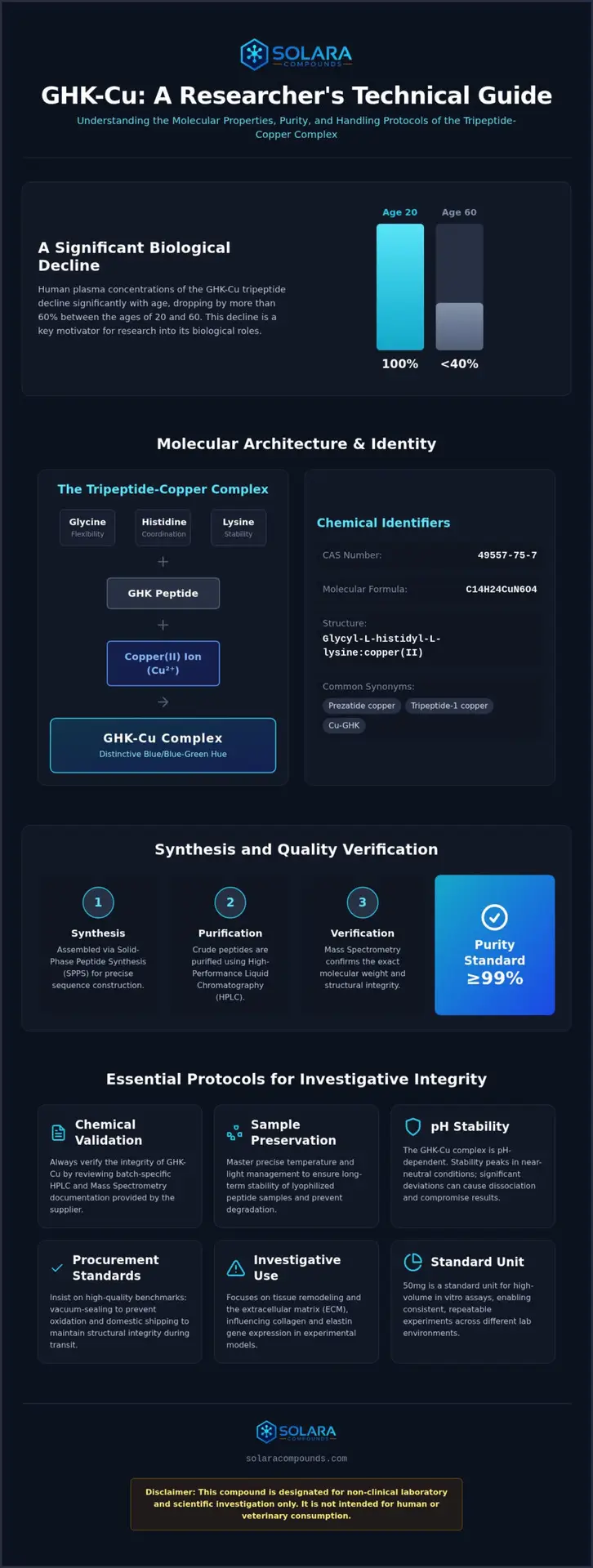
Human plasma concentrations of the GHK-Cu tripeptide decline by more than 60 percent between the ages of 20 and 60. This biological shift has positioned GHK-Cu 50mg for research as a primary focal point for investigators exploring tissue remodeling, gene modulation, and the complex biology of the extracellular matrix. Research integrity depends on chemical accuracy. You’re likely aware that the validity of your findings is linked to the absolute purity of your compounds. Inconsistent peptide sequences or the lack of batch-specific documentation can introduce variables that jeopardize study repeatability. This technical reference serves as a guide for researchers investigating the molecular properties and laboratory applications of the copper(II) complex. We provide the data necessary to verify chemical purity standards through HPLC and Mass Spectrometry. You’ll also find precise reconstitution protocols designed to prevent degradation during handling. This analysis ensures you can accurately assess molecular weight and structural formulas to maintain investigative integrity.
Key Takeaways
- Understand the molecular architecture of the glycyl-L-histidyl-L-lysine sequence and its specific chelation requirements for stable laboratory study.
- Learn how to validate the chemical integrity of GHK-Cu 50mg for research by identifying key markers in batch-specific HPLC and Mass Spectrometry documentation.
- Master preservation protocols, including precise temperature and light management, to ensure the long-term stability of your lyophilized peptide samples.
- Discover how this tripeptide-copper complex interacts with the extracellular matrix to influence collagen and elastin gene expression in experimental models.
- Identify the essential quality benchmarks for procurement, from vacuum-sealing standards to the necessity of domestic shipping for maintaining structural integrity.
Defining GHK-Cu 50mg: A Copper-Binding Tripeptide for Laboratory Research
GHK-Cu is a naturally occurring tripeptide-copper complex consisting of the glycyl-L-histidyl-L-lysine sequence. This specific molecular arrangement demonstrates an exceptionally high affinity for divalent copper ions. When combined, the result is the Copper peptide GHK-Cu. This complex is easily identified in a laboratory setting by its distinctive blue to blue-green hue. This pigmentation is a direct physical manifestation of the copper(II) coordination within the peptide structure. It’s a hallmark of successful chelation. Researchers rely on this visual cue as an initial indicator of complex integrity before proceeding with more rigorous analytical verification.
The 50mg concentration has become a standard unit for high-volume in vitro assays. It provides researchers with sufficient material for multiple experimental iterations while maintaining precise control over molar concentrations. Utilizing GHK-Cu 50mg for research allows for the standardization of protocols across different laboratory environments. Solara Compounds provides this specific concentration to support large-scale studies that require consistent batch volumes. It’s vital to maintain strict adherence to laboratory safety standards. This compound is strictly designated for non-clinical laboratory use and scientific investigation. It isn’t intended for human or veterinary consumption.
The Role of Copper(II) in Peptide Chelation
The stability of the GHK-Cu complex relies on sophisticated coordination chemistry. The GHK sequence acts as a potent chelator for Cu(II) ions. It forms a stable complex where the copper ion is coordinated by the amino nitrogen of the glycine, the amide nitrogens of the histidyl and lysyl residues, and the imidazole nitrogen of the histidine side chain. This high affinity facilitates efficient copper transport across cellular membranes in biological models. Researchers must account for the pH-dependent nature of this formation. Complex stability typically peaks in near-neutral conditions. Significant deviations in pH can lead to the dissociation of the metal ion, which often compromises the accuracy of investigative outcomes.
Nomenclature and Chemical Identifiers
Precision in documentation requires accurate identification of chemical entities. GHK-Cu is frequently referenced in scientific literature by several synonyms. These include Prezatide copper, Tripeptide-1 copper, and Cu-GHK. For procurement and regulatory tracking, researchers should utilize the following identifiers:
- CAS Number: 49557-75-7
- Molecular Formula: C14H24CuN6O4
- Chemical Structure: Glycyl-L-histidyl-L-lysine:copper(II)
Investigators must differentiate between the GHK peptide alone and the GHK-Cu complex. While GHK exists as a signaling peptide, its biological utility in many research models is only realized through its chelation with copper. Verifying the presence of the copper ion is critical for study accuracy. Without the copper(II) coordination, the peptide’s role in tissue remodeling and fibroblast signaling changes significantly.
Molecular Architecture and Synthesis of GHK-Cu
The synthesis of GHK-Cu 50mg for research begins with Solid-Phase Peptide Synthesis (SPPS). This method allows for the systematic assembly of the glycyl-L-histidyl-L-lysine chain on a solid resin support. Precision is mandatory. Crude peptides contain synthesis byproducts that must be meticulously removed to ensure experimental reliability. Purification to ≥99 percent is achieved through preparative High-Performance Liquid Chromatography (HPLC), followed by Mass Spectrometry to confirm the exact mass of the GHK backbone. The introduction of copper(II) occurs post-purification. Stoichiometric balance is essential during this phase to ensure a 1:1 complexation ratio. The resulting molecular weight of GHK-Cu varies slightly depending on hydration levels and the presence of specific counter-ions like acetate or trifluoroacetate.
The Tripeptide Sequence: Gly-His-Lys
Glycine, the simplest amino acid, provides the sequence with necessary conformational flexibility. Histidine serves as the primary coordination site. Its imidazole ring contains nitrogen atoms that bond directly with the copper ion to form the stable complex. Lysine, with its long side chain and terminal amino group, contributes to the overall stability and solubility of the tripeptide. This specific sequence is what drives the Regenerative and Protective Actions of GHK-Cu described in molecular biology literature. Each residue plays a distinct role in how the complex interacts with cellular targets in a laboratory environment. Without this exact arrangement, the transport of copper and subsequent signaling pathways are significantly altered.
Complexation and Salt Forms
Salt forms significantly influence laboratory outcomes and reagent behavior. Trifluoroacetate (TFA) is a common byproduct of the synthesis process, yet it can exhibit cytotoxicity in certain in vitro models. Acetate salts are frequently utilized as a more biocompatible alternative for sensitive biological assays. These salts determine the solubility profile and the final pH of the reconstituted reagent. Lyophilization, or freeze-drying, is the final stage of production. This process removes moisture through sublimation, which locks the peptide into a stable, porous cake. It prevents the hydrolytic cleavage of peptide bonds and ensures the molecular architecture remains intact during shipping. Researchers should always verify batch-specific salt content to ensure their experimental conditions remain consistent across multiple study phases.
Stability and Handling Protocols in Laboratory Settings
Maintaining the structural integrity of GHK-Cu 50mg for research requires strict adherence to thermal and environmental controls. Lyophilized vials should be stored at -20°C for long-term preservation. This temperature minimizes kinetic energy and prevents the spontaneous hydrolysis of peptide bonds. You must protect these vials from direct light exposure and moisture ingress. Premature degradation often occurs when the vacuum seal is compromised or when UV radiation triggers photo-oxidation of the copper complex. Before beginning your protocol, allow the vial to reach room temperature. Opening a cold vial in a humid environment leads to immediate condensation. This moisture can destabilize the lyophilized cake and introduce experimental variables that compromise your results.
Reconstitution and Solubility Metrics
Reconstitution is a delicate phase where mechanical stress can damage the peptide sequence. Use sterile, laboratory-grade diluents such as bacteriostatic water or phosphate-buffered saline (PBS). Introduce the diluent slowly along the side of the vial. Don’t vortex the solution. Vortexing creates high shear forces that can disrupt the Molecular Properties of GHK-Cu, leading to denaturation. Instead, employ a gentle swirling motion until the powder is completely dissolved. GHK-Cu exhibits high solubility in aqueous media, though investigators sometimes utilize organic solvents like DMSO for specific assays. Once the solution is clear, aliquot it into single-use volumes. This practice is essential to avoid repeated freeze-thaw cycles, which cause cumulative structural damage and reduce the concentration of the active complex. Researchers seeking a comprehensive framework for this process should consult the precision laboratory protocol for how to reconstitute GHK-Cu, which details the volumetric mathematics and physical handling techniques required to preserve starting material purity.
Stability in Solution vs. Lyophilized Solid
The stability profile shifts dramatically once the compound enters a liquid state. While the lyophilized solid remains stable for years at sub-zero temperatures, reconstituted solutions have a much shorter half-life. At 4°C, a solution typically maintains its integrity for several weeks. At room temperature, degradation accelerates within days. Researchers should monitor for physical indicators of instability. A significant color shift from the standard blue hue to a pale or yellowish tone suggests the dissociation of the copper ion. Precipitation or increased turbidity also indicates the formation of insoluble aggregates. The pH of the liquid media plays a decisive role here. GHK-Cu is most stable in a pH range of 4.5 to 7.0. Deviations outside this window can compromise the coordination bonds between the copper and the tripeptide backbone, rendering the compound unsuitable for precise study. Investigators conducting high concentration GHK-Cu research should pay particular attention to these stability parameters, as elevated concentrations can amplify the effects of any degradation on experimental outcomes.
Investigative Applications in Extracellular Matrix (ECM) Research
GHK-Cu 50mg for research serves as a critical tool for scientists examining the complex dynamics of the extracellular matrix (ECM). This tripeptide complex is widely studied for its ability to interact with matrix components and influence the structural integrity of tissues in experimental models. Investigators focus on the peptide’s role in modulating collagen and elastin gene expression, which are fundamental to understanding tissue regeneration. These studies often target receptor-mediated signaling pathways within in vitro cellular models to determine how the tripeptide influences intracellular communication. By acting as a specialized copper modulator, the complex facilitates biochemical assays that probe the relationship between metal ions and downstream cellular signaling.
Collagen and Elastin Pathway Analysis
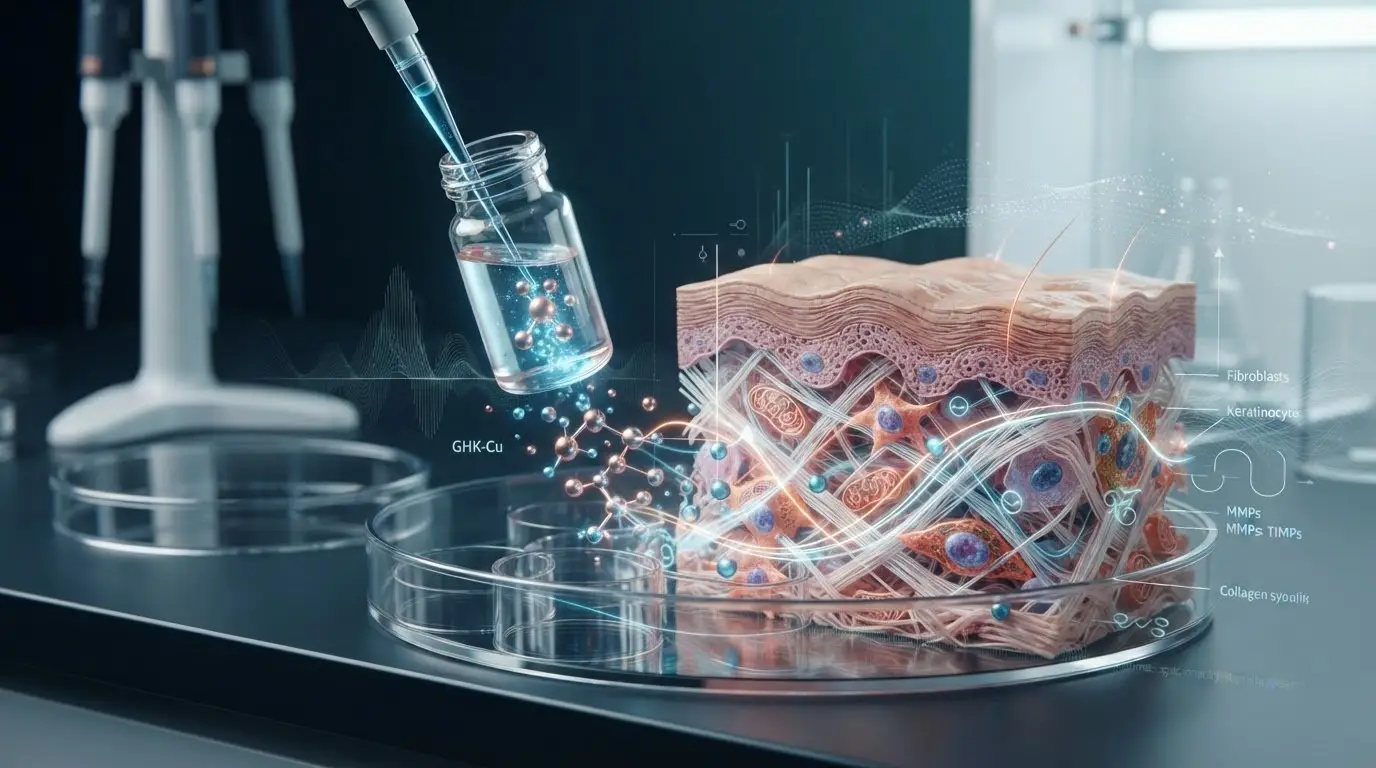
In fibroblast cell cultures, GHK-Cu is frequently used to investigate the synthesis and degradation of ECM proteins. Research has documented its influence on the upregulation of matrix metalloproteinases (MMPs) and their inhibitors, known as TIMPs. This delicate balance is vital for tissue remodeling studies and wound healing models. Accurate data in these high-sensitivity assays requires compounds of verified chemical composition. Utilizing Independent Peptide Lab Testing ensures that the tripeptide concentration and copper chelation levels are precisely as reported. This level of verification prevents impurities from confounding cellular readouts or skewing signaling data. It’s essential for maintaining study repeatability and scientific rigor. Researchers expanding their investigation into tissue repair mechanisms may also find value in reviewing the analytical standards applied to BPC-157 5mg laboratory use, where comparable purity thresholds and HPLC verification protocols are applied to peptide procurement for wound healing and gastric mucosal research.
Copper Transport and Homeostasis Studies
Beyond its role in protein synthesis, GHK-Cu serves as a model for studying peptide-metal transport mechanisms. It’s a valuable reagent for investigating how cells manage copper uptake and distribution at the molecular level. Because copper is a necessary cofactor for various enzymes, this tripeptide helps scientists explore the nuances of metal homeostasis. A primary area of interest is antioxidant enzyme research, specifically regarding Superoxide Dismutase 1 (SOD1). GHK-Cu’s ability to safely deliver copper to these enzymes makes it indispensable for studies focused on oxidative stress and cellular protection mechanisms. Researchers often analyze how the GHK sequence competes with other ligands for copper ions to understand systemic metal distribution. Laboratories maintaining multi-peptide research programs may also benefit from reviewing the batch documentation standards outlined for research grade tirzepatide 10mg, where the same rigorous HPLC and Mass Spectrometry verification principles are applied to ensure lyophilized compound integrity across different molecular classes.
Reliable ECM research depends on the stability and concentration of your reagents. If you’re conducting high-volume in vitro assays, you can procure GHK-Cu 50mg for research to ensure your lab has the high-purity material required for consistent and defensible results.
Procurement Standards: Verifying GHK-Cu Purity and Quality
Research integrity is non-negotiable. When sourcing GHK-Cu 50mg for research, investigators must prioritize vendors that provide batch-specific HPLC and Mass Spectrometry (MS) reports for every vial. Procurement is about verifying the molecular reality of the compound before it enters your laboratory workflow. You should ensure all vials are vacuum-sealed and lyophilized to survive domestic transit without structural degradation. It’s best to verify that the product is synthesized and tested within the United States. This local chain of custody reduces the risk of exposure to environmental stressors during shipping. You must also avoid any compounds that lack clear documentation regarding copper saturation levels. Incomplete chelation can lead to unpredictable results in metal-sensitive assays.
Interpreting HPLC and Mass Spectrometry Reports
Reading an HPLC chromatogram is a fundamental skill for quality verification. The primary GHK-Cu peak should be sharp and symmetrical. A broad or multi-peaked readout indicates the presence of synthesis byproducts or unchelated peptide fragments. Mass spectrometry provides the definitive molecular signature for the complex. For GHK-Cu 50mg for research, you’re looking for a molecular weight readout in the 401 to 404 g/mol range. This specific value accounts for the glycyl-L-histidyl-L-lysine sequence plus the coordinated copper(II) ion. If the MS report only shows the weight of the GHK backbone, which is approximately 340 g/mol, the copper coordination is absent. This distinction is critical for the accuracy of your signaling studies. Researchers engaged in high concentration GHK-Cu research applications should apply these same verification standards with even greater rigor, as elevated dosing protocols amplify the impact of any undetected impurities on experimental data.
The Importance of Batch-Specific COAs
Generic Certificates of Analysis (COA) are insufficient for high-precision research. A generic report often represents a pilot batch rather than the specific material you’ve received. Solara Compounds provides batch-specific COAs that detail exact purity percentages, physical appearance, and solubility markers. This transparency allows you to account for every milligram in your experimental design. High-purity standards in the US market require this level of granular data. It’s the only way to ensure your findings are based on the compound’s properties and not on hidden contaminants or inconsistent chelation levels. Consistent research outcomes depend on this rigorous verification process. Investigators who apply these same procurement principles to other research-grade peptides, such as those following a structured BPC-157 5mg laboratory use procurement guide, will recognize that batch-specific COA requirements are a universal standard for defensible scientific data across peptide research programs.
Optimizing Investigative Accuracy with Verified Peptide Standards
The investigative potential of the glycyl-L-histidyl-L-lysine sequence depends on the absolute stability of its copper(II) coordination. Achieving repeatable results in extracellular matrix studies requires a deep understanding of chelation kinetics and rigorous thermal management. By prioritizing batch-specific analytical data, you eliminate the variables that often compromise high-sensitivity assays. This technical foundation ensures your findings regarding gene modulation and tissue remodeling remain both accurate and defensible. Precision standards are the primary driver of research success.
Reliability in the laboratory begins with precision procurement. When you select GHK-Cu 50mg for research, you’re choosing a compound that has undergone exhaustive HPLC and Mass Spectrometry verification to ensure its structural integrity. Solara Compounds supports your investigative goals by providing batch-specific COAs and efficient domestic US shipping from our Florida-based operation. This commitment to excellence helps you maintain the highest standards of scientific rigor throughout your study. We invite you to source high-purity GHK-Cu 50mg for your laboratory research and advance your findings with confidence.
Frequently Asked Questions
What is the specific molecular weight of GHK-Cu 50mg?
The molecular weight of the copper(II) complex typically ranges between 401 and 404 g/mol. This specific value includes the glycyl-L-histidyl-L-lysine tripeptide backbone and the coordinated copper ion. Variations often occur due to hydration states and the presence of specific salt forms, such as acetate. Accuracy is vital for molar concentration calculations in biochemical assays. Researchers should consult the batch-specific COA to confirm the precise weight for their specific laboratory vial.
Why is the GHK-Cu powder blue in color?
The blue or blue-green pigmentation is a physical result of d-d electronic transitions within the copper(II) center. When the GHK tripeptide chelates a copper ion, the coordination environment changes, causing the complex to absorb specific wavelengths of light. This characteristic color serves as an immediate visual indicator of successful chelation. If the powder appears white or colorless, it suggests the copper ion isn’t properly coordinated to the peptide sequence.
How should GHK-Cu be stored for maximum stability in a lab?
Lyophilized vials should be stored at -20°C in a dark, dry environment to maintain structural integrity. This temperature prevents the hydrolytic cleavage of peptide bonds and minimizes oxidative stress on the copper complex. Vials must remain vacuum-sealed until use. Once reconstituted, solutions should be kept at 4°C and used within a short timeframe. Avoiding repeated freeze-thaw cycles is essential for maintaining the consistency of GHK-Cu 50mg for research.
Can GHK-Cu 50mg be used for human research trials?
No, this compound is strictly designated for laboratory and in vitro research use only. It isn’t intended for human or veterinary consumption. Regulatory standards require that research-grade peptides be utilized solely in controlled scientific environments to study molecular interactions. Any application outside of non-clinical laboratory investigation violates procurement standards and safety protocols. Investigators are responsible for ensuring all usage complies with institutional biosafety and ethical guidelines.
What is the recommended reconstitution diluent for GHK-Cu?
Sterile bacteriostatic water or phosphate-buffered saline (PBS) are the standard diluents for laboratory reconstitution. These fluids provide a stable environment for the complex while maintaining a near-neutral pH. Researchers should introduce the diluent slowly to avoid mechanical shear stress. Gentle swirling is preferred over vortexing to preserve the molecular architecture. The choice of diluent may vary depending on the specific requirements of the downstream cellular assay or biochemical probe. For a detailed breakdown of solvent selection and stepwise handling procedures, researchers can reference the standardized protocol for how to reconstitute GHK-Cu to ensure concentration accuracy and complex stability throughout the preparation process.
How is GHK-Cu purity verified through third-party testing?
Purity is verified using High-Performance Liquid Chromatography (HPLC) and Mass Spectrometry (MS). HPLC measures the chemical purity by separating the primary compound from synthesis byproducts. MS confirms the identity of the compound by measuring its mass-to-charge ratio. A purity level of 99 percent or higher is the industry standard for research-grade materials. These independent tests provide objective proof that the GHK-Cu 50mg for research meets the required chemical specifications.
What is the difference between GHK-Cu and GHK basic peptide?
GHK basic peptide is the tripeptide sequence (glycyl-L-histidyl-L-lysine) without a coordinated metal ion. GHK-Cu is the chelated complex formed when that peptide binds to a copper(II) ion. While the basic peptide has its own signaling properties, many biological models specifically require the copper-bound form to study tissue remodeling and antioxidant pathways. The presence of copper significantly alters the molecular weight, color, and biological activity of the compound in laboratory settings.
Does Solara Compounds provide batch-specific COAs for GHK-Cu?
Yes, every vial is accompanied by a batch-specific Certificate of Analysis (COA). These documents provide verified data from HPLC and Mass Spectrometry testing conducted on that specific production run. Unlike generic reports, batch-specific COAs ensure that the purity, appearance, and molecular weight of the vial in your lab match the reported standards. This level of transparency is critical for researchers who require high-precision reagents to ensure the repeatability of their experimental data.