Research Articles
Citing Peptide Suppliers in Grant Proposals


Could a single missing lot number in your methodology section be the primary reason a reviewer flags your entire proposal for a lack of scientific rigor? It’s a frustrating reality for many lab buyers who spend months perfecting a hypothesis only to face skepticism regarding the integrity of their reagents. Reviewers at the NIH and NSF are increasingly focused on the chain of purity, making the process of citing peptide suppliers in grant proposals a critical step for securing funding. We know that finding batch-specific HPLC and MS data is often difficult, especially when university procurement rules add layers of complexity to every new vendor request.
Citing peptide suppliers in grant proposals is essential for establishing credibility in your research methodology. It not only provides transparency but also reassures reviewers about the quality of the materials used.
This guide provides a clear framework for documenting material reproducibility and supplier reliability to satisfy even the most demanding grant requirements. You’ll learn how to leverage detailed documentation, such as the third-party verified Certificates of Analysis (COA) provided by Solara Compounds, to build a stronger case for your laboratory work. We’ll explore how to navigate new federal mandates, streamline institutional approvals, and ensure your project stands out for its technical precision. All products mentioned are for laboratory research only and are available at solaracompounds.com.
When citing peptide suppliers in grant proposals, it is crucial to highlight the importance of rigorous documentation practices that validate the reliability of your sources.
Key Takeaways
- Understand why generic reagent descriptions often trigger reviewer skepticism and how to satisfy the federal mandate for scientific rigor.
- Discover the standard templates for citing peptide suppliers in grant proposals to ensure your methodology is fully reproducible by other investigators.
- Explore the implications of failing to thoroughly document the process of citing peptide suppliers in grant proposals and the potential impact on funding outcomes.
- Learn to interpret technical batch paperwork, including HPLC chromatograms, to provide definitive proof of compound purity in your grant appendices.
- Simplify the university procurement process by identifying the specific documentation needed to clear institutional compliance checks for new vendors.
- Find out how the documentation-first approach at solaracompounds.com helps researchers build a “chain of purity” for laboratory research only.
The Role of Peptide Supplier Documentation in Scientific Rigor
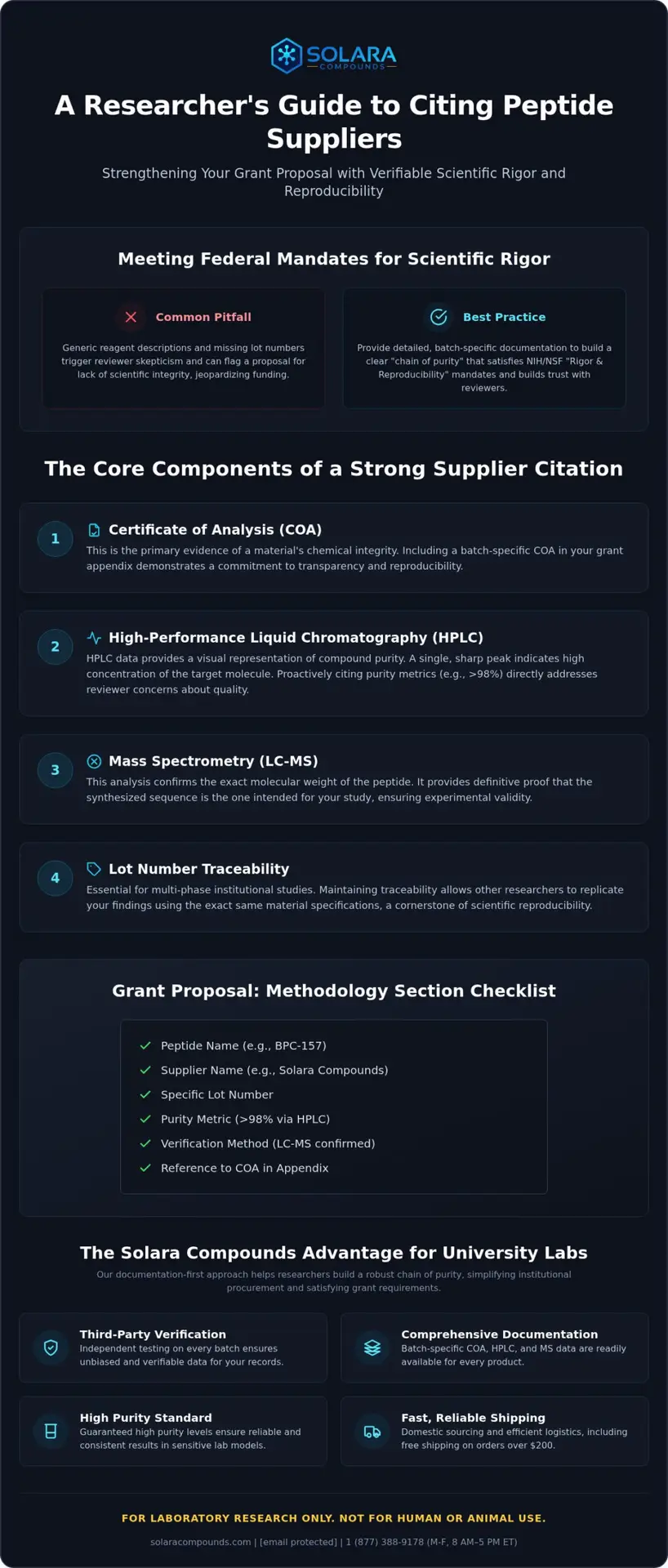
Grant reviewers at the National Institutes of Health (NIH) now look far beyond the hypothesis to evaluate the fundamental integrity of the materials used. The “Rigor and Reproducibility” mandate requires investigators to provide explicit details about the authentication of key biological and chemical resources. Simply listing a peptide by its common name is no longer sufficient. When citing peptide suppliers in grant proposals, researchers must demonstrate that their reagents are precisely characterized and verified for sequence accuracy. This ensures that the experimental validity remains intact across multiple phases of study.
In the context of citing peptide suppliers in grant proposals, it is also vital to disclose potential conflicts of interest related to the sourcing of research materials.
Domestic sourcing plays a vital role in mitigating the risks of sequence variation. International shipments often lack the rigorous oversight necessary to guarantee that a batch of SOL-3RT matches its theoretical profile. At Solara Compounds, we focus on a documentation-first approach. This provides lab buyers with the empirical data needed to satisfy federal requirements. All products provided are for laboratory research only and are not intended for human or animal use.
Satisfying the Authentication of Key Biological Resources
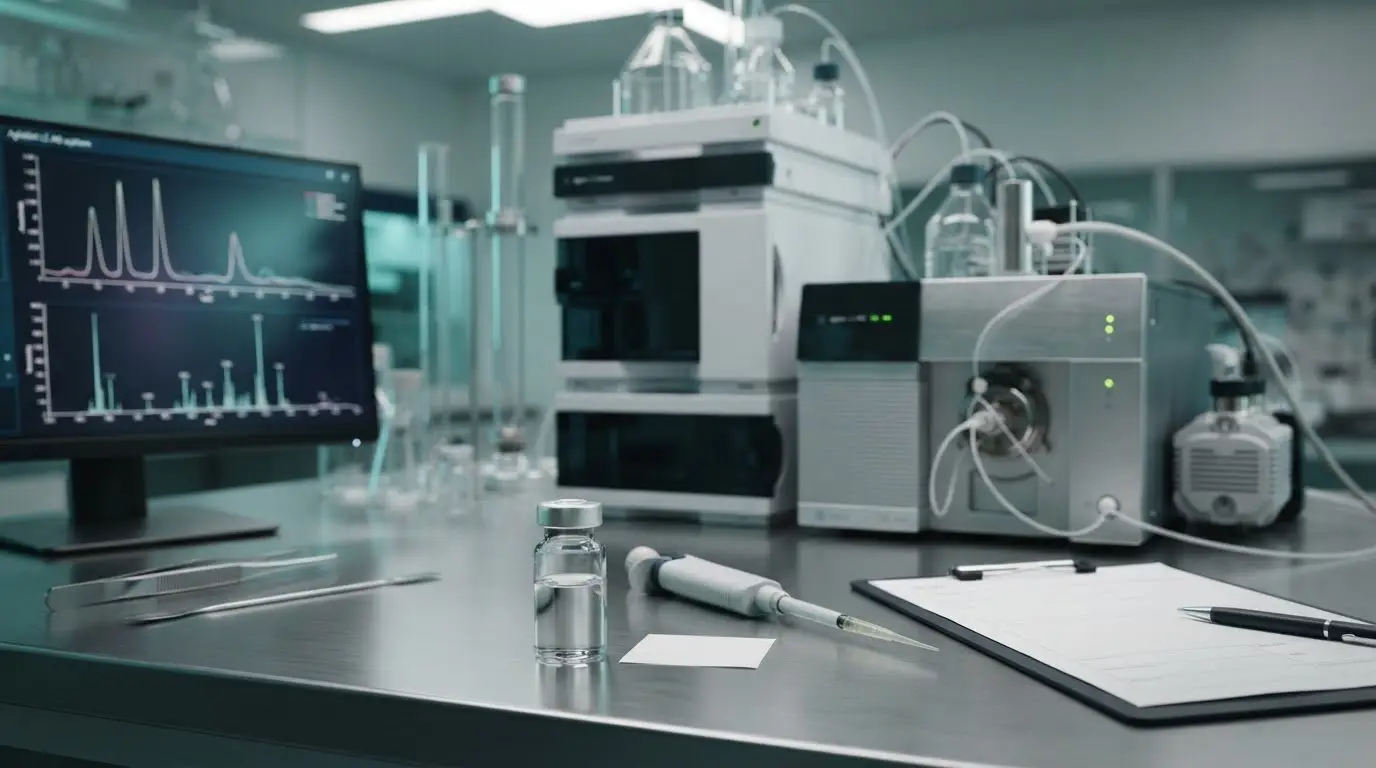
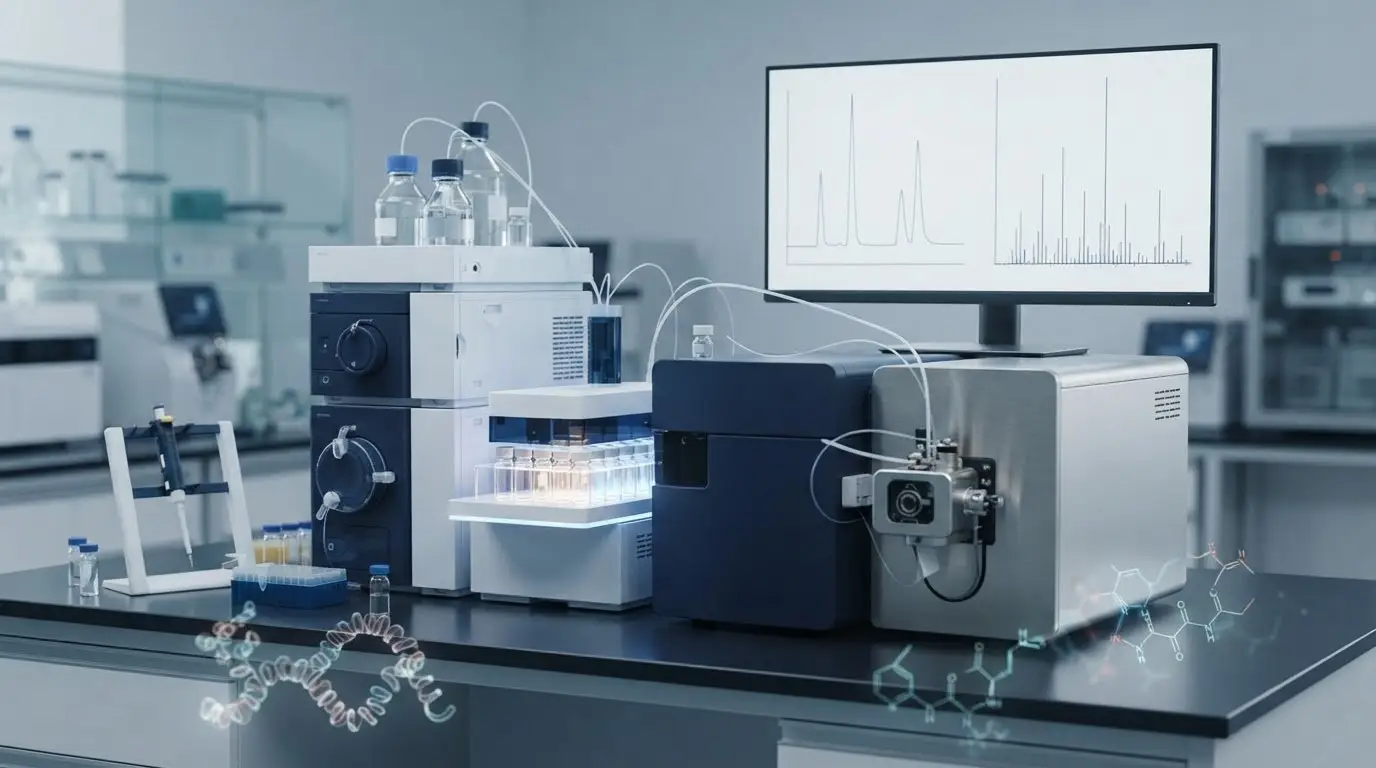
An effective authentication plan for synthetic peptides like BPC-157 or SOL-3RT involves more than a simple purchase receipt. Reviewers expect to see evidence of third-party verification. Solara Compounds utilizes Kovera Labs to conduct independent testing on every batch. This process includes documenting High-Performance Liquid Chromatography (HPLC) and Liquid Chromatography-Mass Spectrometry (LC-MS) results. These data points prove the sequence identity and ensure the compound is free from significant contaminants that could skew laboratory results. Including these details in your proposal narrative builds immediate trust with the review committee.
Addressing Potential Reviewer Objections to Material Quality
Reviewer skepticism often centers on the purity of specialized compounds. Proactively citing purity metrics, such as an HPLC purity of >98%, directly addresses these concerns. It’s helpful to provide a Certificate of Analysis (COA) for every batch used in preliminary data. This level of transparency is vital when citing peptide suppliers in grant proposals to prove scientific rigor. You can find more information on how to utilize these documents in our batch-specific COA peptides guide. Maintaining lot-number traceability is also essential for multi-phase institutional studies. It allows other researchers to replicate your findings using the exact same material specifications. For high-purity research materials, visit solaracompounds.com to review our full catalog.
By meticulously citing peptide suppliers in grant proposals, you can enhance the credibility of your experimental design and ensure a solid review process.
Technical Documentation: COAs, HPLC, and Mass Spectrometry
A Certificate of Analysis (COA) serves as the primary evidence of a material’s chemical integrity. When citing peptide suppliers in grant proposals, providing a COA in the appendix demonstrates a commitment to transparency. It bridges the gap between a theoretical experiment and physical reality. Researchers must look for specific indicators of quality within these documents, starting with High-Performance Liquid Chromatography (HPLC) data. These reports are essential for verifying that the compound used in a study matches the specifications required for reproducible results.
A well-prepared COA is a key element when citing peptide suppliers in grant proposals, as it provides definitive proof of material quality and integrity.
HPLC chromatograms provide a visual representation of purity. A single, sharp peak indicates a high concentration of the target molecule, while secondary peaks suggest the presence of contaminants. For delicate in vitro models, a purity threshold of 99% or higher is often the standard to ensure that secondary substances don’t interfere with cellular pathways. Molecular confirmation requires more than just purity checks. Techniques like Matrix-Assisted Laser Desorption/Ionization-Time of Flight (MALDI-TOF) and Liquid Chromatography-Mass Spectrometry (LC-MS) confirm the exact molecular weight of the peptide. This ensures the sequence synthesized is the one intended for the study. Before finalizing a vendor, it’s wise to review mass spectrometry peptide testing protocols to understand how identity is verified. All products from Solara Compounds are for laboratory research only.
Essential Metrics for Grant-Funded Reagents
Grant reviewers scrutinize the environment in which reagents are handled. Lyophilized powders should be produced in ISO 7 cleanroom environments to ensure they remain free from microbial contamination. Vacuum sealing is another critical factor; it prevents moisture ingress during storage. Researchers should specifically document these handling standards to prove that the material will remain stable throughout the duration of the grant cycle. Identifying residual solvents and TFA content is also a priority, as these can affect the pH and toxicity of a research medium.
Solara Compounds Quality Standards
Consistency between batches is achieved through refined Solid-phase peptide synthesis (SPPS) protocols. This method allows for the production of consistent lots, which is essential for longitudinal studies where material variation could ruin months of data. When drafting a proposal, investigators can access the Solara Compounds COA database to pull relevant data for their preliminary results. Using lot numbers within the methodology section ensures that pilot data correlates perfectly with main experiments. You can browse our catalog of high-purity compounds to see the technical specifications available for your next project. All materials provided are for laboratory use only and are not for human or animal consumption.
Drafting the Citation: Templates for Your Grant Proposal
Precision in the methodology section is a hallmark of a fundable proposal. When citing peptide suppliers in grant proposals, you must move beyond generic names and provide specific vendor details that allow for exact replication. Standardizing this information demonstrates a level of professional oversight that reviewers value. It’s best to list the manufacturer, the geographic location, and the specific catalog or lot numbers associated with your preliminary data. This level of detail confirms that the materials used in your laboratory research are traceable and consistent.
Including specific details about your suppliers when citing peptide suppliers in grant proposals can significantly bolster the strength of your application.
Referencing Solara Compounds LLC as your primary US-based supplier provides an immediate signal of quality. Because we provide batch-specific documentation, you can cite the exact purity and identity metrics for the compounds in your study. All products mentioned, including BPC-157 and SOL-2TZ, are for laboratory research only and are not for human or animal use. For more information on documenting these materials, researchers should consult our guide on lyophilized peptides for laboratory use to ensure their procurement verification meets current standards.
Materials and Methods Citation Template
Your “Materials and Methods” section should be concise but thorough. A standard citation for a research compound might look like this: “Research-grade BPC-157 (Solara Compounds LLC, Florida, USA; Catalog # [Insert Number]) was obtained as a lyophilized powder with a verified purity of >99% via HPLC. Sequence identity was confirmed through third-party LC-MS analysis (Kovera Labs). Compounds were stored at -20°C and reconstituted in sterile buffer immediately prior to laboratory use.” Including the storage conditions and the lyophilized state reinforces the technical rigor of your experimental design. Citing third-party verification adds an extra layer of credibility that “in-house” testing cannot match.
Budget Justification and Resource Description
The budget justification is an often-overlooked opportunity to reinforce your commitment to scientific rigor. When citing peptide suppliers in grant proposals, you should justify the cost of high-purity materials over generic, unverified alternatives. Explain that high-grade reagents from a domestic supplier like Solara Compounds mitigate the risk of experimental failure due to impurities or sequence errors. You can also highlight the “Facilities and Other Resources” provided by a domestic partner. US-based shipping is a significant advantage for time-sensitive grant milestones. It ensures that your laboratory work isn’t delayed by the customs issues or long lead times common with international vendors. This reliability is a key factor in proving that your project will stay on schedule and within budget. Shop research peptides at solaracompounds.com to find the documentation needed for your next submission.
Additionally, when citing peptide suppliers in grant proposals, consider incorporating detailed justifications for your material choices to further convince reviewers.
Peptide Procurement for Universities: Logistics and Compliance
University procurement offices operate on strict compliance frameworks that prioritize vendor reliability and material safety. These departments require standardized documentation before adding new vendors to institutional systems like Oracle or Jaggaer. When researchers are citing peptide suppliers in grant proposals, they must also consider the logistical path from funding approval to the lab bench. Solara Compounds simplifies this transition by providing the technical paperwork necessary for university buyers to clear administrative hurdles. Our Florida-based operations ensure your lab doesn’t face the complexities of international trade or currency fluctuations.
It is advisable to provide a clear rationale for your sourcing decisions when citing peptide suppliers in grant proposals, highlighting their reliability and compliance.
Institutional policies often mandate “Research Use Only” (RUO) status for all chemical reagents to ensure safety and regulatory compliance. Solara Compounds strictly adheres to these standards; all products are for laboratory research only and are not for human or animal consumption. For large-scale projects, we offer bulk and wholesale purchase agreements that maintain the same batch-specific quality standards discussed in previous sections. This allows for long-term consistency across multi-year grant cycles. It’s essential to verify that your supplier can handle these larger volumes without sacrificing the analytical precision your research requires.
Streamlining the Institutional Purchase Process
Procuring specialized chemicals requires accurate price quotes for internal budget reconciliation and grant reporting. Researchers can utilize the Solara Compounds research catalog to generate the necessary documentation for their procurement officers. We understand the urgency of scientific work in major research hubs like San Diego or Boston. Our logistics team specializes in managing the delivery of temperature-sensitive lyophilized powders to ensure structural integrity upon arrival. This logistical precision is essential when citing peptide suppliers in grant proposals as it proves the practical feasibility of your project timelines to the review committee.
Furthermore, ensure that all claims made while citing peptide suppliers in grant proposals are backed by solid evidence to avoid skepticism from reviewers.
Domestic vs. International Sourcing for Grant Timelines
Choosing a domestic supplier is a strategic decision for any grant-funded investigator. International sourcing often leads to unpredictable customs delays that can stall a project for weeks, potentially jeopardizing grant milestones. As a Florida-based US supplier, we eliminate these bottlenecks. This reliability ensures that your laboratory work proceeds according to the milestones outlined in your proposal. We also offer free shipping on orders over $200, which helps in optimizing laboratory budgets and stretching grant dollars further. If your university procurement office has specific questions about our vendor profile, they can reach our direct support team at support@solaracompounds.com or 1 (877) 388-9178. You can shop research peptides at solaracompounds.com
Why University Labs Choose Solara Compounds
University investigators require more than just a vendor; they need a partner capable of upholding the highest standards of empirical integrity. Solara Compounds has built its reputation on a transparency-first approach where every batch is documented through independent third-party verification. This level of detail is indispensable when citing peptide suppliers in grant proposals, as it provides the reviewer with concrete proof of material quality. We provide science-forward product information designed for serious academic investigators who value data over marketing claims. All materials provided are for laboratory research only and are not for human or animal consumption.
Our US-based logistics provide a reliable foundation for researchers in both academic and biotechnology sectors. By maintaining our operations in Florida, we eliminate the uncertainty associated with international shipping and customs. This reliability ensures that your research schedule remains on track, allowing you to meet the milestones defined in your funding applications. Whether you are working with SOL-3RT, SOL-2TZ, or GHK-Cu, our team ensures that the reagents you receive match the technical specifications outlined in your methodology. This consistency is the key to long-term success in any grant-funded project.
In your narrative, reiterate the significance of citing peptide suppliers in grant proposals to emphasize transparency and scientific rigor.
A Curated Catalog for Modern Research
Modern laboratory work often focuses on complex metabolic and regenerative pathways. Our catalog includes specialized tools like Cagrilintide and MOTS-C for researchers investigating metabolic regulation. For those focused on regenerative cellular study, we provide high-purity TB-500 and BPC-157. Each compound is synthesized to ensure structural integrity and consistency across lots. Investigators can find more information on high grade laboratory compounds through our verification guides. This specialized selection ensures that your lab has access to the precise molecules needed for cutting-edge discovery.
Support for the Academic Community
We provide direct assistance to the academic community to help navigate the complexities of institutional procurement. Our team is available at 1 (877) 388-9178 to assist procurement officers with vendor setup and documentation requests. This support is vital when citing peptide suppliers in grant proposals, as it ensures that the transition from proposal to procurement is seamless. We offer batch-level traceability, which is a critical requirement for multi-year longitudinal studies where material consistency is paramount. This ensures that every experiment in your series uses material with an identical chemical profile.
Ultimately, citing peptide suppliers in grant proposals is not just about compliance; it’s about building a trustworthy research narrative.
Solara Compounds remains committed to the Research Use Only (RUO) framework. This commitment ensures legal and ethical compliance for your institution. By prioritizing the integrity of the final result over marketing hype, we help researchers build a foundation of trust with funding agencies and the broader scientific community. Visit solaracompounds.com to review our full research catalog and access the batch-specific data needed for your next grant submission.
Strengthening Your Proposal with Technical Precision
Securing federal funding requires more than a strong hypothesis; it demands definitive proof of material integrity. By citing peptide suppliers in grant proposals with specific lot numbers and technical metrics, you provide reviewers with the evidence they need to validate your methodology. This guide has detailed how to utilize Certificates of Analysis and third-party verification to build a chain of purity that satisfies modern scientific rigor requirements. Choosing a domestic partner isn’t just about logistics; it’s about securing the technical data your grant requires to move forward.
Incorporating the practice of citing peptide suppliers in grant proposals throughout your research enhances both accountability and reproducibility in scientific studies.
Solara Compounds supports your laboratory work through ISO 7 cleanroom synthesis and comprehensive third-party testing via Kovera Labs. Every batch includes batch-specific COA documentation to ensure your laboratory results are reproducible and accurate. All products are for laboratory research only and are not for human or animal use. We invite you to view the current research catalog at solaracompounds.com to see the high-purity materials available for your next study. Your commitment to precision starts with the quality of your reagents, and we are here to provide the data that helps your research succeed.
Frequently Asked Questions
How do I cite Solara Compounds in my peer-reviewed research paper?
Remember, when citing peptide suppliers in grant proposals, clarity and precision in your documentation are key to a successful application.
Citing Solara Compounds LLC (Florida, USA) in your methodology ensures technical transparency for grant reviewers. You should list the specific compound name, such as BPC-157, followed by the catalog and unique lot numbers found on your batch paperwork. This practice is essential when citing peptide suppliers in grant proposals to prove material traceability. All products provided are for laboratory research only and aren’t intended for any human or animal application.
Does Solara Compounds provide batch-specific COAs for all university orders?
Lastly, always keep in mind that citing peptide suppliers in grant proposals plays a vital role in safeguarding the integrity of your research.
Yes, we provide batch-specific Certificates of Analysis for every order to support institutional compliance. Researchers can access these reports directly at solaracompounds.com/coa/ to verify HPLC purity and molecular identity via LC-MS. Providing this level of documentation is a standard requirement for university labs in hubs like Boston and San Diego. It ensures that the reagents used in your laboratory research meet the rigorous standards expected by federal funding agencies.
Can I set up a net-30 or institutional account for bulk peptide procurement?
Solara Compounds offers tiered pricing and procurement agreements tailored to the needs of institutional clients and large-scale laboratories. University buyers can establish bulk purchase accounts by contacting our support team at support@solaracompounds.com or calling 1 (877) 388-9178. These agreements help streamline the acquisition of high-volume research materials while maintaining strict lot-number consistency. We work directly with procurement offices to ensure all institutional vendor requirements are met for local research projects.
What is the minimum purity level for Solara Compounds research peptides?
All research peptides in our catalog target a minimum HPLC purity of >98%. Most of our products, including SOL-3RT and SOL-2TZ, commonly reach or exceed 99% purity as documented in our batch-specific reports. This high threshold is critical for maintaining experimental validity in complex in-vitro and biochemical models. Researchers should always review the specific HPLC chromatogram for their lot before starting laboratory work to ensure it meets their project’s technical specifications.
Are these peptides intended for clinical use or human consumption?
No, these products are strictly for laboratory research only and aren’t intended for human or animal consumption. They aren’t medicines, drugs, or dietary supplements and should never be used for clinical or diagnostic purposes. Solara Compounds is a specialized supplier of research-grade chemical compounds for scientific use. We maintain a clear Research Use Only (RUO) framework to ensure that our materials are used solely by qualified investigators in controlled laboratory settings.
How should I document the storage of lyophilized peptides in my grant proposal?
You should document that the lyophilized peptides are stored at -20°C or -80°C to maintain long-term stability as part of your methodology. Mention that Solara Compounds provides materials synthesized in ISO 7 cleanrooms that are vacuum-sealed to prevent moisture ingress. This detail is important when citing peptide suppliers in grant proposals because it demonstrates a proactive approach to reagent preservation. Proper storage documentation ensures that your experimental reagents remain chemically consistent throughout the entire grant period.
What third-party labs verify the identity of Solara Compounds products?
Every batch of our research peptides undergoes independent third-party verification through Kovera Labs. This process includes High-Performance Liquid Chromatography (HPLC) for purity and Mass Spectrometry (LC-MS or MALDI-TOF) for molecular confirmation. Utilizing an external laboratory for identity testing provides an unbiased trust signal for grant reviewers and university procurement officers. You can find these verified reports for compounds like GHK-Cu and MOTS-C on our website to ensure your laboratory research is backed by empirical data.
Does Solara Compounds ship to university labs in Boston, San Diego, and Raleigh?
Yes, we provide secure shipping services to university laboratories and biotechnology hubs across the entire United States. We frequently ship to major research centers in Boston, San Diego, and Raleigh, as well as Austin and Seattle. Our logistics team ensures that temperature-sensitive lyophilized powders are handled with precision to maintain their structural integrity during transit. Orders over $200 qualify for free shipping, which helps laboratory buyers optimize their budgets while receiving high-purity research materials.