Research Articles
Identifying High-Grade Laboratory Compounds: A Researcher’s Verification Guide

A label that says “99% pure” isn’t a guarantee. In precision-driven material science, that number is merely a claim that requires empirical verification through rigorous analytical methods. You know that batch consistency is the backbone of any successful experiment, yet the risk of project failure due to impure materials remains a constant concern. It’s often difficult to parse complex HPLC reports, leaving researchers in a position of uncertainty when sourcing high grade laboratory compounds. All materials from Solara Compounds are for laboratory research only and are not for human or animal consumption.
This guide provides the exact technical criteria and documentation standards required to verify compound identity with absolute confidence. We’ll examine how to interpret mass spectrometry data, what to look for in third-party testing, and how a documentation-first approach ensures reliable experimental results. By the end of this article, you’ll have a clear framework for evaluating domestic materials from solaracompounds.com. We’ll help you move past the marketing hype and focus on the structural integrity of your research materials.
Key Takeaways
- Differentiate between technical and research-grade materials by understanding the specific purity thresholds required for reliable data.
- Learn how to interpret HPLC and Mass Spectrometry reports to verify the identity and structural integrity of your materials.
- Identify high grade laboratory compounds by prioritizing suppliers like Solara Compounds who provide third-party, batch-specific Certificates of Analysis (COA).
- Discover how lyophilization and vacuum-sealed packaging maintain the stability of research peptides during storage and transport.
- Review the documentation-first catalog at solaracompounds.com to source high-purity materials like SOL-3RT and SOL-2TZ for laboratory research only.
What Defines High-Grade Laboratory Compounds in Research?
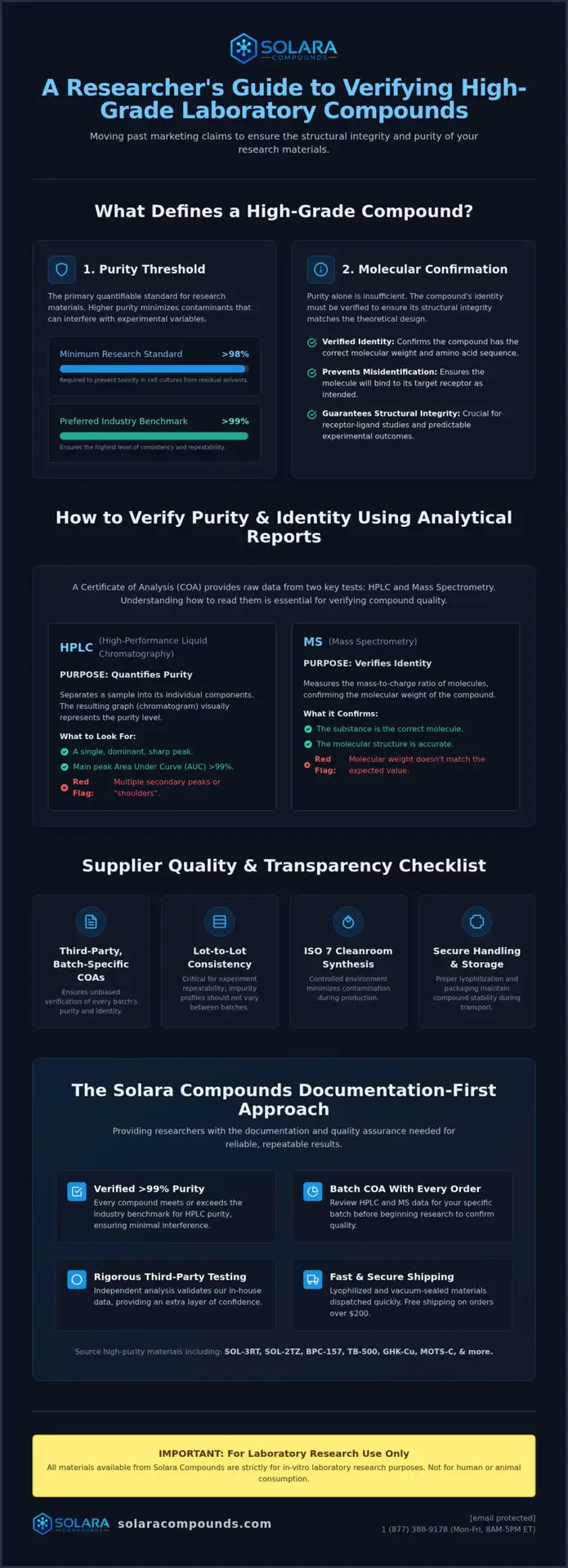
High-grade status isn’t a marketing buzzword. It’s a quantifiable standard. In a technical sense, high grade defines a compound with verified identity and >98% purity. In the lab, researchers distinguish between various chemical purity grades to ensure their data remains valid. Technical grade materials often contain impurities acceptable for industrial cleaning or basic manufacturing, but they lack the refinement required for sensitive assays. Research-grade materials prioritize the removal of these contaminants to prevent interference with experimental variables. All products from Solara Compounds are for laboratory research only and are not for human or animal consumption.
Consistency across batches is the silent driver of repeatability. If Batch A has a different impurity profile than Batch B, your results will drift. This drift ruins months of work and wastes valuable resources. High grade laboratory compounds must provide the same performance every time. Reliable suppliers like Solara Compounds focus on this lot-to-lot stability through standardized synthesis protocols in ISO 7 cleanrooms. Every vial should represent a predictable baseline for your study.
Minimum Purity Thresholds for In Vitro Study
Peptides used in laboratory settings typically require a minimum of 98% purity, though 99% HPLC purity is the preferred industry benchmark. Lower purity levels mean higher concentrations of residual solvents or trifluoroacetic acid (TFA). These substances are used during the synthesis and purification process. If they remain in the final vial, they can be toxic to cell cultures. This toxicity leads to cell death or altered signaling that has nothing to do with the peptide itself. TFA is a common counter-ion used to stabilize peptides, but excessive residual levels can lower the pH of your medium. This acidity disrupts the delicate balance of in vitro environments. By targeting >98% purity, labs minimize these external variables.
The Role of Molecular Confirmation
Purity alone doesn’t tell the whole story. A sample could be 99% pure but contain the wrong molecule entirely. Identity verification is the second pillar of quality. For complex peptides, the amino acid sequence must be exact. Molecular weight confirmation via mass spectrometry prevents misidentification in the lab. This step ensures the structural integrity of the compound matches its theoretical design. Sequence accuracy is vital for receptor-ligand studies. If a single amino acid is out of place, the peptide might fail to bind to its target receptor. High grade laboratory compounds provide the certainty that the molecular structure is precisely what the study requires. Researchers can review the batch COA for every order to confirm both purity and identity before beginning their work.
How to Verify Compound Purity Using Analytical Reports
Reading a Certificate of Analysis (COA) requires more than checking a final percentage. To truly identify high grade laboratory compounds, a researcher must examine the raw analytical data provided by High-Performance Liquid Chromatography (HPLC) and Mass Spectrometry (MS). These tests work in tandem to provide a complete profile of a sample’s purity and identity. All products from Solara Compounds are for laboratory research only and are not for human or animal consumption.
Interpreting HPLC (High-Performance Liquid Chromatography)
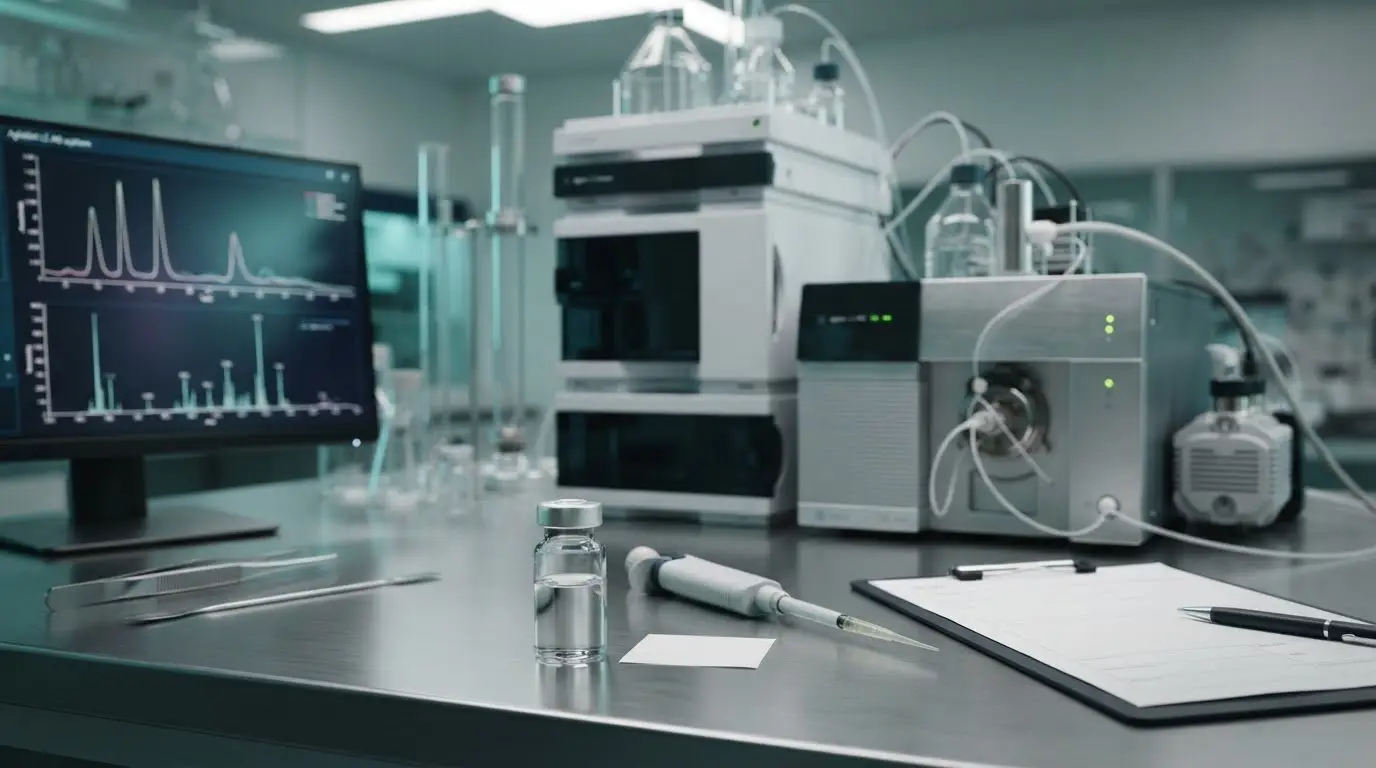
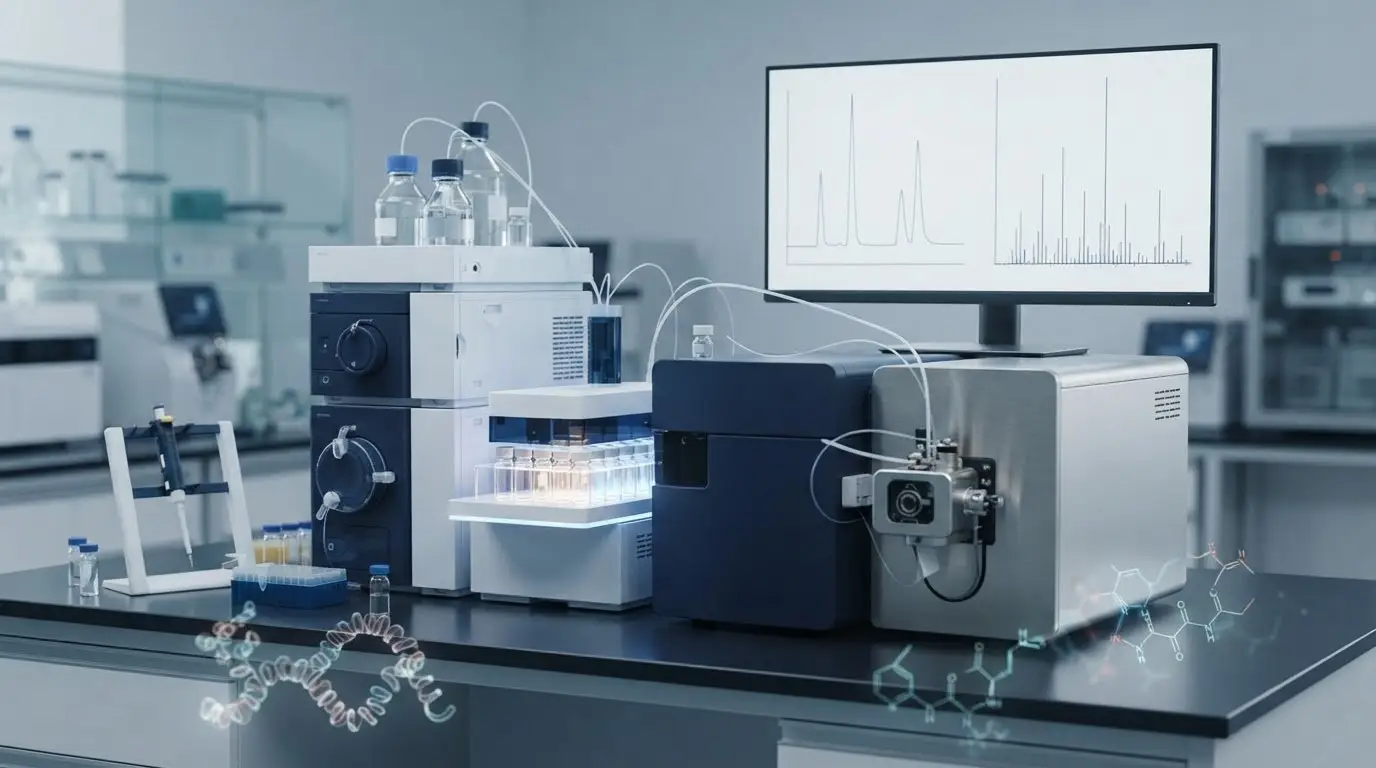
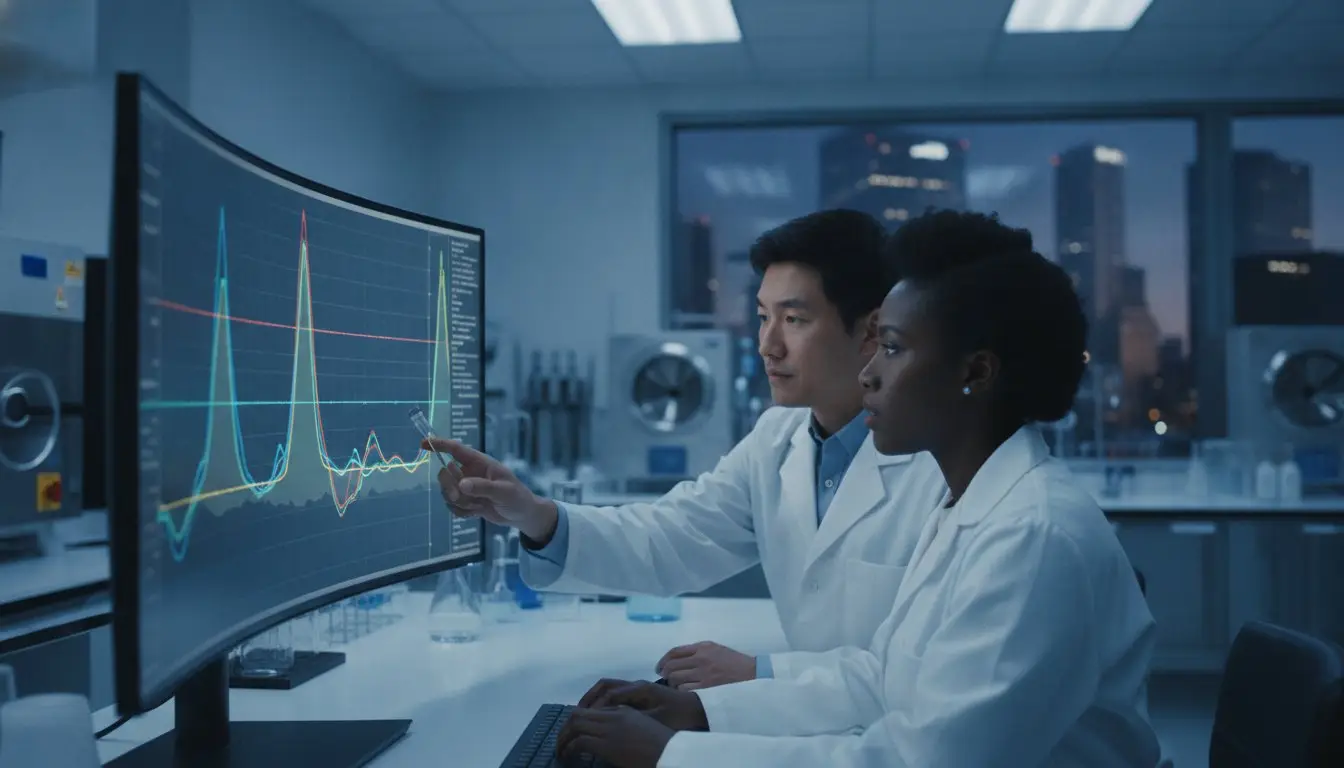
HPLC is the primary tool for quantifying purity. It functions by separating the individual components of a mixture based on their interaction with a mobile and stationary phase. The resulting report features a chromatogram; a visual graph showing peaks that correspond to different substances. A high-purity sample will display one dominant, sharp peak that stands clearly above the baseline.
Researchers should focus on the integration table, specifically the Area Under the Curve (AUC). This value represents the relative amount of the compound compared to any detected impurities. If the main peak accounts for 99% of the total area, the compound is 99% pure. Unexplained secondary peaks or “shoulders” on the main peak are significant red flags. These indicate the presence of synthesis byproducts or degraded material that could compromise your laboratory work. A clean baseline with minimal noise is a hallmark of a well-purified compound.
Understanding Mass Spectrometry (MS) Data
While HPLC measures how much of a substance is present, MS confirms exactly what that substance is. This process is essential for mass spectrometry peptide testing because it measures the mass-to-charge ratio of the molecules. Every compound has a unique theoretical mass based on its amino acid sequence. The report will list an “observed” mass, which must align closely with the theoretical value. A mismatch suggests the compound was synthesized incorrectly or is a different substance entirely.
The reliability of these results depends on verifying analytical methods to ensure precision and specificity. Without this verification, a report might appear clean while missing critical contaminants. High-quality suppliers prioritize transparency by providing batch-specific data rather than generic templates. This documentation-first approach allows you to proceed with confidence. You can browse the current research catalog to see how these standards are applied to every batch at Solara Compounds.
Evaluating Supplier Transparency and Documentation
Transparency is the primary indicator of material quality. When sourcing high grade laboratory compounds, a simple product description is insufficient for establishing scientific validity. Researchers must differentiate between a generic specification sheet and a batch-specific Certificate of Analysis (COA). A spec sheet only lists what the compound should be, while a COA documents what the specific batch actually is. All products from Solara Compounds are for laboratory research only and are not for human or animal consumption.
Lot-number traceability provides the necessary link between the analytical report and the material in your hand. If a COA doesn’t explicitly reference the lot number printed on the vial, the data is irrelevant to your experiment. This level of precision is essential for reporting research findings in peer-reviewed journals, where material provenance is often scrutinized. Relying on unverified international imports introduces significant risks, including heavy metal contamination or mislabeled sequences. Domestic U.S. suppliers offer higher accountability and significantly faster shipping times compared to overseas alternatives.
The Necessity of Batch-Specific Certificates of Analysis (COA)
A valid COA serves as a forensic record of a compound’s journey through the lab. It must include results from independent, third-party laboratories to ensure the data is unbiased and accurate. Researchers can find more technical details in our batch specific COA peptides guide. We encourage all lab buyers to Review the batch COA for their specific lot before every procurement. This practice eliminates the guesswork associated with unverified materials and ensures the integrity of your study.
Domestic Manufacturing and Cleanroom Standards
Synthesis environment directly impacts the final purity of the compound. Florida-based Solara Compounds utilizes ISO 7 cleanrooms to prevent cross-contamination during the manufacturing process. These controlled environments regulate air pressure and particulate matter, ensuring that the structural integrity of the peptides remains uncompromised. Choosing a domestic supplier also simplifies the chain of custody. It allows for direct communication with the technical team if questions arise about a specific batch’s performance. This documentation-first supply model at solaracompounds.com prioritizes empirical data over marketing, providing a stable foundation for identifying high grade laboratory compounds for complex in vitro studies.
Best Practices for Handling and Storage in the Lab
Procuring high grade laboratory compounds is only the first step. Once these materials arrive at your facility, maintaining their structural integrity depends entirely on standardized handling and storage protocols. Peptides are inherently sensitive to environmental stressors like heat, light, and moisture. These factors can trigger premature degradation, leading to unreliable experimental data. All products from Solara Compounds are for laboratory research only and are not for human or animal consumption.
Lyophilization and Vacuum Sealing Standards
Lyophilization, or freeze-drying, is the preferred method for stabilizing research compounds. This process removes water through sublimation, which prevents the chemical degradation that occurs more rapidly in liquid forms. High-quality suppliers often backfill vials with an inert gas like nitrogen. This protects the compound from oxidation, a common cause of molecular breakdown. Vacuum sealing is a hallmark of high-grade laboratory compounds. It ensures that no ambient moisture enters the vial during transport or storage, preserving the purity levels documented in the COA. If a seal is compromised, the compound’s stability is no longer guaranteed.
Optimized Storage Protocols for Peptides
Temperature management is critical for long-term experimental repeatability. For short-term use, standard refrigeration at 2 to 8 degrees Celsius is often sufficient. However, for long-term storage exceeding one month, deep-freeze conditions between -20 and -80 degrees Celsius are required to halt molecular motion and prevent degradation. Light exposure must also be minimized; amber vials or opaque storage containers are standard in professional labs. Fluctuations in temperature, such as those caused by frost-free freezers, can lead to repeated freeze-thaw cycles that damage delicate peptide bonds.
When you’re ready to begin your in-vitro study, reconstitution must be performed with precision. BAC Water is a standard laboratory reagent for research, providing a stable environment for the compound once it’s returned to a liquid state. Always allow the vial to reach room temperature before opening to prevent condensation from forming inside. This moisture can lead to immediate degradation of the lyophilized powder. All reconstitution steps are for laboratory use only and should follow established peer-reviewed protocols to ensure accurate results. To ensure your next project starts with stable, high-purity materials, shop research peptides at solaracompounds.com.
Procuring High-Purity Research Peptides from Solara Compounds
Solara Compounds acts as a bridge between material science and practical laboratory application. We provide a reliable source for high grade laboratory compounds by prioritizing empirical data over marketing claims. Every batch in our inventory undergoes independent, third-party testing through Kovera Labs to verify its purity and molecular identity. This documentation-first approach ensures that your experimental data is built on a stable foundation of verified materials. All products from Solara Compounds are for laboratory research only and are not for human or animal consumption.
Sourcing materials domestically offers distinct advantages for project timelines and accountability. Based in Florida, we offer streamlined U.S. shipping that avoids the delays and regulatory risks associated with international imports. We provide free shipping on orders over $200.00 to support the needs of active research facilities. Our catalog features high-purity materials like SOL-3RT and SOL-2TZ, alongside established research standards such as BPC-157, TB-500, and GHK-Cu. We maintain lot-number traceability for every vial, ensuring that the analytical reports you review match the physical material in your lab.
A Curated Catalog for Institutional Researchers
Our inventory is designed to meet the specific requirements of professional researchers. We offer a broad range of compounds, including MOTS-C, NAD+, and CJC-1295 (no DAC), all synthesized to meet or exceed a 98% purity threshold. Institutional lab buyers can access batch-level documentation directly on our website to confirm structural integrity before procurement. This transparency allows you to focus on your study variables rather than questioning the quality of your reagents. If you require technical assistance or have specific questions regarding our batch paperwork, our support team is available at support@solaracompounds.com or 1 (877) 388-9178, Monday through Friday, 8 AM to 5 PM Eastern.
Conclusion and Research Use Only Disclaimer
Identifying high grade laboratory compounds isn’t a matter of trust; it’s a matter of verification. By evaluating HPLC purity, confirming molecular weight through mass spectrometry, and insisting on batch-specific COAs, researchers can eliminate the uncertainty that often leads to project failure. Solara Compounds remains committed to providing the documentation and domestic support necessary for successful in vitro studies. Consistency in your materials is the first step toward consistency in your results.
Mandatory Disclaimer: All products sold by Solara Compounds are for Research Use Only (RUO). These compounds are not medicines, not supplements, and are not for human or animal consumption. They must not be used to treat, cure, or heal any condition. Do not use these products for human dosing or protocols. Solara Compounds is not a pharmacy or medical provider. Shop research peptides at solaracompounds.com to view our current catalog and review batch-specific data.
Advancing Your Research with Verified Materials
Verifying the integrity of your materials is the most critical step in ensuring experimental repeatability. By demanding batch-level COA documentation on every lot and prioritizing third-party testing through Kovera Labs, you protect your work from the variables introduced by unverified sources. Identifying high grade laboratory compounds isn’t just about sourcing; it’s about establishing a rigorous chain of custody for every reagent in your facility. This documentation-first approach allows you to focus on your specific study objectives with the confidence that your materials meet the highest technical standards.
Solara Compounds supports this commitment by providing fast U.S. shipping from Florida and maintaining strict ISO 7 cleanroom standards for every product. All materials are for laboratory research only and are not for human or animal consumption. We invite you to view the current research catalog at solaracompounds.com to find the precise materials required for your next in vitro study. Maintaining high standards in your supply chain is the key to achieving reliable, publication-grade results. We’re here to help you move your research forward with precision and accuracy.
Frequently Asked Questions
What is the difference between research grade and pharmaceutical grade?
Research-grade materials are synthesized specifically for in vitro and laboratory use, focusing on providing a documented chemical baseline for scientific studies. While high grade laboratory compounds often exceed 99% purity, they lack the specific clinical safety validations required for pharmaceutical grades intended for human use. Solara Compounds products are strictly for Research Use Only (RUO) and are not for human or animal consumption, as they are not manufactured for diagnostic or therapeutic applications.
How do I read an HPLC report for a research peptide?
Focus on the integration table to identify the Area Under the Curve (AUC) percentage for the main peak. This value represents the relative purity of the peptide compared to any detected impurities. A clean report should display one sharp, dominant peak with minimal baseline noise or secondary peaks. Broad “shoulders” or unexplained spikes on the chromatogram are red flags that indicate synthesis byproducts or degraded material that could compromise your laboratory research results.
Why is third-party testing important for laboratory compounds?
Third-party testing provides an unbiased layer of verification that ensures the supplier’s internal quality claims are accurate. Independent laboratories like Kovera Labs use specialized equipment to confirm the purity and identity of every batch before it reaches the researcher. This external validation is essential for maintaining the integrity of experimental data, especially for institutional labs in major research hubs like San Diego, Boston, and San Francisco that require absolute consistency in their materials.
What should I look for in a Certificate of Analysis (COA)?
A valid COA must display a lot number that matches the physical vial to ensure full traceability for your high grade laboratory compounds. Look for confirmed HPLC purity levels, typically targeting 98% or higher, and mass spectrometry data that aligns with the theoretical molecular weight of the peptide. The report should also include the testing date and a signature from the reviewing chemist. Researchers in cities like Houston and Miami rely on this batch-level data to validate their study parameters.
How should lyophilized peptides be stored in a laboratory setting?
Lyophilized powders should be stored in a temperature-controlled environment protected from light and moisture to prevent molecular degradation. For short-term laboratory use, standard refrigeration at 2 to 8 degrees Celsius is often sufficient. For long-term storage exceeding one month, deep-freeze conditions between -20 and -80 degrees Celsius are required. Always allow the vacuum-sealed vial to reach room temperature before opening to prevent condensation from forming inside, which can lead to immediate peptide breakdown.
Are Solara Compounds products tested for identity and purity?
Yes, every batch at Solara Compounds undergoes rigorous testing to confirm both its molecular identity and chemical purity. We utilize High-Performance Liquid Chromatography (HPLC) to quantify purity and Mass Spectrometry (MS) to verify the exact amino acid sequence weight. These tests ensure that materials like SOL-3RT, SOL-2TZ, and BPC-157 meet our strict internal quality thresholds. All products are supplied as lyophilized powders for laboratory research only and are not for human consumption.
Does Solara Compounds provide batch-specific documentation?
Solara Compounds provides batch-specific Certificates of Analysis for every lot in our inventory rather than using generic templates. This documentation-first approach ensures the data you review corresponds exactly to the lot number on your specific vial. Researchers can access these reports directly at solaracompounds.com/coa/ to verify the integrity of their order. This level of transparency supports researchers in Seattle, Raleigh, and Chicago who require precise material provenance for their published findings.