Research Articles
Peptide degradation pathways and how long peptides remain stable

A peptide’s stability can change through several chemical routes. Depending on its sequence, formulation, and exposure to light, heat, or moisture, a peptide may degrade within days or weeks. Understanding peptide degradation pathways helps researchers see how oxidation, hydrolysis, deamidation, and chain cleavage alter molecular structure and stability.
This variability matters when evaluating materials for laboratory work. A peptide in solution may behave differently from the same peptide in dry, lyophilized form. Mapping peptide degradation pathways helps connect those differences to the sequence and surrounding conditions.
Oxidation modifies susceptible amino-acid residues, hydrolysis breaks bonds through reaction with water, and deamidation alters certain side chains. Comparing peptide degradation pathways helps researchers interpret these structural changes in context. All peptide products discussed are for laboratory research only and are not for human or animal use.
Key Takeaways
- Recognize how proteases such as trypsin and chymotrypsin break peptide bonds at specific sites, helping explain why sequence affects stability.
- Distinguish oxidation, hydrolysis, and deamidation by the kinds of molecular changes they cause.
- Understand why asparagine deamidation can form Asp and isoAsp products, with pH and nearby residues influencing the pathway.
- Use degradation mechanisms to interpret how peptide structure and laboratory conditions can shape impurity formation.
How quickly do peptides degrade?
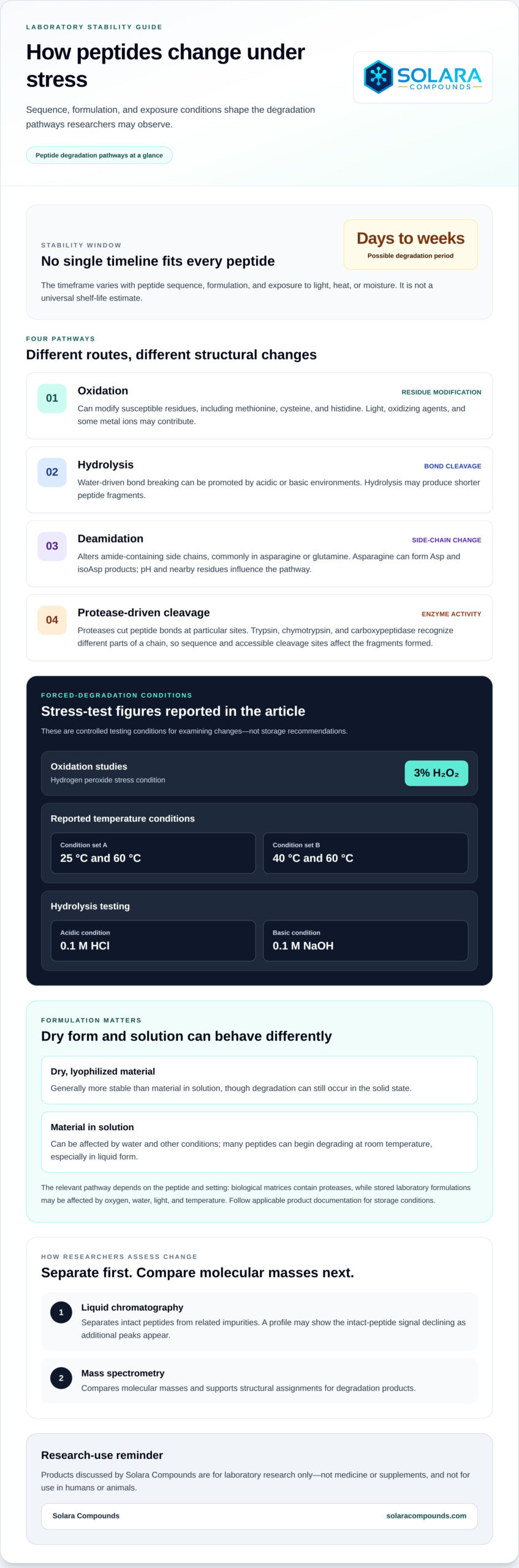
There is no single stability period that applies to every peptide. Some may degrade within days or weeks, depending on sequence, formulation, and exposure to heat, light, or moisture.
Protease-Driven Breakdown
Proteases and peptidases are enzymes that cut peptide bonds at particular sites. Their activity matters because it can rapidly metabolize and inactivate peptides in blood and other biological matrices.
Trypsin, chymotrypsin, and carboxypeptidase recognize different parts of a chain. The resulting fragments depend partly on the peptide’s amino-acid sequence and accessible cleavage sites. The U.S. Food and Drug Administration defines peptides as chains with fewer than 40 amino acid residues. Some classifications describe 40-49 residues as polypeptides and 50 or more as proteins. A protein’s larger structure does not make it immune to enzymatic breakdown.
Degradation in Bodies and Formulations
Enzymes can act directly on peptide bonds in biological matrices, while laboratory formulations face chemical and physical stresses. The setting determines which processes are most relevant: biological matrices contain proteases, whereas oxygen, water, light, and temperature can affect stored formulations.
Peptides are generally less stable than proteins in laboratory and biological experiments. Dry, lyophilized material is generally more stable than material in solution, though degradation can still occur in the solid state. Many peptides can begin degrading at room temperature, especially in liquid form. Store research materials in cool, dry conditions, often refrigerated or frozen, according to the applicable product documentation. For laboratory research only, not for human or animal use.
Pathways Across Peptide Types
Different peptide types can undergo the same broad chemical changes, but sequence and formulation shape their relative importance. Preserving structure is a key concern in pharmaceutical development. Other research peptides are assessed for their particular laboratory applications and should not be assumed to share a single stability profile.
Degradation may alter activity or produce fragments and modified molecules, complicating the interpretation of an experiment. Deamidation, for example, changes susceptible amino-acid side chains; cleavage produces shorter chains. These changes do not establish a biological effect on their own. Researchers interpret them in context, considering the peptide, formulation, and experimental system. A sequence-specific example is the KPV peptide, whose identity is tied to its amino-acid sequence.
Definitions also vary across sources. Forbes defines peptides as a short string of 2 to 50 amino acids and polypeptides as containing more than 20 amino acids. Another distinction is that peptides generally contain fewer than 20-30 amino acid residues, while proteins may contain as many as 4000 residues. These category boundaries do not by themselves determine how quickly a particular chain degrades; sequence and formulation remain relevant.
Some structural modifications can reduce susceptibility to breakdown. Replacing natural L-form amino acids partly or entirely with D-form amino acids can increase stability by reducing susceptibility to proteolytic degradation. N-methylation of the peptide backbone can enhance resistance to proteases. Chelating agents such as ethylenediaminetetraacetic acid can bind metal-dependent peptidases or proteases and impede catalytic degradation. These approaches address specific degradation routes, so their relevance depends on the peptide and the conditions in which it is studied.
Oxidation, hydrolysis, and deamidation
These chemical modifications can alter a peptide’s structure and laboratory stability. Their rates depend on sequence, formulation, pH, temperature, and exposure conditions.
Conditions Affecting Peptide Stability
pH, heat, and oxidizing agents can affect stability by changing reaction rates or modifying amino-acid side chains. The same peptide may form different impurities under different conditions. Acidic or basic environments can promote hydrolysis, while higher temperatures can accelerate degradation reactions. Oxidation can modify susceptible residues, including methionine, cysteine, and histidine.
Forced-degradation testing uses controlled stress to examine which changes occur. Oxidation studies may use 3% hydrogen peroxide; reported temperature conditions include 25 °C and 60 °C, or 40 °C and 60 °C. These are stress-test conditions, not storage recommendations. Researchers compare stressed samples with controls to characterize changes linked to each condition.
Light can contribute to oxidation by promoting reactions that modify susceptible residues. Exposure conditions matter: a light-sensitive formulation may change differently from one protected from light. Metal ions can also catalyze oxidation, often near metal-binding sites. Methionine, cysteine, or histidine residues in those regions may be vulnerable, even when other amino acids are more exposed to the surrounding liquid.
Peroxide oxidation provides a controlled way to examine oxidative susceptibility. Hydrolysis testing can use acidic conditions such as 0.1 M hydrochloric acid or basic conditions such as 0.1 M sodium hydroxide. The resulting profiles help distinguish bond cleavage from oxidation or deamidation. Deamidation changes an amide-containing side chain, commonly in asparagine or glutamine, and can produce altered peptide forms.
Identifying Degradation Products
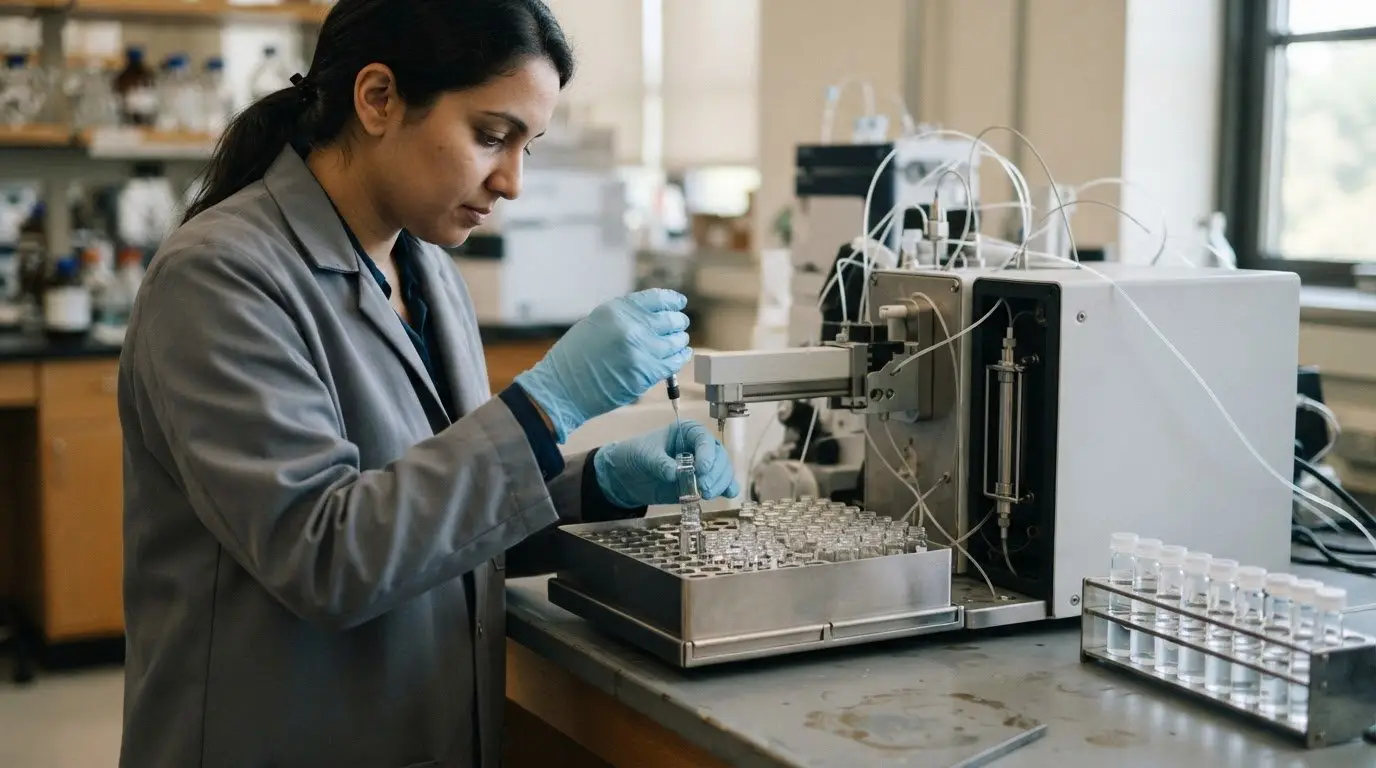
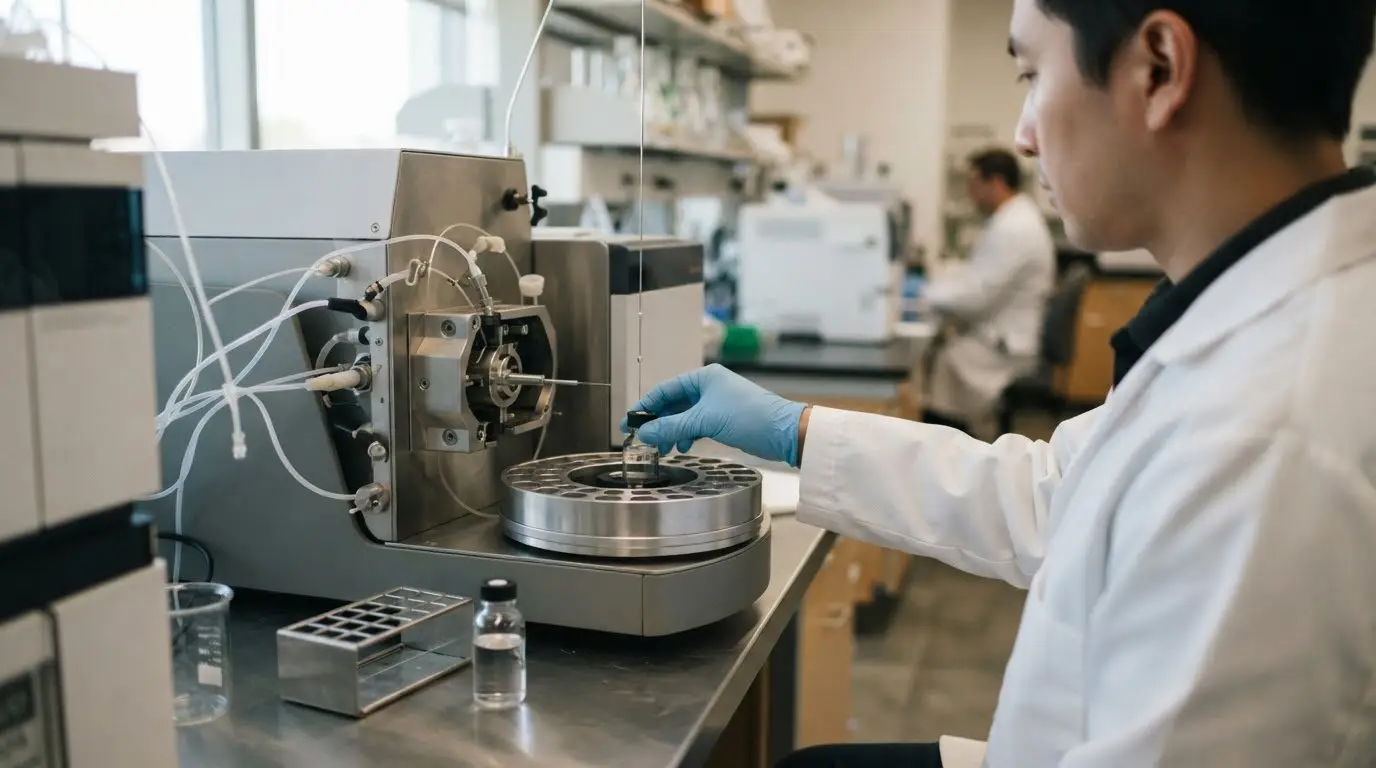
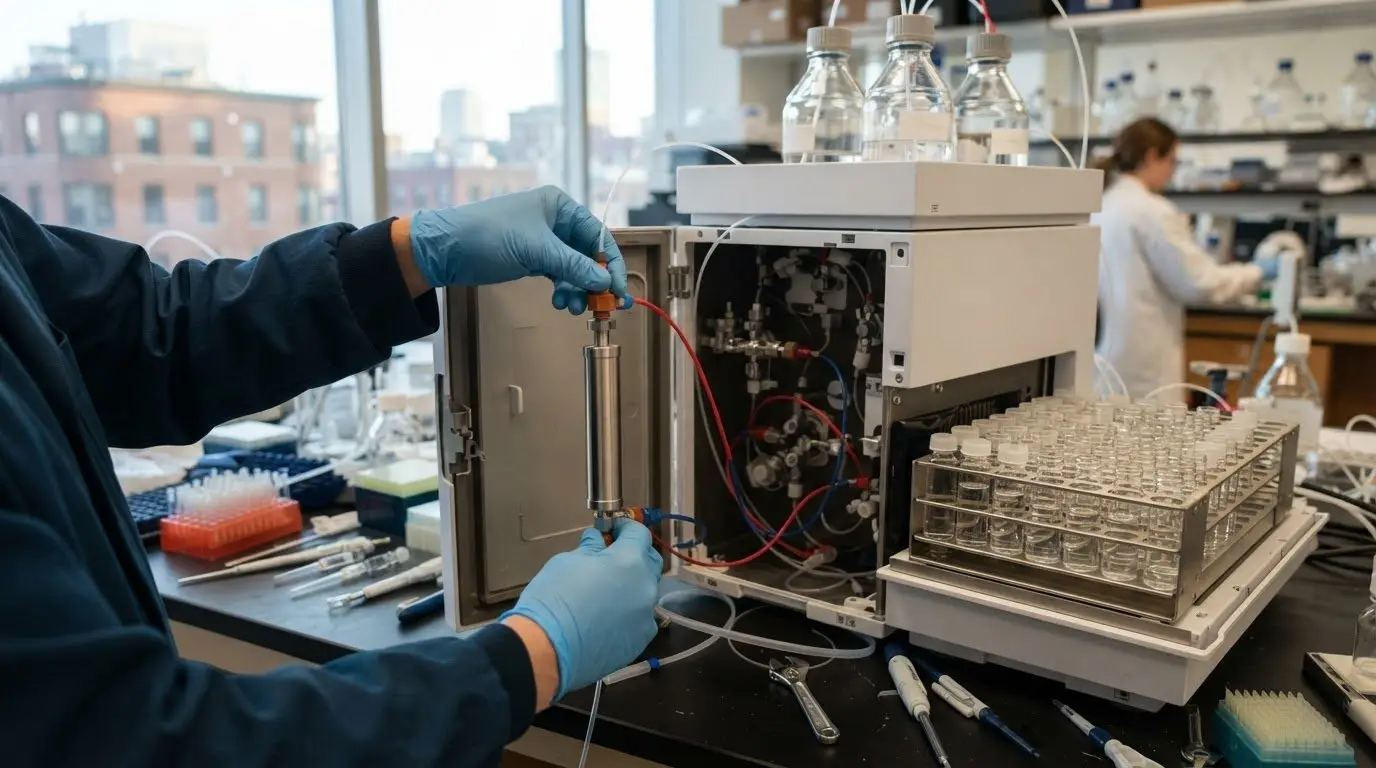
Degradation-product analysis separates a mixture and identifies changes in its components. Researchers commonly use liquid chromatography to separate intact peptides from related impurities, then mass spectrometry to compare molecular masses and support structural assignments.
A chromatographic profile can show whether the intact peptide signal declines as additional peaks appear. Mass spectrometry can help distinguish oxidation, which produces oxygen-related mass changes, from hydrolysis or cleavage products. Deamidation can be harder to resolve by mass alone, so separation and complementary analytical evidence matter. Researchers interpret results against an unstressed sample and relevant controls, rather than relying on a single signal.
For laboratory comparisons involving research materials, the research peptide catalog provides a product-selection starting point. All products are for laboratory research only, not for people or animals.
Taken together, these routes matter because peptide degradation through hydrolysis, oxidation, and deamidation can affect function, stability, and safety. Peptides are sensitive to light, temperature, and chemical changes, and may break down through these pathways or other changes. This broader susceptibility is relevant when interpreting degradation profiles.
For forced-degradation studies, azobisisobutyronitrile (AIBN) is listed as an oxidation stressor for proteins and peptides. A peroxide control is also listed for these studies. Metal-ion-catalyzed oxidation can damage histidine, cysteine, and methionine residues. It often targets residues in or near metal-ion-binding sites rather than the most solvent-accessible amino acids. Interpreting observed changes may therefore require considering both the applied chemical stress and the local residue environment.
Peptide backbone chain cleavage
Backbone cleavage breaks the bonds that connect amino acids, dividing one peptide chain into shorter fragments. For researchers, identifying this change matters because fragments may no longer retain the original structure or measured activity.
A peptide backbone links amino acids through peptide bonds, each formed between a carboxyl group and an amino group. Cleavage at one bond divides a chain into two pieces; breaks at additional positions create more fragments. During hydrolysis, water participates in breaking the bond, leaving new chemical ends on the resulting fragments.
Cleavage can result from enzymatic action or chemical reactions. Proteases recognize particular sequences or structural features, so a susceptible site can determine where a chain splits. Chemical cleavage depends on the peptide’s sequence and local environment. Although the mechanisms differ, both change the chain’s length and arrangement.
Asparagine provides a specific example of sequence-linked cleavage. In peptides that deamidate slowly, its side chain can attack a nearby peptide carbonyl carbon. This reaction can break a backbone bond, producing fragments rather than only modifying a side chain. The local amino-acid sequence therefore helps determine which products form.
Fragmentation can change a peptide’s stability, solubility, and measured activity. A shorter fragment has fewer connected amino acids and may not retain the original three-dimensional structure. If a cleavage site lies within a region needed for a laboratory assay, the observed signal may differ from that of the intact peptide. The effect depends on the fragment and the assay.
During peptide research, it is useful to distinguish cleavage from other chemical changes. Deamidation modifies an amino-acid side chain, while backbone cleavage separates the chain. Oxidation changes susceptible residues without necessarily splitting the backbone. These outcomes can occur in parallel, so a sample may contain intact peptide, modified chains, and shorter fragments.
To interpret chain cleavage, locate the break and compare the resulting fragments with the original sequence. A break near an asparagine residue, for example, may fit the side-chain attack pathway. A fragment pattern associated with a protease instead points to its preferred cleavage sites. These comparisons help connect a chemical change to a likely mechanism.
In laboratory research, chain integrity matters for interpreting results, not just for storage. A peptide that appears stable can still produce fragments under particular conditions, while an acidic environment can favor different reactions from other settings. Tracking the intact chain alongside its breakdown products gives researchers a clearer basis for evaluating experimental activity.
Asparagine and glutamine deamidation
Deamidation modifies an amide-containing side chain, changing a peptide’s structure without necessarily cutting its backbone. Asparagine and glutamine are the relevant residues. This pathway matters because modified molecules can differ from the starting peptide in charge, shape, and laboratory behavior.
Asparagine can follow different pathways under acidic versus neutral or alkaline conditions. In acidic media, studied hexapeptides underwent direct hydrolysis, producing Asp-containing peptides. Under neutral or alkaline conditions, asparagine first formed a cyclic imide intermediate. That intermediate could then hydrolyze into both isoAsp and Asp forms.
This distinction is useful when interpreting samples exposed to different pH conditions. A new Asp product under acidic conditions fits direct hydrolysis in the studied peptides. A mixture of Asp and isoAsp under neutral or alkaline conditions points to the cyclic-imide pathway. These findings describe specific studied hexapeptides, not a universal rate for every sequence.
Sequence also shapes deamidation. At neutral to alkaline pH, the size of the amino acid immediately after asparagine significantly affected the deamidation rate in the studied peptides. At acidic pH, that neighboring C-terminal residue did not affect the rate in those studies. Changes to the amino acid before asparagine also had no significant effect under the tested pH conditions.
Glutamine has a similar amide-bearing side chain and can also undergo deamidation. Its local sequence and surrounding conditions influence the resulting modification. Researchers should distinguish this general susceptibility from the specific asparagine findings above, which describe defined reaction pathways and neighboring-residue effects in studied hexapeptides.
A liquid formulation can expose peptide molecules to water and dissolved components, making the surrounding pH relevant to deamidation. Oxygen exposure is a separate concern: it can promote oxidation, but it is not the defining cause of asparagine deamidation. Keeping these mechanisms distinct helps researchers interpret changes without assigning every new product to a single pathway.
Deamidation can also coincide with chain breakdown. In peptides that deamidated slowly, the asparagine side chain was observed to attack a peptide carbonyl carbon, causing bond cleavage. A sample may therefore contain both modified residues and shorter chains. Sequence, pH, and the observed products together help distinguish the chemical pathway involved.
In laboratory studies, the practical focus is the pattern of products, not a single label. Asp, isoAsp, and cleavage products represent different structural outcomes. Comparing these outcomes across acidic, neutral, and alkaline conditions can reveal how a peptide’s sequence responds to its environment, while keeping oxidation and other chemical changes analytically distinct.
Chemical degradation pathways
The main chemical pathways include hydrolysis, oxidation, deamidation, peptide bond cleavage, Maillard reactions, β-elimination, enantiomerization, isomerization, and dimerization. Each changes a peptide differently, so identifying the reaction helps explain which molecular properties may have shifted.
Some pathways modify one residue; others change the chain or link separate molecules. Enantiomerization changes an amino acid’s spatial form, while isomerization rearranges its structure without changing its overall composition. Dimerization joins two peptide molecules. These changes can affect structural integrity even when the full chain remains intact.
A Maillard reaction can modify a peptide through reactions involving amino groups and sugars. The resulting products differ from the starting molecule, so a sample may contain chemically altered forms alongside intact peptide. This pathway matters when assessing how formulation components and exposure conditions may interact with a peptide over time.
β-elimination is another possible chemical pathway. It can remove part of a side chain and create a new unsaturated structure. The outcome depends on the residues and reaction environment. This differs from hydrolysis, which breaks a bond through water, and oxidation, which chemically modifies susceptible residues.
Several reactions can occur together. Deamidation may occur alongside cleavage, while oxidation and isomerization can produce distinct modifications in the same sample. A single changed signal therefore does not identify a unique pathway. Researchers interpret product patterns in relation to the starting sequence and conditions, including temperature, moisture, and formulation.
Thiol exchange shows how a side-chain reaction can affect a linked structure. In maleimide-thiol conjugates, exchange with glutathione can cause the conjugate to lose targeting ability. The peptide bond may remain intact even as the attached group’s function changes. This distinction helps separate backbone degradation from modification of a conjugate.
Physical state also informs interpretation. Peptides are generally more stable in lyophilized form than in solution, although changes can still occur in the solid state. Excipients in finished formulations may interact with peptides and contribute to degradation. Spectroscopy and other analytical approaches can help characterize structural changes, while separation methods can distinguish intact material from degradation products.
The practical takeaway is to match the suspected reaction to the observed molecular change. A split chain suggests cleavage; a joined pair suggests dimerization; altered side chains point toward modification. For laboratory research materials, explore research peptide options with the study’s identity and analytical requirements in mind. Products are for laboratory research only, not for people or animals.
Solara Compounds
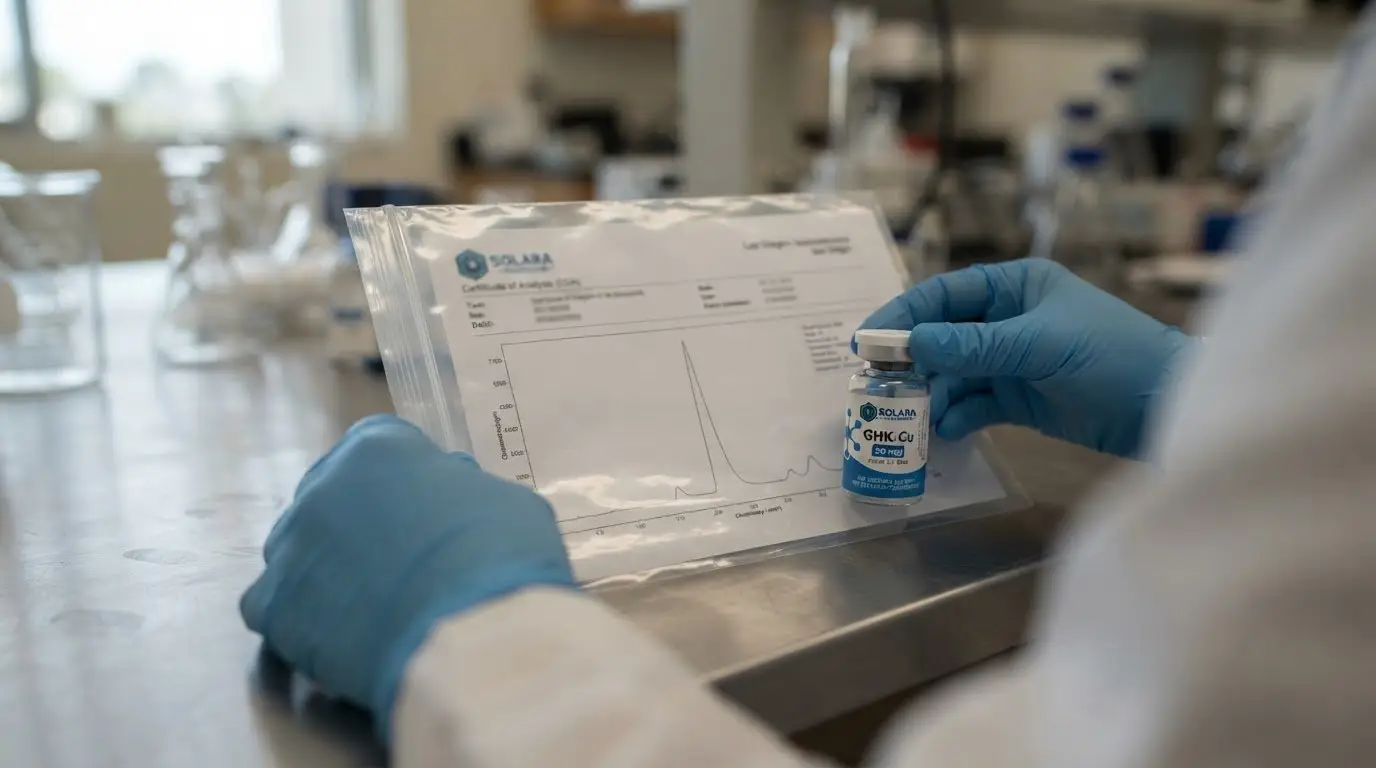
Solara Compounds supplies research peptides with independent third-party testing and batch-specific Certificates of Analysis. These records help researchers identify batch documentation when assessing materials for studies involving stability and degradation.
Its research catalog includes SOL-3RT Retatrutide 10mg, SOL-2TZ Tirzepatide 10mg, GHK-Cu 50mg, and TB-500 5mg. Products are for laboratory research only; they are not medicines or supplements and are not for people or animals.
For questions about research materials or batch documentation, contact Solara Compounds at [email protected] or 1 (877) 388-9178, Monday-Friday, 8 AM-5 PM Eastern.
Build a More Repeatable Research Plan
A focused comparison starts by defining the variable to examine, the result to measure, and the conditions that need to remain consistent. This gives researchers a clearer framework for interpreting changes without assuming that every sample behaves alike.
Use that framework to plan how observations will be documented and results compared across experiments. A well-defined research question can make the study of peptide degradation pathways more useful by linking molecular changes to the specific outcome under investigation.
Solara Compounds offers research materials for laboratory work. Choose options that fit your study’s scope, then carry your research question forward with care. Explore research peptides at solaracompounds.com and take the next step with a clear plan.
Frequently Asked Questions
How do proteases and peptidases break down peptides?
Researchers can assess enzyme-driven changes by comparing an enzyme-exposed sample with a matched enzyme-free control. Keep the peptide, formulation, and observation conditions consistent between samples. A difference in intact-material levels or fragment profiles can support an enzyme-related interpretation. This comparison is useful when an experimental result changes because it helps distinguish enzyme activity from background changes in the formulation.
What are common chemical degradation pathways of peptides, such as deamidation and hydrolysis?
Common pathways include deamidation, hydrolysis, oxidation, cleavage, isomerization, enantiomerization, dimerization, β-elimination, and Maillard reactions. For a useful record, identify the suspected change and document the evidence supporting that assignment. Do not treat a pathway name as proof by itself. A clear record distinguishes observed products from the proposed explanation, making later comparisons across samples more meaningful.
What factors determine peptide degradation rates and half-life?
Sequence, formulation, physical state, pH, temperature, light, moisture, and the surrounding biological matrix can all affect degradation. For meaningful half-life comparisons, use the same endpoint and clearly record the sample context. A value measured for one formulation or assay cannot automatically describe another. Keeping these details alongside results helps researchers judge whether reported stability measurements are genuinely comparable.