Research Articles
How to Store Reconstituted Peptides and Protect Your Solution

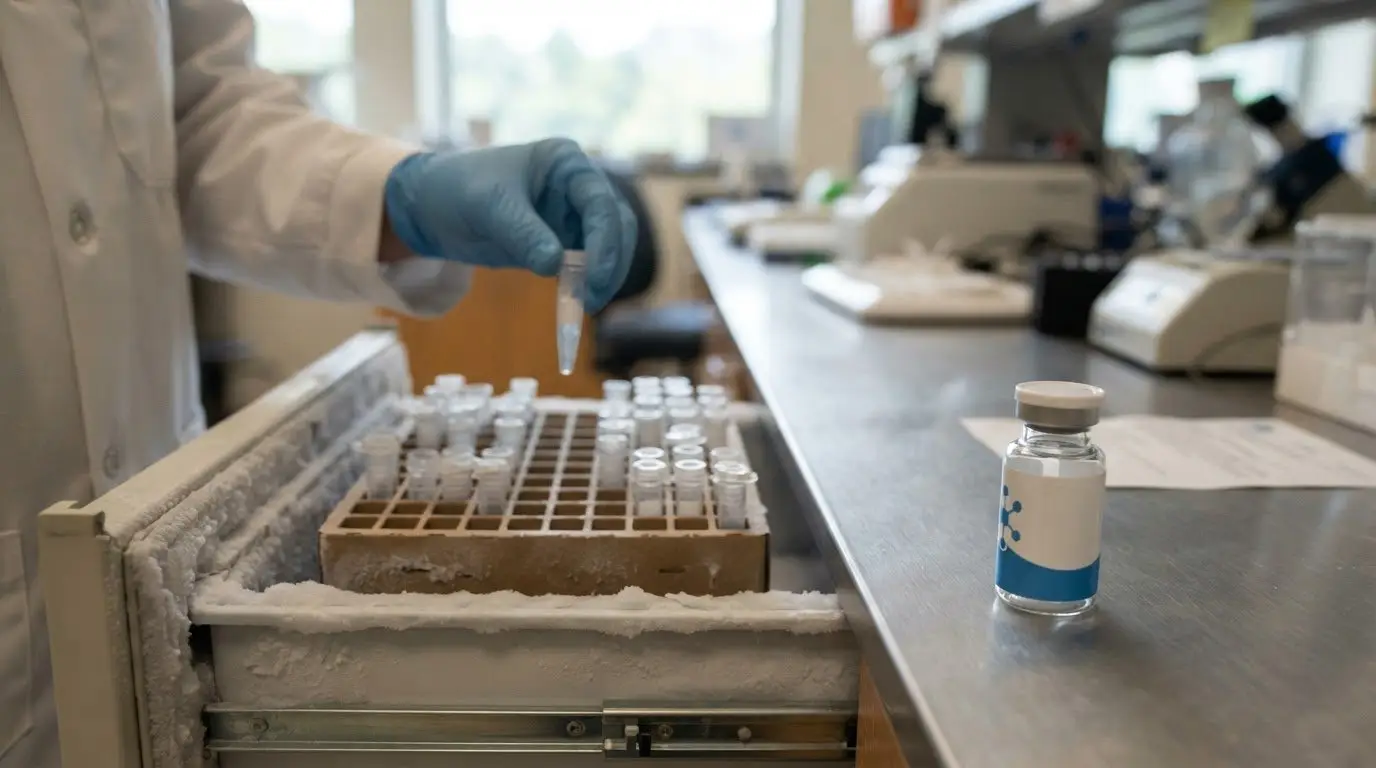
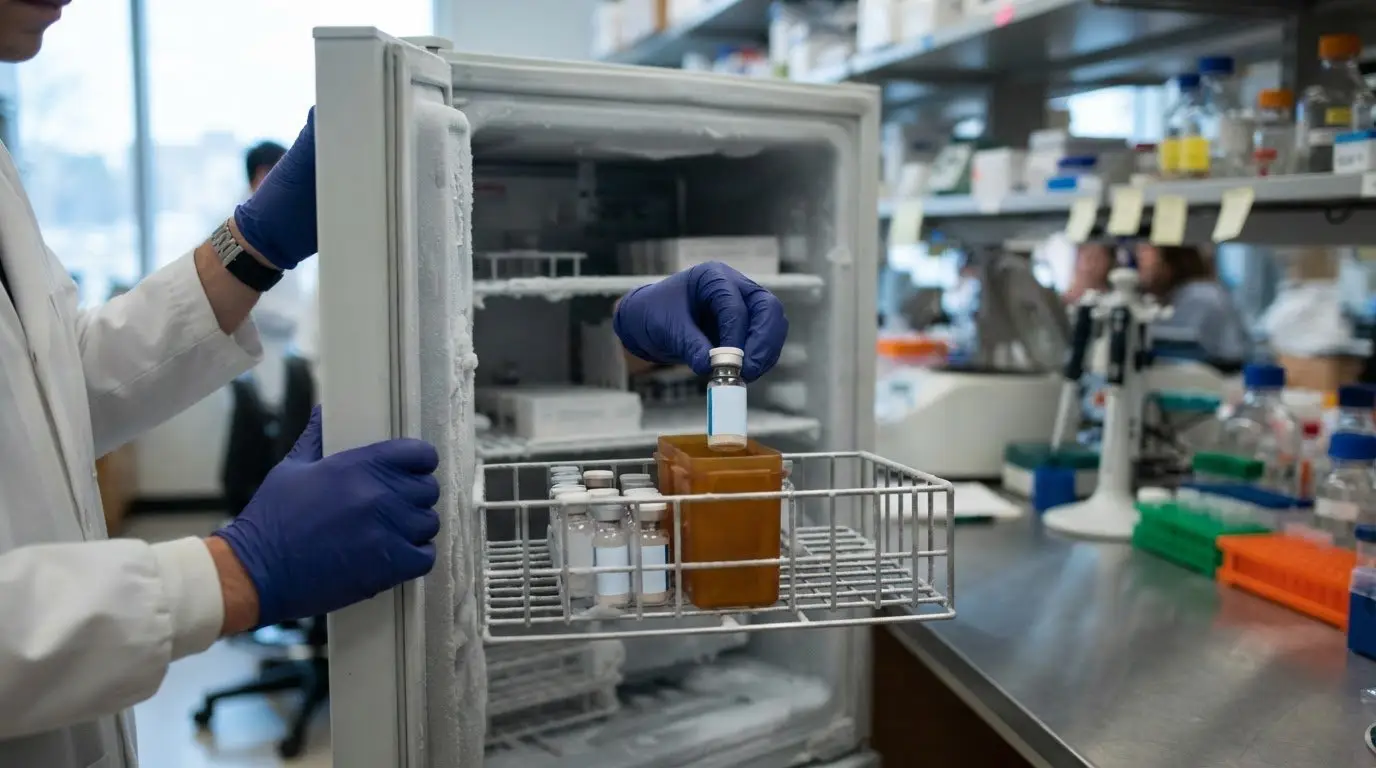
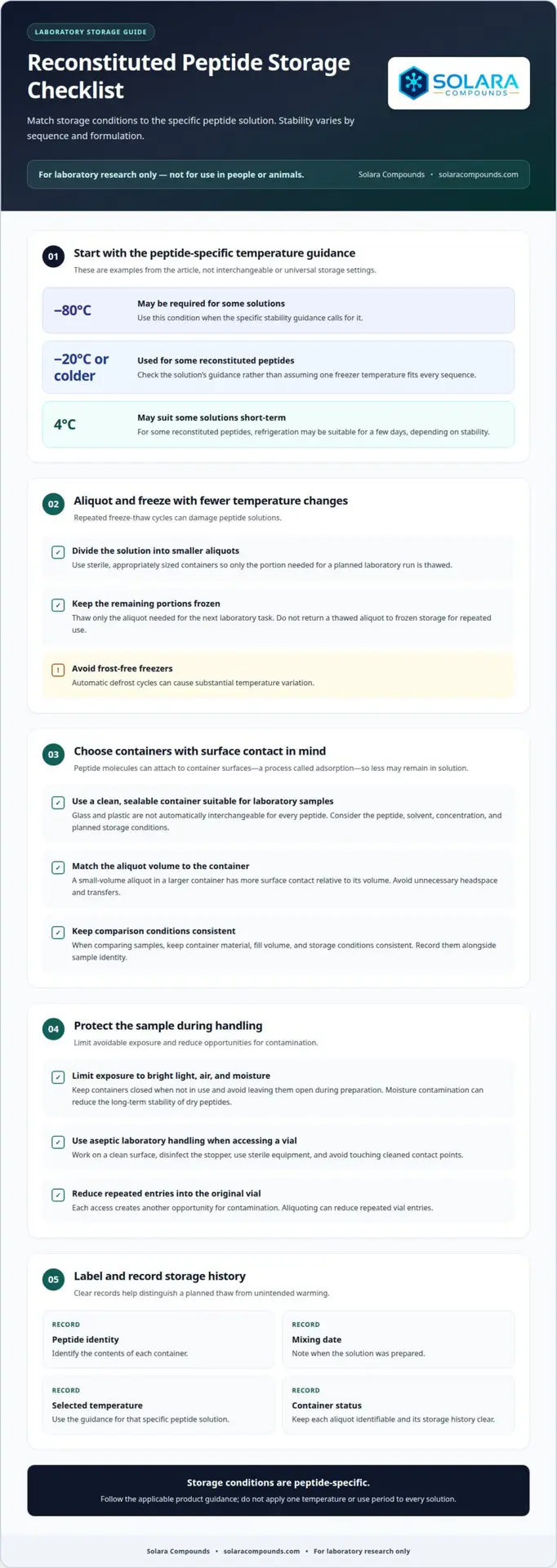
A mixed peptide vial can be frozen, but the appropriate temperature depends on the peptide’s stability in solution: some are stored at -20°C or colder, while others may require -80°C. Repeated freeze-thaw cycles can damage peptide solutions, so dividing a solution into smaller aliquots can help avoid thawing the full vial repeatedly. The practical rule for how to store reconstituted peptides is to follow the stability guidance for the specific peptide and solution.
It’s reasonable to want a clear answer about how to store reconstituted peptides, since storage conditions can affect solution integrity. This guide covers freezing, container choice, aliquoting, temperature, discard dates, degradation, and aggregation. It is intended for laboratory research only, not use in people or animals. Because stability varies by peptide and formulation, follow the relevant product-specific guidance rather than applying one rule to every solution.
Key Takeaways
- Match freezer temperature to the peptide’s stability in solution; some require -20°C or colder, while others may need -80°C.
- Plan aliquots to reduce repeated freeze-thaw cycles, which can damage peptide solutions.
- Consider how container materials and surface contact may affect peptide adsorption and the amount recovered.
- Record mixing and discard dates, and use the product’s specific storage guidance rather than assuming a universal use period.
- Account for sequence and storage conditions, since both can influence degradation and aggregation.
Can I freeze a mixed vial?
Freezing may suit some peptide solutions, but the appropriate temperature depends on the peptide’s stability after reconstitution. Follow sequence-specific storage guidance, then plan aliquots to limit thawing and refreezing.
Aliquot to Limit Freeze-Thaw Cycles
Divide the mixed solution into smaller aliquots before freezing, using sterile, appropriately sized containers. Set aside only the volume needed for a planned laboratory run; smaller portions reduce the need to thaw and refreeze the remaining solution. Label each container clearly so its contents and storage history remain identifiable. Avoid repeatedly warming the original vial for separate withdrawals.
Freeze Mixed Vials Carefully
Check the peptide’s solution-stability guidance before choosing a freezer temperature. Some reconstituted peptides are stored at -20°C or colder; others may require -80°C to limit rapid degradation. Do not assume one temperature suits every sequence. Avoid frost-free freezers, where automatic defrost cycles can cause substantial temperature variation, and avoid repeated freeze-thaw cycles because they can damage peptide solutions.
- Protect containers from bright light and moisture during handling and storage. Keep each vial closed when not in use and use a clean, dry storage area. Moisture contamination can reduce the long-term stability of dry peptides. For solutions, limit unnecessary exposure to air and light, and avoid leaving a container open while preparing other materials.
- Use aseptic laboratory handling whenever accessing a vial: work on a clean surface, disinfect the stopper, use sterile equipment, and avoid touching the cleaned stopper or equipment contact points. There is no universal puncture limit for every peptide vial. Each access creates another opportunity for contamination, so aliquot samples to reduce repeated entries and follow the applicable laboratory procedure.
- Keep a storage record with the aliquots. Note the peptide identity, mixing date, selected temperature, and each container’s status. If freezer defrost cycles or temperature variation are a concern, use a stable freezer rather than relying on a frost-free unit. The record helps distinguish a planned thaw for use from unintended warming.
- Thaw only the aliquot needed for the next laboratory task, and keep the other portions frozen. Don’t return a thawed aliquot to frozen storage for repeated use. If solution stability guidance calls for -80°C rather than -20°C, use that more protective condition; the peptide sequence determines which temperature is appropriate.
Container materials and peptide adsorption
Yes. Storage requirements vary with peptide sequence, formulation, and intended storage period. For short-term refrigeration, 4°C may suit some solutions for a few days, depending on stability.
- Choose a compatible container. Use a clean, sealable container suitable for laboratory samples. Peptides can interact with container surfaces, reducing the amount that remains in solution. Glass and plastic are not automatically interchangeable for every peptide. Consider the material alongside the peptide, solvent, concentration, and planned storage conditions.
- Consider adsorption before selecting a material. Adsorption occurs when peptide molecules attach to a container’s surface instead of remaining in solution. This can matter particularly when a sample contains little peptide relative to the surface it contacts. For example, a small-volume aliquot in a larger container has more surface contact relative to its volume than a fuller container.
- Match sample volume to container size. Choose a container that holds the aliquot without unnecessary surface area or headspace. Avoid transferring a solution between containers without a clear reason: each transfer adds surface contact and another opportunity for contamination. Keep the container closed between laboratory tasks.
- Match refrigeration to the specific solution. A storage temperature of 4°C may be acceptable for some reconstituted peptides for a few days, depending on their stability. It is not a universal temperature or duration. Peptide sequence and formulation influence stability, so use the applicable product guidance rather than assuming every mixed solution has the same requirements.
- Limit light and moisture exposure. Store containers closed and away from bright light. Moisture is especially relevant to dry peptide material, where water contamination can reduce long-term stability. Handle dry material under dry conditions and close the vial promptly after use. For a solution, avoid unnecessary opening and exposure during transfers.
- Use consistent containers for comparisons. When comparing samples, keep container material, fill volume, and storage conditions consistent. Differences in recovery may reflect surface adsorption or handling, not only peptide degradation. Record these details alongside sample identity so researchers can interpret results across runs.
- Make the storage choice part of the experimental plan. Record the peptide, formulation, container material, and storage temperature together. If a laboratory project needs research materials, browse research peptides for laboratory research only.
A vial with unexpected cloudiness, color changes, particles, cracks, a loose seal, prohibited freezing, prolonged heat, or possible contamination should be treated as compromised for research use. Quarantine the sample, record the observation, and do not use it in experiments until integrity is confirmed by the laboratory’s own analytical checks (for example HPLC or appearance against the sample log). Filtration does not restore a compromised sample.
Peptides containing Asp, Glu, Lys, Arg, or His can absorb moisture from the air and should be stored in a desiccator in a tightly capped vial. Peptides containing Cys, Met, or Trp are prone to oxidation and require anaerobic storage to maintain stability. These sequence-specific considerations make suitable container closure and storage conditions important, alongside attention to adsorption.
Aliquoting peptide solutions
Divide a solution into portions sized for separate laboratory runs. This limits handling of the main sample and helps preserve a consistent storage history.
- Plan portions around the experiment. Estimate the volume needed for one planned run, then prepare aliquots accordingly. Each portion should cover that run without requiring repeated access to the same container. Avoid using a fixed aliquot size for every peptide; the experimental volume and solution stability determine a practical amount.
- Prepare aliquot containers first. Set out clean, suitable containers before opening the peptide solution. Label each with the peptide identity and enough sample information to distinguish it from other laboratory materials. Preparing labels in advance reduces open-container time and helps prevent mix-ups during transfer.
- Distribute the solution in one organized session. Transfer the prepared solution into the planned portions using clean laboratory equipment and a consistent method. Keep the main sample open only as long as needed. Unnecessary transfers add surface contact and handling, complicating later comparisons between experimental runs.
- Keep aliquots separate after division. Don’t combine one portion with another container after storage begins. Separate aliquots give each run a distinct handling history. For example, a portion set aside for one assay can be thawed without disturbing samples reserved for later work.
- Choose storage temperature by peptide stability. Peptide solution aliquots should be stored at -20°C or colder wherever possible. Some sequences may require colder conditions, so use the storage guidance for the specific peptide. Don’t assume every solution tolerates the same temperature or storage period.
- Record storage details as you work. Add each aliquot’s identity, preparation date, and storage condition to the laboratory record. Keep the same information with its container where practical. These details help researchers interpret differences between runs and identify which portion was used, rather than relying on memory.
- Thaw only the portion planned for use. Keep the remaining aliquots in their selected storage conditions while working with one portion. Avoid returning a thawed aliquot to frozen storage for repeated use. If the planned experiment changes, preserve the original portions and prepare a separate allocation for the revised work.
- Review the aliquot plan before mixing. Match the number of portions to the project’s expected runs and the peptide’s stability in solution. Smaller portions can reduce unnecessary handling, but excessive division creates more containers and labels to manage. Use a clear, repeatable plan for laboratory research only.
Mixing and discard dates
Follow the manufacturer’s instructions and product label; a 28-day use period isn’t universal. Diluents vary by peptide, and the chosen formulation can affect solution stability.
Follow Manufacturer and Label Instructions
Use the storage instructions for the specific peptide and formulation. Some reconstituted solutions may be kept at 4°C for a few days, depending on stability. Don’t apply that example to every peptide. The compatible diluent and storage conditions depend on the product’s instructions, so avoid substituting a solvent based on another peptide’s directions.
Record Mixing and Discard Dates
After reconstitution, write the mixing date and discard date on each vial. Use the product’s stated period to determine the discard date rather than assuming all solutions share the same deadline. Keep the dates visible when aliquoting, so each container remains traceable to its preparation and use schedule.
- Read the product instructions before mixing. Identify the specified diluent, storage temperature, and use period for that peptide. The correct diluent is formulation-specific; a solvent suitable for one sequence may not suit another. Don’t assume that changing the diluent preserves the same storage life.
- Set the discard date from the applicable instructions. Labeled multidose products may specify seven, fourteen, or thirty days after mixing. These are product-specific examples, not interchangeable periods for every peptide. A 28-day period is not a universal peptide rule. Follow the exact label or manufacturer instructions for the material being handled.
- Label the vial as soon as mixing is complete. Record both the mixing date and discard date, then keep the information legible during storage. For aliquots, transfer the relevant dates to each container. This keeps every portion connected to the original preparation timeline.
- Track diluent-vial dates separately. If a laboratory diluent has its own open-container dating, track that date separately from the peptide solution’s discard date. Track both records independently when both materials are used. Don’t use the diluent’s date to calculate the peptide solution’s discard date.
- Follow instructions for each container. Do not borrow in-use limits from unrelated device or finished-drug labeling. Keep each research solution’s discard date tied only to that peptide’s product instructions and the laboratory sample log. Keep each product’s storage and discard instructions attached to its own container and formulation.
- Preserve the stated storage conditions throughout the use period. Temperature and formulation can affect how long a reconstituted solution remains stable. If the instructions call for refrigeration, follow the stated conditions; 4°C may be appropriate for some solutions for a few days. Use these materials for laboratory research only.
Peptide degradation and aggregation
- Consider the sequence when setting storage conditions. Peptide stability depends on its amino acid sequence. Cysteine, methionine, asparagine, glutamine, and tryptophan can limit solution shelf life. A solution containing one of these residues may behave differently from another peptide under the same conditions. Use sequence-specific storage guidance when planning laboratory work.
- Account for oxidation-sensitive residues. Peptides containing Cys, Met, or Trp are prone to oxidation, a chemical change that can alter the molecule. Peptides containing Cys, Met, or Trp may be more susceptible to oxidation, so limiting oxygen exposure can help preserve stability. Include oxygen exposure in the storage plan, and limit unnecessary opening or handling that exposes the solution to air.
- Reduce conditions that encourage aggregation. Aggregation occurs when peptide molecules associate into larger groupings rather than remaining evenly dispersed. Reconstitution conditions, solution pH, and handling can affect the risk. Sterile, low-pH buffers or solvents can help minimize contamination and aggregation risks during reconstitution. Use a formulation compatible with the peptide.
- Use temperature guidance specific to the solution. Storage temperature affects how quickly peptide degradation can occur, but no single temperature suits every sequence. Some solutions are stored at -20°C or colder, while some may require -80°C. Select conditions based on the peptide’s solution stability, not a general rule applied across unrelated sequences.
- Keep a consistent handling record. Record the peptide sequence, solvent or buffer, storage temperature, and handling dates for each sample. These details help researchers interpret changes across experiments. For example, a difference between two samples may relate to their storage conditions, not only their sequence or experimental treatment.
- Assess integrity with suitable analytical methods. HPLC can separate components in a sample, while mass spectrometry can measure molecular mass. Circular dichroism can assess aspects of peptide structure. Researchers can use these methods to evaluate reconstituted peptide integrity over time, comparing samples stored under documented conditions.
- Distinguish visible changes from confirmed degradation. Cloudiness or particles can prompt closer examination, but appearance alone doesn’t identify the underlying chemical change. Compare observations with the sample record and analytical results where available. Keep handling consistent so later measurements reflect the peptide and storage conditions, rather than avoidable variation.
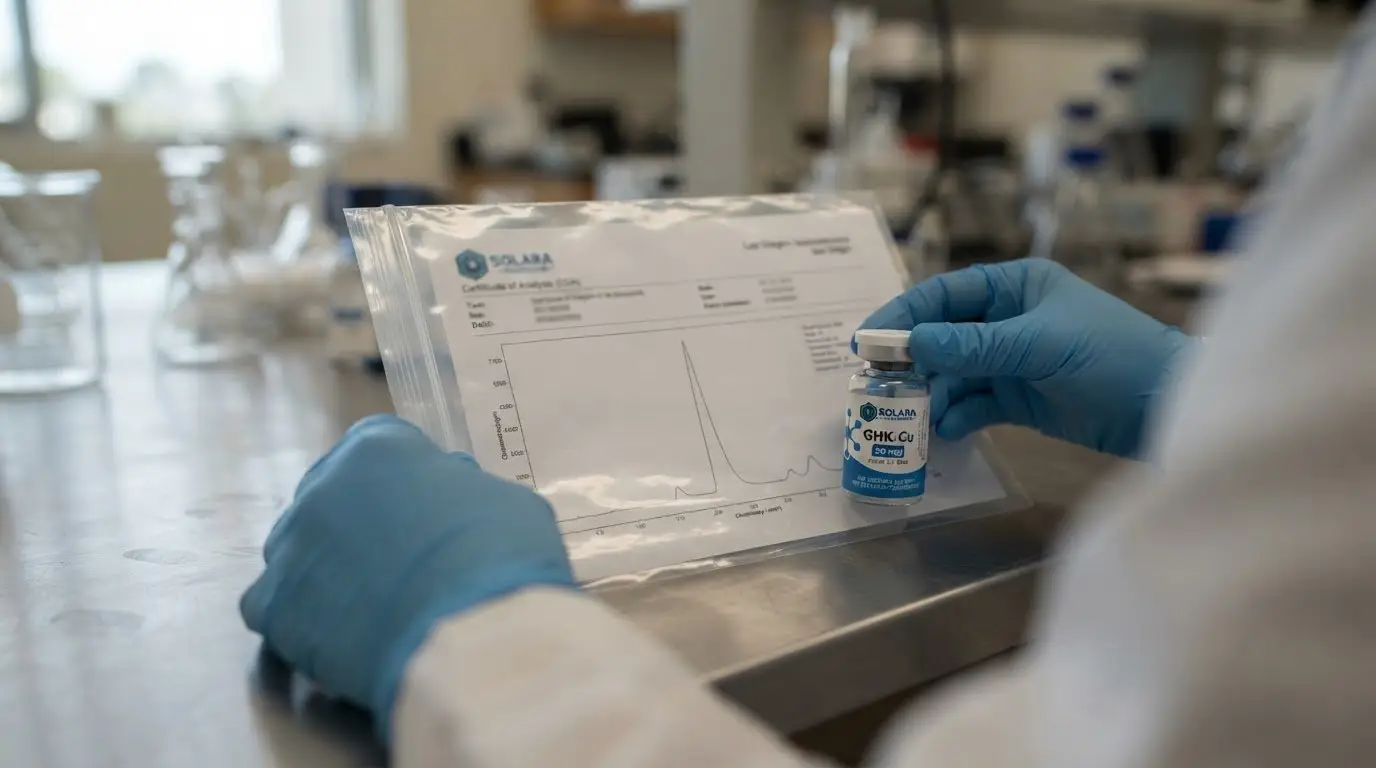
- Choose research materials with traceable quality information. Batch-specific Certificates of Analysis support review of material identity and quality documentation. Explore research peptides for laboratory research, intended for laboratory research only and not for people or animals.
Solara Compounds
Solara Compounds supplies research peptides for laboratory work, with batch-specific Certificates of Analysis and third-party testing supporting material traceability. Researchers across major U.S. cities can review materials such as SOL-3RT Retatrutide 10mg and SOL-2TZ Tirzepatide 10mg for laboratory research.
Storage decisions still depend on the specific peptide, formulation, and study conditions. Review batch documentation alongside product handling information when planning laboratory use. These products are for laboratory research only, not for people or animals.
For questions about Solara Compounds research materials, contact [email protected] or call 1 (877) 388-9178, Monday-Friday, 8 AM-5 PM Eastern.
Build a Consistent Storage Workflow
Good storage decisions begin before a sample is mixed. Treat preparation, container choice, temperature, and recordkeeping as parts of one laboratory workflow. This makes experiments easier to compare and helps identify where handling differences may affect results. A repeatable process is more useful than relying on memory or applying one storage rule to every peptide.
As you refine how to store reconstituted peptides, use the product-specific handling information alongside your research plan. Keep storage choices aligned with the peptide and formulation, and document decisions consistently across samples. Solara Compounds offers research materials including GHK-Cu 50mg, for laboratory research only and not for people or animals.
When you’re ready to select materials for your next laboratory project, explore the research peptide catalog. A clear plan and careful records can help you approach each study with greater consistency.
Frequently Asked Questions
How long does a reconstituted peptide last?
There is no single duration for every reconstituted peptide. Use the product-specific discard date and record when mixing was completed in the sample log. For a study involving multiple batches, keep each batch’s preparation record separate rather than assigning all samples the same end date. Don’t extend a discard date because a solution looks unchanged; appearance alone doesn’t establish its usable period.
How should reconstituted peptides be stored?
A practical approach to how to store reconstituted peptides is to keep each sample identifiable and its handling history attached. Label the container with the peptide identity and batch or sample code, then record storage conditions in the laboratory log. Keep research samples separate from unrelated materials to reduce mix-ups. Solara Compounds supplies research materials with batch-specific COAs and lot-number traceability. All products are for research use only and not for human or animal use.
How long do reconstituted peptides remain stable in the refrigerator?
Refrigerator stability varies by peptide and formulation, so no single duration applies to every solution. Check the applicable product instructions for the permitted period, then plan experiments around that limit. To support repeatability, note when the sample was placed in storage and any time it was removed for laboratory work. This record helps distinguish storage history from differences in the experiment itself.
Can reconstituted peptides be frozen, and does freezing damage them?
Some reconstituted peptides can be frozen, but freezing is not suitable for every sequence or formulation. Before choosing it, consider the peptide’s stated solution stability and the planned experiment. Repeated freeze-thaw cycles can damage a solution, so plan handling to avoid returning a thawed portion to frozen storage. One general rule cannot establish the integrity of every peptide after freezing.
How can you tell if a reconstituted peptide has degraded or become contaminated?
Use analytical evidence alongside the sample’s handling record; visual inspection alone can’t confirm integrity or contamination. For example, researchers can compare a sample’s chromatographic profile or measured molecular mass with appropriate reference data. Unexpected experimental variation may prompt further analysis, but it doesn’t identify the cause by itself. Document the result and sample history so investigators can distinguish a handling issue from other experimental differences.
Which diluents are compatible with different peptides, and how do they affect storage life?
Use sterile, low-pH buffers or solvents as a cautious starting point when reconstituting peptides. Compatibility varies: highly hydrophobic peptides may not dissolve adequately this way, and some tested peptides dissolved in DEPC-treated water while one required DMSO before dilution in water. Solution shelf life depends on peptide sequence and stability, so use the specific storage guidance.