Research Articles
Non-therapeutic peptide research: where evidence falls short


Evidence in non-therapeutic peptide research is uneven. Cell and animal findings can suggest how a peptide interacts with a biological system, but they do not establish that the same effect occurs in people. Human clinical evidence addresses a different question, and for many peptides discussed in wellness contexts, such evidence remains limited.
Early results can attract attention, but a signal in a cell model or animal study answers a narrower question than a clinical study. This guide explains how to interpret that distinction, assess a peptide’s identity and batch documentation, and understand why combining experimental compounds makes results harder to interpret. Products discussed here are for laboratory research only, not human or animal use. The goal is to distinguish a plausible research lead from a conclusion the evidence does not support.
Key Takeaways
- Cell and animal findings can point to research questions, but they don’t establish effects in people; look for human clinical evidence before drawing broader conclusions.
- Peptide identity, purity, and potency are separate considerations. Batch-specific documentation can help researchers assess what material a laboratory study uses.
- Combining experimental compounds can make it harder to interpret results because several effects may be changing at once.
- A “research use only” label doesn’t establish that a compound is approved for human use or suitable as a medicine or supplement.
- Compare a compound’s proposed role in a study with the strength and type of evidence available, rather than relying on promotional claims alone.
What are the risks of unapproved peptides?
In laboratory research, key concerns include uncertain identity, variable composition, and evidence that does not establish safety or efficacy in people. A label or research claim alone cannot resolve these questions.
Evidence for Injected Peptides
Evidence for injected peptides means data about both their effects and risks when introduced into the body. It matters because laboratory findings don’t establish that administration is safe or effective in people.
The FDA requires sufficient evidence from human clinical trials showing that a drug is effective before approving it. Cell experiments and animal studies can help researchers investigate how molecules interact with biological systems, but they do not demonstrate the same result in people.
Injection also makes material quality important: contamination or an incorrectly identified compound can create risks beyond the molecule’s intended research question. The exact risks and side effects depend on the substance and exposure, so don’t infer a human safety profile from laboratory observations.
Research-Grade and Pharmaceutical-Grade Differences
Research-grade describes material intended for laboratory study; pharmaceutical-grade refers to standards associated with approved medicines and their regulated manufacture. The terms are not interchangeable. Research-grade status does not establish approval, human safety, or pharmaceutical equivalence.
To compare peptide suppliers in the United States, assess whether documentation identifies the material and its batch, and whether testing information supports identity, purity, and potency claims. For example, a KPV peptide record should make the compound and batch traceable. These checks support research reproducibility; they don’t turn a research material into an approved medicine.
Identity and potency are separate questions. Identity asks whether the material is the stated peptide, a molecule composed of amino acids in a particular sequence. Potency concerns the amount of active material present. A product name without batch-specific documentation cannot answer both questions. Keeping them distinct helps researchers interpret results and compare experiments.
Purity claims also require context. A purity result describes a tested sample under a stated method; it does not by itself establish identity, sterility, or suitability for administration. Reports about some compounded medications have found that certain products contained no prescribed drug, while others contained bacteria, toxins, or lead. These reports do not show that all peptide batches have such problems, but they illustrate why product claims and safety evidence are different.
FDA’s bulks-list history adds context. In 2023, FDA placed BPC-157 in Category 2 of its interim 503A bulks list. On April 15, 2026, FDA removed BPC-157 and eleven other peptides from Category 2. A list status is not proof that a particular batch is safe, pure, or approved for human use.
In 2020, Tailor Made Compounding LLC and its owner were federally charged over distributing unapproved peptides, including BPC-157. That case is a specific example, not evidence about every supplier. For laboratory work, distinguish regulatory history from batch-level identity and testing data, and keep all materials for laboratory research only, not as medicine, supplements, or for people or animals.
Animal and cell research versus human clinical evidence
Researchers use peptides in laboratory studies to examine molecular interactions, biological pathways, and stability. These experiments help define research questions, but cell and animal results do not establish clinical effectiveness in people.
Findings from Animal and Cell Research
Cell and animal studies examine how a peptide behaves in controlled biological models. A cell study might measure whether a molecule binds a target or changes a defined process; an animal study adds whole-organism context. Both approaches can investigate mechanisms, but differences between models and people limit what the findings establish.
For example, a study of site-specific mono-PEGylation of GLP-1 reported a 16-fold increase in plasma half-life in rats. That result describes the modified compound in rats, not an effect or duration in people. Researchers should treat animal findings as evidence about that model and design, not as a direct prediction of clinical outcomes.
For many peptides discussed in wellness contexts, research remains limited to cell and animal studies, with little human clinical evidence. A positive laboratory signal may support further investigation, but it does not show whether the same effect occurs in people, under different conditions, or amid other biological factors. The model, measured outcome, and compound structure all shape what a result means.
Laboratory Uses of Research Peptides
Laboratory peptide studies examine how specific molecules interact with biological targets and pathways. A pathway is a chain of cellular signals that helps regulate a process. This work allows scientists to test a focused mechanism before deciding whether a question merits clinical investigation.
Researchers may compare a peptide’s structure with its measured activity, examine a target’s response, or study how modifications affect stability. These are experimental questions, not evidence of human effectiveness. A useful result specifies what occurred under the study conditions, including the model and measured outcome.
Clinical studies address a different question: whether effects and risks are observed in people. Findings need to be interpreted in context, including the population studied, the outcome measured, and the consistency of results. A cell response cannot substitute for this evidence, and an animal result alone cannot establish a human benefit.
Keep the evidence chain clear: a laboratory finding may generate a hypothesis; animal studies can examine it in a larger biological system; human clinical studies evaluate outcomes in people. Each stage answers a different question. For lab buyers reviewing candidates, the research peptide catalog can help connect available compounds with a defined laboratory research question.
Experimental metabolic peptide combinations
Combining experimental peptides can complicate interpretation because multiple molecules may affect a study system at once. A result from a combination does not automatically show which compound caused a measured change or whether the compounds interacted.
This distinction matters in metabolic research, where investigators may examine how proteins, signals, or pathways relate to a defined outcome. A pathway is a chain of cellular signals. When two compounds are introduced together, the observed response could reflect either compound, their interaction, or unrelated variation in the model.
For example, researchers studying two candidate compounds can compare each compound separately with the combination under the same experimental conditions. They can then assess whether the combined observation differs from what each produced alone. This approach can help distinguish an interaction from overlapping effects, but it does not establish safety or effectiveness in people.
- Define the question: Specify the target, model, and measured outcome before interpreting a combination.
- Keep comparisons aligned: Use the same model and measurement approach for each compound and the combined condition.
- Interpret narrowly: Describe the observed result in that experiment, not as a wellness claim or human-use conclusion.
Controls matter, too. A comparison condition shows whether the model changes without the compounds, while single-compound conditions help clarify each molecule’s contribution. Without these comparisons, combination testing can blur cause and effect. Changes in the model, measurement, or material can further complicate interpretation.
“More activity” is not automatically meaningful. Researchers need to know what the measurement represents, whether it addresses the original question, and whether the observation is consistent across comparable experiments. A result from one laboratory model remains specific to that model. It cannot establish a benefit for people or animals.
Keep the research question specific. If the goal is to study one compound’s interaction with a target, adding a second substance may make the result harder to interpret. If the question concerns an interaction, the design needs comparisons that distinguish combined effects from each compound’s separate effects. These principles apply to studies of metabolic pathways, proteins, and other cellular processes.
Experimental findings do not establish that a combination is appropriate for human administration. Claims about wellness, safety, or cancer-related effects require evidence suited to those claims, not an inference from a laboratory signal. Research peptides are for laboratory research only, not for human or animal use. A carefully designed study can inform future questions, but its conclusions should remain within the evidence it measured.
For laboratory work, keep combination studies focused on a defined question and report the model, comparison conditions, and measured outcome clearly. Browse research compounds in relation to a specific laboratory research purpose.

Research-chemical sales and human-use disclaimers
A “for research use only” label describes the stated purpose of a chemical sale. It does not establish that a substance is approved, safe, or effective for people. Researchers should distinguish intended laboratory use from clinical evidence and regulatory status. A disclaimer cannot make an unapproved drug an approved medicine or substantiate human-use claims that the evidence has not established.
The Federal Food, Drug, and Cosmetic Act, 21 U.S.C. Section 355(a), bars introducing a new drug into interstate commerce without FDA approval. That rule concerns drug approval, not whether a compound produces an interesting result in a laboratory. The distinction matters for synthetic peptides: a research label doesn’t establish approval for human use, and a laboratory finding doesn’t substitute for evidence from human clinical trials.
Insulin illustrates how peptide research and medicine can have different histories. Researchers discovered and isolated insulin from a dog’s pancreas in 1921; synthetic insulin became commercially available in 1982. Those milestones describe a specific peptide’s development. They don’t mean that every synthetic peptide sold for research has undergone the evidence and approval process associated with an approved drug.
Read a research-chemical disclaimer as a boundary, not a safety certificate. It may state that a product is intended for laboratory research only and is not for human or animal use. This describes the seller’s declared purpose. It does not independently verify a product’s identity, composition, purity, or potency, or demonstrate suitability for administration.
For laboratory purchasing, separate three questions before interpreting a product claim:
- What is the stated purpose? Research-use language limits the product’s intended context to laboratory work.
- What does approval mean here? FDA approval concerns a drug’s authorized status, not simply its chemical name or synthetic origin.
- What does the evidence show? Cell or animal observations answer narrower questions than clinical studies in humans.
These distinctions help prevent a common error: treating sales language as proof of clinical status. A label that says “research” does not establish that a compound has been evaluated for human safety. Likewise, a familiar name such as insulin does not make an unrelated research chemical comparable to an approved medicine. Identity, manufacturing records, and evidence remain separate considerations for each substance.
Keep materials strictly within their declared laboratory purpose. Research peptides are not medicines or supplements, and are not for people or animals. In non-therapeutic peptide research, clear labeling and careful interpretation protect the meaning of experimental results: a laboratory observation remains laboratory evidence, not a human-use conclusion.
Which peptides are commonly studied in non-therapeutic research?
Researchers examine different peptides according to their structure, targets, and experimental question. Names such as BPC-157, TB-500, GHK-Cu, MOTS-C, and CJC-1295 identify distinct compounds, not interchangeable materials or established human outcomes.
BPC-157 and TB-500 appear in experimental peptide discussions. A laboratory question might examine how a compound behaves in a defined model or interacts with a biological target. The name alone doesn’t identify the model, method, or strength of evidence behind a reported result. Researchers need to interpret each finding in its specific experimental context.
GHK-Cu is a copper-binding peptide, while MOTS-C is studied as a mitochondrial-derived peptide. These structural descriptions distinguish the compounds and help define different research questions. They do not establish a particular result. A study’s design and measured outcome determine what its findings can support.
CJC-1295 (no DAC) is another named peptide used in research settings. The “no DAC” wording is part of the compound’s identifier; it should not be dropped when recording materials or describing an experiment. Precise naming supports traceability and helps prevent confusion between differently identified compounds.
Peptide research also includes established medicines such as insulin and peptide families such as GLP-1. Those examples show the range of research contexts, from studying a specific molecule to examining a broader signaling system. An approved medicine’s history doesn’t transfer approval or clinical evidence to another peptide with a different structure.
For a useful comparison, researchers can organize candidate peptides by the question each experiment addresses:
- Identity: Record the exact compound name and any distinguishing identifier, such as “no DAC” for CJC-1295.
- Research question: State which target, model, or molecular interaction the study examines.
- Evidence type: Separate cell or animal findings from clinical evidence in people.
- Interpretation: Keep conclusions limited to the measured outcome and experimental conditions.
That framework is useful when comparing compounds with similar marketing associations but different molecular identities. For example, a result involving GHK-Cu cannot automatically be applied to MOTS-C. Likewise, findings about insulin or a GLP-1 compound don’t establish effects for BPC-157, TB-500, or CJC-1295.
Research peptides are for laboratory research only, not medicine or supplements, and not for use in people or animals. To explore named compounds for laboratory work, view research peptide options.
Solara Compounds
Solara Compounds supports laboratory buyers seeking research peptides with clear product information and quality documentation. Its catalog includes SOL-3RT Retatrutide 10mg, SOL-2TZ Tirzepatide 10mg, GHK-Cu 50mg, and TB-500 5mg. These materials are for laboratory research only, not medicine or supplements, and not for use in people or animals.
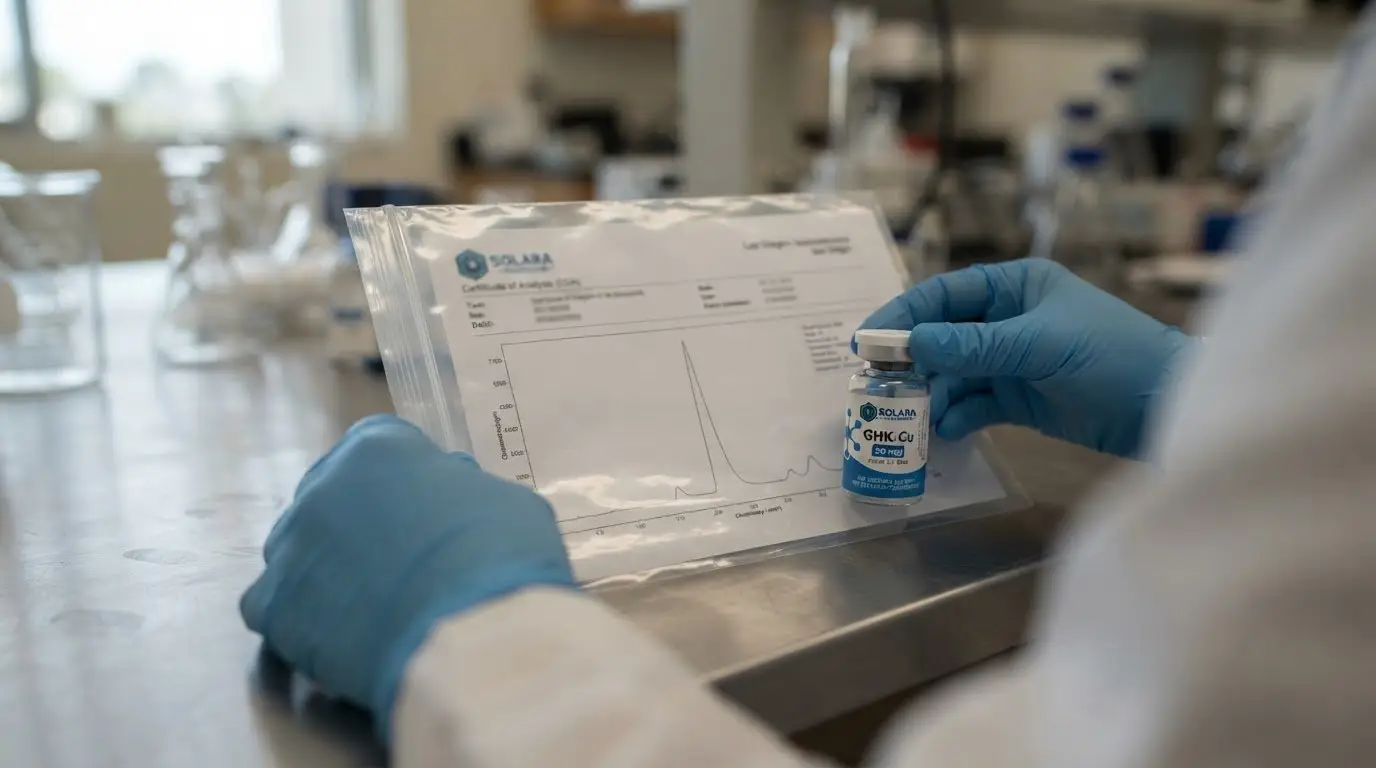
Batch-specific Certificates of Analysis and third-party testing can help researchers assess material documentation and support more consistent laboratory work. They don’t replace clinical evidence or establish human-use approval. For questions about the catalog or batch paperwork, contact Solara Compounds at [email protected] or 1 (877) 388-9178, Monday-Friday, 8 AM-5 PM Eastern. The research catalog is available at solaracompounds.com.
Set a Clear Standard for Your Next Study
Before selecting a material, write down the question the study needs to answer and the observation that would address it. In non-therapeutic peptide research, a clearly defined objective helps align material selection and interpretation with the work.
Solara Compounds supports laboratory buyers exploring research materials. Keep the intended work within laboratory research, and avoid treating experimental findings as conclusions beyond the study’s scope.
Take a measured next step: explore the research catalog for materials relevant to your laboratory work. A well-framed question is a strong place to begin.
Frequently Asked Questions
Peptides are buzzing: But what does the science say?
Scientific claims are easier to assess when methods and measured outcomes are reported clearly. A headline about a peptide’s potential is not enough to judge a finding. Look for the exact compound, comparison groups, measurement method, and study limitations. Independent replication can also strengthen confidence in a result. When these details are missing, it may be difficult to reproduce or interpret the finding, even if its proposed mechanism sounds plausible.
What, exactly, are peptides?
Peptides are molecules made from specific sequences of amino acids. Sequence order and chemical modifications can influence a molecule’s structure, stability, and interactions. Two materials broadly described as peptides may differ substantially if their sequences or attached groups differ. For clear laboratory records, use the exact compound name and any distinguishing notation, so observations remain linked to the material actually studied.
What does non-therapeutic peptide research mean?
Non-therapeutic peptide research investigates a peptide without presenting the work as a medical or personal application. A project might examine a compound’s chemical properties, stability, or interaction with a defined target. The research question determines the methods and measurements. Stating the purpose clearly in study records helps distinguish exploratory laboratory work from claims about diagnosis, treatment, or applications beyond the experiment.
How are research peptides synthesized and tested for purity?
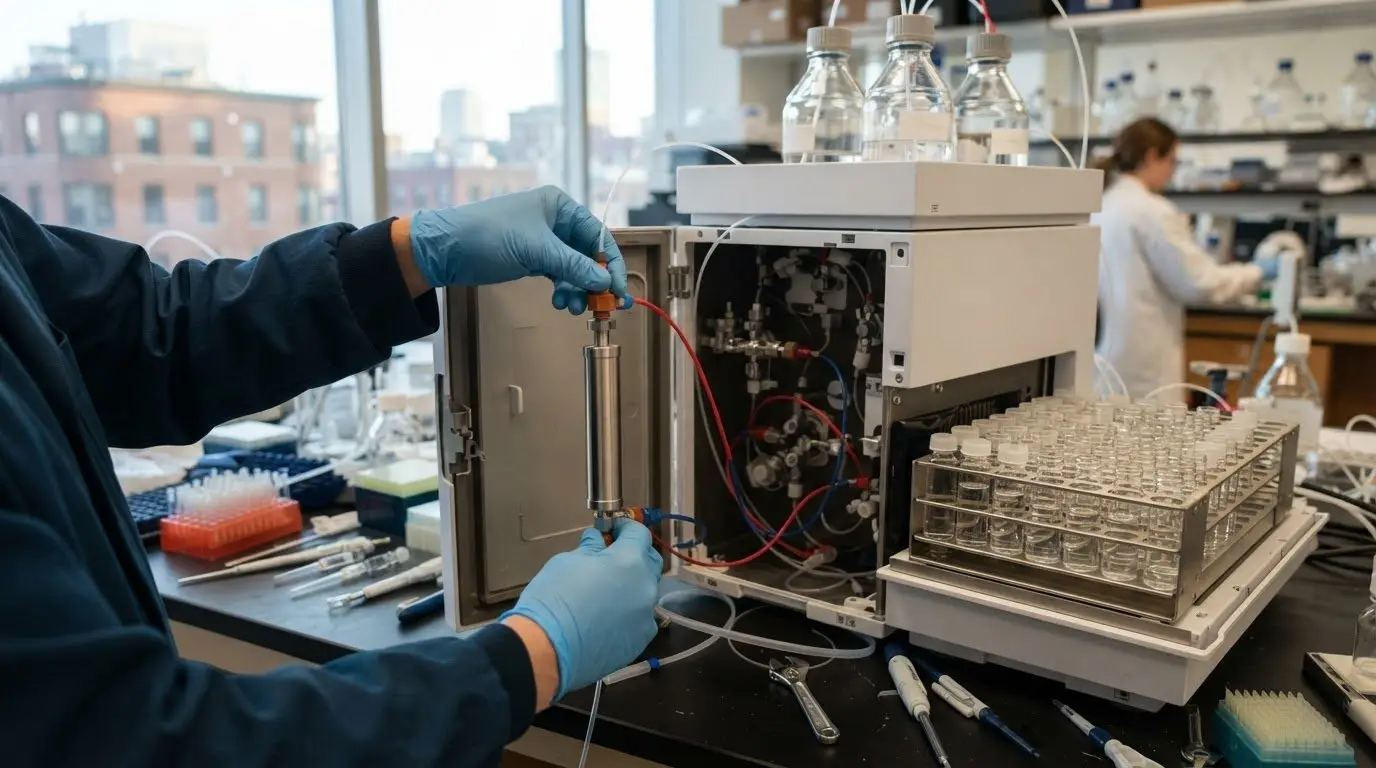
Peptide synthesis assembles amino acids into a defined sequence, while analytical testing can separate and measure components in a sample. A reported purity percentage needs its method and report context: it may reflect relative detector signal rather than sterility, exact quantity, or biological activity. For clear records, retain the batch identifier, report date, and analytical method alongside study observations.
What U.S. laws and FDA rules apply to selling and purchasing research peptides?
U.S. rules distinguish approved drugs, compounded preparations, and research chemicals. Off-label prescribing means using an FDA-approved drug for a condition other than its approved condition; it does not change the status of an unapproved chemical. State and local requirements may also apply. Purchasers should assess the transaction and intended research setting under applicable rules.
Can research peptides legally be used in humans or for self-experimentation?
Research materials aren’t a basis for self-experimentation. The Right to Try Act applies only to patients with immediately life-threatening conditions who have exhausted approved options, and the investigational drug must have completed a Phase 1 clinical trial. Expanded access has separate requirements, including physician involvement, manufacturer agreement, Institutional Review Board approval, and an FDA Investigational New Drug application.
What safety risks and handling precautions apply to research peptides?
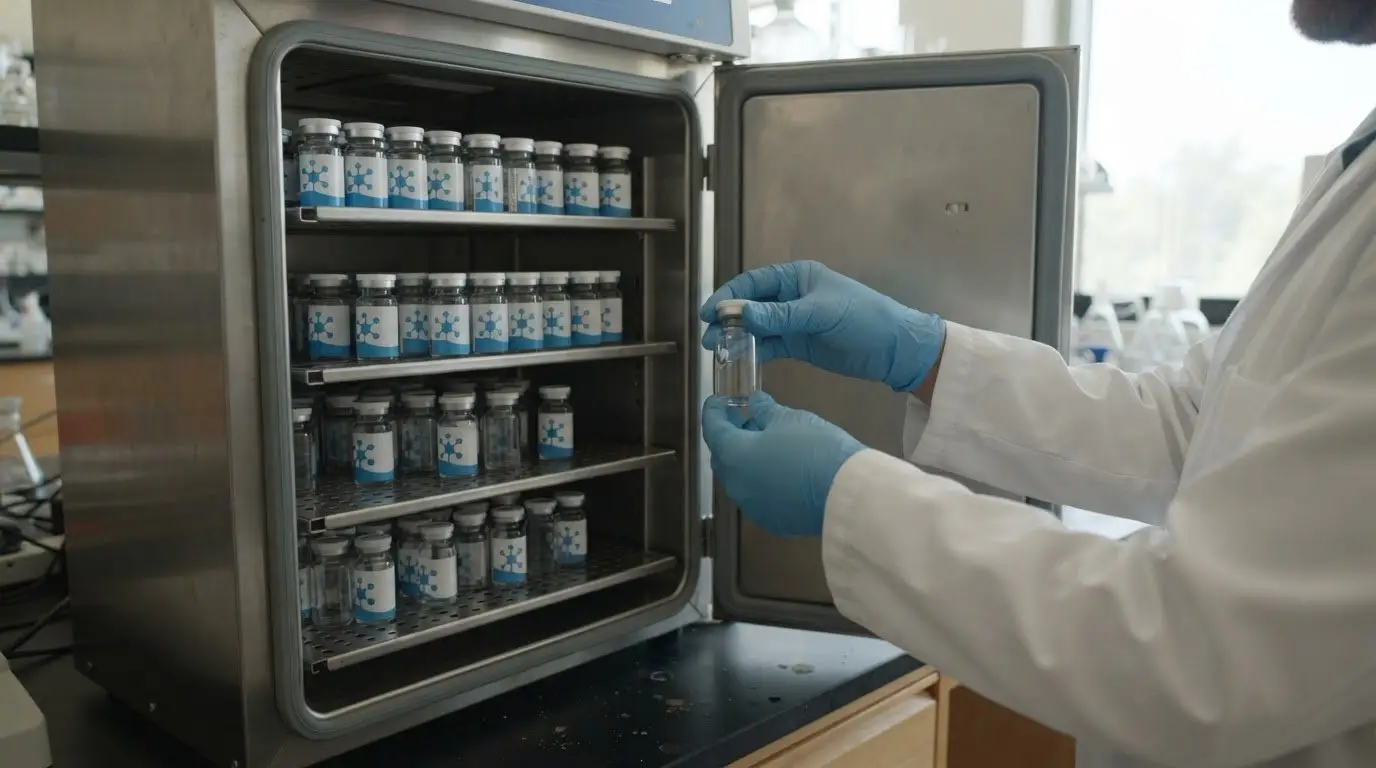
Follow the material’s safety documentation and the laboratory’s handling procedures. Keep containers identified by compound and batch, use appropriate protective equipment, and prevent mix-ups or cross-contamination between materials. Solara Compounds specifies storage at −20 °C or below, protected from light and moisture. These materials are for laboratory research only, not medicine or supplements, and not for use in people or animals.