Research Articles
Good Laboratory Practice for Peptide Sourcing and GLP Compliance

A peptide supplier’s paperwork alone doesn’t make a study GLP-compliant. In the United States, FDA-regulated nonclinical laboratory studies covered by Good Laboratory Practice requirements are addressed in 21 CFR 58, according to the U.S. Food and Drug Administration. Good laboratory practice (GLP) peptide sourcing supports a study’s material records, but compliance also depends on how the study is planned, conducted, documented, and overseen.
It’s reasonable to focus on whether a peptide comes with clear identity and batch documentation. These records help researchers assess a material, but they do not replace the study’s required controls and records. Peptides discussed here are for laboratory research only, not for human or animal use.
This guide explains what GLP means in drug development, when it applies, and which approvals, equipment records, and archived documents matter. It also outlines how to assess a peptide supplier’s documentation and how supplier records fit within a laboratory’s quality system.
Key Takeaways
- FDA-regulated nonclinical laboratory studies covered by Good Laboratory Practice requirements are addressed in 21 CFR 58, according to the U.S. Food and Drug Administration.
- GLP compliance depends on controlled study conduct, approved protocols, trained personnel, quality oversight, and complete records, not supplier paperwork alone.
- Assess peptide vendors by the traceability and batch-specific documentation they provide, then determine how those records fit your study’s quality system.
- Independent testing can help evaluate identity, purity, potency, and contaminants; the methods and acceptance criteria should match the study’s objectives.
- Research peptides are for laboratory research only, not medicine or supplements, and not for use in people or animals.
GLP compliance for drug-development activities
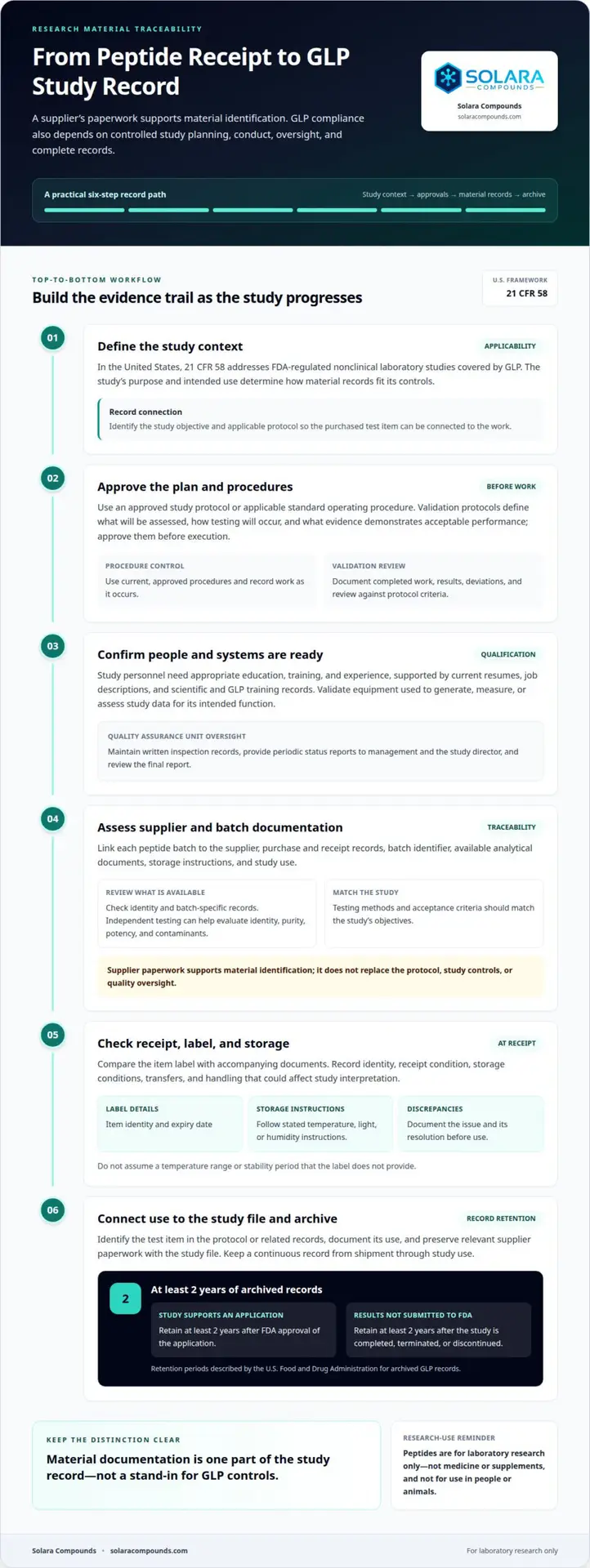
In the United States, FDA-regulated nonclinical laboratory studies covered by Good Laboratory Practice requirements are addressed in 21 CFR 58, according to the U.S. Food and Drug Administration. For peptide sourcing, the study’s purpose and intended use determine how material records fit its controls.
GLP Requirements for Peptide Sourcing
GLP requirements govern how covered nonclinical studies are planned, conducted, documented, and overseen. They make study data traceable and help an organization reconstruct how results were produced. Supplier records support material identification, but they do not replace the study protocol, operating procedures, or quality oversight. Connect each received test item to its study records.
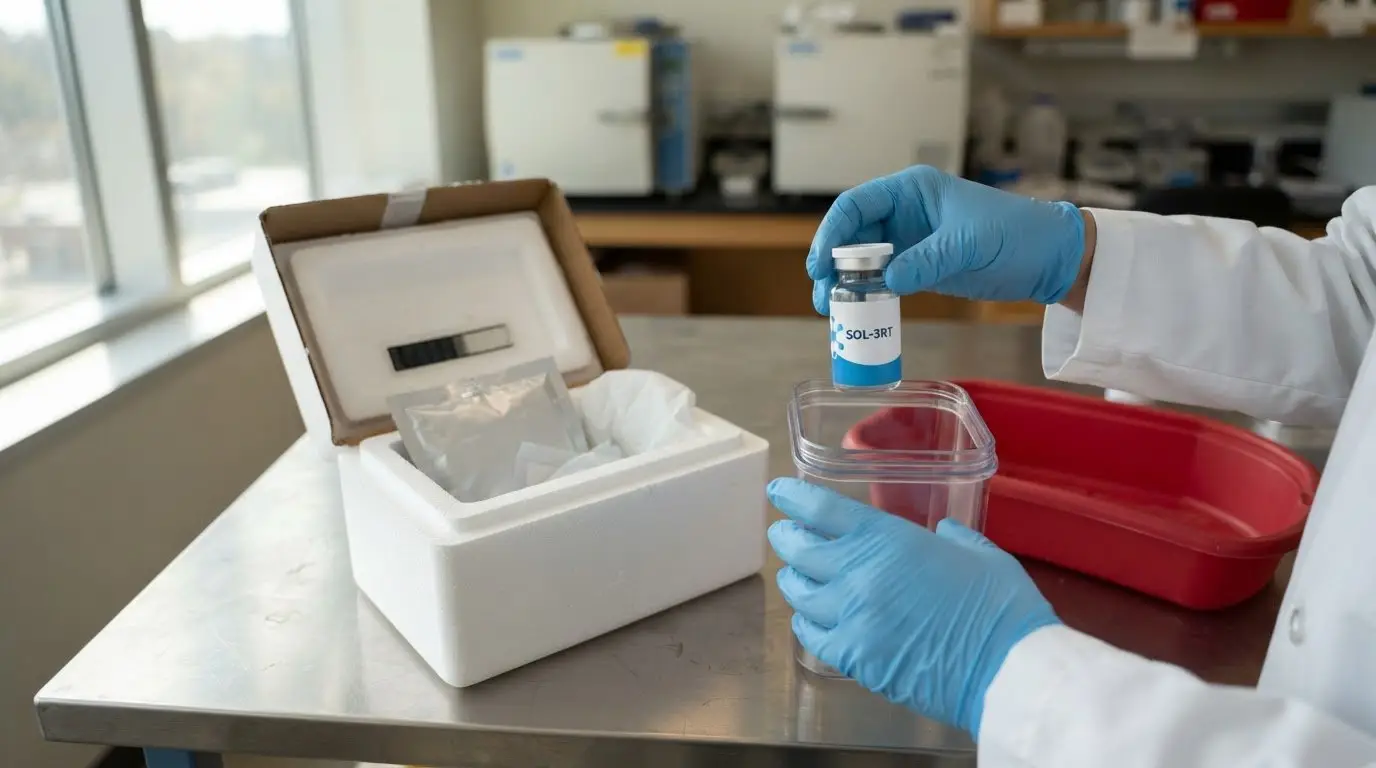
At receipt, compare the item label with its accompanying documents and record the material’s identity. GLP test-item labels should identify the item, expiry date, and specific storage instructions, such as temperature, light exposure, or humidity. Follow those instructions, document receipt and storage, and record handling that could affect study interpretation. For example, a light-protection instruction on the label should also appear in the storage record.
Applicable U.S. Regulations
For U.S. purchasing and use, 21 CFR 58 addresses FDA-regulated nonclinical laboratory studies covered by GLP. It provides the relevant study framework; the study’s purpose and regulatory context determine how it applies. Researchers should define the study objective, identify the applicable protocol, and align purchasing records with the test item used. The regulation does not make supplier paperwork a substitute for study compliance.
Records continue to matter after laboratory work ends. According to the U.S. Food and Drug Administration, archived GLP records for a study supporting an application for a research or marketing permit must be retained for at least 2 years after the FDA approves the application. For a study whose results were not submitted to the FDA, archived records must be retained for at least 2 years after the study was completed, terminated, or discontinued, according to the U.S. Food and Drug Administration.
Maintain a continuous record from shipment through study use. Match the package and label to purchase documents, note the condition on receipt, and record storage conditions and transfers in the study records. Follow the stated expiry and storage instructions; do not assume a temperature range or stability period the label does not provide. If a receipt record contains a discrepancy, document the issue and its resolution before using the material.
GLP records should also make the material’s role understandable later. Identify the item in the protocol or related records, document its use, and preserve relevant supplier paperwork with the study file. A reference such as peptide material details can help distinguish a specific research material from general sourcing notes.
Study personnel need appropriate education, training, and experience, supported by current resumes, job descriptions, and scientific and GLP training records. They should follow the protocol or applicable standard operating procedure during the work. The Quality Assurance Unit maintains written inspection records, provides periodic status reports to management and the study director, and reviews the final report. Together, these controls connect sourcing decisions to accountable study conduct.
Validation approvals and documentation
Validation documents that facilities, equipment, methods, and systems perform as intended. In a GLP study, approvals and records link each test result to the process that produced it, supporting data integrity during review.
Set approval points before work begins
A validation protocol defines what will be assessed, how testing will occur, and what evidence will demonstrate acceptable performance. Approve the protocol before execution, then document the completed work and its review. A Validation designee, Subject Matter Expert or System Owner, and Quality Assurance should approve validation protocols and qualifications before and after execution.
This sequence gives each role a defined review point. For example, an equipment qualification should identify the equipment, its intended use, acceptance criteria, test records, and deviations. Final approval should reflect whether recorded results meet the protocol’s criteria, not simply confirm that testing took place.
Keep procedures and qualification records aligned
Routine study procedures need written standard operating procedures that are accurate, current, approved, available, reviewed, and followed. When conducting sample analysis, use the applicable procedure version and record the work as it occurs. This prevents an outdated method from shaping results unnoticed or making the work difficult to reconstruct.
Validation may cover facilities, equipment, analytical methods, computerized systems, processes, and cleaning. Validate equipment used to generate, measure, or assess study data for its intended function. If an existing system moves from early research into a GLP study, retrospective validation can identify missing deliverables and support a plan to address gaps.
Document supplier and batch traceability
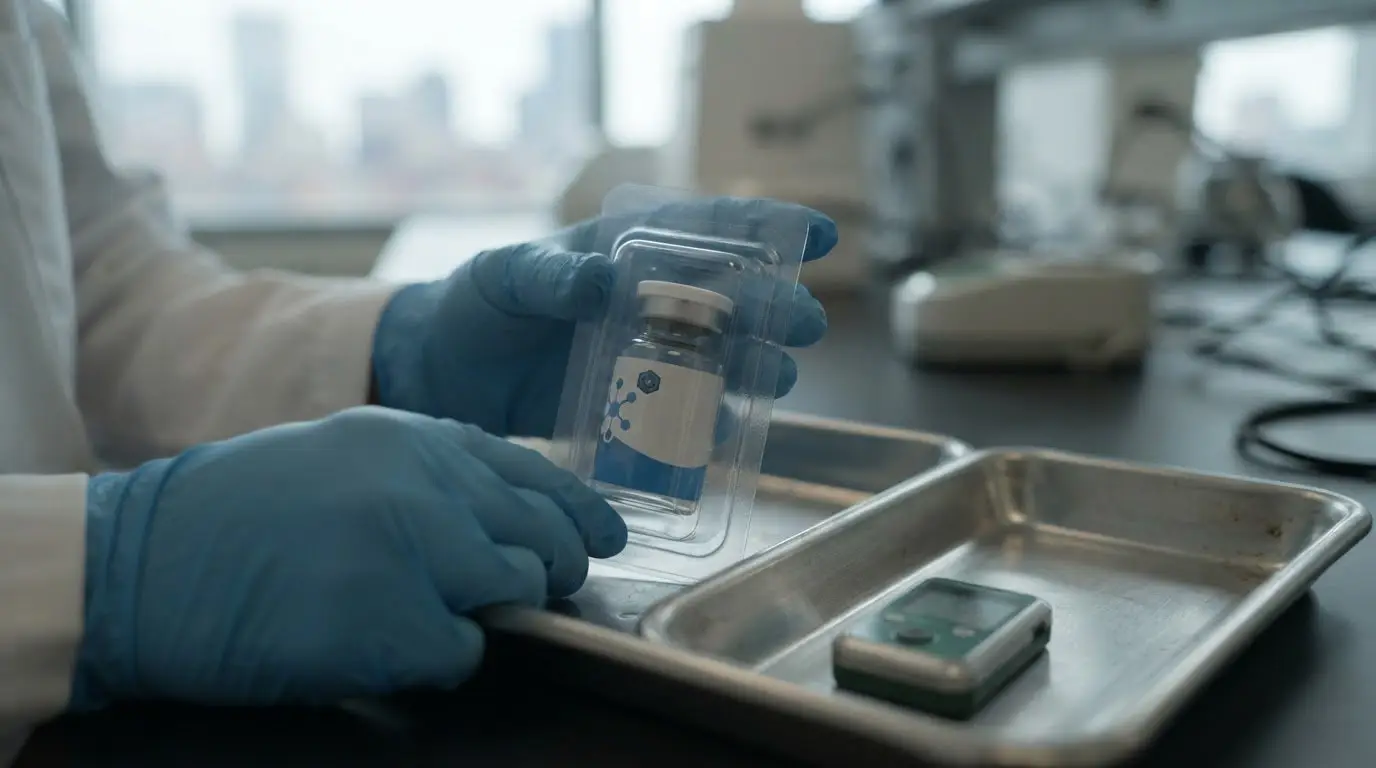
For GLP traceability, link each peptide batch to its supplier, purchase and receipt records, batch identifier, available analytical documents, storage instructions, and study use. Record who received and reviewed the material, when it entered inventory, and where it was assigned. These details connect the incoming test item to the study record without confusing supplier paperwork with laboratory validation.
Keep the batch record and related documents together in a controlled file or system. If a Certificate of Analysis accompanies a batch, preserve the exact document received and link it to the batch identifier. The record should trace the material from receipt to use, including any transfer or status change.
Record deviations, complaints, and rejected batches
If a shipment arrives damaged, its label conflicts with its paperwork, or a test result falls outside the study’s acceptance criteria, document the issue before use. Identify the affected batch, describe the observation, record its status, and capture the investigation, decision, and authorization. Keep complaint correspondence and the reason for rejection with the batch record.
Separate an affected batch from materials cleared for study use, and document its disposition under the laboratory’s procedures. This creates a clear history of what happened and why. For related research materials, the research peptide catalog can help lab buyers review available product categories alongside their own qualification requirements.
Vendor partner selection
Choose a peptide supplier whose records and handling practices support your study’s intended use. Assess documentation, batch traceability, testing evidence, and communication as parts of the same purchasing decision.
Costs Among Qualified U.S. Suppliers
Peptide sourcing costs vary with the material, batch documentation, testing, and purchasing requirements. Compare the complete package, not just the listed product price: separate analytical work or missing records can add work for the laboratory.
A useful price comparison matches the peptide, quantity, batch paperwork, and testing scope. For example, check whether each quote includes a batch-specific Certificate of Analysis and which analytical methods it describes. These details help lab buyers judge whether a purchase supports the study’s intended use.
Record the selection rationale alongside the purchase decision. A comparison can note product identity, batch traceability, documentation supplied, shipping conditions, and any additional testing the lab expects to perform. This gives the study team a clear basis for assessing the total purchasing effort, without treating a lower initial price as proof of equivalent documentation or material characterization.
Risks of Online and Overseas Vendors
Online and overseas sourcing risks include gaps between the material ordered, the batch received, and the records available to the study team. Check whether vendor paperwork identifies the specific batch, labels match those records, and shipment and storage instructions are clear. These checks focus on traceability and handling, not location alone.
For example, a generic analysis document without a batch identifier cannot readily connect its results to the received test item. Unclear storage directions also leave the receiving team without a documented basis for handling. Record discrepancies at receipt and follow laboratory procedures before assigning the material to study work.
Evaluate a supplier’s quality information against your study requirements. Determine whether records are batch-specific, whether reported testing covers the attributes your protocol depends on, and how the vendor identifies materials. Review supporting documents rather than relying on a quality claim or online listing. Supplier records inform your assessment; the laboratory remains responsible for its own study controls.
Use a consistent assessment for every purchasing decision: identify the study need, review available batch documentation, assess handling information, and record why the supplier fits. This supports repeatability if a later study uses another batch or vendor. Good laboratory practice (GLP) peptide sourcing means making the supply-chain decision traceable to the study’s objectives.
For laboratory research only, peptides are not medicine or supplements and are not for use in people or animals. Lab buyers comparing research materials can review the research peptide catalog as one part of their documented sourcing assessment.
What does Good Laboratory Practice (GLP) require for sourcing research peptides?
GLP makes peptide sourcing part of a controlled study record, not a standalone quality claim. Researchers connect the received test item to the study protocol, supplier documents, handling records, and any characterization the study requires. This link helps explain which material was used, how it was assessed, and how its properties relate to the resulting data.
Start with the study objective. It determines what information the team needs about the peptide and which test-item characteristics matter. For example, if the study depends on stability, the plan should specify how it will be assessed and documented. If a test article is mixed into a preparation, its homogeneity and concentration may also need characterization under GLP principles.
Before use, compare the received item with its purchase and batch records. The label should identify the test item, its expiry date, and specific storage instructions, such as temperature, light exposure, or humidity. Record receipt and storage details, then link the batch identifier to the study records. Resolve any mismatch between the label and paperwork in writing before the material enters study work.
- Identity: Link the peptide name and batch identifier across receipt, inventory, and study-use records.
- Handling: Follow the label’s storage instructions and document transfers or changes in status.
- Characterization: Record the analytical procedures used to assess relevant test-item properties.
Supplier documentation supports traceability but does not replace laboratory evaluation. A Certificate of Analysis provides batch information for review; the study team decides whether it addresses the protocol’s needs. If additional characterization is required, document the method, results, acceptance criteria, and responsible personnel in the applicable study records.
Keep the purchasing decision aligned with the approved protocol. The protocol should describe the study objectives and methods, and personnel should follow it or the applicable standard operating procedure. If a researcher finds a documentation gap or handling discrepancy, record the issue and its effect on the material’s study status. Clear records distinguish an unresolved question from an approved decision.
Equipment and methods used to characterize the peptide also matter. Equipment generating or assessing study data should be appropriately designed, maintained, and routinely calibrated. Analytical methods should be qualified for their intended use, with validation records and approvals retained. These controls help show how a reported identity, stability, homogeneity, or concentration result was produced.
For GLP studies, the practical standard is traceable material plus controlled evaluation: identify the batch, preserve its records, follow documented handling instructions, and link characterization to the protocol. Research peptides are intended solely for laboratory research, not for human or animal use.
How can peptide identity, purity, potency, and contaminants be independently tested?
Independent testing uses analytical methods suited to the peptide and the study question. A laboratory should define the attributes to assess, choose methods that can measure them, and retain the resulting data with the sample’s traceable identification.
Identity: Mass spectrometry measures a peptide’s mass and can help assess whether it matches the expected molecular identity. A laboratory may pair this result with chromatographic separation or sequence-focused analysis when stronger characterization is needed. The method should distinguish the target from plausible related substances, rather than produce a mass value without interpretation.
Purity: High-performance liquid chromatography, or HPLC, separates sample components so analysts can assess the target peak alongside detected impurities. A chromatogram can show relative peak areas, but that result alone does not establish every aspect of material quality. The report should identify the method, sample, results, and limitations relevant to the study’s acceptance criteria.
Purity results depend on whether the method can detect and separate the substances of interest. For example, a method that does not resolve a target peptide from a closely related impurity may give an incomplete picture. Ask the testing laboratory what the reported purity value represents and whether the method suits the peptide and intended use.
Potency or activity: The appropriate test depends on what “potency” means in the research context. A validated binding assay can assess interaction with a target, while a functional assay can measure a defined response in a controlled test system. These methods answer different questions. A mass or purity result alone cannot demonstrate biological activity.
Contaminants: Select tests based on risks relevant to the material and study. Chromatographic or mass-spectrometric methods can target related substances or chemical residues; other suitable assays can examine microbial contamination or endotoxin when relevant. A test panel should state what was assessed, which method was used, and the result. Do not treat an untested contaminant category as ruled out.
To preserve interpretability, send a sample with independent identification, documented handling, and a clear chain of custody. The laboratory report should link sample identification to methods, raw data or supporting results, acceptance criteria, and reviewer approval. Equipment calibration and method validation records help show that measurements were generated under controlled conditions.
Compare independent results with the study protocol before using them to support a decision. If a result conflicts with supplier documentation, record the discrepancy, investigate its possible cause, and document the material’s study status. For research materials, review the research peptide catalog as part of a documented sourcing assessment. Research peptides are for laboratory research only, not medicine or supplements, and not for use in people or animals.
Solara Compounds: SOL-3RT Retatrutide 10mg
Solara Compounds offers SOL-3RT Retatrutide 10mg for laboratory research, with ≥99% (HPLC) purity, third-party testing by Kovera Labs, and batch-specific COA documentation. Researchers can use these records when assessing material documentation for their laboratory work.
Prompt local shipping in specified U.S. cities supports laboratory buyers engaged in good laboratory practice (GLP) peptide sourcing. SOL-3RT Retatrutide 10mg is for laboratory research only, not for human or animal use, and not a medicine or supplement.
For sourcing questions, contact Solara Compounds at [email protected] or visit solaracompounds.com.
Make Your Next Sourcing Decision Deliberate
Let your study’s research question guide the next purchasing decision. Good laboratory practice (GLP) peptide sourcing is most useful when the selected material, its documentation, and the laboratory’s evaluation plan all support the same research purpose. Keep that connection clear throughout the study.
For laboratory research only, Solara Compounds offers SOL-2TZ Tirzepatide 10mg and GHK-Cu 50mg. These research materials are not medicine or supplements and are not for use in people or animals. Select materials according to your laboratory’s research aims and quality procedures.
Review the available research materials and select those that fit your laboratory’s documented needs.
Explore research peptides at Solara Compounds and move forward with a sourcing decision grounded in your study plan.
Frequently Asked Questions
What is GLP?
GLP is a quality framework for organizing and reporting nonclinical study work so it can be evaluated reliably. It governs how a study is conducted, rather than certifying a peptide or supplier. A supplier’s quality claims therefore do not make a laboratory study GLP-compliant. Distinguish the study’s quality system from the materials purchased and assessed.
How can U.S. laboratories qualify and audit peptide suppliers for GLP compliance?
Set written qualification criteria that reflect the study’s material risks, then assess whether supplier records meet them consistently. An audit can examine document control, correction practices, and how changes to product or testing information are communicated. Record findings, assign follow-up actions, and consider whether a change affects the laboratory’s assessment. Supplier qualification supports purchasing oversight, while the laboratory remains responsible for its study quality system.
What documentation should accompany GLP-sourced peptides, including certificates of analysis and chain of custody?
For independent testing, retain the testing request, sample identifier, transfer record, laboratory report, and a clear link to the study record. Reconcile the tested aliquot with the original material so results are not assigned to another sample or batch by mistake. Keep the supplier’s Certificate of Analysis distinct from the independent laboratory’s report: each has a different origin and evidentiary role. Use consistent file names to make records easy to retrieve.