Research Articles
The Impact of Peptide Impurities on Research: A Guide to Authentic Research Grade Peptides


What if the groundbreaking result you just recorded isn’t a biological breakthrough, but rather a chemical artifact caused by a 2% impurity in your peptide sample? In high-precision laboratory environments, even minor deviations in molecular structure can lead to catastrophic data skew. Most researchers recognize that purity is essential, yet the nuanced impact of peptide impurities on research often remains buried in complex HPLC reports or overlooked during procurement. You’ve likely experienced the frustration of inconsistent data across batches or unexplained cellular toxicity that halts a promising in vitro model. These variables don’t just waste time; they compromise the foundational reliability of your scientific conclusions.
It’s time to move beyond surface-level metrics and understand how specific contaminants distort signaling pathways. This guide provides the technical clarity needed to identify authentic, research-grade compounds and eliminate chemical noise. We will examine the structural integrity of compounds like BPC-157 and Tirzepatide, decode mass spectrometry reports, and establish a rigorous protocol for laboratory procurement. By the end of this analysis, you’ll have the tools to ensure long-term repeatability and maintain total control over your experimental variables.
Key Takeaways
- Authentic research-grade peptides require more than a high purity percentage. They must maintain precise amino acid sequence accuracy to ensure consistent receptor affinity and biological activity.
- Synthesis byproducts and residual solvents, such as TFA, can introduce significant variables. These contaminants often lead to unexplained cellular toxicity or distorted signaling in in vitro models.
- Analyzing the impact of peptide impurities on research is critical for maintaining a high signal-to-noise ratio. This process ensures that recorded outcomes reflect true peptide interactions rather than chemical artifacts.
- A reliable procurement protocol relies on the rigorous interpretation of third-party HPLC and MS reports. Verifying batch-specific Certificates of Analysis is the only way to confirm the structural integrity of your compounds.
- Prioritizing transparency and batch-specific accountability eliminates the risks associated with unverified international suppliers. This focus on precision supports the long-term repeatability of complex scientific experiments.
Why Authentic Research Grade Peptides Are Essential for Data Integrity
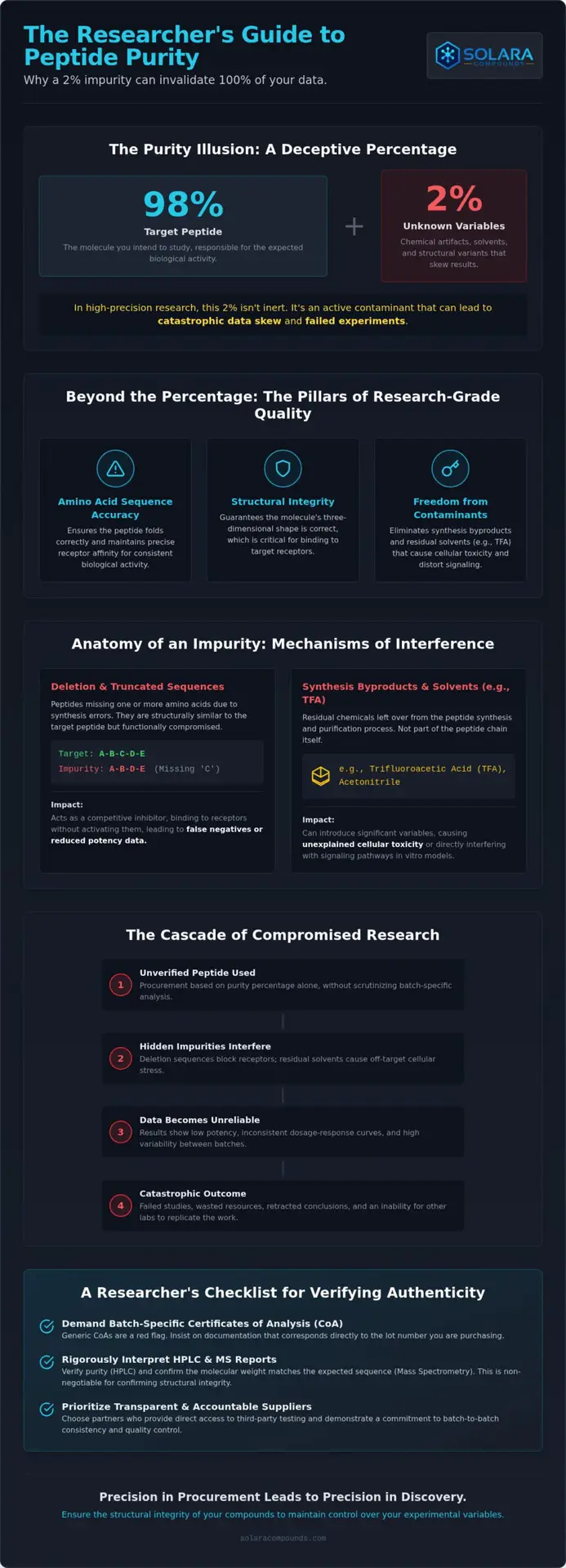
High-purity peptides are the cornerstone of valid laboratory results. While a 95% purity might suffice for cosmetic applications or industrial testing, it’s inadequate for quantitative scientific inquiry. The impact of peptide impurities on research is most visible when these minor contaminants interfere with molecular binding sites. If the structural integrity of a compound is compromised, the resulting data is effectively useless. Scientific discovery relies on the assumption that the observed effect is caused by the intended molecule, not a hidden byproduct.
The Definition of High-Purity Research Standards
For most quantitative analyses, the industry benchmark is a minimum of 98% purity. This threshold ensures that the biological activity observed is a result of the primary sequence rather than residual reagents or truncated chains. Research Use Only (RUO) labeling isn’t just a legal distinction; it’s a commitment to rigorous quality control. Understanding peptide synthesis methods is vital because these processes often leave behind deletion sequences where specific amino acids are missing. In complex chains like Retatrutide 10mg, a single missing link changes the entire folding pattern. This loss of structural accuracy renders the peptide unable to bind correctly to target receptors, leading to false negatives or misleading potency data.
The Relationship Between Purity and Experimental Repeatability
Repeatability is the hallmark of sound science. Peptide purity is the absence of non-target sequences and synthesis byproducts. When batches vary, your dosage-response curves become unreliable. A 10mg vial of Tirzepatide with only 90% purity contains 1mg of unknown variables. These contaminants create statistical noise that masks true physiological responses and prevents other labs from replicating your work. Consistency is what separates a successful study from a series of unexplained anomalies.
The economic cost of using unverified compounds is substantial. A single failed in vitro study can waste weeks of labor and thousands of dollars in specialized reagents. Choosing authentic, research-grade peptides isn’t merely a preference for quality; it’s a strategy for risk mitigation. Laboratory-grade standards prioritize the following attributes:
- Sequence Accuracy: Ensuring every amino acid is in the correct order.
- Contaminant Removal: Eliminating residual solvents that cause unintended cellular toxicity.
- Batch Consistency: Providing identical results from the first experiment to the last.
Precision in procurement leads to precision in discovery. By verifying the structural integrity of your compounds, you eliminate the variables that lead to unexplained data skew. This technical discipline ensures that your focus remains on the biological hypothesis rather than troubleshooting chemical inconsistencies.
Common Peptide Impurities and Their Mechanisms of Interference
Understanding the impact of peptide impurities on research requires looking beyond the percentage on a label. If a vial is 98% pure, the critical question is the chemical identity of the remaining 2%. These contaminants aren’t inert. They’re often bioactive molecules that directly interfere with your experimental variables. It’s a common oversight to assume that minor impurities won’t skew results, but in high-affinity binding assays, even trace amounts of a related sequence can produce significant statistical noise.
Deletion Sequences and Truncated Peptides
The presence of Common peptide-related impurities often stems from incomplete coupling or premature chain termination during the synthesis process. Deletion sequences are particularly problematic because they’re nearly identical to the target peptide, lacking only one or two amino acids. These molecules often act as competitive inhibitors. They occupy the target receptor without activating the intended signaling pathway, which artificially lowers the observed potency of your sample. Because their molecular weight and hydrophobicity are so similar to the target compound, they’re notoriously difficult to separate during standard purification stages.
Residual Scavengers and Salts
Synthesis doesn’t happen in a vacuum; it requires solvents and catalysts that must be meticulously removed. Trifluoroacetic acid (TFA) is frequently used as a counter-ion and a mobile phase additive in HPLC. While it’s effective for purification, residual TFA is toxic to many cell lines and can alter the pH of your culture media. This toxicity often leads to unexplained cell death in in vitro models, which researchers might mistakenly attribute to the peptide itself. Similarly, residual salts like acetonitrile or ammonium acetate can alter the osmotic pressure of your research solutions, creating physical stress on cellular membranes that distorts biological responses.
Chemical modifications further complicate the landscape. Oxidation of methionine residues or deamidation of asparagine can occur during storage or handling, changing the peptide’s mass and binding affinity. These modifications often lead to disulfide bond scrambling, where the peptide folds into an incorrect, non-functional shape. Verifying the absence of these contaminants through a transparent procurement partner ensures your experimental models remain uncontaminated by these hidden variables.
Solubility is another area where impurities exert influence. The choice of counter-ions significantly affects how a compound like BPC-157 or Tirzepatide 10mg dissolves in aqueous buffers. If the salt content is inconsistent, you’ll face uneven concentration gradients across your study groups. This lack of uniformity makes it impossible to establish an accurate dosage-response curve, undermining the entire foundation of your research. Reliable outcomes depend on knowing exactly what is in your vial, down to the last milligram of salt.
Quantifying the Risk: How Impurities Distort Research Outcomes
The impact of peptide impurities on research is rarely a subtle phenomenon. When a sample contains unverified contaminants, the resulting data doesn’t just lose precision; it loses its fundamental validity. In the context of bio-analysis, we must view purity through the lens of the signal-to-noise ratio. A high-purity compound provides a clear, unmistakable signal of biological activity. Conversely, impurities introduce chemical noise that masks true physiological responses, making it impossible to determine if an effect is caused by the target peptide or a synthesis byproduct.
Distorting the Signal-to-Noise Ratio
Chemical noise significantly complicates the interpretation of HPLC chromatograms and mass spectrometry results. If a contaminant shares a similar elution time with the primary sequence, it can lead to the misattribution of potency. You might record a high level of receptor activation, but without rigorous analysis, you won’t know if that activation came from your 10mg of Tirzepatide or a more potent truncated fragment. This ambiguity is why the regulatory standards for peptide impurities emphasize the need for stringent analytical control. Ensuring that observed effects are solely due to the primary compound is the only way to maintain the integrity of your study’s conclusions.
Toxicological Artifacts in Lab Models
Unintended cellular toxicity is perhaps the most damaging outcome of using lower-grade compounds. In many in vitro models, researchers observe high rates of cell death and assume the peptide is to blame, when in reality, residual solvents like acetonitrile are the culprits. Even 1% impurity can trigger significant off-target biological responses. These toxicological artifacts alter the metabolic profile of your research subjects, leading to data that suggests a biological pathway is being inhibited when, in fact, the cells are simply struggling to survive in a contaminated environment.
The risks extend to binding affinity and immunogenicity as well. Degraded peptides, such as those that have undergone oxidation or deamidation, may still appear “mostly pure” on a basic report but will fail to bind correctly to target receptors. This leads to false negatives in binding assays, effectively killing a research project before it can yield results. When these impurity-driven artifacts find their way into published literature, they often lead to retracted research and damaged institutional reputations. Reliability isn’t a luxury in the lab; it’s a requirement for scientific progress. By quantifying these risks, you can better appreciate why authentic, research-grade compounds are the only viable choice for high-stakes experimentation.
A Researcher’s Checklist for Procurement: Verifying Peptide Authenticity
Establishing a rigorous procurement protocol is the most effective way to mitigate the impact of peptide impurities on research. In an industry where many suppliers provide “typical” analysis reports rather than batch-specific data, the burden of verification often falls on the laboratory. Procurement shouldn’t be a matter of trust; it must be a matter of empirical evidence. Identifying authentic, research-grade compounds requires a systematic evaluation of a supplier’s testing transparency and analytical depth.
Analyzing the Certificate of Analysis (COA)
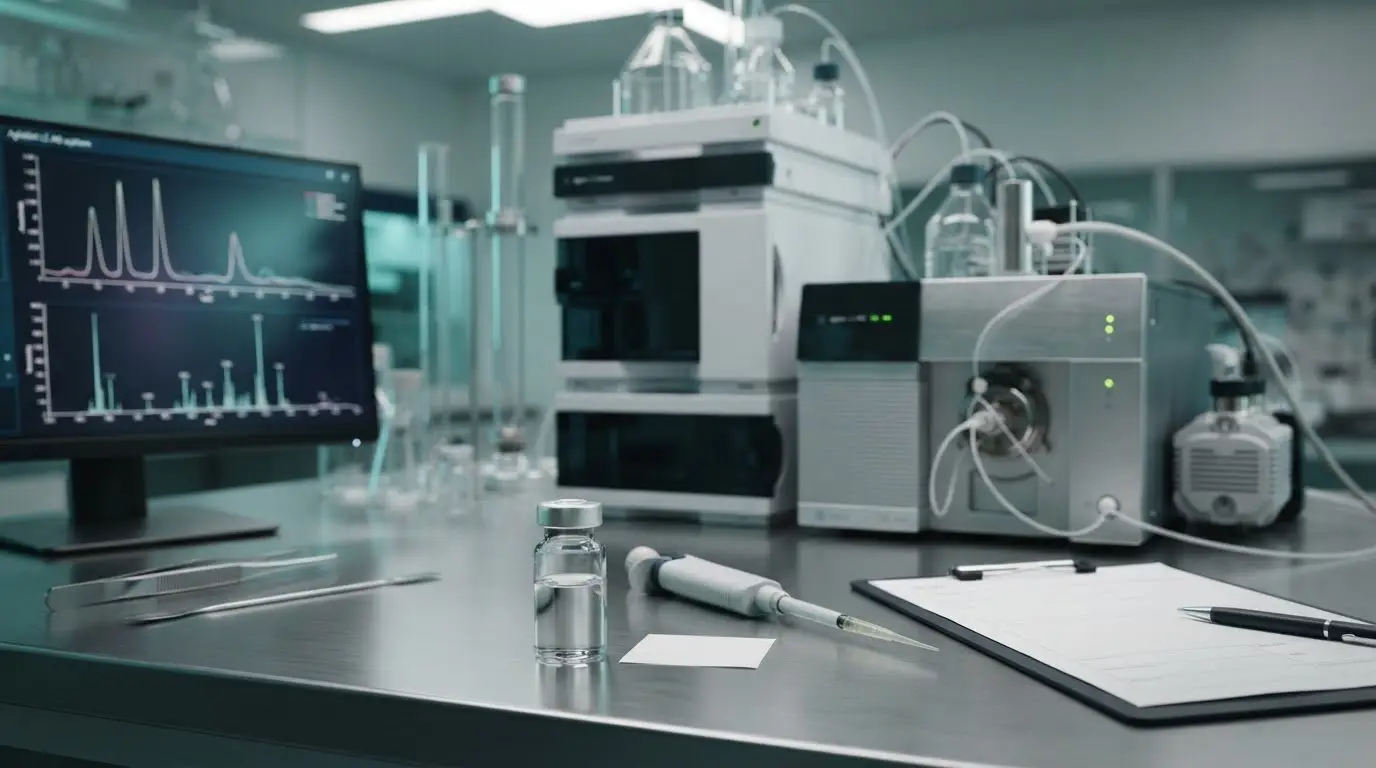
A Certificate of Analysis is only valuable if it directly corresponds to the material in your hands. Always match the batch number on the vial to the report provided. When reviewing the COA, look for a clean HPLC chromatogram with a stable baseline and a sharp primary peak. Broad peaks or multiple smaller “shoulders” indicate the presence of truncated sequences or residual solvents. Additionally, you must confirm that the observed molecular weight matches the theoretical mass of the peptide. Even a minor discrepancy suggests a sequence error or significant chemical modification that will compromise your experimental outcomes.
HPLC and MS: The Gold Standards of Verification
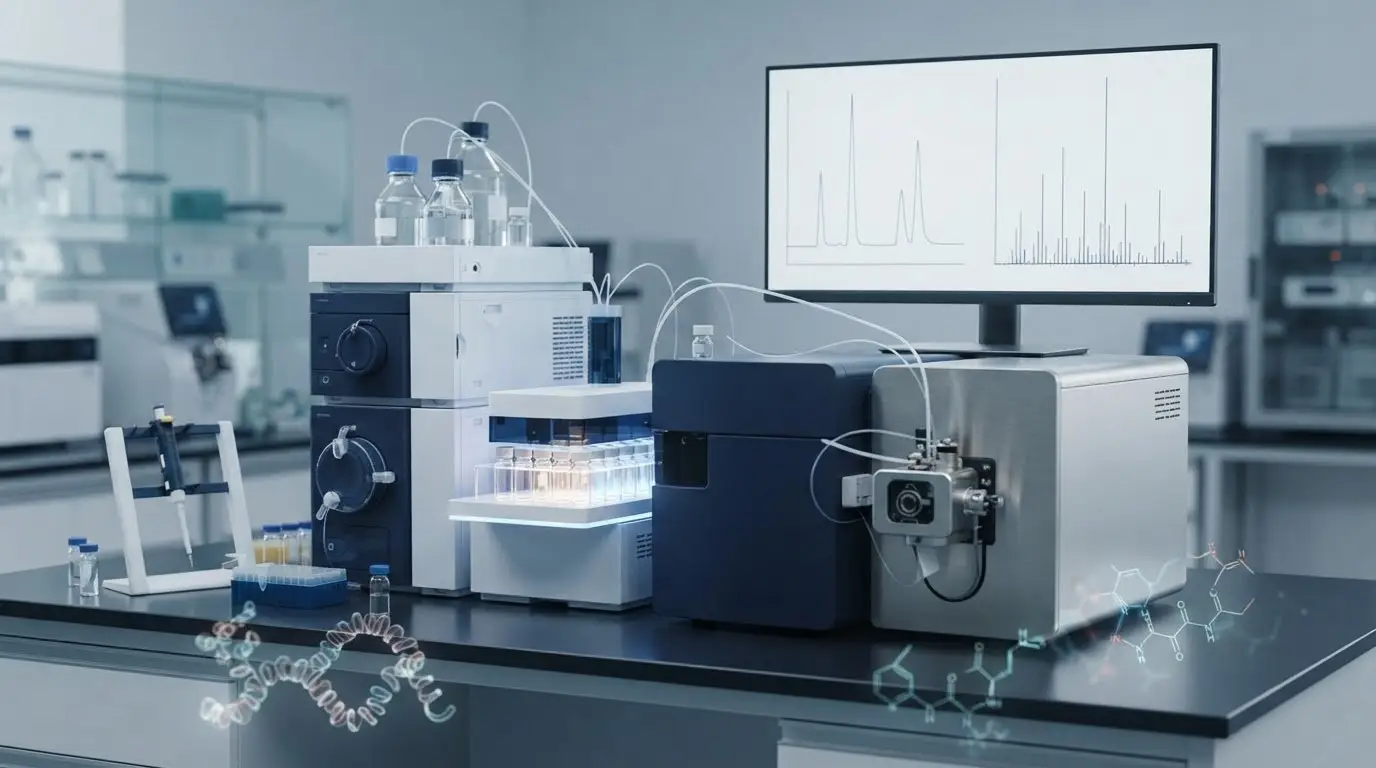
High-Performance Liquid Chromatography (HPLC) and Mass Spectrometry (MS) serve distinct but equally critical roles. While HPLC measures the purity percentage of the sample, MS confirms the actual identity of the molecule. It’s possible to have a sample that’s 99% pure but consists of the wrong amino acid sequence. Using MS ensures the structural integrity of complex compounds like Retatrutide 10mg or Tirzepatide 10mg. Independent, third-party laboratory verification is non-negotiable; internal reports from the manufacturer lack the necessary objectivity for high-stakes research.
Red flags often appear in the form of “too good to be true” pricing. The high cost of synthesis, purification, and multi-stage testing is reflected in the final price of a legitimate research-grade peptide. If a supplier’s pricing is significantly below the market average, they’re likely bypassing essential purification steps or omitting third-party analysis. You can verify batch-specific purity standards through transparent providers who prioritize data integrity over high-volume sales. To ensure the long-term repeatability of your studies, follow this checklist for every procurement cycle:
- Verify Batch-Specific COAs: Avoid suppliers who only offer “typical” analysis.
- Confirm Identity via MS: Ensure the amino acid sequence is accurate.
- Check HPLC Baseline Stability: Look for minimal chemical noise in the chromatogram.
- Audit Third-Party Labs: Ensure the testing facility is independent and accredited.
Precision in the procurement phase saves months of troubleshooting in the analytical phase. By holding suppliers to these standards, you protect your research from the hidden variables that lead to retracted data and failed experiments.
Solara Compounds: Ensuring Structural Integrity Through Rigorous Analysis
Solara Compounds acts as a technical consultant for the modern laboratory. We recognize that the impact of peptide impurities on research extends beyond a single experiment; it affects the entire trajectory of a scientific project. By prioritizing empirical data over marketing rhetoric, we provide researchers with the stability required for high-stakes discovery. Our commitment to excellence ensures that every compound, from BPC-157 to Tirzepatide 10mg, meets the most stringent analytical benchmarks. We don’t just supply materials; we provide the chemical certainty necessary to eliminate variables caused by synthesis byproducts.
The Solara Testing Protocol
Precision is our baseline. Every batch we distribute undergoes a dual-stage verification process involving High-Performance Liquid Chromatography (HPLC) and Mass Spectrometry (MS). This isn’t a “typical” analysis based on historical data. It’s a batch-specific evaluation that confirms both the purity percentage and the exact amino acid sequence accuracy. We provide downloadable, verifiable Certificates of Analysis (COAs) for every product, allowing you to audit our results before you begin your study. Maintaining strict storage conditions is equally vital to our protocol. We ensure that temperature-sensitive compounds are handled with care to prevent degradation, effectively neutralizing the impact of peptide impurities on research before the vial even reaches your bench. This methodical approach ensures that the molecular structure you receive is identical to the one your study requires.
Procuring High-Purity Compounds for Your Institution
Reliability requires more than just high-quality chemistry; it requires a stable supply chain. Solara Compounds operates as a US-based partner, offering domestic shipping that eliminates the uncertainty of international customs and unverified handling. Domestic shipping isn’t just about speed; it’s about the preservation of structural integrity. International transit often exposes sensitive amino acid chains to extreme temperature fluctuations and handling delays that compromise the final result. By sourcing from a US-based provider, you ensure a controlled chain of custody that protects your investment. For long-term studies, we provide bulk procurement options for compounds such as Retatrutide 10mg and GHK-Cu 50mg. This ensures that your multi-phase research projects maintain consistent material quality from the initial baseline to the final data point. Our support team functions as a knowledgeable guide, helping you navigate technical challenges and ensuring your procurement protocol is as rigorous as your science. You can procure authentic research grade peptides from Solara Compounds to establish a foundation of data integrity for your next study.
Establishing a Foundation for Reliable Laboratory Outcomes
Scientific progress depends on the stability of your variables. The impact of peptide impurities on research often manifests as subtle data skew or overt cellular toxicity; both outcomes undermine years of rigorous investigation. Relying on “typical” analysis is no longer sufficient for high-impact studies. You must demand batch-specific accountability and precise third-party verification to ensure that every recorded interaction reflects true biological activity rather than chemical artifacts.
Precision is a technical choice made during the procurement phase. By prioritizing compounds with verified structural integrity, you eliminate the chemical noise that masks potential breakthroughs. Solara Compounds supports this mission by providing batch-specific COAs and third-party HPLC and MS verification for all research-grade compounds. Our US-based secure shipping ensures your materials arrive with their amino acid sequences intact. Secure authentic research grade peptides for your laboratory today and ensure your results remain repeatable and definitive. Your next discovery deserves a foundation built on absolute chemical certainty.
Frequently Asked Questions
What is the difference between 95% and 99% peptide purity for research?
A 99% purity level represents a significant reduction in synthesis byproducts compared to the 95% threshold. While 95% may suffice for basic qualitative screening, quantitative research requires the higher 99% standard to ensure that biological responses aren’t masked by contaminants. The impact of peptide impurities on research is most pronounced at lower purity levels, where truncated sequences can act as competitive inhibitors. High-purity compounds ensure that your recorded data reflects the primary molecule’s true potency.
How do I read an HPLC report for a research peptide?
Focus on the primary peak’s sharp definition and the stability of the baseline. A sharp, narrow peak indicates high purity, while “shoulders” or multiple smaller peaks suggest the presence of closely related impurities or truncated fragments. Check the integration table to verify that the area under the main peak matches the stated purity percentage. Any significant deviation or noise in the baseline suggests residual solvents or reagents that could compromise your final laboratory outcomes.
Can peptide impurities cause cellular toxicity in my experiments?
Impurities like residual solvents or scavengers can trigger unintended cellular toxicity in in vitro models. These contaminants often cause physical stress on cellular membranes or alter metabolic pathways, leading to unexplained cell death. Researchers frequently misattribute these toxic effects to the peptide itself, which creates misleading data. Verifying the absence of toxic byproducts through rigorous testing is essential for distinguishing true biological activity from chemical artifacts. This technical discipline protects the integrity of your experimental conclusions.
What are common signs of peptide degradation during storage?
Common signs include changes in physical appearance, such as discoloration or clumping, and shifts in solubility. However, chemical degradation like oxidation or deamidation is often invisible to the naked eye. In an HPLC report, degradation appears as new, smaller peaks or a broadening of the primary peak. Maintaining strict storage conditions, such as lyophilization and sub-zero temperatures, is critical to preventing these structural changes from occurring before your research begins. Stability depends on both material quality and handling protocol.
Why is a batch-specific COA more important than a general one?
A batch-specific COA is the only document that accurately reflects the material in your specific vial. General or “typical” reports only show what a manufacturer achieved in the past, ignoring the inherent variability of individual synthesis runs. The impact of peptide impurities on research is batch-dependent; one lot might be 99% pure while the next contains significant deletion sequences. Always verify that the batch number on your report matches the physical vial to ensure long-term repeatability in your study.
How does TFA (Trifluoroacetic acid) affect in vitro research?
Trifluoroacetic acid acts as a strong acid that can significantly lower the pH of your culture media. This shift in acidity often inhibits cell growth or causes direct toxicity, particularly in sensitive cell lines. Additionally, residual TFA can interfere with peptide-receptor binding by altering the electrostatic environment of the molecule. Removing TFA or replacing it with an acetate counter-ion is often necessary to ensure that your results reflect biological signaling rather than solvent stress. It’s a hidden variable that requires careful management.
Is third-party testing mandatory for research-grade peptides?
While not legally mandatory for research-grade materials, third-party testing is a scientific necessity for data integrity. Independent verification provides an objective audit that internal manufacturer reports often lack. Relying solely on a supplier’s own data introduces a conflict of interest that can lead to the use of unverified compounds. Accreditation by an external lab ensures that the HPLC and MS results are accurate, providing the transparency required for high-impact research. It’s the only way to confirm structural integrity with absolute certainty.
What happens if the molecular weight on the COA doesn’t match the theoretical weight?
A mismatch between the observed and theoretical molecular weight indicates that the amino acid sequence is incorrect. Even a small difference suggests a missing residue or an unintended chemical modification like oxidation. If the mass spectrometry data doesn’t align with the predicted mass of the target peptide, the compound isn’t authentic. You shouldn’t proceed with experiments using these materials; the resulting data will be fundamentally flawed and impossible to replicate. Accuracy in molecular weight is the primary indicator of sequence integrity.