Research Articles
High Concentration GHK-Cu Research: Molecular Integrity and Laboratory Applications

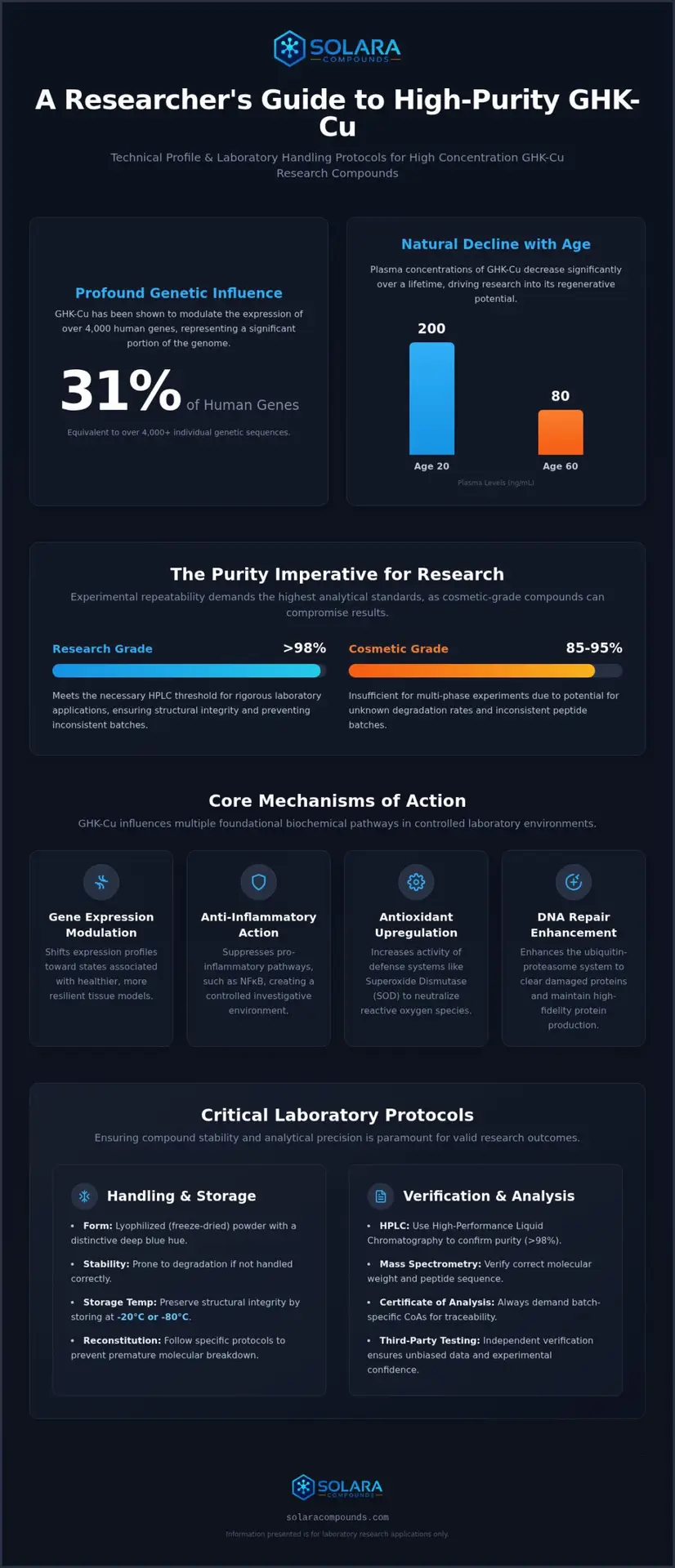
GHK-Cu has been shown to modulate the expression of approximately 31% of human genes, a figure that represents over 4,000 individual genetic sequences. For investigators focusing on high concentration GHK-Cu research, this remarkable molecular influence requires a baseline of absolute purity and structural integrity. Standard cosmetic-grade materials, which often range from 85% to 95% purity, fail to meet the 98% HPLC threshold necessary for rigorous laboratory applications. The importance of high concentration GHK-Cu research cannot be understated as it directly correlates to the integrity of experimental results.
You likely understand the frustration of multi-phase experiments compromised by inconsistent peptide batches or unknown degradation rates. Maintaining experimental repeatability is nearly impossible when technical data is sparse or unreliable. This article provides a comprehensive analysis of the molecular mechanisms and laboratory handling requirements for 50mg GHK-Cu research compounds.
In the realm of high concentration GHK-Cu research, achieving reliable results depends heavily on the quality of materials used.
We’ll examine the specific protocols for maintaining compound stability during reconstitution and storage to prevent premature degradation. You’ll also discover how to verify batch-specific data, including mass spectrometry and HPLC results, to ensure your investigative materials meet the highest analytical standards. This guide bridges the gap between complex material science and practical laboratory utility.
Understanding the nuances of high concentration GHK-Cu research can significantly improve experimental outcomes.
Key Takeaways
- Gain a technical understanding of how GHK-Cu modulates the expression of over 4,000 human genes to influence biochemical pathways in laboratory models.
- Evaluate the cost-efficiency and logistical advantages of utilizing 50mg vials for institutional longitudinal studies and multi-well plate applications.
- Master the analytical requirements for high concentration GHK-Cu research by using HPLC and Mass Spectrometry to verify peptide sequence and molecular weight.
- Implement standardized handling protocols, including storage at -20°C or -80°C, to preserve the structural integrity and stability of lyophilized compounds.
- Ensure experimental repeatability by identifying the necessity of batch-specific Certificates of Analysis and independent third-party purity verification.
Understanding the Molecular Profile of GHK-Cu in Bio-Chemical Research
Biochemical investigation into GHK-Cu began in 1973, when researchers first isolated the molecule from human plasma. This tripeptide, formally known as glycyl-L-histidyl-L-lysine, naturally occurs in the body, but its concentration declines significantly as an organism ages. By age 20, plasma levels sit around 200 ng/mL; however, they drop to approximately 80 ng/mL by age 60. This decline has spurred decades of high concentration GHK-Cu research focused on tissue regeneration and cellular signaling, highlighting the ongoing need for rigorous studies in this area.
The Copper peptide GHK-Cu is characterized by its high affinity for copper (II) ions. While the GHK peptide can exist independently, it’s the chelated form that exhibits the most profound biological activity in a laboratory setting. This specific affinity allows the peptide to act as a carrier, transporting copper to specific cell receptors and modulating enzymatic processes. Distinguishing between the raw peptide and the copper-chelated complex is vital for investigators. The presence of the copper ion is what facilitates the molecule’s unique redox-active properties and biological signaling potential.
The Chemical Structure of Glycyl-L-Histidyl-L-Lysine
The molecule’s structural stability is rooted in its specific amino acid sequence. With a molecular formula of C14H24N6O4 and a molecular weight of approximately 340.4 g/mol for the peptide alone, GHK-Cu forms a stable complex where the copper ion is coordinated by the nitrogen atoms of the peptide backbone. Researchers working with high concentration GHK-Cu research compounds will immediately recognize the material by its visual properties. The lyophilized powder presents a distinctive, deep blue hue, a clear indication of successful complex formation and structural integrity during the manufacturing phase, essential for high concentration GHK-Cu research.
Research Applications in Tissue Remodeling and Bio-Analysis
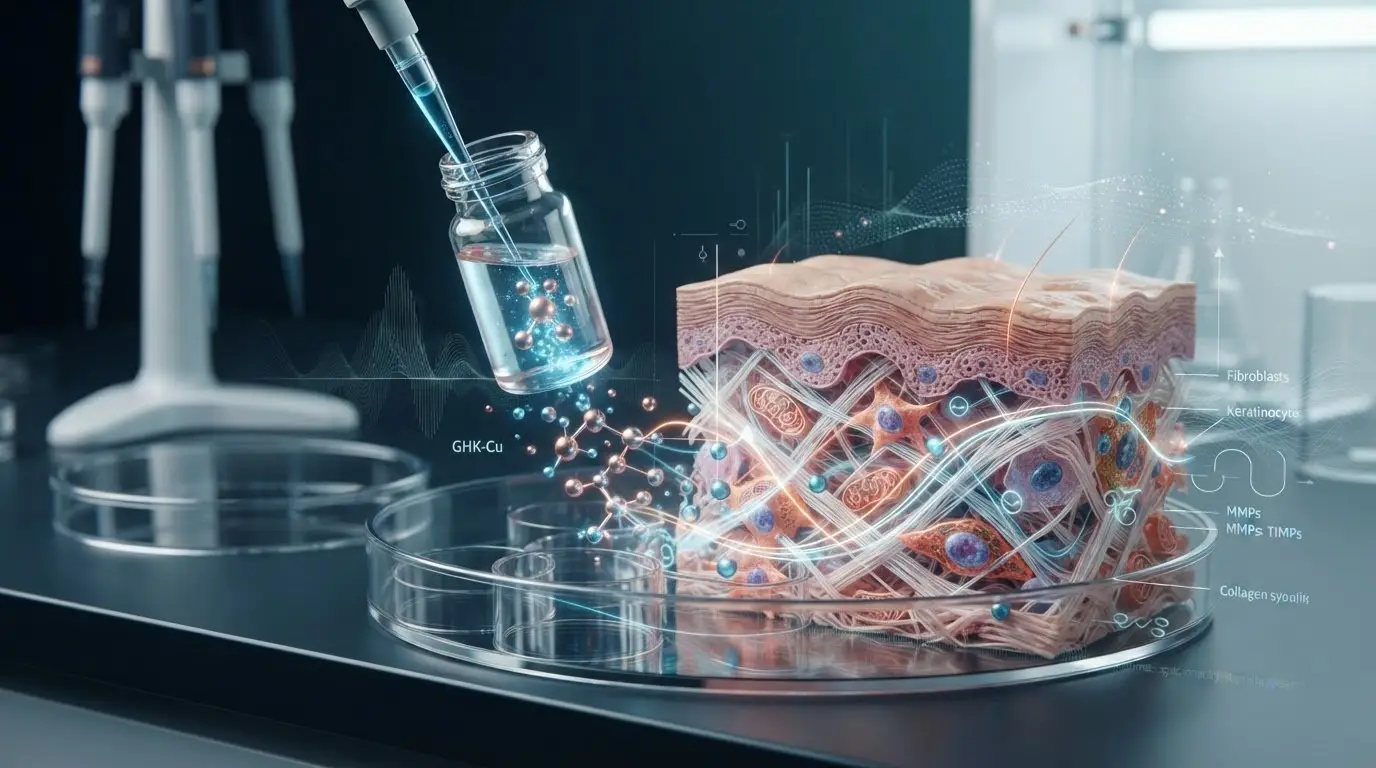
In vitro studies consistently highlight the molecule’s role in extracellular matrix (ECM) modulation. When applied to human fibroblast cultures, GHK-Cu has been shown to stimulate the synthesis of collagen and elastin. This stimulation isn’t merely an increase in volume. It involves the organized remodeling of the matrix. Beyond structural proteins, the complex is a subject of intense interest for its potential in promoting nerve and blood vessel outgrowth. Laboratory models focused on angiogenesis and neurogenesis utilize GHK-Cu to observe its influence on cellular migration and the expression of growth factors, providing a baseline for understanding systemic tissue repair mechanisms.
In high concentration GHK-Cu research, it’s crucial to recognize the peptide’s multifaceted role in both structural support and signaling.
GHK-Cu and Gene Expression: Mechanisms of Action
GHK-Cu regulates cellular behavior by influencing genetic transcription at a foundational level. Research indicates that the complex modulates approximately 31% of the human genome. This influence extends to over 4,000 individual genes, effectively shifting their expression profiles toward states associated with healthier, more resilient tissue. In human fibroblast models, this GHK-Cu and gene expression modulation facilitates enhanced protein synthesis and structural maintenance. The resulting data suggests a profound capacity for systemic cellular “resetting” in controlled laboratory environments.
The suppression of inflammatory pathways is a cornerstone of high concentration GHK-Cu research. The peptide complex reduces the expression of pro-inflammatory molecules, specifically targeting the NFκB signaling pathway. By inhibiting these inflammatory markers, GHK-Cu allows for a more controlled investigative environment when studying cellular recovery and protein turnover, an essential aspect of high concentration GHK-Cu research.
Epigenetic Signaling in Laboratory Models
The impact of GHK-Cu on DNA repair gene expression is a critical area of study. It enhances the activity of the ubiquitin-proteasome system, which is responsible for clearing damaged proteins from the cellular environment. This ensures that the cell maintains high-fidelity protein production during longitudinal studies. GHK-Cu acts as a comprehensive epigenetic signal that re-aligns gene expression profiles to support cellular longevity and structural repair.
Protective Actions Against Oxidative Stress
Beyond gene modulation, the complex provides direct protection against oxidative stress through multiple biochemical channels. It effectively inhibits lipid peroxidation, a process that frequently damages cell membranes in investigative research. This protective effect is partially due to the molecule’s copper chelation properties. By sequestering free copper ions, it prevents the formation of hydroxyl radicals via the Fenton reaction. It also serves as a critical buffer against iron-induced oxidative damage, maintaining the stability of the research environment. For those conducting these complex studies, sourcing verified research-grade GHK-Cu is essential for achieving repeatable data.
Comparative Analysis: High Concentration GHK-Cu 50mg vs. Standard Vials
Institutional investigators often prioritize 50mg vials over standard 10mg or 20mg formats to accommodate longitudinal studies. In high concentration GHK-Cu research, consistency across time-sensitive experiments is paramount. Reconstituting a single 50mg vial allows for a larger volume of standardized solution. This reduces the margin of error compared to mixing multiple smaller vials. This approach ensures that every multi-well plate in a high-throughput screening session receives a peptide concentration with identical molecular integrity. It’s a pragmatic solution for labs that value repeatability over the logistical complexity of managing numerous small-batch vials.
Procuring GHK-Cu 50mg for research from Solara Compounds provides significant cost-efficiency for institutional procurement. Labs can streamline their inventory while ensuring investigators have sufficient material for extensive dose-response curve modeling. Beyond budget considerations, the precision benefits are clear. Using a single high-concentration source minimizes inter-batch variability, which is a common issue that can compromise the validity of sensitive bio-assays. Reliability in the supply chain matters. Domestic shipping within the US ensures these materials arrive without the degradation risks associated with international transit.
Scalability in In Vitro Experimental Design
High-throughput screening requires a reliable supply of stable compounds. A 50mg vial facilitates the creation of a master stock solution that can be accurately diluted across dozens of plates. When comparing 50mg versus 10mg vials, the larger format is superior for establishing comprehensive dose-response curves. It allows researchers to maintain tight control over the experimental environment without the risk of introducing variables from different production lots. This approach is a standard requirement for high concentration GHK-Cu research involving complex cellular signaling pathways. This scalability is essential for labs moving from pilot studies to large-scale investigative projects.
Reconstitution Strategies for 50mg Research Powders
Precise calculation of molarity is essential when working with high-concentration solutions. Investigators must consider the solubility limits of GHK-Cu, which typically shows high solubility in both bacteriostatic water and sterile saline. However, maintaining pH balance is critical during the reconstitution of 50mg powders. Rapid shifts in pH can affect the chelation stability of the copper peptide. Researchers seeking a standardized framework should consult a precision laboratory protocol for how to reconstitute GHK-Cu to ensure volumetric accuracy and preserve the copper-peptide bond throughout the process. Adhering to established laboratory handling and storage protocols for GHK-Cu ensures that the resulting aqueous solution remains stable for the duration of the experiment. Stability is the foundation of any successful investigative outcome.
Laboratory Handling and Storage Protocols for GHK-Cu
Maintaining the molecular integrity of research compounds starts at the moment of delivery. Upon receipt, investigators should immediately inspect the lyophilized cake for structural integrity. A robust, uniform cake indicates that the vacuum seal remains intact and the material hasn’t been exposed to excessive humidity during transit. For high concentration GHK-Cu research, immediate storage at -20°C is required for short-term use, while -80°C is preferred for long-term preservation.
Aseptic reconstitution is the next critical phase in the laboratory workflow. Researchers must use sterile bacteriostatic water or an appropriate buffer within a controlled environment, such as a ISO-certified laminar flow hood. This step prevents microbial proliferation that could interfere with sensitive biological assays or skew gene expression data. Once the compound enters an aqueous state, it becomes significantly more vulnerable to its environment. Light sensitivity and temperature fluctuations post-reconstitution can trigger rapid degradation. It’s standard practice to store the solution in amber glass vials or wrap transparent containers in aluminum foil to shield the complex from UV exposure. To ensure your baseline materials meet these rigorous standards, you can order verified GHK-Cu 50mg vials for your next investigative project.
Stability of GHK-Cu in Aqueous Solutions
The stability of reconstituted GHK-Cu is relatively high when maintained at refrigerated temperatures of 4°C. Most laboratory protocols suggest utilizing the solution within 28 days to ensure maximum analytical potency. Repeated freeze-thaw cycles are detrimental to the compound’s structure. These cycles create ice crystals that can physically shear the peptide bonds, leading to molecular fragmentation and loss of chelation integrity. Investigators should monitor for visual indicators of degradation, such as a loss of the characteristic blue hue or the appearance of precipitation. If the solution loses clarity, its analytical reliability is compromised. Utilizing independent peptide lab testing provides a definitive verification of purity levels before proceeding with high-stakes experiments.
Best Practices for Long-Term Lyophilized Storage
Desiccation is a primary requirement for preserving high-purity powders. Lyophilized GHK-Cu is hygroscopic, meaning it readily absorbs moisture from the atmosphere. This moisture can trigger hydrolysis, breaking down the peptide complex even at sub-zero temperatures. Vials should be stored in secondary airtight containers with desiccant packs to mitigate this risk. Organizing batch-specific inventories is equally important for research traceability. This allows investigators to correlate specific experimental outcomes with the precise batch data provided in the Certificate of Analysis (CoA), ensuring a higher degree of transparency and repeatability in high concentration GHK-Cu research.
These best practices are vital for ensuring that high concentration GHK-Cu research yields reproducible and reliable results.
Ensuring Analytical Precision: Verifying GHK-Cu Purity
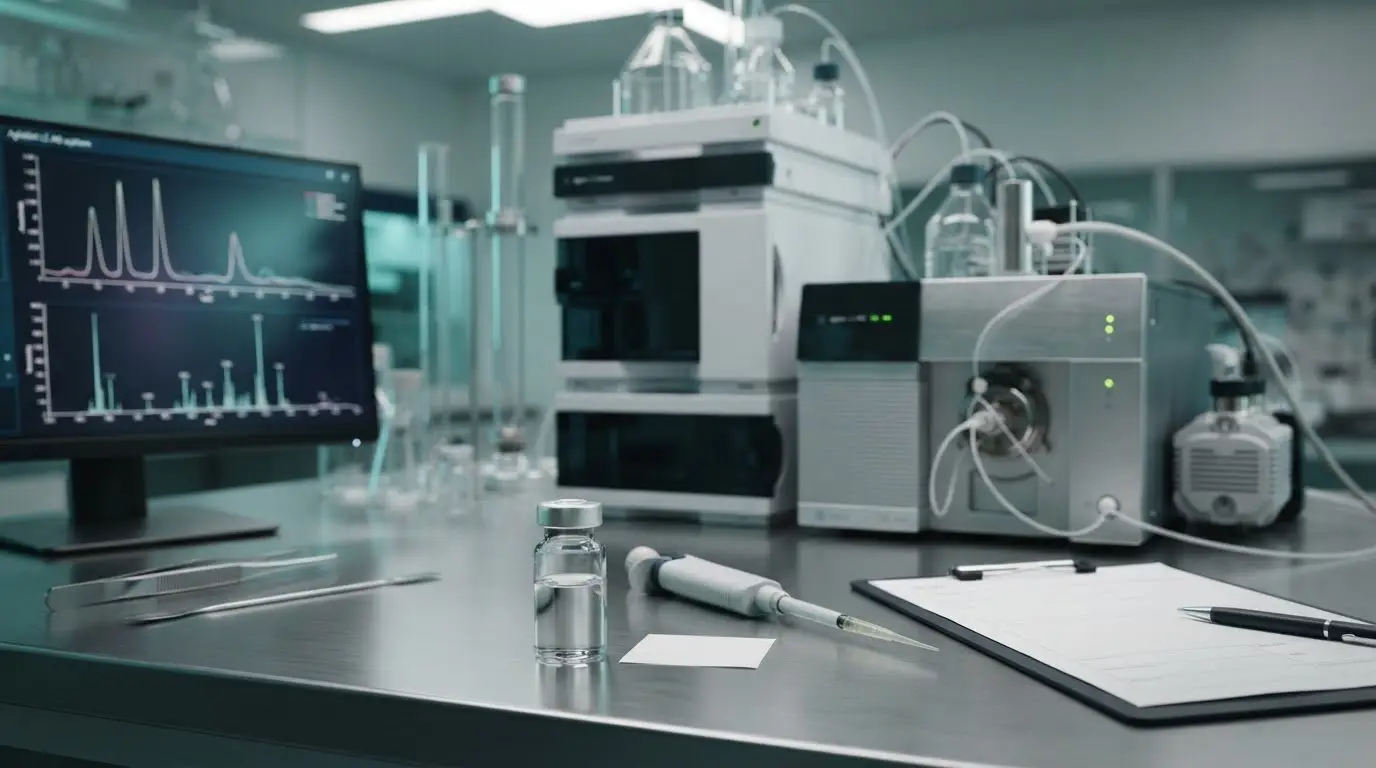
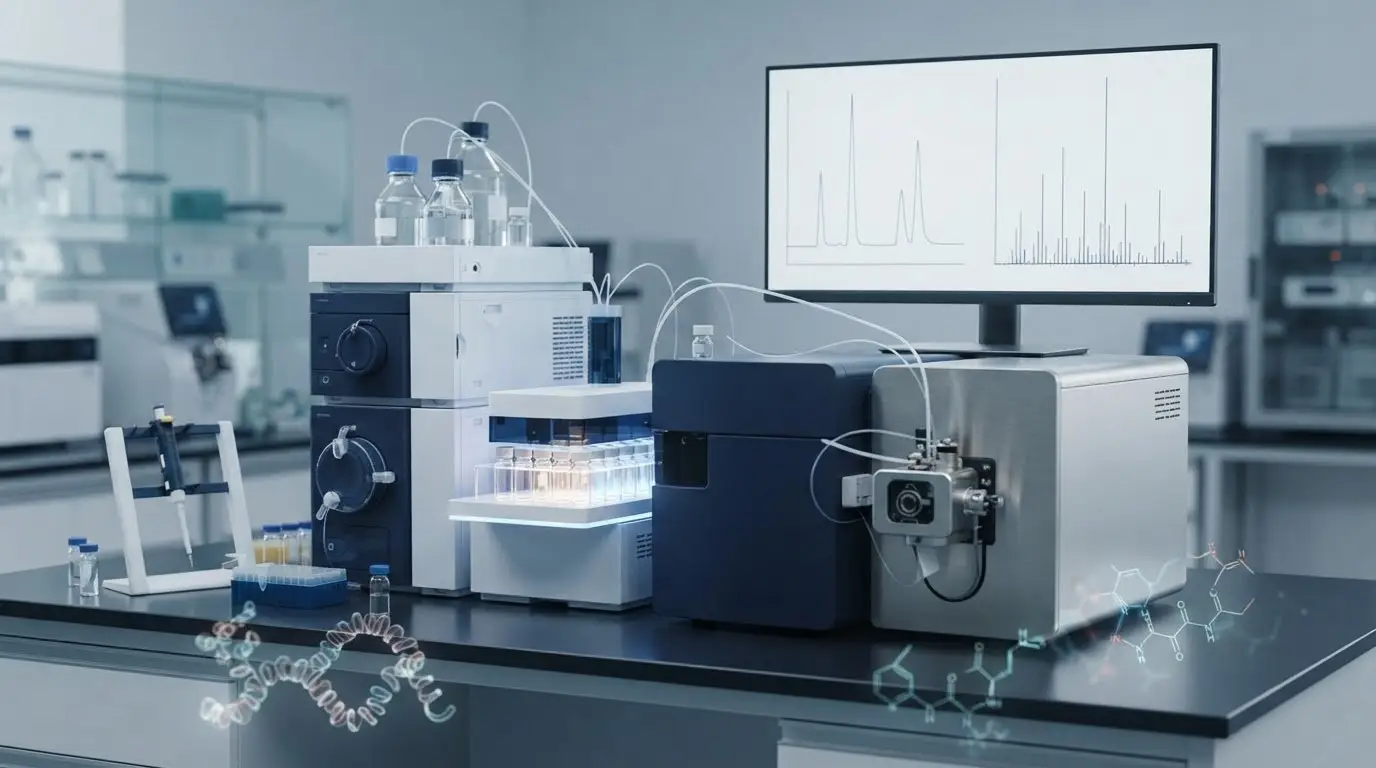
Rigorous high concentration GHK-Cu research demands more than a simple purity claim; it requires definitive analytical proof. High-Performance Liquid Chromatography (HPLC) is the industry standard for sequence verification. This process separates the tripeptide from any secondary molecules, providing a clear chromatogram that illustrates the sample’s composition. Without this level of detail, investigators risk introducing unknown variables into their cellular models. Mass Spectrometry (MS) serves as the necessary companion to HPLC by confirming the exact molecular weight of the GHK-Cu complex. This step ensures that the copper is correctly chelated and the peptide sequence remains intact throughout the synthesis process.
Batch-specific Certificates of Analysis (COA) are non-negotiable for any scientific study. A generic or outdated COA doesn’t account for the subtle variations that can occur during different production runs or lyophilization cycles. Researchers must be able to identify potential contaminants, such as residual solvents from the synthesis phase or truncated peptide sequences. These impurities can interfere with sensitive gene expression assays or skew the results of metabolic studies. A verified, batch-specific COA provides the transparency required to justify experimental data and ensures the integrity of the investigative environment.
Interpreting HPLC and MS Reports
Reading an HPLC report involves identifying the primary peak, which represents the target GHK-Cu molecule. The area under this peak, compared to any smaller secondary peaks, determines the final purity percentage. For research-grade material, this should consistently exceed 98%. On a mass spectrum report, investigators should verify the mass-to-charge (m/z) ratio against the theoretical molecular weight of the complex. Discrepancies between the advertised purity and the tested results should be flagged immediately. This scrutiny ensures that high concentration GHK-Cu research is conducted with materials of known and repeatable quality.
Procuring Verified GHK-Cu 50mg for Institutional Study
Institutional procurement requires a supplier that prioritizes empirical data and transparency. Solara Compounds addresses this requirement by providing batch-specific documentation for every 50mg vial, ensuring that investigators have access to independent HPLC and MS testing results. This approach streamlines the procurement process for US-based research institutions by removing the uncertainty often associated with international peptide sourcing. By focusing on domestic reliability and third-party verification, institutions can maintain the high analytical standards necessary for longitudinal studies and complex bio-chemical analysis.
Advancing Analytical Standards in Peptide Investigation
Achieving repeatable results in high concentration GHK-Cu research requires an unwavering commitment to molecular precision. This analysis has detailed how the tripeptide-copper complex influences thousands of human genes and why maintaining a 98% HPLC purity threshold is essential for valid bio-chemical analysis. Utilizing 50mg vials offers the scalability needed for high-throughput screening while minimizing the variables introduced by multiple smaller batches.
Maintaining these standards shouldn’t be a logistical burden. By prioritizing batch-specific HPLC and MS verification, you ensure that every experiment rests on a foundation of empirical data. Solara Compounds supports your investigative goals with 99%+ purity standards and secure national US shipping to keep your projects on schedule. Secure high-purity GHK-Cu 50mg for your next research project at Solara Compounds and receive comprehensive, batch-specific reports with every order. We’re proud to support the next generation of breakthrough discoveries in your facility.
Frequently Asked Questions
What is the primary advantage of high concentration GHK-Cu research?
The primary advantage of high concentration GHK-Cu research lies in the ability to establish a standardized molecular baseline for high-throughput screening and longitudinal studies. Utilizing 50mg vials allows investigators to reconstitute larger volumes from a single source, which significantly reduces the margin for error compared to mixing multiple smaller batches. This scalability is essential for institutional procurement, ensuring that every multi-well plate in an investigative series receives material with identical structural integrity and chelation properties.
Is GHK-Cu 50mg stable for long-term laboratory storage?
For those engaged in high concentration GHK-Cu research, understanding these factors is crucial for success.
GHK-Cu 50mg is highly stable for long-term laboratory storage provided it remains in its lyophilized powder form at sub-zero temperatures. Storing the vials at -20°C or -80°C effectively halts molecular degradation and preserves the peptide bond sequence for extended periods. It’s critical to keep the material away from moisture and light, as these environmental factors can trigger hydrolysis. Once reconstituted, the solution’s stability window narrows, making sub-zero storage of the dry powder the preferred institutional standard.
How should GHK-Cu 50mg be reconstituted for in vitro studies?
Reconstitution for in vitro studies should be performed using sterile bacteriostatic water or a laboratory-grade buffer within an ISO-certified laminar flow hood. Maintaining aseptic technique prevents microbial contamination that could compromise sensitive gene expression assays. For high-concentration solutions, researchers must carefully calculate molarity while monitoring the pH balance. Rapid shifts in pH can destabilize the copper-peptide bond. Once aqueous, the solution should be stored in amber vials at 4°C and utilized within 28 days for maximum potency. Investigators can follow a detailed step-by-step guide on how to reconstitute GHK-Cu to master the volumetric calculations and physical handling techniques required for high-concentration vials.
Does Solara Compounds provide HPLC reports for GHK-Cu?
Yes, Solara Compounds provides batch-specific HPLC and Mass Spectrometry reports for every order of GHK-Cu 50mg. These independent third-party tests verify that the material meets or exceeds a 98% purity threshold. Providing these reports is a standard part of our commitment to transparency and analytical precision. Researchers can correlate their experimental results with the exact molecular data of their specific batch, ensuring a higher degree of repeatability and traceability in their investigative workflows.
What is the difference between GHK and GHK-Cu in a research setting?
In a research setting, the difference between GHK and GHK-Cu is the presence of the Copper (II) ion. GHK is the raw tripeptide sequence (Glycyl-L-histidyl-L-lysine), whereas GHK-Cu is the chelated complex. While the peptide alone has some biological signaling properties, the chelated form is required for most redox-active processes and tissue remodeling studies. The copper ion facilitates specific cellular interactions that are fundamental to high concentration GHK-Cu research focusing on angiogenesis and extracellular matrix modulation.
Can GHK-Cu be stored at room temperature upon arrival?
This distinction is particularly relevant in the context of high concentration GHK-Cu research, where the copper ion plays a vital role.
GHK-Cu should not be stored at room temperature for any extended duration upon arrival. While the lyophilized cake is stable during short-term transit, immediate transfer to a freezer set at -20°C or -80°C is necessary to maintain long-term structural integrity. Exposure to heat and humidity can lead to moisture absorption and subsequent peptide hydrolysis. To ensure the reliability of your research data, standardizing your cold-chain intake procedure is as important as the experimental protocols themselves.
Why is third-party testing critical for high-concentration peptides?
This is especially critical in high concentration GHK-Cu research where every detail matters in experimental design.
Third-party testing is critical because it provides objective verification of a peptide’s sequence integrity and the absence of residual solvents. In high-concentration applications, even minor contaminants can significantly skew biological data or trigger unintended cellular responses. Independent HPLC and MS testing ensure that the advertised purity matches the actual molecular composition. This level of scrutiny is non-negotiable for scientific publications, where the repeatability of results depends entirely on the verified quality of the starting compounds.
What are the molecular weight specifications for GHK-Cu research compounds?
Such precision is non-negotiable for high concentration GHK-Cu research.
The molecular weight specifications for GHK-Cu research compounds are foundational for calculating precise molar concentrations. The raw GHK tripeptide has a molecular weight of approximately 340.4 g/mol. When chelated with copper, the molecular weight of the complex increases accordingly. Investigators should always verify these specifications using the Mass Spectrometry data provided in the batch-specific Certificate of Analysis. Confirming the correct m/z ratio ensures that the peptide is properly chelated and free from truncated sequences or fragmentation.
This understanding is paramount for high concentration GHK-Cu research and its applications.