Research Articles
Peptide Dosage for Cell Culture: Researcher’s Guide


What if the key to calculating peptide dosage for cell culture isn’t finding a universal dose, but translating a documented experimental concentration into the right working volume? It’s easy to confuse the peptide’s mass, the stock solution’s concentration, and the volume added to a culture. They’re related, but they aren’t interchangeable.
This guide explains how to connect those values with a transparent calculation, check units, and avoid treating an injection-oriented calculator output as cell-culture guidance. You’ll also see why the experimental concentration must come from relevant research and your lab’s validated design, not a one-size-fits-all recommendation.
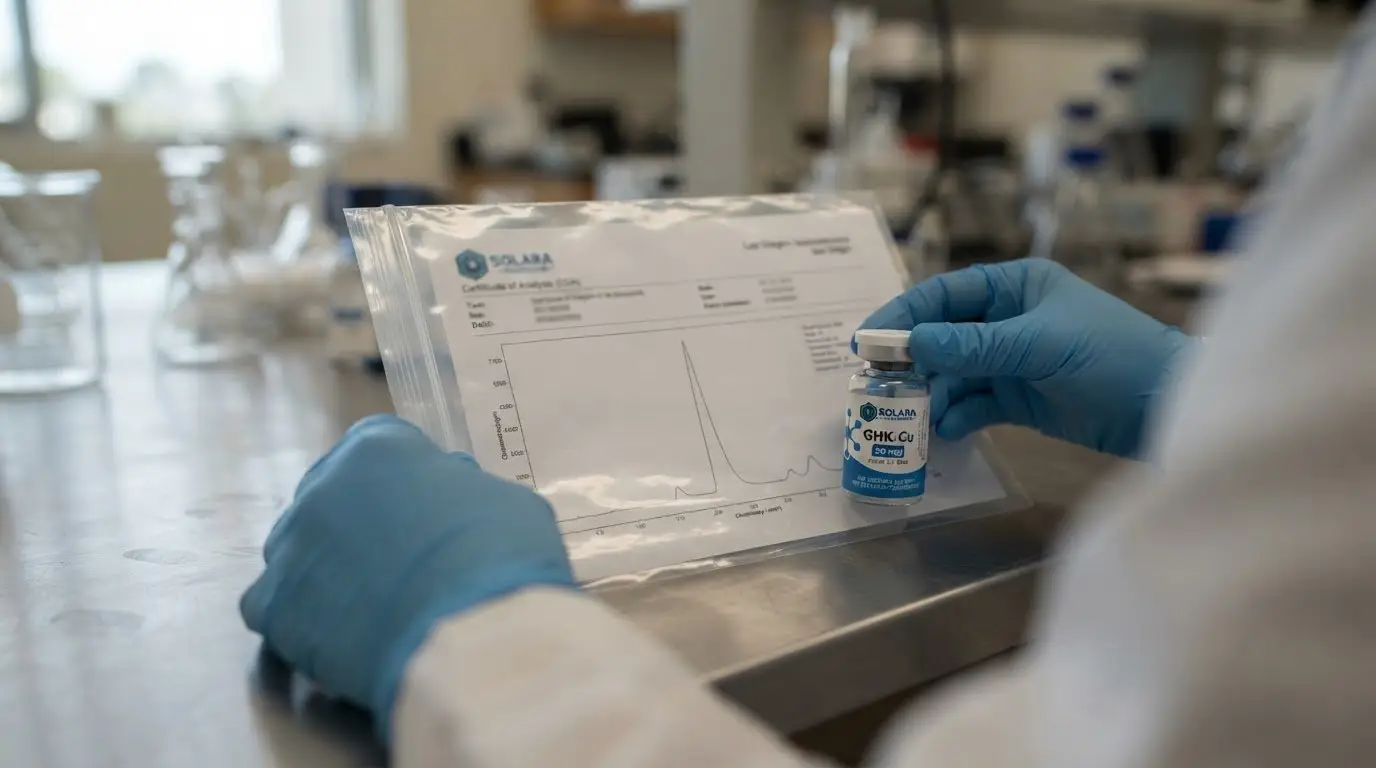
We’ll cover the basic mass, volume, and concentration relationship, dilution math, and the documentation to review before laboratory work. Batch-specific COAs from Solara Compounds provide identity and purity information, not evidence of experimental outcomes. All products are for laboratory research only; they are not medicines or supplements and are not for people or animals. Find research information at solaracompounds.com.
Key Takeaways
- Separate the study-defined concentration from the volume needed to reach it; the calculation doesn’t establish a universal experimental recommendation.
- Keep units consistent through each step, and verify that the amount, solution volume, and final culture volume refer to the quantities you intend to calculate.
- When calculating peptide dosage for cell culture, distinguish solution concentration from syringe-unit outputs, which don’t by themselves specify a culture concentration.
- Use a simple verification workflow: identify the documented concentration, record units, calculate, independently check the arithmetic, and document the result.
- Review the batch-specific COA and lot information as material documentation, not as evidence that a particular experimental outcome is assured.
What peptide concentration means in cell-culture calculations
A cell-culture concentration describes how much material is present in a defined volume of solution. It isn’t a universal peptide recommendation. The appropriate experimental concentration must come from the study design or a laboratory method validated for the specific research question, not from a generic calculator.
This distinction matters because a vial label, a stock solution, and a culture each describe different things. A product listing such as KPV 10 mg identifies a research material and its labeled mass; it doesn’t establish a working concentration or determine how a cell-culture experiment should be designed. For context, Cell culture involves maintaining cells in a controlled environment, where the surrounding medium is part of the experimental system.
Concentration, as arithmetic: the amount of a substance divided by the volume containing it. It must be written with units, such as mass per volume (mg/mL) or amount of substance per volume (µmol/L). This definition describes a relationship between quantities; it is not experimental advice or a recommended target.
Mass, concentration, and volume are different quantities
Mass describes how much peptide material is present, recorded with a mass unit such as mg or µg. Volume describes how much liquid is present, recorded with a volume unit such as mL or µL. Concentration connects the two by specifying an amount per volume. Keeping those units attached prevents a mass value from being mistaken for a concentration.
Stock concentration is the amount of material per volume in a prepared source solution. Working concentration is the concentration intended for use in a defined experimental setup, as specified by the relevant study or validated method. Final culture volume is the total liquid volume in the culture after additions, as defined by that method. These terms answer different questions, so they shouldn’t be substituted for one another.
For calculating peptide dosage for cell culture, the first task is to identify which quantity the experimental design specifies. A mass alone doesn’t tell a researcher how much solution volume is involved; a volume alone doesn’t state how much peptide it contains. The units make the distinction visible.
Why injection-oriented calculators do not answer culture questions
Some peptide calculators are built around syringe-unit outputs or other injection-oriented assumptions. Those outputs represent a different measurement context from concentration in a cell-culture medium. They don’t automatically describe the quantity per culture volume, and converting between display formats doesn’t establish an experiment’s conditions.
A calculator can perform arithmetic only from its inputs and assumptions. It can’t determine a suitable biological concentration, validate a study design, or predict an outcome. Researchers should use the concentration defined by their experimental source, then calculate relevant solution quantities with compatible units. All Solara Compounds products are for laboratory research only, not for use in people or animals.
The concentration and dilution math behind cell-culture calculations
The arithmetic is straightforward once each quantity is clearly identified. Concentration equals amount divided by volume: C = A ÷ V, where C is concentration, A is the amount of material, and V is the volume containing it. For a mass-based calculation, the units might be written as mass per volume; for a molar calculation, they might be amount of substance per volume. The units determine what the result means.
For cell-culture calculations, the calculation starts with inputs set by the study design or laboratory’s validated method. The equation can translate those inputs into a required volume, but it can’t decide which experimental concentration is appropriate. That separation matters: arithmetic answers “how much volume corresponds to these inputs?” It doesn’t answer “what should the experiment use?”
Use dimensional analysis to keep units consistent
Before calculating, put quantities into compatible units. If an amount is recorded in one mass unit and the concentration uses another, convert the amount first using the appropriate unit-conversion factor. Likewise, convert microliters and milliliters to the same volume unit before combining values. Label every intermediate result with its unit, not just the final answer.
Dimensional consistency is the fastest check for a concentration calculation. If the units don’t reduce to the expected quantity, pause and review the setup. For example, dividing an amount with mass units by a volume with volume units should leave a mass-per-volume unit. This check can reveal a missed conversion or a misplaced variable before the result is carried into later calculations.
Relate a stock solution to a final culture volume
The general dilution relationship is C1V1 = C2V2. Here, C1 is the starting stock concentration, V1 is the portion of stock represented in the calculation, C2 is the defined final concentration, and V2 is the final solution volume. Rearranging the relationship can isolate the unknown volume, provided the inputs are appropriate and units align.
The equation tracks the amount of material through a dilution: the amount represented by the starting concentration and volume equals the amount represented by the final concentration and volume. Before using it, express both concentrations in the same units and both volumes in compatible units. Otherwise, the equality won’t be meaningful, even if the numbers appear to balance.
Most importantly, the formula computes a volume from chosen inputs; it doesn’t select those inputs. Researchers must take the intended concentration and final culture volume from the relevant study design or validated laboratory method. No universal peptide concentration follows from the dilution equation, and the calculation alone can’t predict a biological outcome.
Used this way, calculating peptide dosage for cell culture is a unit-aware translation of documented experimental values, not a dosing recommendation. Researchers sourcing materials for laboratory work can view the research peptide catalog while keeping product selection separate from experimental calculations.
How cell-culture calculations differ from peptide calculator outputs
A calculator can return a precise-looking number without answering the laboratory question a researcher actually has. The key is to distinguish a calculator’s input and output from the concentration defined for a cell-culture experiment. Syringe-unit values, stock-solution concentration, and final culture concentration describe different things; one should not be treated as a substitute for another.
| Input or output | What it represents | Does it answer a cell-culture question? |
|---|---|---|
| Peptide mass and liquid volume | General arithmetic inputs that can be used to calculate a mass-per-volume concentration when units are compatible. | Not by themselves. They don’t establish the experimental concentration. |
| Stock concentration | The amount of material per volume in a source solution. | Partly. It can support a dilution calculation when the study-defined inputs are known. |
| Syringe-unit output | A volume scale associated with a syringe format. | No. It does not express the amount of peptide per culture volume. |
| Final culture concentration | The concentration in the completed culture volume, expressed with appropriate units. | Yes, if calculated from suitable, documented experimental inputs. |
Which calculator fields transfer to laboratory arithmetic?
Mass and liquid volume can be useful fields because they are general mathematical quantities. A calculator may use them to derive a solution concentration, but that result is only meaningful if the units and assumptions match the calculation the researcher intends to perform. The target culture concentration must be established independently from the study design or a validated laboratory method.
Syringe-unit output doesn’t help interpret a culture concentration. It reports a volume on a particular scale, not a concentration in the culture medium. If a calculator presents that output prominently, researchers should separate it from the quantities relevant to their laboratory calculation rather than infer a culture value from it.
What a calculator cannot determine for an experiment
A correct arithmetic result doesn’t verify peptide identity, purity, or behavior in solution. Nor does it predict biological response. Those are separate questions requiring appropriate documentation, material evaluation, and experimental evidence. A calculator processes entered values; it can’t validate the material or the assumptions behind those values.
Experimental planning also depends on context. Cell type, assay design, and the research question can affect which conditions are relevant, so a number copied from an unrelated calculator or context cannot establish suitability. A calculator checks arithmetic, not experimental validity.
For calculating peptide dosage for cell culture, treat every displayed result as conditional: it depends on the units, assumptions, and input values entered. A numerical output is not evidence that a concentration is suitable or that an outcome will follow. Researchers should retain the source of their chosen inputs and verify that the calculation matches the intended culture quantity before using it.

A practical verification workflow for peptide concentration calculations
A reliable calculation should be traceable from its source inputs to its final result. This workflow is for checking arithmetic and records, not for choosing experimental conditions. It intentionally leaves target concentrations, reconstitution steps, incubation conditions, and assay-specific instructions to the study design and the laboratory’s validated method.
Check inputs, units, and calculation independently
Start by confirming that each quantity refers to the same material and preparation. Then follow the calculation in a consistent order and retain units beside every value. A second calculation or independent review can help catch transcription errors, overlooked conversions, or a mismatch between the intended culture volume and the volume used in the arithmetic.
- Identify the documented concentration. Record the concentration specified by the relevant study design or validated laboratory method, along with its source. Don’t substitute a generic calculator’s suggested value.
- Record the inputs and units. Note the material amount, stock concentration, and relevant solution or final culture volume, using the units stated in the source. Confirm each value belongs to the same compound and preparation.
- Calculate and show the work. Write the equation, insert the documented values, and retain units through each step. Convert units before combining quantities, rather than trying to reconcile them after the calculation.
- Check independently. Recalculate using a separate method or ask a qualified researcher to review the setup. Confirm that the units in the result match the quantity the calculation is meant to find.
- Document the result. Preserve the inputs, conversions, equation, assumptions, reviewer or checking method, and source of the experimental concentration. This makes the arithmetic easier for another qualified researcher to reproduce.
Document the batch and its analytical information
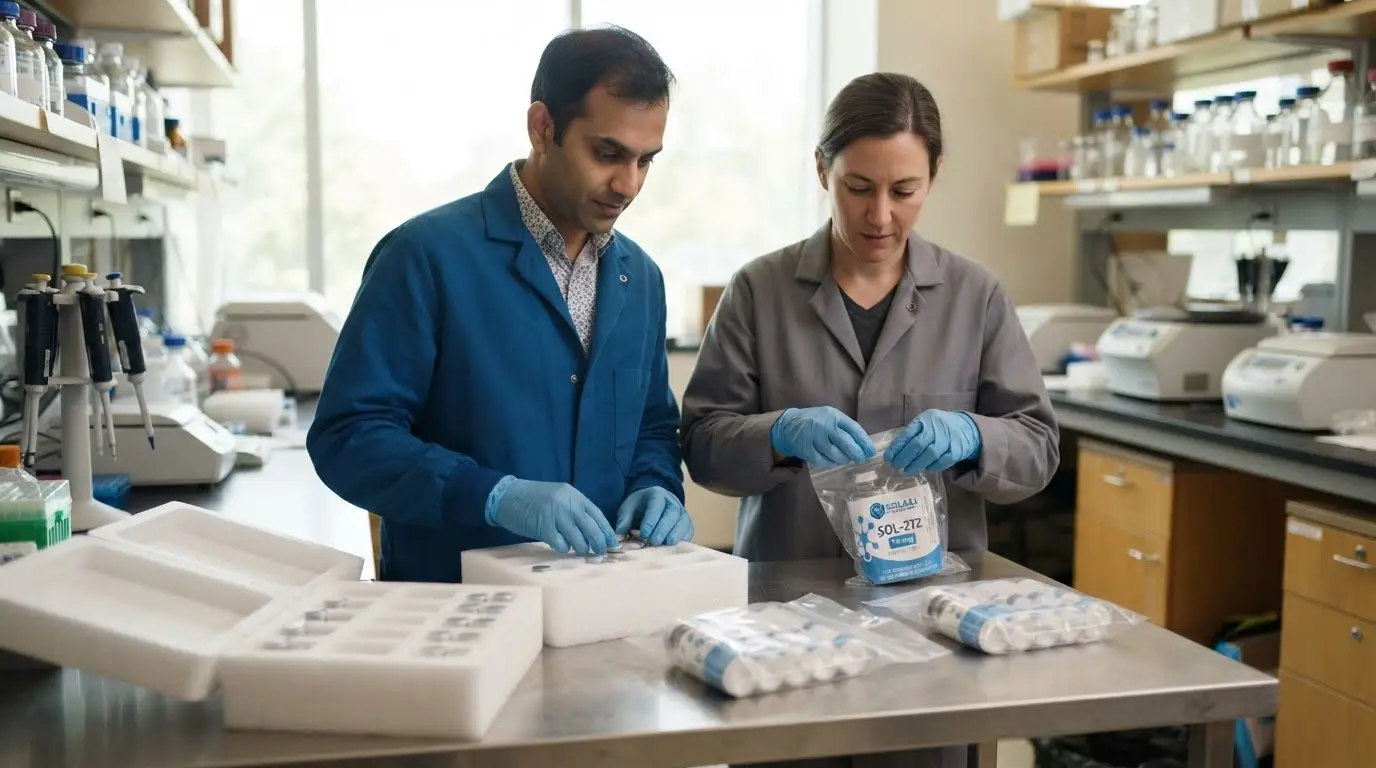
Link the calculation to the material used. Record the exact compound name and lot number, then review the corresponding batch-specific COA documentation for the identity and purity information it provides. Keeping the lot record alongside the calculation helps distinguish which research material was associated with a particular set of laboratory records.
Analytical documentation and experimental validation answer different questions. Batch paperwork can provide information about the material; it doesn’t establish that the peptide is suitable for a particular cell-culture design, confirm how it behaves under specific assay conditions, or guarantee an outcome. Third-party testing information is also distinct from evidence that a given experimental calculation or concentration has been validated.
Careful records strengthen repeatability without turning arithmetic into a protocol. For calculating peptide dosage for cell culture, preserve both the calculation and the reason for its inputs, then evaluate the material documentation separately from experimental evidence. To review research materials and their available product information, see the current research catalog.
Research-grade peptide documentation and next steps with Solara Compounds
Material procurement is easier to manage when supplier records fit the laboratory’s existing documentation practices. Researchers can decide how purchase records, source documents, and internal study references should be organized so that information remains accessible during review. The goal is a clear handoff from purchasing to research planning, without using supplier materials to set experimental conditions.
What batch documentation can and cannot tell researchers
Use supplier documents for the questions they are designed to address, and keep them distinct from the laboratory’s own methods and observations. A useful record system connects a purchased material with the applicable source documents while preserving the laboratory’s separate rationale for its research design. This makes it easier to review procurement decisions without treating supplier paperwork as a substitute for experimental evidence.
Solara Compounds is a U.S. supplier of research compounds. Researchers can use the COA resource as part of their materials-review process, then retain relevant records according to their laboratory’s established practices. The documents support material evaluation; the laboratory remains responsible for its experimental design and interpretation.
Choose a documented research supply route
Before a purchase, lab buyers can align material selection with the scope of their research and the recordkeeping approach used by their institution. After procurement, keeping source documents with the appropriate internal project records can reduce ambiguity during later review. These are practical organizational steps, not recommendations for a particular compound or cell model.
Solara Compounds provides product information through solaracompounds.com. Researchers can consider that information as part of a broader purchasing review while keeping experimental decisions grounded in their own research sources and laboratory methods. A supplier’s catalog helps identify available research materials; it doesn’t prescribe how those materials should be used in an experiment.
All products are for laboratory research only and are not for human or animal consumption. Shop research peptides for laboratory use.
Build calculation checks into your research records
As a next step, consider how your team will share calculation conventions across projects. A common format for recording units and notation can make collaboration clearer, especially when researchers compare methods or hand work between colleagues. Aligning these conventions with your laboratory’s existing review practices helps keep technical communication consistent.
For questions about Solara Compounds research materials, contact [email protected] or call 1 (877) 388-9178, Monday-Friday, 8 AM-5 PM Eastern. To explore the catalog, shop research peptides for laboratory use.
Frequently Asked Questions
How do you calculate peptide concentration for cell culture?
Calculate concentration by dividing the material amount by the solution volume, after aligning their units. In calculating peptide dosage for cell culture, the study design supplies the experimental concentration; arithmetic only translates that input into a corresponding volume or concentration. If a method specifies molar units while material records use mass units, molecular-weight information is needed for conversion. Don’t infer an experimental target from a calculator default.
What formula is used to calculate a peptide dilution?
The general dilution formula is C1V1 = C2V2. C1 is the starting concentration, V1 the transferred volume, C2 the target concentration, and V2 the final volume. It’s a mass-balance relationship: the represented amount remains equivalent across the calculation. Use compatible units throughout. The equation doesn’t select an appropriate experimental target or replace a laboratory’s validated method.
Can an online peptide calculator be used for cell-culture research?
A calculator may help check arithmetic if its inputs, assumptions, and outputs match the experimental question. A concentration or solution-volume result may be relevant to a culture calculation, but syringe-unit output doesn’t describe concentration in culture. Before relying on a result, compare the calculator’s definitions with the research design, verify unit conversions, and independently check the math. A generic tool isn’t an experimental recommendation.
What is the difference between peptide amount and peptide concentration?
Amount describes the mass of peptide material; concentration describes that amount relative to a defined volume. The distinction matters when reviewing separate records: a material amount alone can’t show the concentration in a stock solution or final culture volume. For clear comparisons, record both the amount and the volume it relates to, with units. This also helps another researcher understand what a reported value represents.
Does a peptide COA tell you what concentration to use in cell culture?
No. A batch-specific Certificate of Analysis documents batch-level identity and purity information; it doesn’t specify an experimental concentration or validate a cell-culture condition. Researchers should establish experimental inputs from the study design and suitable scientific sources. Reviewing a COA helps evaluate and identify research material, but it can’t establish assay performance or predict or guarantee experimental outcomes. Keep the material record separate from the evidence supporting the experimental design.
Why should calculations record units and batch details?
Unit labels make conversion errors easier to spot and let another researcher follow the arithmetic. Recording the exact compound name and lot number links laboratory notes to the specific material examined, which is useful when comparing records or reviewing a project later. Researchers and lab buyers in Boston, San Diego, San Francisco, New York, Houston, Miami, Los Angeles, Austin, Raleigh, Seattle, Chicago, Philadelphia, Baltimore, Dallas, Phoenix, Tampa, Atlanta, and Denver can use traceable records to support clarity, not guarantee a particular result.