Research Articles
Research Peptide Storage and Handling: A Guide to Maintaining Molecular Integrity

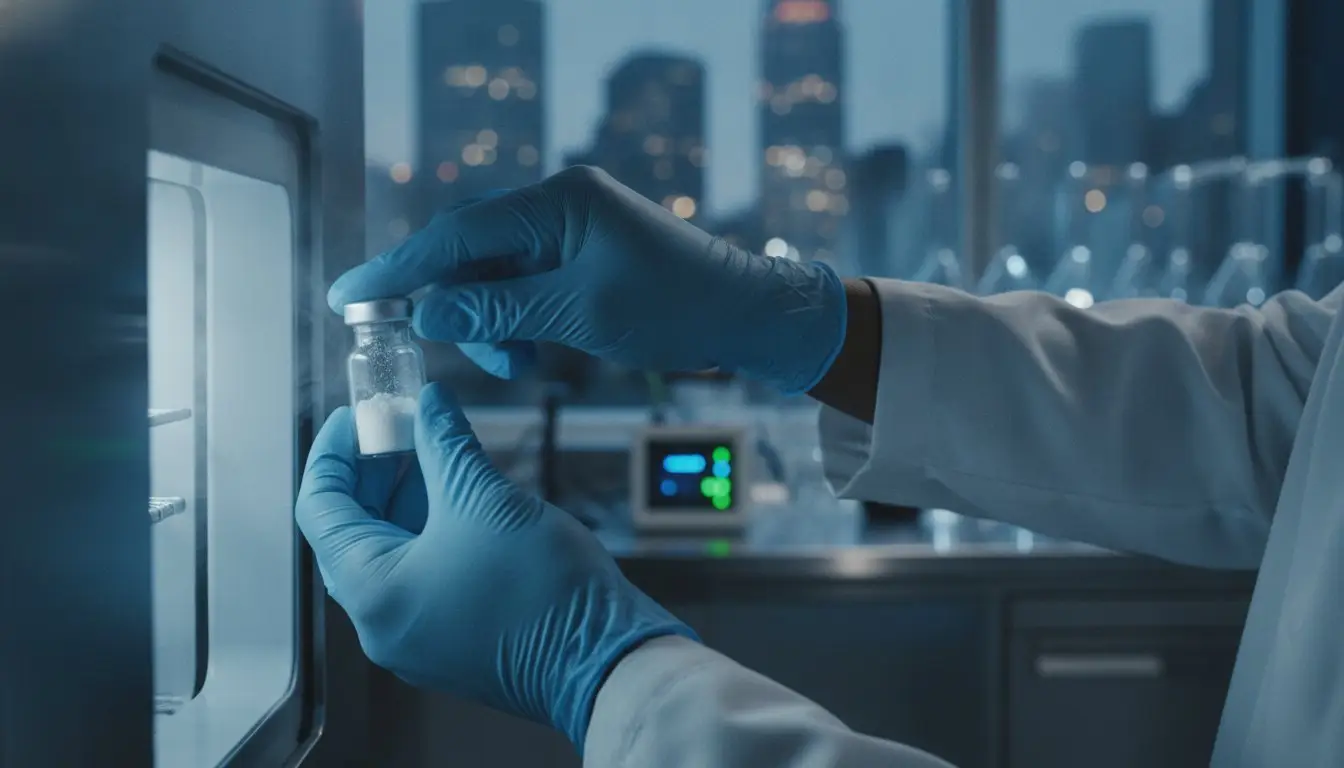
A single 10-degree Celsius increase in temperature can double the rate of chemical degradation for many sensitive laboratory compounds. This reality makes rigorous research peptide storage and handling the foundation of any successful study. It’s a common concern for researchers that improper climate control or moisture exposure might compromise expensive materials and lead to inconsistent data. You need confidence that your molecular assets, whether they’re SOL-3RT or BPC-157, remain stable throughout your project’s duration. These products are for laboratory research only and are not for human or animal consumption.
Solara Compounds understands that experimental reproducibility depends on the structural integrity of your materials. We’ve designed this guide to help you master the specific protocols required to maintain high-grade engineering in your lab. You’ll learn the actionable temperature thresholds for long-term storage, step-by-step procedures to minimize moisture contamination, and the science behind the vacuum-sealed vials provided at solaracompounds.com. By implementing these precise standards, you ensure the longevity of your research catalog and the accuracy of every result. We’ll bridge the gap between material science and your practical laboratory applications through logical, data-driven strategies.
Key Takeaways
- Identify how environmental factors like heat and moisture trigger hydrolysis to better protect the structural integrity of your research materials.
- Establish precise temperature standards for lyophilized powders, utilizing -20°C for standard preservation and -80°C for multi-year archiving.
- Implement rigorous research peptide storage and handling protocols, such as a mandatory warming period, to prevent moisture condensation before opening vials.
- Preserve molecular stability during the liquid phase by selecting appropriate laboratory solvents like BAC Water 10ml and avoiding damaging freeze-thaw cycles.
- Ensure analytical accuracy for all laboratory research by reviewing batch-specific HPLC and LC-MS documentation to verify the purity of every compound.
Understanding Peptide Stability and Environmental Degradation Pathways
Peptide stability refers to the preservation of a compound’s primary amino acid sequence and its specific secondary structure. Peptides are short chains of amino acids linked by covalent bonds; maintaining the strength of these bonds is the core objective of research peptide storage and handling. When researchers discuss molecular integrity, they’re primarily managing the environmental variables that trigger chemical or physical breakdown. Chemical degradation involves the alteration of the molecule through bond cleavage or modification, while physical degradation involves unfolding or aggregation. Both processes can render a compound useless for precise laboratory work. All products from Solara Compounds are for laboratory research only and are not for human or animal consumption.
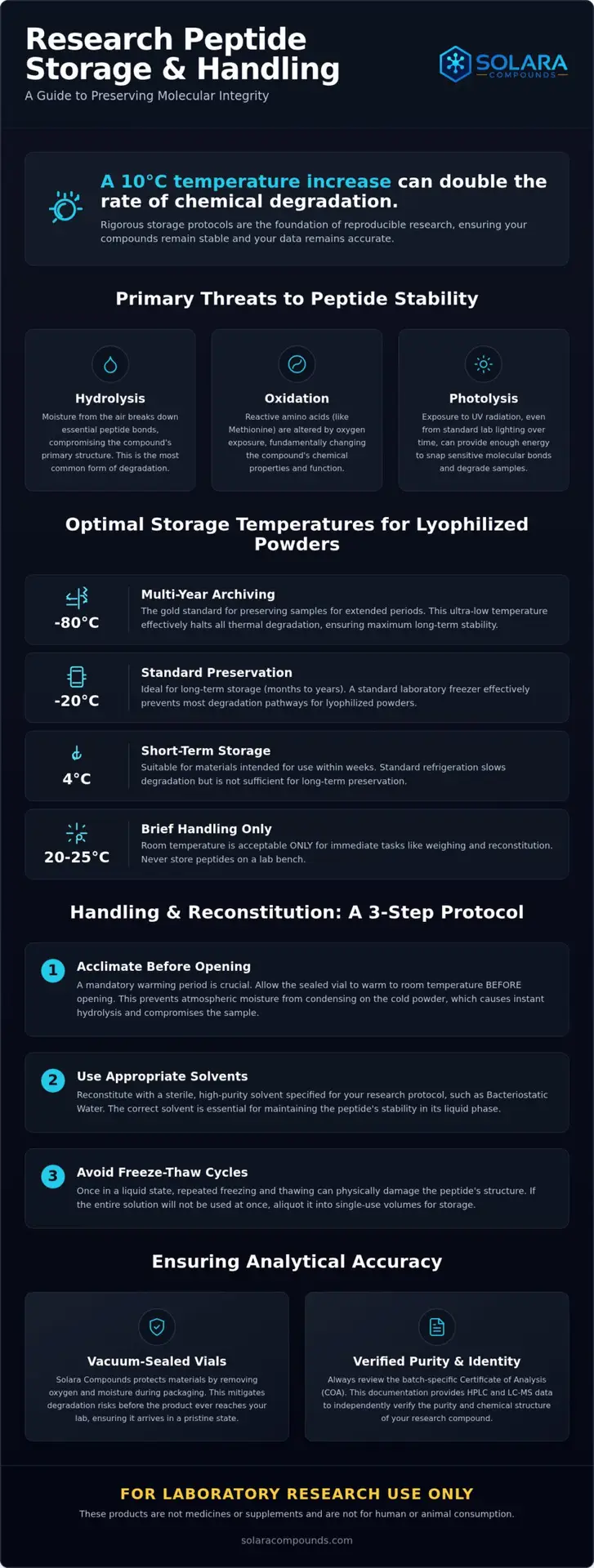
Hydrolysis represents the most significant chemical threat in a laboratory setting. It occurs when moisture in the environment provides the water molecules necessary to break the peptide bonds, a process often accelerated by temperature fluctuations or pH imbalances. Oxidation is another critical pathway, particularly for residues like Methionine and Cysteine. These sulfur-containing amino acids are highly reactive and can easily gain oxygen atoms, fundamentally changing the compound’s chemical properties. Additionally, light exposure can catalyze photolysis, where UV radiation provides enough energy to snap sensitive molecular bonds. Protecting your catalog from these specific stressors is the first step in successful material management.
The Role of Molecular Structure in Stability
A peptide’s sequence length and specific amino acid composition dictate its inherent vulnerability. Shorter sequences often lack the complex folding of larger proteins, yet they remain susceptible to terminal degradation. Secondary structures, such as alpha-helices or beta-sheets, provide organization but are prone to aggregation if the environment becomes unfavorable. Physical degradation often manifests as unfolding, where the peptide loses its three-dimensional shape. If these molecules clump together, they can no longer interact correctly with laboratory assays. Chemical degradation is more permanent, involving the actual cleavage of bonds that define the molecule’s identity. Accuracy in your results requires that both physical and chemical integrity are maintained.
Moisture: The Primary Catalyst for Degradation
Lyophilized peptide powders are naturally hygroscopic. They actively attract and hold water molecules from the surrounding air, which is a major concern for labs in coastal research hubs like Boston or San Diego. Atmospheric humidity is a silent contaminant that can introduce impurities before research even begins. It’s why research peptide storage and handling emphasizes a dry environment. At Solara Compounds, we prioritize vacuum sealing to mitigate this risk. By removing oxygen and moisture from the vial during the manufacturing process, we protect the long-term molecular integrity of products like SOL-3RT and BPC-157. This high-grade engineering ensures that the materials you receive at solaracompounds.com meet the rigorous standards of modern science. Maintaining a vacuum seal until the moment of use is a simple but effective protocol for preventing premature hydrolysis.
Optimal Storage Conditions for Lyophilized Research Powders
Maintaining the stability of lyophilized powders requires strict adherence to thermal protocols. While these freeze-dried cakes are more resilient than their liquid counterparts, they remain sensitive to thermal energy. Proper research peptide storage and handling ensures that the primary structure isn’t compromised by environmental stressors. These materials are for laboratory research only and are not for human or animal consumption. At Solara Compounds, we provide vacuum-sealed vials to ensure that the initial purity is maintained during transit and storage.
Temperature Benchmarks for Laboratory Use
Room temperature (20 to 25°C) is acceptable only for the brief windows required for weighing or transfer. Exposure beyond a few hours can initiate slow degradation, as thermal energy increases molecular collisions. Refrigeration at 4°C serves well for short-term investigative phases, typically up to four weeks. For long-term preservation, deep freezing at -20°C is the industry standard. If you intend to archive materials for multiple years, -80°C is necessary to halt almost all molecular motion. Following established Peptide Handling and Storage Protocols is vital for maintaining high-purity compounds like SOL-3RT and BPC-157.
The Danger of Temperature Fluctuations
Frost-free freezers are detrimental to peptide stability. These units use a heating element to prevent ice buildup, causing the internal temperature to cycle several times a day. Such fluctuations can damage the delicate lyophilized cake and lead to premature degradation through structural collapse. In the context of peptide lyophilization, the glass transition temperature is the specific thermal point where the material shifts from a rigid, glassy state to a more mobile, rubbery state, significantly increasing the risk of chemical reactions. It’s best to use dedicated laboratory freezers rather than shared units that are opened frequently. Constant door openings introduce warm air, which can lead to moisture condensation inside the vials even if they’re capped.
Proper research peptide storage and handling also requires meticulous documentation. Every vial in your inventory should feature a clear label including the product name, lot number, and date received. This traceability is essential for independent research validation and aligns with the batch-specific COAs provided at solaracompounds.com. Solara Compounds ensures each shipment is vacuum-sealed to provide an extra layer of protection against transit-related variables. If you’re building a library of high-purity materials, you can view our research-grade catalog to see available compounds and documentation.
Handling and Reconstitution: Best Practices for Liquid Phase Research
Transitioning from long-term preservation to active laboratory work introduces new risks to molecular integrity. While deep freezing stabilizes the compound, the phase change during reconstitution is a delicate process. Proper research peptide storage and handling protocols must extend into the liquid phase to ensure that your experimental data remains valid. These products are for laboratory research only and are not for human or animal consumption. Maintaining the high-grade engineering found in Solara Compounds materials requires a methodical approach to dissolution.
Preventing Condensation During Transfer
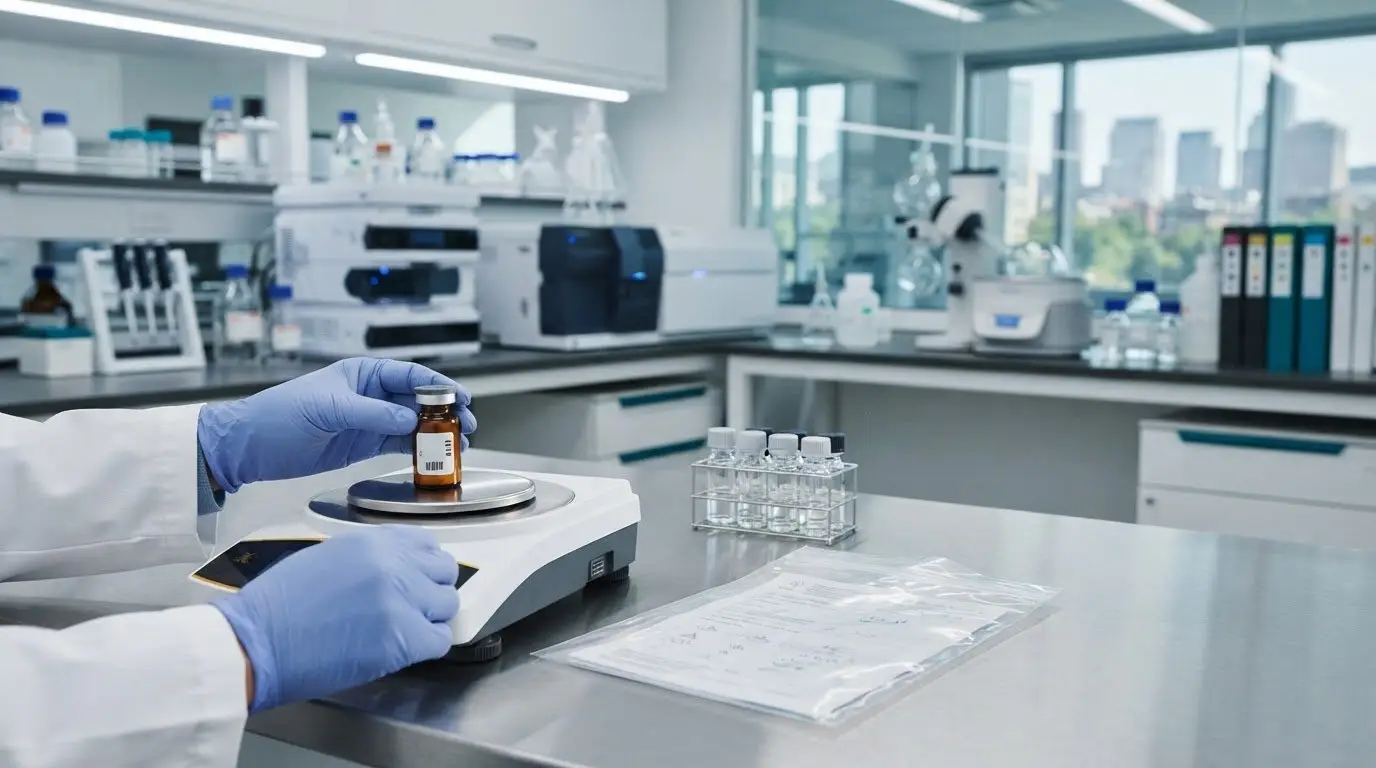
The warming period is the most overlooked step in peptide management. When you remove a vial from cold storage, you must allow it to reach room temperature before breaking the seal. This 30-minute rule is essential because opening a cold vial in a humid room causes immediate moisture condensation on the lyophilized powder. This ingress of water triggers hydrolysis, the chemical breakdown of peptide bonds, before your research even begins. If you’re weighing out small quantities, work quickly in a low-humidity environment to prevent the hygroscopic powder from absorbing atmospheric moisture. Precision at solaracompounds.com starts with these foundational handling steps.
Selecting the correct solvent is equally important for maintaining stability. For most laboratory applications, BAC Water 10ml is the preferred choice because the 0.9% benzyl alcohol inhibits microbial growth during the study. Mechanical handling during this phase should be gentle. You should swirl the vial slowly rather than using a vortex mixer or shaking it vigorously. High-energy mechanical stress can shear the delicate secondary structures of the molecule. Following established Peptide Handling, dissolution & Storage guidelines helps prevent these physical degradation pathways.
Stability Post-Reconstitution
Peptides are significantly more fragile once they’re in a liquid state. In solution, the molecules have greater freedom of movement, which increases the frequency of collisions and the rate of chemical reactions like oxidation. While lyophilized powders can last years, reconstituted peptides at 4°C generally have a stable shelf-life of only a few days to a few weeks, depending on the sequence. If your study requires a longer timeline, you shouldn’t keep the entire batch in a single container.
Implementing an aliquoting strategy is the best way to manage liquid samples. By dividing the solution into single-use volumes, you avoid the damaging freeze-thaw cycles that occur when a large bottle is repeatedly cooled and warmed. Each thaw event introduces mechanical stress from ice crystal formation, which can snap the peptide chain. Accuracy in research depends on using fresh, non-degraded samples for every trial. This structured approach to research peptide storage and handling ensures your results are a reflection of the compound’s properties, not its degradation.
Laboratory Protocols for Long-Term Storage and Shipping
Laboratory projects often require the institutional transfer of materials or multi-year archiving. Maintaining high-purity standards during these transitions is a core challenge in research peptide storage and handling. These products are for laboratory research only and are not for human or animal consumption. When preparing peptides for transfer, you must ensure they remain in their lyophilized state and are protected from thermal shocks. Solara Compounds prioritizes these factors to ensure that materials like SOL-3RT or BPC-157 arrive with their molecular integrity intact.
Managing US Domestic Shipping Realities
Standard shipping protocols often overlook the environmental extremes found in high-heat regions like Florida or Texas. Solara Compounds optimizes logistics from our Florida base to ensure minimal environmental exposure during domestic transit. We utilize insulated packaging and cold packs to counteract the ambient temperatures encountered during the shipping process. Fast U.S. shipping is a critical component of our quality control chain. It reduces the time a compound spends outside of a temperature-controlled environment before it reaches your facility. Upon receiving a shipment from solaracompounds.com, researchers should perform an immediate inspection. Verify the vacuum seal is intact and transfer the vials to a -20°C freezer without delay.
Archiving and Lot Traceability
Effective archiving relies on structured documentation and precise environmental control. Organize your research catalog by lot number to enable seamless batch-specific COA cross-referencing. This ensures that every experiment is backed by verifiable analytical data and high-grade engineering. We recommend using secondary storage containers with desiccants to combat any residual moisture that might enter during frequent freezer access. You can learn more about our sourcing and verification process to understand how we maintain these standards before the product reaches your laboratory.
If you suspect a storage failure, such as a freezer malfunction, immediate assessment is necessary. While visual changes in the lyophilized cake can indicate moisture ingress, they don’t always reveal chemical degradation. In such cases, analytical re-verification via HPLC or LC-MS is the only way to confirm molecular integrity before proceeding with laboratory work. Solara Compounds provides the documentation necessary to baseline these evaluations and ensure experimental reproducibility. To maintain a consistent supply of verified materials for your study, you can shop our high-purity research catalog.
Ensuring Analytical Accuracy with Solara Compounds Quality Standards
Analytical accuracy represents the final metric of success for any laboratory study. While rigorous research peptide storage and handling protocols preserve molecular integrity, the foundation of experimental reproducibility is the initial purity of the compound. Solara Compounds utilizes advanced analytical techniques, including High-Performance Liquid Chromatography (HPLC) and Liquid Chromatography-Mass Spectrometry (LC-MS), to verify both the identity and the purity of every batch. HPLC provides a quantitative measure of purity, targeting levels above 98%, while LC-MS confirms the exact molecular mass of the amino acid sequence. These products are for laboratory research only and are not for human or animal consumption.
Sterile lyophilization within ISO 7 cleanrooms is the primary driver of storage longevity. By removing moisture and oxygen in a controlled, sterile environment before vacuum sealing, we eliminate the biological and chemical catalysts for degradation. This high-grade engineering ensures that the lyophilized cake remains stable during transit and long-term archiving. If you have questions regarding technical data or institutional procurement, our support team is available at support@solaracompounds.com or 1 (877) 388-9178, Monday–Friday, 8 AM–5 PM Eastern. We’re here to act as a knowledgeable guide for your technical challenges.
Transparency Through Documentation
Lab buyers should always review the batch-specific COA before initiating any experimental protocols. This documentation provides a transparent record of the specific lot’s performance, allowing researchers to account for any minor variations in their data. We maintain a strict commitment to third-party testing through Kovera Labs to ensure our internal quality metrics are independently validated. Understanding these purity metrics is essential for research reliability; a purity level of >98% ensures that trace impurities don’t interfere with your laboratory assays. This level of transparency is why many institutions choose us as their support partner.
Procuring Research-Grade Compounds
Our e-commerce platform at solaracompounds.com provides direct access to high-purity materials for institutional use. You can easily procure specialized compounds such as BPC-157 10mg and SOL-3RT with full confidence in their analytical baseline. We support multi-phase research projects and institutional buyers who require consistent lot numbers for longitudinal studies. Every order is processed with the understanding that these materials are Research Use Only (RUO). They aren’t medicine, aren’t supplements, and aren’t for people or animals. By combining precise manufacturing with the research peptide storage and handling standards outlined in this guide, you can maintain the highest level of molecular integrity in your laboratory catalog. Shop research peptides at solaracompounds.com to see our current inventory and documentation.
Advancing Laboratory Precision with Standardized Protocols
Masterful research peptide storage and handling is the final safeguard for your experimental data. By respecting thermal benchmarks and implementing a strict warming period before opening vials, you protect your molecular assets from the silent threat of hydrolysis. Transitioning these compounds into the liquid phase requires a disciplined approach to aliquoting to prevent the mechanical stress of repeated freeze-thaw cycles. These products are for laboratory research only and are not for human or animal consumption.
Solara Compounds supports your long-term project success with high-purity materials verified through third-party testing at Kovera Labs. Every lot includes batch-specific COAs to ensure your baseline is always documented and accurate. We also offer free US shipping on orders over $200 to ensure your catalog remains stocked with the highest grade engineering available at solaracompounds.com. You can trust our vacuum-sealed vials to maintain structural integrity from our facility to your laboratory bench.
View the Current Research Catalog at Solara Compounds
With these rigorous protocols in place, you can move forward with your study with absolute confidence. Your results will stand on a foundation of structural integrity and scientific excellence, ensuring that every data point is a true reflection of your research objectives.
Frequently Asked Questions
How long can lyophilized peptides be stored at room temperature?
Lyophilized peptides remain stable at room temperature for approximately two to four weeks depending on the specific sequence. Stability varies. While freeze-dried powders are resilient during transit to laboratories in San Francisco or Houston, extended exposure to 20-25°C can initiate slow molecular breakdown. These products are for Research Use Only (RUO) and not for human or animal consumption. Solara Compounds provides vacuum-sealed vials to help mitigate environmental stressors during these brief periods of ambient exposure.
Why should I avoid frost-free freezers for peptide storage?
You should avoid frost-free freezers because they utilize internal heating elements to prevent ice accumulation. These periodic defrost cycles cause the internal temperature to fluctuate significantly, which is detrimental to research peptide storage and handling. Constant temperature cycling can lead to structural collapse of the lyophilized cake and accelerate chemical degradation. Laboratories in Seattle or Chicago should use dedicated manual-defrost units to ensure a stable thermal environment for high-purity materials like SOL-3RT.
What is the best solvent for reconstituting research peptides?
The optimal choice for most laboratory applications is BAC Water 10ml, which contains 0.9% benzyl alcohol to inhibit microbial growth. This is particularly important for multi-day studies in busy research environments like those in New York or Los Angeles. If the compound is highly hydrophobic, specific buffers or organic solvents may be required as indicated in the batch-specific COA. Solara Compounds provides these solvents to ensure compatibility. Always ensure solvents are at room temperature before introduction.
How many freeze-thaw cycles can a peptide survive?
Peptides should ideally undergo zero freeze-thaw cycles once reconstituted because the formation of ice crystals can physically shear the delicate molecular chains. Repeated cycling between -20°C and room temperature causes cumulative damage that compromises experimental reproducibility. Researchers in Miami or Tampa should implement an aliquoting strategy, dividing the solution into single-use volumes. This ensures that each sample is thawed only once, preserving the structural integrity required for precise analytical work at solaracompounds.com.
Can I store different peptides in the same freezer container?
You can store different peptides in the same freezer container provided each vial is hermetically sealed and meticulously labeled with its unique lot number. Cross-contamination is rarely a risk for vacuum-sealed lyophilized powders, but organization is key for maintaining a reliable research catalog. Using secondary containers with desiccants is a standard protocol for laboratories in Boston or Austin. This setup protects the vials from residual moisture when the freezer is accessed for other projects or institutional transfers.
How do I know if my peptide has degraded during storage?
Physical changes such as a yellowing of the powder or a visible collapse of the lyophilized cake often indicate moisture ingress and potential degradation. However, chemical breakdown is frequently invisible to the naked eye. The only way to definitively verify integrity after a suspected storage failure is through analytical re-testing via HPLC or LC-MS. Solara Compounds provides batch-specific documentation to help researchers in Dallas or Philadelphia baseline their results against the original purity metrics verified by third-party testing.
Does light exposure affect the stability of research compounds?
Light exposure significantly impacts the photostability of certain research compounds, particularly those containing aromatic amino acids. UV radiation can catalyze oxidation or trigger photolysis, which involves the breaking of chemical bonds by light energy. Most research peptide storage and handling protocols require vials to be kept in the dark or in amber containers. Facilities in sunny regions like San Diego or Phoenix must be especially vigilant about keeping storage units away from direct light sources to prevent premature degradation.
What is the shelf life of a reconstituted peptide at 4°C?
Once reconstituted, most peptides have a stable shelf life of approximately seven to fourteen days when stored at 4°C. The specific duration depends heavily on the peptide sequence and the pH of the solvent used. For researchers in Atlanta, Raleigh, or Baltimore, it’s best to use liquid samples as quickly as possible. If a project requires a longer timeline, aliquoting and re-freezing at -20°C in a Denver facility is the preferred method for maintaining molecular integrity.