Research Articles
Peptide Buying Guide: Consistent Batch-to-Batch Supply

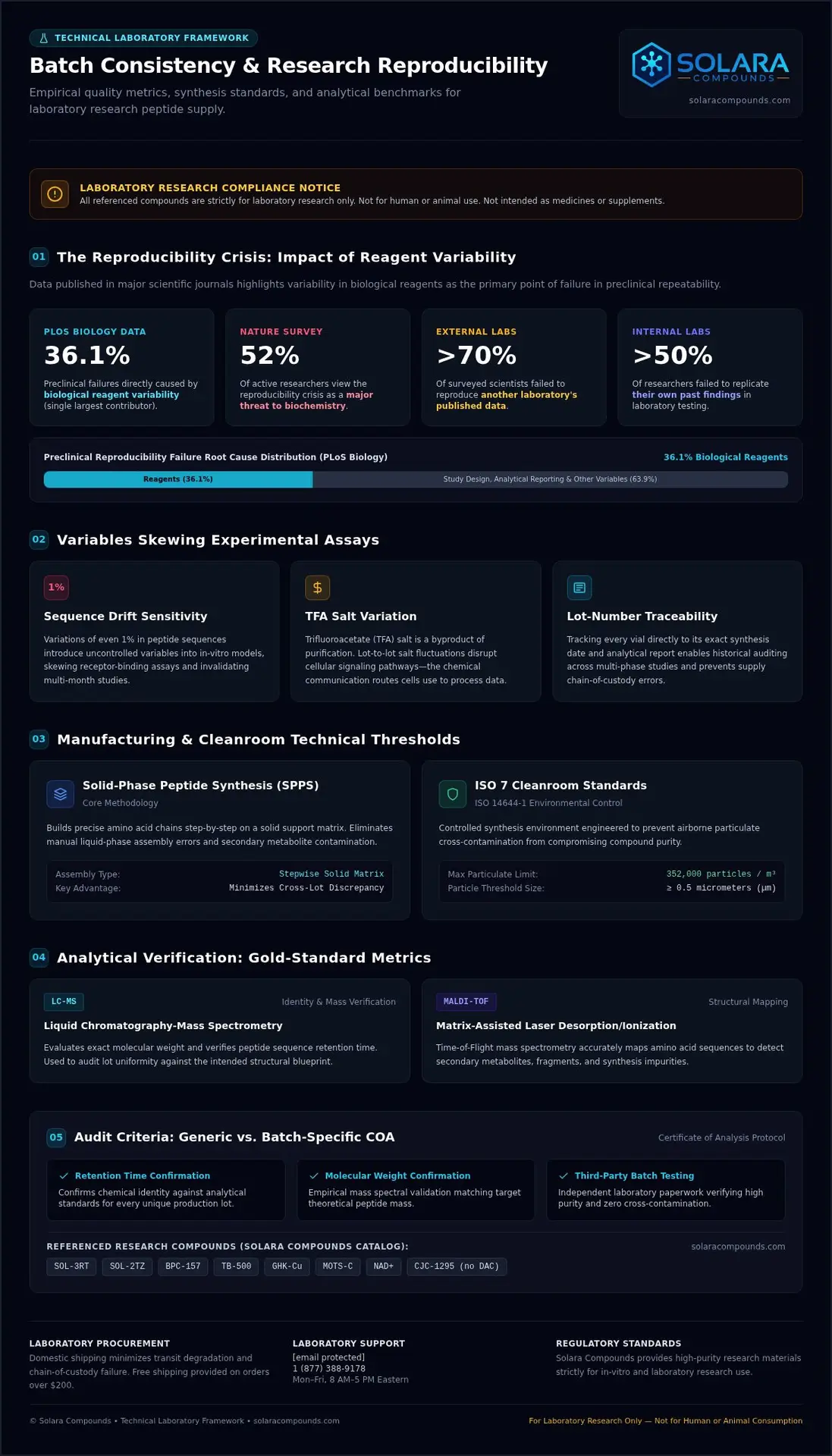
Data from PLoS Biology indicates that 36.1% of preclinical research reproducibility failures are directly attributable to biological reagent variability. This represents the single largest contributor to non-replicable studies, outstripping errors in study design or analytical reporting. You understand that your data is only as reliable as the compounds you introduce into your assays. Securing a consistent batch-to-batch peptide supply is not just a procurement preference; it’s a fundamental requirement for scientific integrity.
This guide provides a technical framework for evaluating peptide suppliers based on empirical quality metrics. You’ll learn how to audit manufacturer documentation, interpret certificates of analysis, and implement procurement strategies for compounds like BPC-157 or SOL-3RT. We’ll examine the role of ISO 7 cleanrooms and third-party verification in maintaining structural integrity across different lots. At Solara Compounds, we prioritize these rigorous standards to ensure your laboratory work remains precise and reproducible. All products available at solaracompounds.com are for laboratory research only. These compounds are not medicines or supplements and are not for human or animal use.
Key Takeaways
- Learn how slight variations in peptide sequences can compromise experimental data and why maintaining a consistent batch-to-batch peptide supply is essential for peer-reviewed validation.
- Understand the role of Solid-Phase Peptide Synthesis (SPPS) and ISO 7 cleanroom environments in preventing cross-contamination and ensuring structural integrity.
- Discover how to distinguish between generic and batch-specific Certificates of Analysis (COA) by identifying critical metrics like retention time and molecular weight confirmation.
- Explore strategies for securing single-lot bulk supplies to maintain continuity in long-term longitudinal studies while avoiding the logistical risks of international shipping.
- Review the Solara Compounds catalog at solaracompounds.com to source high-purity compounds like BPC-157 and TB-500, which are provided for laboratory research only and not for human consumption.
The Impact of Batch Consistency on Research Reproducibility
Scientific integrity rests on a single pillar: repeatability. Batch consistency refers to the uniformity of chemical identity, purity, and concentration across different production lots. When a researcher transitions from one vial to the next, the molecular profile must remain identical. If peptide sequences vary by even 1%, the resulting data drift can render months of work invalid. Maintaining a consistent batch-to-batch peptide supply ensures that the only variables in your experiment are the ones you intend to test.
The scientific community is currently grappling with a significant Reproducibility Crisis. A survey by Nature revealed that 52% of active researchers believe this crisis is a major threat to biochemistry. Over 70% of participants failed to reproduce another laboratory’s published data, and more than half failed to replicate their own past findings. Reagent variability is a primary culprit. Lot-to-lot variation introduces uncontrolled variables into in-vitro experimental models, skewing receptor-binding assays or disrupting cellular signaling pathways. These pathways are the specific chemical communication routes cells use to process information. Without high-grade laboratory compounds, these biological signals become impossible to measure accurately.
Identifying the Risks of Poor Quality Control
Cheap peptides often lead to expensive laboratory failures. During solid-phase peptide synthesis, secondary metabolites and synthesis byproducts can emerge as contaminants. These impurities may interfere with sensitive biological assays. For instance, the impact of salt content, specifically trifluoroacetate (TFA), is a critical factor in cellular signaling research. TFA is a common byproduct of the purification process. If one batch contains significantly different salt concentrations than the next, your quantitative results won’t align. Researchers choosing Solara Compounds benefit from a documentation-first approach that accounts for these technical variables before the compounds ever reach the lab bench. Every vial is intended for laboratory research only.
The Role of Lot-Number Traceability
Lot tracking is the process of connecting a specific vial to its exact synthesis date and independent analytical report. This transparency allows lab buyers to audit historical data consistency across multi-phase studies. If an unexpected result occurs, the lot number is the first point of investigation. It’s the difference between guessing and knowing. Solara Compounds maintains a strict commitment to transparent lot-tracking for all research-grade materials, including BPC-157 and SOL-3RT. By visiting solaracompounds.com, researchers can access batch-specific paperwork that verifies the integrity of their supply. These products are not for human or animal consumption and are not supplements or medicines. Securing a consistent batch-to-batch peptide supply from a domestic source reduces the risk of chain-of-custody issues often found with international vendors.
Technical Standards for Consistent Peptide Synthesis
Achieving a reliable consistent batch-to-batch peptide supply requires strict adherence to advanced manufacturing protocols. Solid-Phase Peptide Synthesis (SPPS) serves as the core methodology for building precise amino acid chains. This chemical process assembles peptides step-by-step on a solid support, minimizing the human errors often associated with older liquid-phase methods. To maintain this precision, synthesis must occur within an ISO 7 cleanroom environment. Under the current ISO 14644-1 standard, these controlled spaces permit a maximum of 352,000 particles per cubic meter for particles greater than or equal to 0.5 micrometers. This rigorous environmental control prevents cross-contamination from airborne particulates that could otherwise degrade the final product.
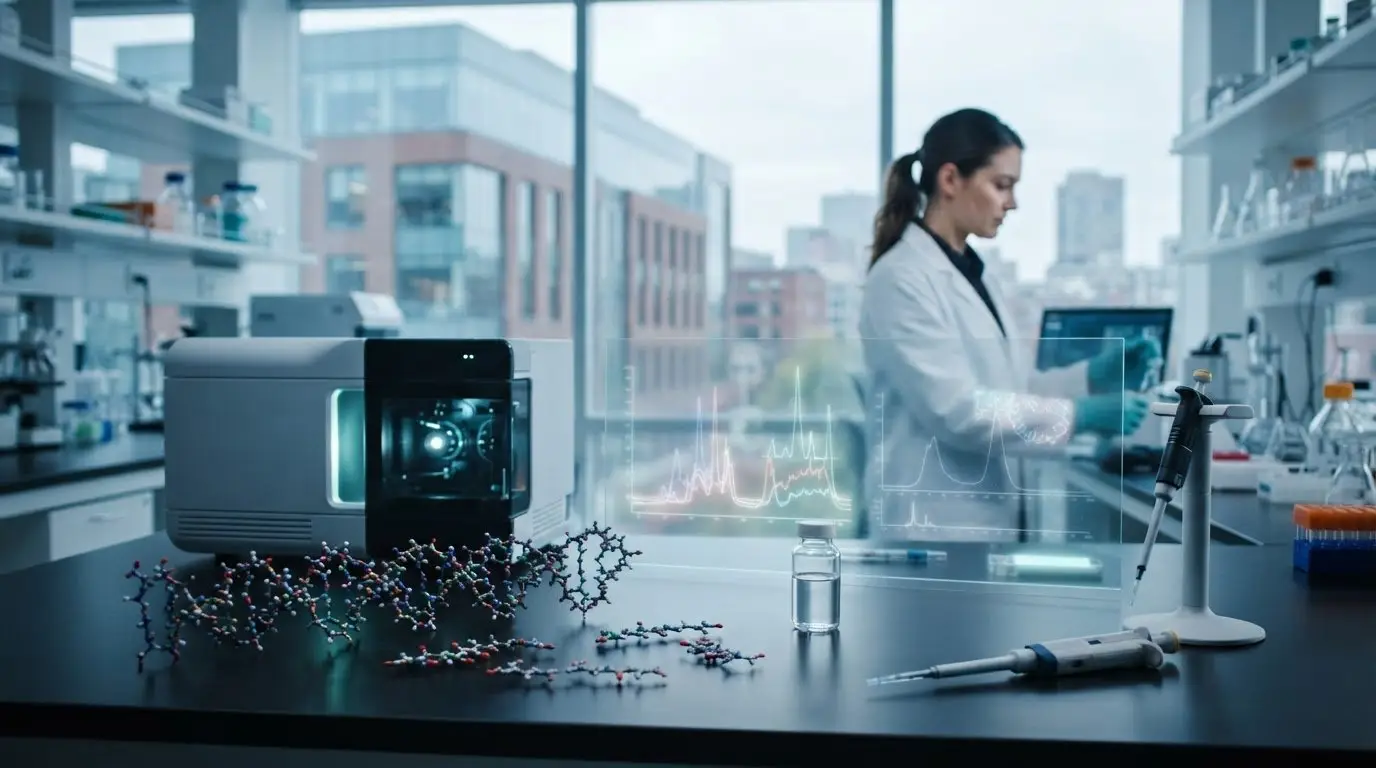
Once synthesis is complete, molecular confirmation techniques verify that the compound matches the intended structural blueprint. Liquid Chromatography-Mass Spectrometry (LC-MS) and Matrix-Assisted Laser Desorption/Ionization Time-of-Flight (MALDI-TOF) mass spectrometry represent the analytical gold standards. These methods evaluate exact molecular weight and map the amino acid sequence to ensure absolute identity confirmation, reflecting the type of rigorous assessment found in formal FDA guidance on synthetic peptide quality standards. Following verification, sterile lyophilization, or freeze-drying, removes residual moisture while vacuum-sealing preserves the structural integrity of lyophilized peptides for long-term laboratory use.
Precision in Solid-Phase Synthesis
Automated synthesis systems provide vastly superior batch-to-batch repeatability compared to manual alternatives. These systems precisely regulate temperature, reaction times, and reagent volumes during the coupling process, which is the step where individual amino acids join the chain. This extreme automation controls for sequence accuracy and prevents deletion mutations. Because structural drift compromises experimental outcomes, Solara Compounds targets a minimum of greater than 98% High-Performance Liquid Chromatography (HPLC) purity for all catalog items, with typical production batches reaching 99% or higher. Lab buyers can explore these highly verified options in the Solara Compounds research catalog, where all materials are prepared strictly for laboratory research only.
Lyophilization and Storage Stability
The science of freeze-drying is critical for maintaining long-term peptide stability in the lab. Lyophilization sublimates ice directly into vapor under a vacuum, bypassing the liquid phase to create a stable, porous cake. This structure dissolves easily during reconstitution for laboratory assays. Immediately following this process, vials are vacuum-sealed to prevent oxidation and moisture degradation during shipping and storage. For detailed protocols on maintaining these materials, researchers can review the guide on Lyophilized Peptides: Storage and Handling for Longevity. Remember that these research tools are not for human consumption, are not medicines or supplements, and must be handled exclusively by qualified personnel within a controlled environment.
Auditing Supplier Documentation: Interpreting the COA
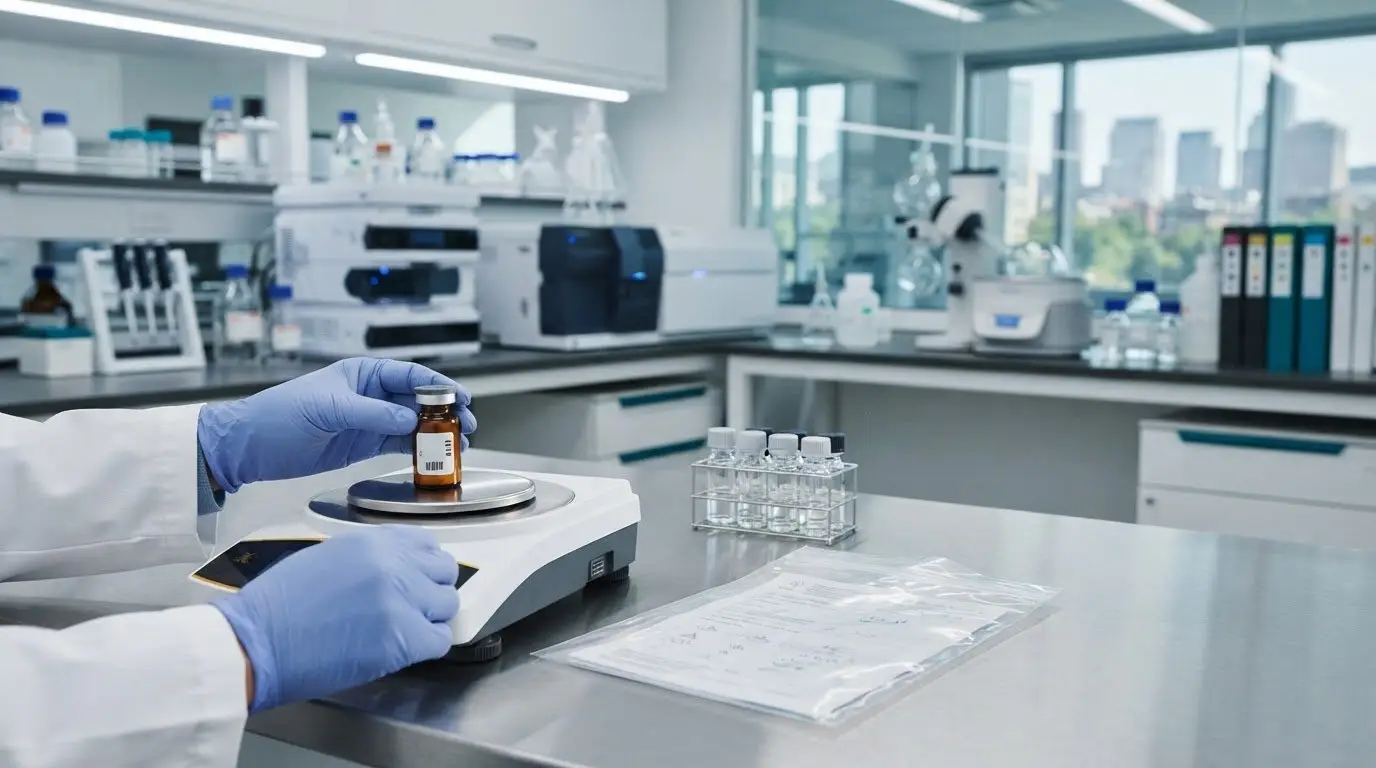
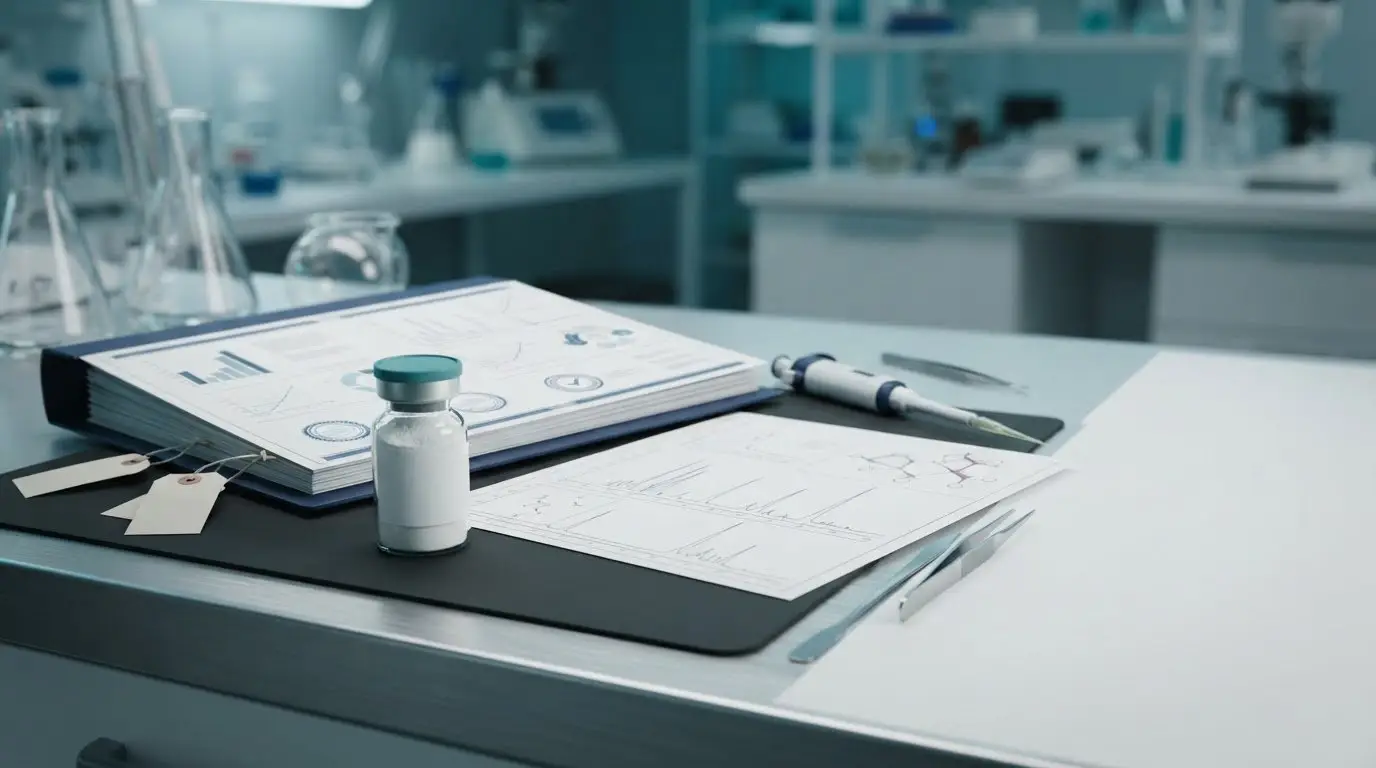
Evaluating a Certificate of Analysis (COA) is a mandatory step for any laboratory procurement officer. However, many vendors provide generic, static documentation rather than lot-specific reports. A generic COA is simply a representative sample sheet reused across multiple production cycles, whereas a batch-specific COA links a unique lot number directly to the specific vial on your bench. Relying on outdated paperwork introduces severe risks to experimental consistency. To ensure a truly consistent batch-to-batch peptide supply, researchers must inspect the precise analytical data for every individual order.
Independent third-party testing provides an unbiased layer of verification that internal supplier claims cannot match. For example, Solara Compounds partners with Kovera Labs to conduct independent analytical testing on every production lot. This process cross-references structural identity and purity before the materials are released for laboratory use. To verify the documentation for a specific lot, researchers can access the public portal at the Solara Compounds COA Repository. Every compound sold is intended for laboratory research only, and is not a medicine, supplement, or drug for human or animal consumption.
HPLC Analysis: Reading the Purity Peak
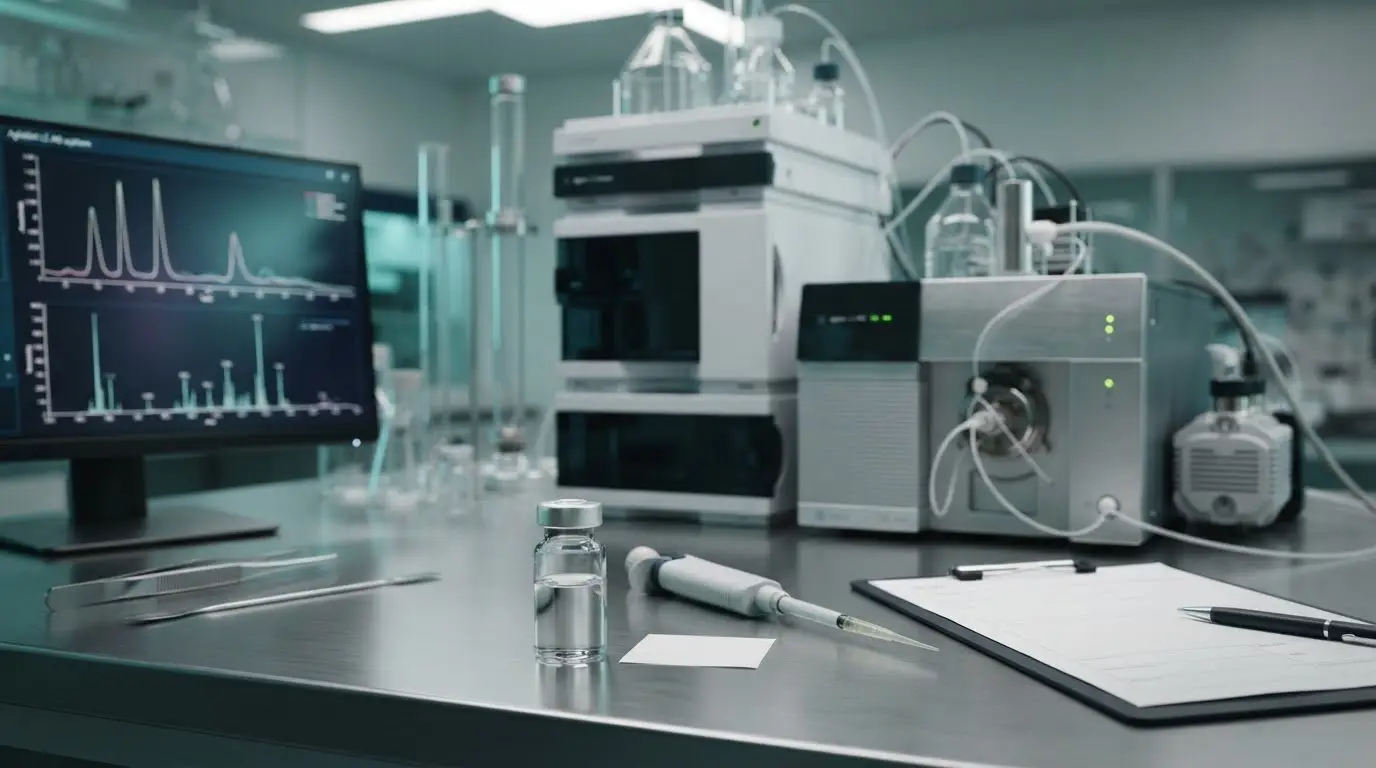
High-Performance Liquid Chromatography (HPLC) is an analytical chemistry tool used to separate, identify, and quantify each component in a mixture to measure chemical purity in a research setting. When reviewing an HPLC chromatogram, the primary target is the main integration peak, which represents the pure peptide. Synthesis impurities appear as small side peaks or shoulders flanking this central signal. These secondary peaks indicate the presence of truncated sequences or deletion mutations that occurred during assembly. A clean chromatogram with a sharp, isolated peak confirms that the compound meets high purity thresholds, minimizing the presence of background noise in your biological models.
LC-MS: Confirming Molecular Identity
While HPLC measures purity, it cannot confirm that the synthesized material is the exact compound you ordered. Liquid Chromatography-Mass Spectrometry (LC-MS) solves this by confirming the precise peptide sequence based on mass-to-charge ratios. The resulting spectrum provides an experimental molecular weight that must match the theoretical peptide mass calculated from the amino acid sequence. If the mass deviates, the target sequence is incorrect, regardless of how pure the HPLC peak appears. For a deeper understanding of how these dual verification methods protect your data, read about Independent Peptide Lab Testing: Purity & Verification. Maintaining these strict standards at solaracompounds.com ensures that your long-term research projects rest on verifiable empirical data.
Procurement Strategies for Long-Term Research Projects
Longitudinal studies, which track specific variables over extended periods, require a consistent batch-to-batch peptide supply to maintain a stable baseline. If a researcher reorders a compound six months into a project and the new lot has a slightly different purity or salt concentration, the resulting data may shift. This makes it impossible to determine if the change was due to the experimental variable or the reagent itself. Institutional buyers often mitigate this by securing bulk quantities from a single lot number at the start of a study. This strategy eliminates reagent-induced noise and ensures that every assay performed over the multi-phase project uses identical material.
Securing wholesale research peptides USA from a domestic source is the most effective way to maintain a consistent batch-to-batch peptide supply while avoiding international chain-of-custody issues. Domestic sourcing allows for better oversight of the manufacturing environment and simpler auditing of batch paperwork. Solara Compounds provides these high-purity materials strictly for laboratory research only. These compounds are not medicines, not supplements, and are not for human or animal consumption.
Bulk and Wholesale Purchase Agreements
Large-scale procurement contracts are essential for supporting multi-year research initiatives. These agreements allow laboratories to reserve specific lots of compounds like SOL-3RT 10mg or SOL-2TZ 10mg. By securing a single production run, institutions avoid the risks of sequence drift or impurity fluctuations that can occur between different synthesis cycles. Solara Compounds offers tiered pricing structures for institutional peptide supply. To discuss high-volume requirements or request a custom quote for your facility, you can contact Solara Compounds Support at support@solaracompounds.com.
Domestic vs. International Sourcing
Sourcing materials from international vendors introduces significant logistical risks that can compromise scientific data. Customs seizures lead to project delays, while temperature fluctuations during long-haul transit can damage the structural integrity of sensitive lyophilized powders. A domestic supplier provides superior control over the cold chain. Solara Compounds operates from Florida, offering rapid fulfillment to major research hubs like San Diego or Boston. Fast shipping within the United States ensures that compounds arrive quickly, minimizing environmental exposure. Additionally, Solara Compounds provides free shipping on orders over $200, making it a cost-effective choice for labs managing tight budgets. You can shop research peptides at solaracompounds.com to secure high-purity materials for your next laboratory project.
Sourcing High-Purity Compounds from Solara Compounds
Solara Compounds functions as a bridge between complex material science and your laboratory’s practical applications. Our “Documentation-First” philosophy ensures that every vial is backed by science-forward data rather than marketing fluff. We understand that your research depends on precision; therefore, we prioritize the structural integrity of every compound we synthesize. By maintaining a consistent batch-to-batch peptide supply, we act as a reliable partner in your long-term scientific success. This focus on repeatability allows you to correlate your experimental results with high-purity chemical inputs, ensuring that your data remains valid during peer review.
Our commitment to quality is rooted in rigorous engineering. All synthesis occurs within ISO 7 cleanrooms to minimize particulate interference. Following production, we utilize third-party verification through Kovera Labs to confirm purity and identity via LC-MS and MALDI-TOF analysis. This multi-layered verification process ensures that the compounds you receive meet the highest technical standards. It’s important to remember that all products from Solara Compounds are for Research Use Only (RUO). These compounds are not medicines, not supplements, and are not for human or animal consumption. They must never be used for any purpose outside of a controlled laboratory environment. Our no-nonsense approach to craftsmanship means we value empirical results above all else.
Featured Research Compounds
The Solara Compounds catalog includes a diverse range of high-purity materials designed for specific in-vitro and biochemical investigations. We provide SOL-3RT and SOL-2TZ for researchers focused on metabolic pathway investigations. For those studying regenerative and tissue-signaling models, we offer BPC-157 10mg and TB-500. Additionally, GHK-Cu 50mg is available for cellular and mitochondrial research. Every item in our catalog is synthesized to target a minimum of 98% purity, providing the reliability your data requires. We don’t just sell compounds; we provide the foundational tools for reproducible science.
Next Steps for Qualified Researchers
Qualified researchers and procurement officers can register for institutional pricing to support large-scale or multi-phase projects. This ensures your lab has a steady, predictable supply of the materials needed for continuous testing. You can review our specific quality standards and manufacturing protocols by visiting our About Us page. Our team is available Monday through Friday, 8 AM to 5 PM Eastern, to assist with technical inquiries or bulk quotes. We take pride in being a knowledgeable guide for the research community.
When you are ready to secure high-purity materials for your next study, you can Shop research peptides at solaracompounds.com. We offer fast shipping within the United States and free shipping on all orders over $200. Maintaining a consistent batch-to-batch peptide supply is essential for laboratory integrity, and we are here to support your pursuit of accurate, replicable data.
Advancing Research Integrity with Verifiable Standards
Scientific progress relies on the elimination of uncontrolled variables. As this guide has detailed, securing a consistent batch-to-batch peptide supply is the most effective way to protect your laboratory data from reagent-induced drift. By prioritizing batch-specific COAs and third-party testing via Kovera Labs, you ensure that every vial of BPC-157 or SOL-3RT meets the exact molecular profile required for your assays. Solara Compounds remains committed to this documentation-first approach, providing US-sourced materials that bypass the logistical risks of international shipping.
Every compound offered at solaracompounds.com is intended strictly for laboratory research only. These materials are not for human or animal consumption, and they are not medicines or supplements. With free shipping on orders over $200 and rapid domestic fulfillment, you can maintain a steady supply without compromising the cold chain or your project timeline. Transitioning to a transparent procurement model isn’t just a logistical upgrade; it’s a commitment to the long-term success of your research. We invite you to View the current research catalog at Solara Compounds and build your next study on a foundation of empirical precision.
Frequently Asked Questions
How do you ensure batch-to-batch consistency for research peptides?
Solara Compounds ensures consistency through automated solid-phase synthesis within ISO 7 cleanrooms and strict lot-tracking protocols. Every production run is assigned a unique lot number, allowing researchers in hubs like San Francisco or Seattle to verify the exact synthesis history of their material. This documentation-first approach is the foundation of a consistent batch-to-batch peptide supply. All materials are for laboratory research only and are not for human consumption or as dietary supplements.
What is the minimum purity level for peptides at Solara Compounds?
We target a minimum purity level of greater than 98% for all catalog items, though production batches typically achieve 99% or higher HPLC purity. This standard applies across our entire range, including SOL-2TZ and BPC-157. High purity is critical for biochemical models in laboratories from New York to Houston. These research-grade compounds are intended solely for qualified scientific use and are not medicines or drugs for people or animals.
Where can I find the Certificate of Analysis (COA) for my specific batch?
You can access the batch-specific Certificate of Analysis (COA) for your order at solaracompounds.com/coa/. Simply enter the unique lot number found on your vial to view the analytical data, including HPLC and MS reports. This transparency allows lab buyers in Miami or Dallas to confirm chemical identity before starting an experiment. Remember that these products are for laboratory research only and are not for human or animal use.
Are Solara Compounds’ peptides tested by independent third parties?
Yes, all peptides supplied by Solara Compounds undergo rigorous independent testing through Kovera Labs. This third-party verification confirms the purity and molecular identity of every lot, ensuring our documentation matches the physical product. Researchers in major biotechnology centers like San Diego or Boston rely on this unbiased data for their longitudinal studies. These compounds are research-grade tools and are not supplements, medicines, or intended for any form of human consumption.
Does Solara Compounds offer bulk pricing for university research projects?
Solara Compounds offers tiered pricing structures and large-scale procurement contracts for institutional clients and university research projects. These agreements help laboratories in Austin or Raleigh secure a consistent batch-to-batch peptide supply for multi-year initiatives. To request a custom quote or discuss high-volume requirements, contact our support team at support@solaracompounds.com. All wholesale materials are provided for laboratory research only and are not for human or animal application.
How are peptides stored to ensure stability during domestic shipping?
We utilize sterile lyophilization and vacuum sealing to maintain the structural integrity of our peptides. This freeze-drying process creates a stable powder that resists degradation during transit to research hubs like Chicago or Phoenix. Once the vials arrive at your facility, they should be stored according to the handling guidelines found at solaracompounds.com. These compounds are lyophilized for laboratory research only and are not for human consumption.
What is the typical shipping time for domestic peptide orders in the US?
Domestic orders typically ship rapidly from our Florida fulfillment center to ensure minimal transit time. Standard shipping times vary by location, but we offer next-day shipping for qualifying orders to major cities like Tampa or Atlanta. We prioritize fast U.S. shipping to maintain the cold chain for sensitive research compounds. Please note that Solara Compounds doesn’t offer international shipping. All products are for laboratory research only.
Can I return a shipment if the COA does not meet my lab’s requirements?
Solara Compounds accepts returns for damaged goods, incorrect items, or lost shipments when requested within 14 days of delivery confirmation. If a shipment error occurs, lab buyers in Philadelphia or Baltimore should contact support@solaracompounds.com immediately. Our policy ensures that your laboratory receives the exact materials specified in your order. These research tools are not medicines or supplements and are strictly for qualified laboratory use only.