Research Articles
TB-500 5mg and Thymosin Beta-4: A Research-Focused Guide

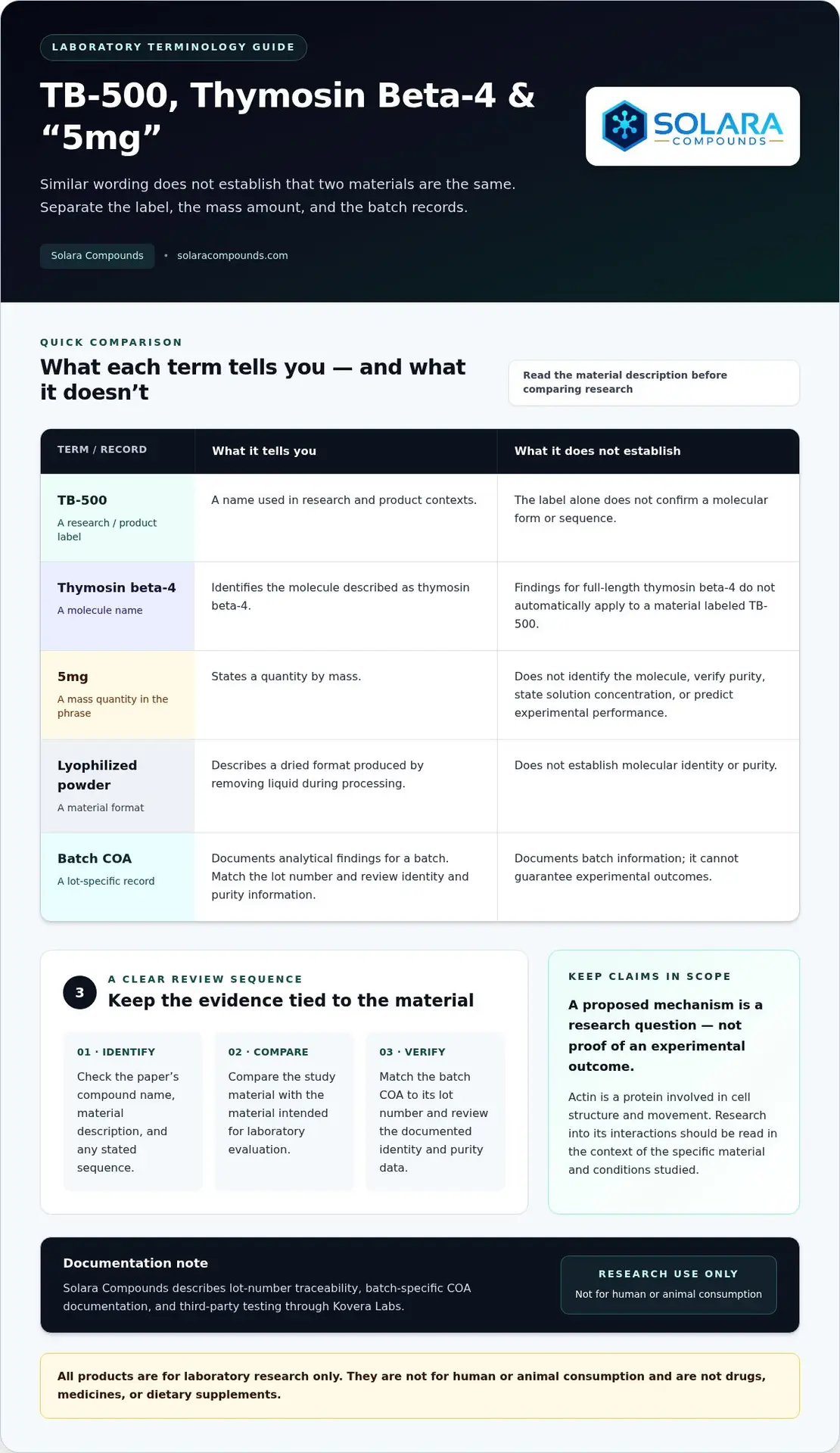
The phrase “TB-500 5mg thymosin beta-4” combines terms that are sometimes used interchangeably, even though TB-500 and full-length thymosin beta-4 are not necessarily the same molecular form. A quantity in milligrams alone does not resolve that distinction. This guide is for laboratory buyers comparing research terminology, material identity, and batch documentation.
When evaluating a paper or a research material, start with the molecule and material actually described. Then review the batch-specific Certificate of Analysis (COA) for lot-linked identity and purity information. A COA can document analytical findings for a batch, but it cannot guarantee experimental outcomes.
Solara Compounds provides lot-number traceability, batch-specific COA documentation, and third-party testing through Kovera Labs. The practical approach is to separate terminology from verified batch information, then assess the records for the material being considered.
All products are for Research Use Only (RUO): intended solely for laboratory research and not for human or animal consumption, not a drug, medicine, or dietary supplement.
Key Takeaways
- “TB-500 5mg thymosin beta-4” combines terms that may refer to different molecular forms. The 5mg wording alone does not establish identity or a product specification.
- Compare a study’s material description with the material intended for laboratory evaluation before applying its findings.
- Actin is a protein involved in cell structure and movement. Research into its interactions provides a mechanism to investigate, not proof of an experimental outcome.
- Review a batch COA by matching its lot number and examining identity and purity data. Keep the record with the purchasing file; it documents batch information, not experimental results.
- Solara Compounds provides lot-number traceability and describes third-party testing through Kovera Labs for its research materials.
What Does TB-500 5mg Mean in a Thymosin Beta-4 Research Context?
TB-500 is a name used for a research compound discussed in laboratory settings. The terminology can be imprecise: product descriptions and research sources may use “TB-500” and “thymosin beta-4” in ways that sound interchangeable, but the names alone do not establish that the materials have the same molecular form.
This distinction matters when researchers compare papers or select a material for laboratory work. A paper’s findings apply to the material and experimental conditions it describes. They should not automatically be assigned to another compound or product with a related name.
Why TB-500 and thymosin beta-4 terminology needs care
Thymosin beta-4 is the name of a molecule, while “TB-500” is a label used in research and product contexts. Describing TB-500 as a particular fragment or sequence makes a claim about molecular identity. Do not infer that identity from the name alone. Check sequence statements against primary literature and product-specific documentation. The Thymosin Beta-4 Wikipedia overview can provide background, but it is not a substitute for primary sources or batch records.
Keep the research question tied to the molecule actually studied. If a source reports findings for full-length thymosin beta-4, those findings do not establish the same results for a material labeled TB-500. Compare names, sequence descriptions, and study methods so that a similar label is not mistaken for molecular equivalence.
What a 5mg label tells a laboratory buyer
In the phrase “TB-500 5mg thymosin beta-4,” the 5mg wording is a mass quantity in the phrase, not a complete material specification. Mass alone does not identify a molecule, verify purity, or establish whether a material matches one used in a study. It also does not state the concentration of a solution or predict experimental performance.
For purchasing, distinguish a search phrase from current product information and batch documentation. Solara Compounds lists TB-500 in 10mg and 20mg formats for laboratory research. Review the live product listing and the batch-specific records for the relevant product details; do not infer a specification from other wording.
Lyophilized powder is a dried format produced by removing liquid during processing. The term describes presentation, not molecular identity or purity. Solara Compounds supplies lyophilized research peptides with lot-number traceability and batch-specific COA documentation, giving researchers records to review alongside product descriptions.
All products are for Research Use Only (RUO): intended solely for laboratory research and not for human or animal consumption, not a drug, medicine, or dietary supplement.
How TB-500 Research Relates to Molecular Structure and Actin
Actin is a structural protein that helps cells maintain their shape and move. It can assemble into filaments inside a cell, forming part of the cell’s internal framework. Researchers study interactions between proteins and actin to understand cellular processes. A proposed mechanism is a research question, not proof of a particular outcome.
This distinction is important when reviewing thymosin beta-4 research. Evidence about its relationship with actin applies to the molecular form and experimental conditions examined. It does not establish that every material called TB-500 behaves identically.
How researchers describe actin-related mechanisms
Studies of full-length thymosin beta-4 describe it as binding actin monomers, the individual units that can join together to form filaments. In plain terms, this interaction may affect how much actin is available to build or reorganize a cell’s internal framework. It gives researchers a mechanism to investigate, but does not establish what will happen in a particular experiment.
A proposed mechanism explains what researchers think may be happening; a confirmed experimental result reports what a defined study actually measured. Keep those statements separate when reviewing a paper or product description. A proposed connection to cell movement, for example, is not a substitute for checking the study’s measured endpoint and the identity of the material tested.
Why molecular form matters when reading papers
Start with the material tested. Check the compound name, any sequence or material description, and whether the authors identify full-length thymosin beta-4 or another form. If a sequence is stated, compare it with primary sources and the study’s methods. Do not assume that a TB-500 label maps to the same molecule just because the paper also mentions thymosin beta-4.
Next, note the model and assay: what system was studied, and what did the researchers measure? A result from a cell-based assay answers a question about that assay, not every other research setting. Keep the conclusion within the limits of the study. If sequence identity or the connection between a product label and a paper’s material is unclear, record it as unresolved rather than treating the match as established.
This is why “TB-500 5mg thymosin beta-4” should not be read as a molecular specification. A label or search phrase does not show which form a study used or establish a mechanism for a particular material. For laboratory purchasing, compare the identity records for the intended research material with the evidence relevant to that form. Solara Compounds provides research materials and batch documentation; browse the research peptide catalog as part of that evaluation.
How to Interpret TB-500 Evidence Without Confusing Molecular Forms
Research findings are easier to compare when the tested material is clearly identified. A paper may use “thymosin beta-4,” “Tβ4,” or “TB-500,” but a familiar label alone does not identify the exact molecule. Findings for one form cannot automatically be assigned to another.
Use the paper’s methods and material description as your starting point. This comparison shows what to record before interpreting a claim:
| Name used | Molecular form | Study context | Source to examine |
|---|---|---|---|
| Thymosin beta-4 or Tβ4 | Check whether the authors specify full-length protein and provide identity details | Record the model and assay described in the paper | Primary paper, especially methods and materials |
| TB-500 | Use the sequence or material description reported; if absent, record it as unspecified | Note the specific experimental system and measured endpoint | Primary paper and product-specific identity records |
| Related terminology in a summary | Do not infer molecular identity from the name alone | Treat the summary as a pointer, not evidence of equivalence | Trace the claim back to the cited study |
Which details to capture from a research paper
Make a brief evidence record before summarizing a result. Capture the exact material name, any sequence description, the experimental model, and the assay, meaning the method used to measure an effect. Then separate what the authors directly observed from interpretations added in abstracts, reviews, or product descriptions.
- Record the molecule and sequence details exactly as reported.
- Identify the model and what the assay measured.
- Note whether the source is a primary paper or a later summary.
Prioritize primary papers because their methods let you inspect what was tested. Classify the evidence accurately and keep it within the model and conditions described. Do not present a finding from one research setting as if it establishes a result in another.
How to describe evidence limits accurately
Use careful wording when molecular identity or mechanism remains uncertain: “the authors report,” “in this model,” or “the material was described as.” Avoid turning a proposed explanation into a settled finding. Shared terminology alone does not establish molecular equivalence; the study’s material description and methods must support that conclusion.
For example, if a paper names TB-500 but does not specify a sequence, summarize it as research on material identified by that name, not as confirmed evidence for full-length thymosin beta-4. Likewise, keep a measured result specific to its assay and avoid extending it to unrelated settings. The phrase “TB-500 5mg thymosin beta-4” is not a substitute for the identity details needed to interpret a study.
What to Review in a TB-500 Batch COA Before Laboratory Work
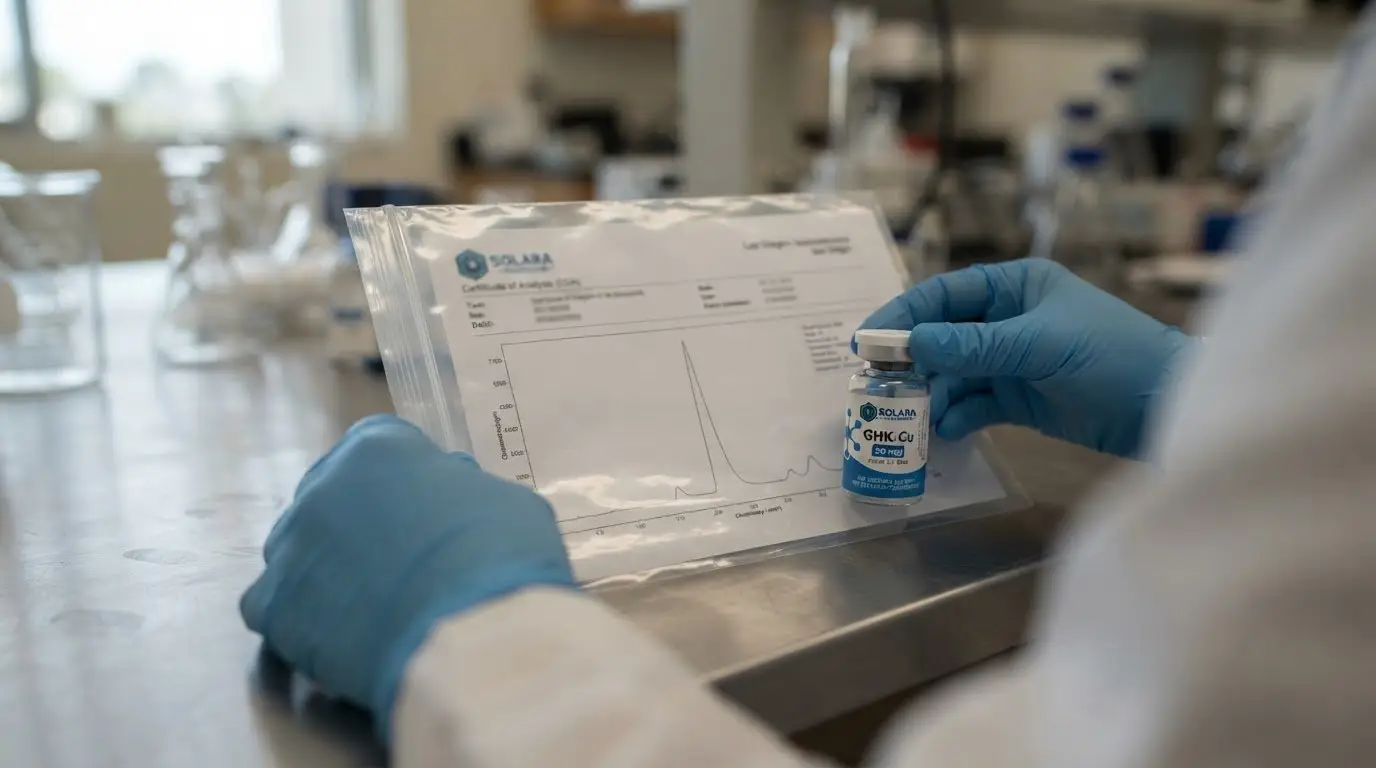
A Certificate of Analysis (COA) is most useful when it can be linked to the exact material lot under review. It provides batch-level information for laboratory buyers to assess, not a guarantee that an experiment will produce a particular result. Read it alongside the product label and purchase record, focusing on what the document identifies and measures.
A batch-specific COA connects reported analytical data to a traceable lot, rather than to a product name alone. Use this four-part review when organizing research material records:
- Match the lot number. Compare the identifier on the COA with the product label and purchase record. If they differ, the document may not describe the batch in hand.
- Inspect identity data. Check how the material is named and whether the report provides molecular confirmation data and identifies the analytical method. A shared label does not establish a specific sequence or molecular form.
- Assess purity data. Review the reported result and method, then note what the measurement represents. A purity figure alone does not establish identity, performance, or suitability for a particular research question.
- Retain the records. Keep the COA with the purchase record and the laboratory’s material documentation. This preserves the link between the batch identifier and the data used in later review.
How to match a COA to a specific lot
Check the identifiers before interpreting analytical results. The COA should identify the material and show a lot number that corresponds to the product record. Review the document date and stated methods as well, and record which report you consulted. Solara Compounds provides batch-specific COA documentation; its COA access page is a starting point for reviewing available batch records.
What analytical methods can and cannot establish
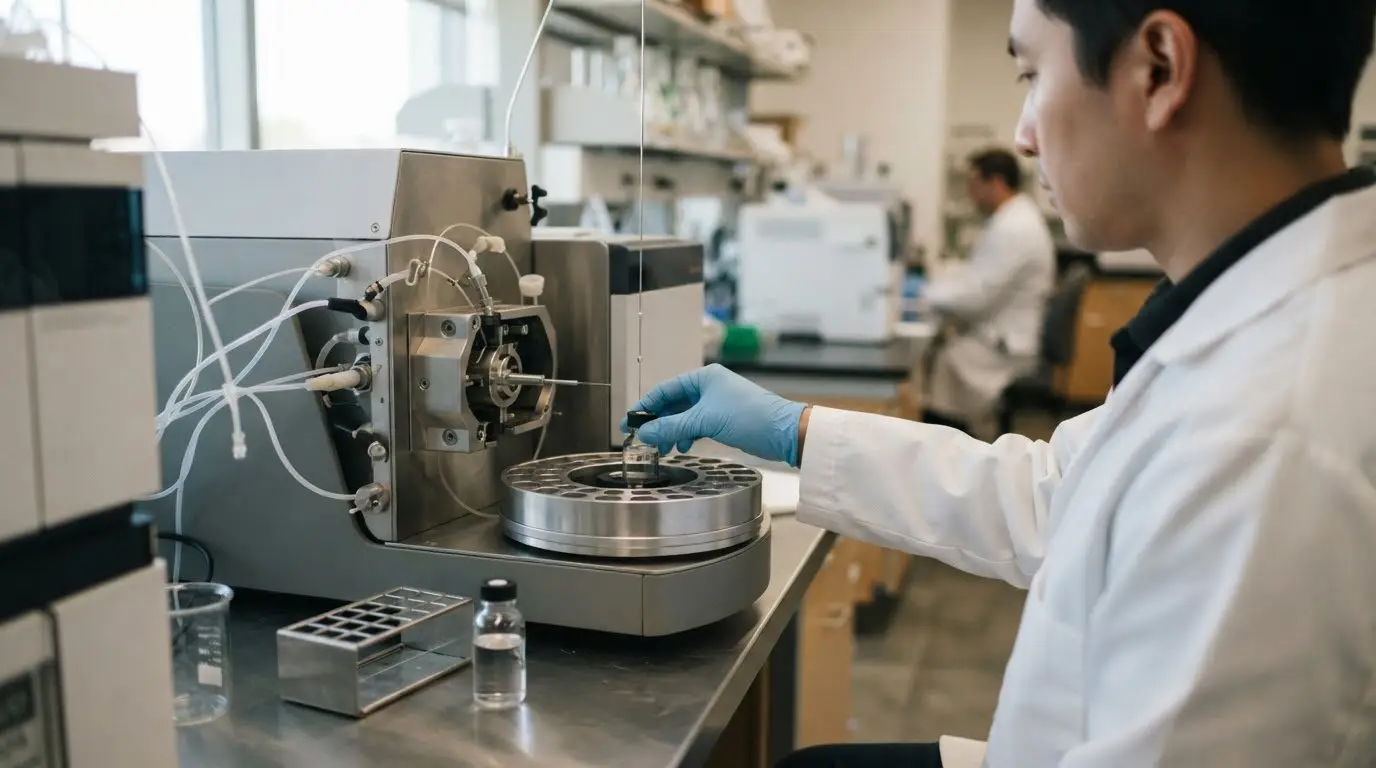
HPLC, or high-performance liquid chromatography, separates components in a sample and can be used to assess chromatographic purity. MALDI-TOF and LC-MS are mass spectrometry methods that measure characteristics related to molecular mass and can support molecular confirmation. Solara Compounds describes HPLC purification targeting greater than 98% purity minimum, along with molecular confirmation using MALDI-TOF and LC-MS. These methods provide analytical evidence, but their results do not establish how a material will behave in an experiment.
Interpret each result within its limits. A report may document data for a specific batch and method, but it does not guarantee experimental outcomes or resolve every question about how a study’s material relates to a product label. This matters for phrases such as “TB-500 5mg thymosin beta-4”: wording alone does not replace a lot-linked identity record.
For laboratory research only, review the documentation associated with the material and keep it connected to the relevant lot. See the current research catalog to review Solara Compounds research materials.
Solara Compounds TB-500 Research Supply and Documentation
For laboratory buyers, a product listing is the starting point for assessing whether a research material fits a project’s documented requirements. Solara Compounds is a U.S. supplier of research peptides. Its TB-500 listing provides product information for researchers to review. Keep the listing, research question, and material description in relevant papers aligned during purchasing decisions.
What Solara’s batch documentation provides
Solara Compounds provides TB-500 batch COA records for review. Researchers can retain these records with purchasing documentation, while keeping in mind that analytical reports describe tested material and do not establish how it will behave in a research model. Interpret a document according to its stated scope.
Solara Compounds uses a documentation-first approach that includes lot-number traceability and third-party testing through Kovera Labs. Review the product information and relevant batch records together, and retain them with the project’s purchasing files. The company’s research materials are supplied as lyophilized powders, with product quality information documented for laboratory buyers.
Research-use-only purchasing next steps
Qualified laboratory buyers can use the live listing and available batch records to inform a purchasing review. Avoid relying on a search phrase or general description when a project requires a specific material identity. The product listing and supporting records are the relevant references for that assessment.
Solara Compounds ships across the United States, including to laboratory buyers in Boston, San Diego, San Francisco, New York, Houston, Miami, Los Angeles, Austin, Raleigh, Seattle, Chicago, Philadelphia, Baltimore, Dallas, Phoenix, Tampa, Atlanta, and Denver. Free shipping is available on orders over $200.
All products are for Research Use Only (RUO): intended solely for laboratory research and not for human or animal consumption, not a drug, medicine, or dietary supplement.
To explore Solara Compounds research materials, view the current research catalog.
Set a Consistent Standard for Your Next Research Review
Use the phrase TB-500 5mg thymosin beta-4 as a starting point for a precise laboratory purchasing question. Before evaluating materials, define the information your project needs. A written review standard helps researchers apply consistent criteria to sourcing decisions rather than relying on shorthand labels or informal notes.
Keep a brief record of the research question, evidence reviewed, and details that remain uncertain. This gives the project a useful reference as it develops and helps distinguish documented information from assumptions. The purpose is a clearer decision process, not a prediction of experimental outcomes.
Solara Compounds’ website, solaracompounds.com, provides research information and purchasing resources. For support, contact [email protected] or call 1 (877) 388-9178, Monday through Friday, 8 AM to 5 PM Eastern.
All products are for laboratory research only, not for human or animal consumption. View the current research catalog.
Frequently Asked Questions
What is TB-500 in a laboratory research context?
TB-500 is a research compound name used in laboratory purchasing and research discussions. In project records, capture the name exactly as it appears in the material documentation rather than silently expanding it to another molecule’s name. Then compare that entry with the study’s materials section and the project’s inclusion criteria. This makes later comparisons more precise, especially when papers use different naming conventions.
Is TB-500 the same as thymosin beta-4?
Not automatically. Create separate entries for each named material and note whether the source provides enough detail to establish a match. Primary papers can clarify what investigators tested, while batch records describe the purchased material. If either source lacks identifying detail, leave the relationship unresolved in your notes rather than treating similar terminology as proof of equivalence.
What does 5mg mean on a TB-500 product listing?
“5mg” is a mass quantity, not a complete research specification. Solara Compounds lists TB-500 in 10mg and 20mg formats. Compare the live product listing with the project’s material request and procurement record; the phrase “TB-500 5mg thymosin beta-4” does not describe those listed formats or establish molecular identity.
What information should a TB-500 batch COA contain?
Use a COA to support orderly laboratory records. Check the material and analytical information, record which project or purchasing file it belongs to, and retain the original document without altering its reported values. If a field is absent or unclear, note that limitation rather than filling it in by assumption. A COA reports batch measurements, not experimental outcomes.
Can findings on thymosin beta-4 be applied to TB-500?
Do not transfer a finding across materials without support from the evidence. When reviewing a paper, record the experimental question, model, assay, and measured endpoint separately. This helps show whether a comparison involves similar conditions or only overlapping terminology. Keep conclusions specific to the material and setup described by each source.
How do HPLC and mass spectrometry contribute to peptide documentation?
HPLC and mass spectrometry provide different types of analytical information. When reviewing a report, note which method supports each reported value and avoid treating a method name as a broad quality verdict. HPLC separates components for chromatographic assessment; mass spectrometry provides mass-related data. The report’s actual results and stated scope matter more than the presence of a familiar instrument or technique alone.
Where can researchers review Solara Compounds’ TB-500 batch records?
Researchers can review available records through the COA page and product information through the research catalog. Save the relevant record alongside the product details used for the order. Solara Compounds materials are for laboratory research only, not for human or animal consumption. The same documentation process applies to research purchasing in Boston, Miami, and other U.S. locations.