Research Articles
Checklist: Verifying Third-Party Testing for Bulk Peptides

Can a researcher truly rely on a digital document when the integrity of a multi-month study is at stake? In the 2026 research market, the prevalence of forged or outdated documentation has made third-party testing for bulk peptides a critical focal point for laboratory procurement. You likely recognize that inconsistent batch quality isn’t just a minor inconvenience; it’s a variable that can compromise data accuracy and waste valuable resources. At Solara Compounds, we believe that transparency is the only path to scientific certainty.
This article provides a comprehensive framework for validating peptide purity and identity through independent laboratory documentation. You’ll learn how to conduct a rigorous audit of a Certificate of Analysis (COA), specifically looking for the intersection of High-Performance Liquid Chromatography (HPLC) and Mass Spectrometry (MS) data. We’ll also discuss the importance of lot-number traceability and how to secure reliable domestic sourcing at solaracompounds.com. All materials discussed are for laboratory research only and are not intended for human or animal consumption. By establishing a repeatable verification protocol, you can ensure your laboratory work remains grounded in empirical truth.
Key Takeaways
- Understand why independent verification is essential for maintaining data integrity and ensuring bulk materials meet the precise specifications required for laboratory use.
- Learn to interpret High-Performance Liquid Chromatography (HPLC) for purity levels and Mass Spectrometry (MS) to confirm the molecular identity of research compounds.
- Establish a repeatable protocol for third-party testing for bulk peptides by cross-referencing batch-specific lot numbers with accredited laboratory credentials.
- Identify critical red flags in supplier documentation, such as missing analytical data or scientifically improbable purity claims that indicate batch inconsistency.
- Secure high-purity materials for laboratory research only by utilizing the transparent, batch-specific COA database available at solaracompounds.com.
The Necessity of Independent Third-Party Testing for Bulk Peptides
Experimental repeatability in in-vitro studies depends entirely on the precision of the starting material. When researchers procure large volumes of compounds, the risk of batch-to-batch variation increases, making the role of independent verification paramount. Relying solely on supplier-provided data is no longer sufficient for modern laboratory standards. Instead, third-party testing for bulk peptides serves as a critical gatekeeper for data integrity; it ensures that the compound’s structural integrity matches the researcher’s expectations before resources are committed to long-term projects.
Many suppliers provide “representative” Certificates of Analysis (COAs), which may reflect a previous batch or a different synthesis run entirely. This practice creates a significant blind spot for lab buyers. By contrast, external validation through labs like Kovera Labs provides a neutral, lot-matched assessment of the specific material in the researcher’s hands. This level of transparency is standard at Solara Compounds, where every compound is designated for laboratory research only and is never intended for human or animal consumption. Validating these materials through independent channels isn’t just a safety measure; it’s a fundamental requirement for scientific accuracy.
Defining Research-Grade Purity Metrics
In the analytical research space, 98% purity is the recognized minimum threshold. This specific metric ensures that residual trifluoroacetic acid (TFA), moisture, or synthesis byproducts don’t interfere with cellular pathways or receptor binding assays. Verification is typically performed using High-Performance Liquid Chromatography, a technique that separates components within a mixture to determine the exact percentage of the target peptide. Researchers must also distinguish between chemical identity and purity. While identity confirms the sequence is correct, purity measures how much of that sequence exists relative to impurities. High-volume batches also require stable lyophilized powder to prevent degradation during storage, a factor that third-party testing for bulk peptides can help verify through stability testing.
The 2026 Market Context for Laboratory Buyers
The 2026 regulatory environment has fundamentally changed how researchers approach procurement. Following the FDA advisory panel votes in July 2026 and the subsequent reclassification of several peptides by HHS, the focus on documentation transparency has intensified. Recent vendor collapses have shown that catalog size isn’t a reliable indicator of stability. Lab buyers now prioritize US-based synthesis and testing to reduce logistical risks and ensure compliance with “Research Use Only” (RUO) standards. By utilizing Independent Peptide Lab Testing protocols, Solara Compounds helps researchers navigate this complex market with confidence. You can find more information about our documentation-first approach and our current research catalog at solaracompounds.com.
Technical Checklist: Interpreting HPLC and Mass Spectrometry Reports
A Certificate of Analysis (COA) is only as useful as your ability to interpret its raw data. When reviewing third-party testing for bulk peptides, you must look beyond the final percentage number. A complete report provides two distinct analytical views: High-Performance Liquid Chromatography (HPLC) for purity and Mass Spectrometry (MS) for identity. These compounds are for laboratory research only and must be verified to ensure experimental consistency.
Reading the HPLC Chromatogram
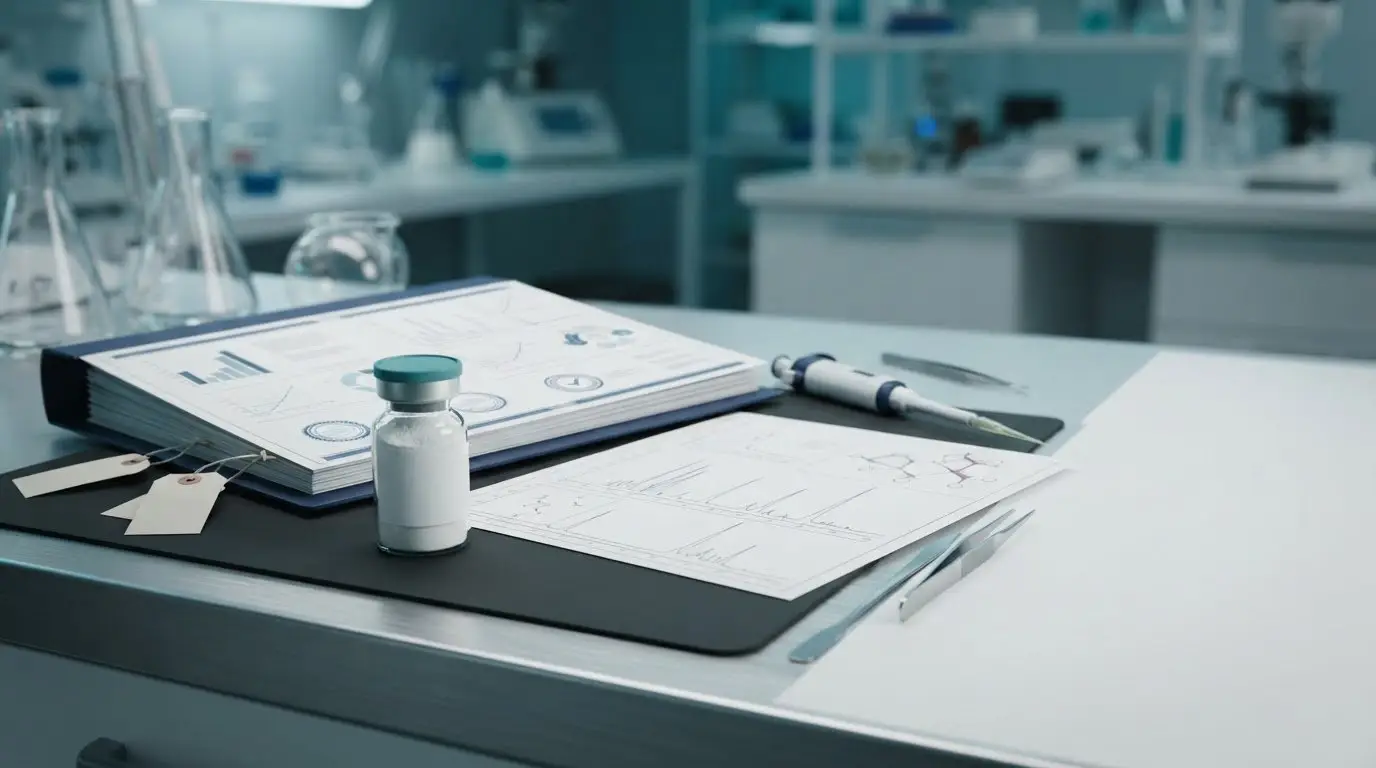
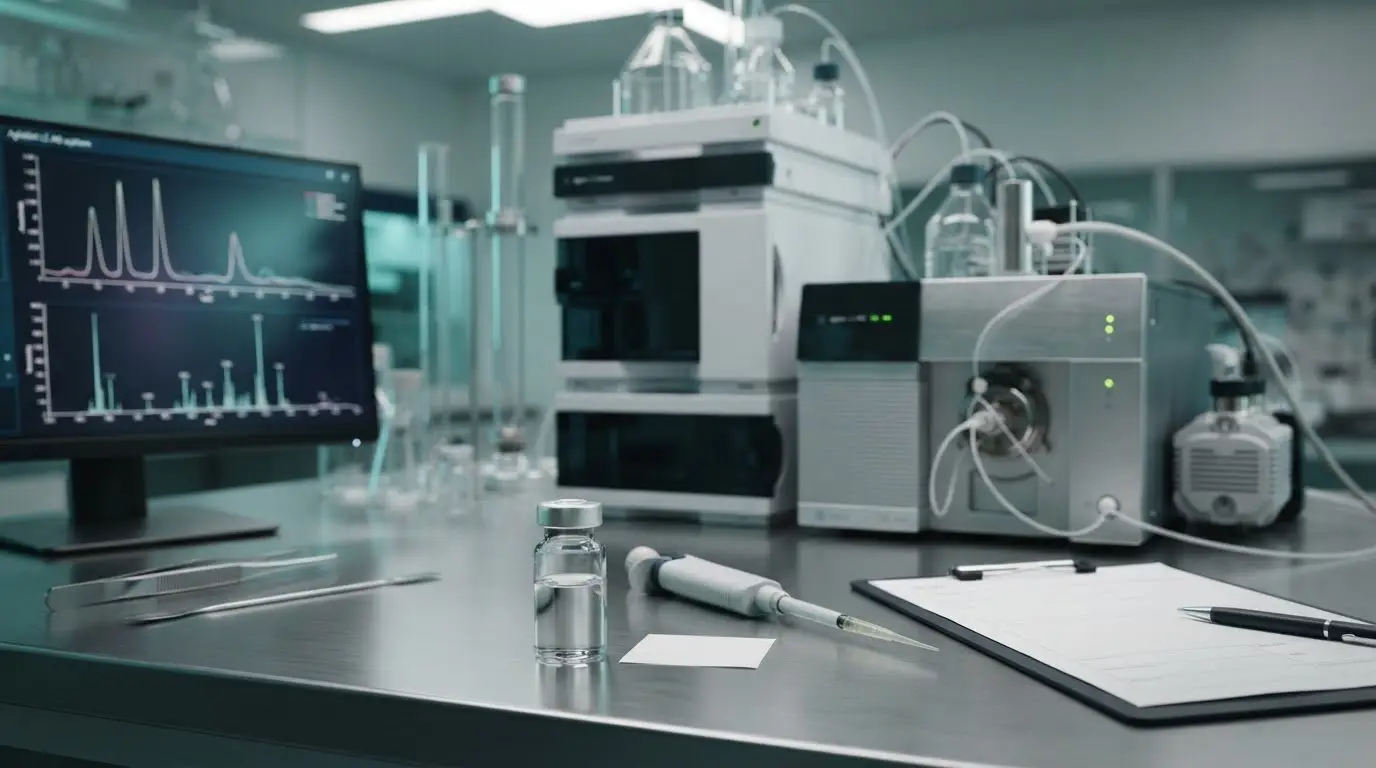
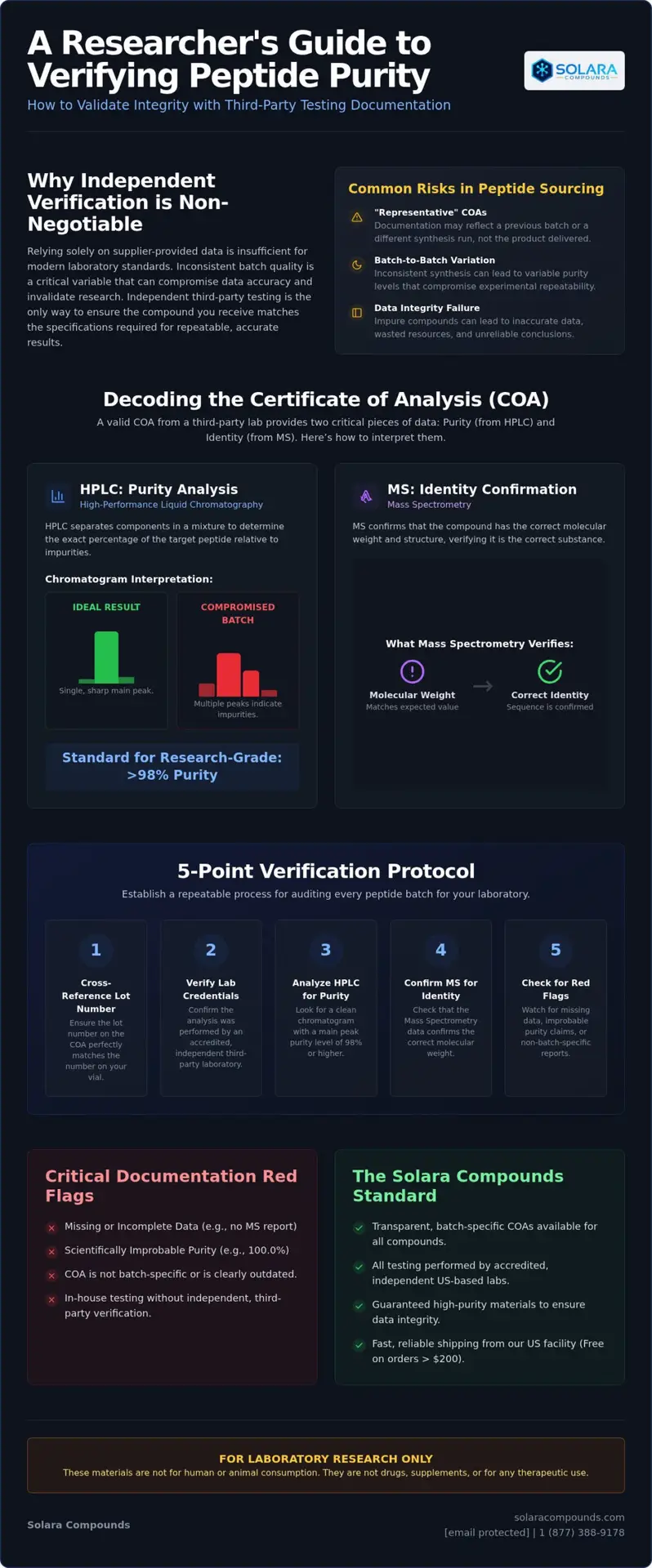
The HPLC chromatogram is a visual representation of a compound’s purity. It maps the detection of substances over time as they pass through a calibrated column. A high-purity synthesis, such as those found at solaracompounds.com, will display a single, sharp “main peak” with a stable baseline. The purity is calculated by measuring the area of this main peak relative to the total area of all detected peaks. Minor peaks appearing before or after the main signal represent impurities, such as peptide fragments or residual solvents. If the baseline is erratic or multiple large peaks are present, the batch integrity is compromised. Researchers should look for clear integration lines that show exactly which peaks were included in the final purity calculation.
Mass Spectrometry and Molecular Confirmation
While HPLC confirms how much of a substance is present, Mass Spectrometry (MS) confirms what that substance actually is. This process measures the mass-to-charge ratio (m/z), which is essentially a way to identify a molecule by its weight. You should compare the “observed mass” on the report against the theoretical molecular weight of the peptide. For instance, if you are analyzing a batch of SOL-3RT, the primary peak on the MS graph must align with its known molecular mass. Discrepancies here suggest the presence of a different compound or significant degradation. A professional report, like those provided by Kovera Labs for Solara Compounds, will have clearly labeled axes and a legible primary signal. Verification of these details prevents the common error of using a “pure” but incorrect compound in a study. You can view our verified research catalog to see how we document these technical specifications for every batch.
5-Point Verification Checklist for High-Volume Peptide Sourcing
Bulk procurement requires a shift from individual vial inspection to systematic lot verification. When researchers manage high-volume orders, the risks associated with batch drift or mislabeling become amplified. Implementing a repeatable protocol for third-party testing for bulk peptides is the only way to safeguard your experimental budget and ensure the integrity of your data. These compounds are for laboratory research only; therefore, the documentation must be as rigorous as the study itself.
- Step 1: Confirm Batch-Specific Lot Numbers. Every vial in your shipment must feature a lot number that matches your documentation exactly.
- Step 2: Cross-Reference Laboratory Credentials. Ensure the testing facility, such as Kovera Labs, is a recognized entity with no financial interest in the supplier.
- Step 3: Analyze Purity Percentages. Results should align with institutional requirements, typically exceeding the 98% threshold for analytical work.
- Step 4: Verify Lyophilization. Inspect the “cake” or powder for consistency; it should be a stable, freeze-dried solid rather than a sticky or collapsed mass, which indicates moisture ingress.
- Step 5: Review Storage Documentation. Confirm that the material was handled according to specific stability requirements during transit to prevent degradation.
Lot-Number Traceability for Bulk Orders
A common pitfall in bulk sourcing is the use of “generic” or “representative” COAs. These documents may show a high purity level, but they don’t actually correspond to the specific synthesis run you received. This creates a “blind spot” in your experimental variables. At Solara Compounds, we prioritize documentation transparency by providing a dedicated Solara Compounds COA portal. Researchers can enter their lot numbers to retrieve the exact HPLC and MS data for their specific material. For large-scale contracts, it’s a best practice to request a random vial pull. This allows you to send a sample for independent re-testing to ensure the entire shipment is uniform before you begin your work.
Evaluating the Independent Lab
Independence means the lab operates as a neutral third party. They have no incentive to inflate purity numbers or overlook fragments. You should always verify the date of the report; a document from two years ago is irrelevant for a 2026 production run. Watch for signs of “report recycling,” where the same graph is used for multiple different products. If a report looks altered or lacks a verifiable signature, contact the lab directly to confirm its authenticity. All compounds from solaracompounds.com are for laboratory research only and are not for human or animal consumption. We maintain these rigorous standards to act as a reliable partner in your long-term scientific success.
Identifying Red Flags in Research Chemical Documentation
Quality assurance in the peptide industry often hinges on a single document. However, not all documentation is created equal. When evaluating third-party testing for bulk peptides, researchers must be vigilant against common technical discrepancies that signal a lack of synthesis control. One of the most glaring red flags is a claim of 100% purity. In the context of large-scale chemical synthesis, absolute purity is scientifically improbable. High-grade research compounds, like those at Solara Compounds, target a minimum of 98% purity. The remaining percentage typically consists of moisture, residual trifluoroacetic acid (TFA), or harmless peptide fragments. A report claiming 100% suggests either an unprofessional laboratory or a falsified document.
Generic reports that omit a specific laboratory contact or a lot number are effectively useless for serious laboratory work. A valid COA must allow you to contact the testing facility to verify the results independently. Discrepancies between theoretical and observed molecular weights are another critical warning sign. If the Mass Spectrometry report shows an observed mass that deviates significantly from the known sequence weight, the identity of the compound is in question. These products are for laboratory research only and are not for people or animals.
The “Paper-Only” Vendor Trap
Many suppliers fall into the “paper-only” trap. They provide a high-quality COA once and then continue to use that same report for subsequent batches. This practice is particularly risky when sourcing compounds like SOL-2TZ, where identity peaks must be confirmed for every individual synthesis run to ensure experimental repeatability. Without batch-level transparency, you have no way to verify that the material in the vial matches the data on the screen. If a vendor cannot provide a report that lists a specific lot number matching your order, the material should be considered unverified. Solara Compounds prioritizes empirical data to ensure your laboratory results remain accurate and consistent.
Inconsistencies in Lyophilization
Beyond the digital report, the physical state of the compound provides critical clues. Proper lyophilization, or freeze-drying, results in a stable “cake” or uniform powder. If you observe a sticky residue or a collapsed mass, it often signals a failure in the vacuum sealing process or secondary moisture ingress. This degradation can lead to a significant loss of peptide longevity, even if the initial COA was accurate. For a deeper dive into procurement standards, review our Bulk Tirzepatide Research Procurement Guide. All materials from solaracompounds.com are for laboratory research only and are not medicine or supplements. You can shop research peptides at solaracompounds.com and access our full database of batch-specific documentation.
Solara Compounds: A Documentation-First Approach to Research
Solara Compounds operates with a commitment to empirical verification that goes beyond standard industry claims. We understand that for a researcher, a compound is only as reliable as its documentation. This is why we have established a documentation-first workflow. Every batch we distribute undergoes rigorous third-party testing for bulk peptides through Kovera Labs to ensure that structural integrity and purity meet our internal benchmarks. Our synthesis occurs in ISO 7 cleanrooms, where we utilize advanced purification techniques to target purity levels of ≥99% for our catalog.
Maintaining this level of precision requires a structured approach to quality control. We provide batch-specific COAs for every compound in our research catalog, ensuring that you never have to rely on “representative” data. Our domestic shipping infrastructure is designed to protect these materials, providing secure transport to major research hubs while meeting tight laboratory timelines. By prioritizing the relationship between raw properties and final physical outcomes, we act as a guide for researchers navigating the technical challenges of modern procurement.
Verified Research Compounds for Laboratory Use
Our inventory includes high-purity analytical profiles for compounds such as SOL-3RT, SOL-2TZ, and BPC-157 10mg. For multi-phase projects that span several months, the significance of lot-matched documentation cannot be overstated. It allows researchers to maintain a consistent baseline across different experimental stages without introducing new variables from different synthesis runs. To support institutional procurement, we offer free shipping on all domestic orders over $200. This ensures that your laboratory can secure the necessary volume of high-purity compounds without unnecessary logistical overhead.
Partnering with Solara for Institutional Supply
We provide specialized support for researchers requiring wholesale or bulk purchase agreements. If your facility requires high-volume procurement with consistent lot-matching, our research support team is available to discuss custom supply solutions. You can reach us at support@solaracompounds.com or by calling 1 (877) 388-9178. Our technical support hours are Monday through Friday, 8 AM to 5 PM Eastern. We take pride in our no-nonsense approach to craftsmanship and our commitment to excellence in the research space.
Qualified lab buyers can expect prompt technical responses to inquiries regarding batch history or specific analytical data. It’s vital to remember that all products from solaracompounds.com are for laboratory research only. These compounds are not medicine, not supplements, and are not for human or animal consumption. By choosing Solara Compounds, you are partnering with a supplier that prioritizes the technical integrity of your laboratory work through transparent, third-party testing for bulk peptides and lot-specific verification.
Securing Data Integrity Through Empirical Verification
Establishing a repeatable protocol for third-party testing for bulk peptides is the most effective way to eliminate experimental variables and protect your laboratory’s resources. By prioritizing lot-matched HPLC and Mass Spectrometry data, researchers ensure that every compound used in a study meets the rigorous standards required for analytical work. Solara Compounds remains dedicated to this transparency, providing batch-specific COAs verified by Kovera Labs for every item in our inventory. This documentation-first approach provides the precision necessary for repeatable results in complex research environments.
Our primary research compounds target HPLC purification levels of ≥99% to ensure structural integrity and consistency. We support your institutional procurement with fast U.S. shipping and free delivery on orders over $200. It’s essential to remember that all materials at solaracompounds.com are for laboratory research only and are not for human or animal consumption. We invite you to explore our professional catalog and secure high-purity materials for your next project.
View the current research catalog at solaracompounds.com to review the latest batch documentation. We look forward to being a reliable partner in your long-term scientific success.
Frequently Asked Questions
What is the minimum purity standard for research peptides?
The recognized minimum purity for analytical research peptides is >98% as measured by High-Performance Liquid Chromatography. Solara Compounds targets a higher threshold of ≥99% to ensure experimental consistency for researchers in major hubs like Boston and San Diego. These materials are for laboratory research only and are not for human consumption. Maintaining this standard prevents synthesis byproducts from interfering with sensitive in-vitro models or metabolic pathway studies.
How do I read an HPLC report for a bulk peptide batch?
To interpret an HPLC report, you must evaluate the area under the primary peak relative to the total area of all detected signals. A high-quality report from third-party testing for bulk peptides will show a single, sharp peak with a flat baseline. Researchers should confirm that the integration lines accurately capture all minor peaks. This verification ensures that the lyophilized powder meets the precise specifications required for controlled laboratory use.
Why is mass spectrometry necessary if I have an HPLC report?
While HPLC determines the percentage of a compound, mass spectrometry confirms the actual molecular identity of the substance. It’s possible to have a “pure” sample that is the incorrect peptide sequence. By using LC-MS or MALDI-TOF, lab buyers in San Francisco and Seattle can verify that compounds like SOL-3RT or SOL-2TZ match their theoretical molecular weights. This dual verification is essential for maintaining the integrity of complex scientific investigations.
What is lot-number traceability in peptide procurement?
Lot-number traceability is a system where each synthesis run is assigned a unique identifier that follows the product from production to the final vial. This allows researchers to verify that their specific batch matches the data on solaracompounds.com/coa/. For high-volume procurement in New York or Houston, this ensures that every vial in a large order is consistent. All compounds are intended solely for laboratory research and are not medicine.
Can I trust a supplier-provided COA without third-party verification?
Relying on a supplier’s internal COA without independent verification introduces significant risk to experimental repeatability. Independent third-party testing for bulk peptides through labs like Kovera Labs provides an unbiased assessment of the material. This external audit prevents the use of “representative” or recycled reports that don’t reflect the current batch. Serious investigators in Raleigh and Austin prioritize these neutral reports to ensure their data remains grounded in empirical truth.
How does lyophilization affect the quality of bulk peptides?
Lyophilization, or freeze-drying, is critical for the long-term stability and shelf life of research peptides. Proper vacuum sealing prevents moisture from degrading the peptide bonds over time. A well-formed “cake” indicates successful processing, while a collapsed or sticky mass may signal a compromise in vacuum integrity. This process is vital for researchers in humid climates like Miami or Tampa who require stable compounds for multi-phase laboratory projects.
What are the risks of using unverified research chemicals in a lab?
Using unverified research chemicals can lead to erratic data, corrupted results, and the total loss of expensive laboratory resources. For biotech firms in Los Angeles or Chicago, batch inconsistency can stall progress and compromise institutional funding. Ensuring that every compound is backed by lot-specific documentation is the only way to safeguard your experimental budget. Remember that these products are for laboratory research only and are not supplements or drugs.
Where can I find batch-specific COAs for Solara Compounds?
You can access batch-specific COAs for all our research compounds at solaracompounds.com/coa/. Simply enter the lot number found on your vial to retrieve the HPLC and MS data verified by Kovera Labs. If you have technical questions or require bulk procurement support, contact our team at support@solaracompounds.com or 1 (877) 388-9178. We are available Monday through Friday to assist researchers in Atlanta, Denver, and across the United States.