Research Articles
Verifying Peptide Suppliers for Academic Labs: 2026 Guide

The integrity of your entire multi-year study rests on a single, often overlooked variable: the raw analytical data of your chemical compounds. In a research environment where the FDA issued over 900 GMP observations in a single year, simply trusting a label is no longer a viable strategy for serious scientists. You likely understand that verifying peptide supplier credentials for academic labs is the only way to safeguard your data against the quiet sabotage of impure compounds. It’s a frustrating reality that batch-to-batch inconsistency can turn a hard-won breakthrough into an irreproducible failure.
This guide provides the technical framework you need to master the vetting process in 2026. You’ll learn how to dissect HPLC and Mass Spectrometry reports to ensure your Retatrutide or Tirzepatide meets the 99% purity threshold required for institutional compliance. We’ll examine the shift toward ISO 9001:2026 standards and establish a repeatable protocol for securing high-grade materials. This structured approach ensures that your procurement process mirrors the rigor of your scientific methodology, leading you toward a conclusion based on evidence rather than hope.
Key Takeaways
- Identify the critical differences between HPLC purity quantification and Mass Spectrometry identity verification to ensure your compounds meet exact molecular specifications.
- Implement a standardized vetting protocol for verifying peptide supplier credentials for academic labs to safeguard your data against the risks of impure or degraded batches.
- Distinguish between biased in-house reporting and independent third-party validation to maintain the highest level of transparency for peer-reviewed publication.
- Optimize institutional procurement by evaluating domestic shipping reliability and cold chain protocols that prevent peptide degradation during transit.
- Secure research-grade materials through a “claim and verify” model that prioritizes batch-specific analytical transparency for compounds like Retatrutide and Tirzepatide.
The Critical Role of Supplier Vetting in Academic Research Integrity
Academic research functions on the premise of absolute precision. When an institutional lab sources compounds for in vitro models, the margin for error is non-existent. Standard e-commerce vetting, which often relies on visual branding and superficial testimonials, fails to meet the rigorous demands of peer review. For a principal investigator, verifying peptide supplier credentials for academic labs is not a bureaucratic hurdle; it is a fundamental safeguard for institutional funding and scientific reputation. Contaminated or mislabeled compounds don’t just ruin a single experiment. They can invalidate years of data and jeopardize future grants. Protecting the integrity of the study requires a transition from trusting a supplier’s marketing to auditing their technical performance.
The Cost of Impurity in Peer-Reviewed Studies
Trace impurities, such as residual trifluoroacetic acid (TFA), salts, or truncated peptide sequences, act as uncontrolled variables in laboratory models. These contaminants can inadvertently activate or inhibit signaling pathways, leading to false positives that disappear during replication. High-profile case studies frequently highlight failed replications where the culprit was eventually identified as an inconsistent peptide batch rather than a flawed hypothesis. The reproducibility crisis in peptide research refers to the systemic failure of subsequent studies to replicate initial experimental results due to undocumented variations in chemical purity or structural identity. This lack of batch-specific transparency creates a ripple effect, wasting public funding and stalling the progression of therapeutic discovery.
Academic Standards vs. Commercial Marketing
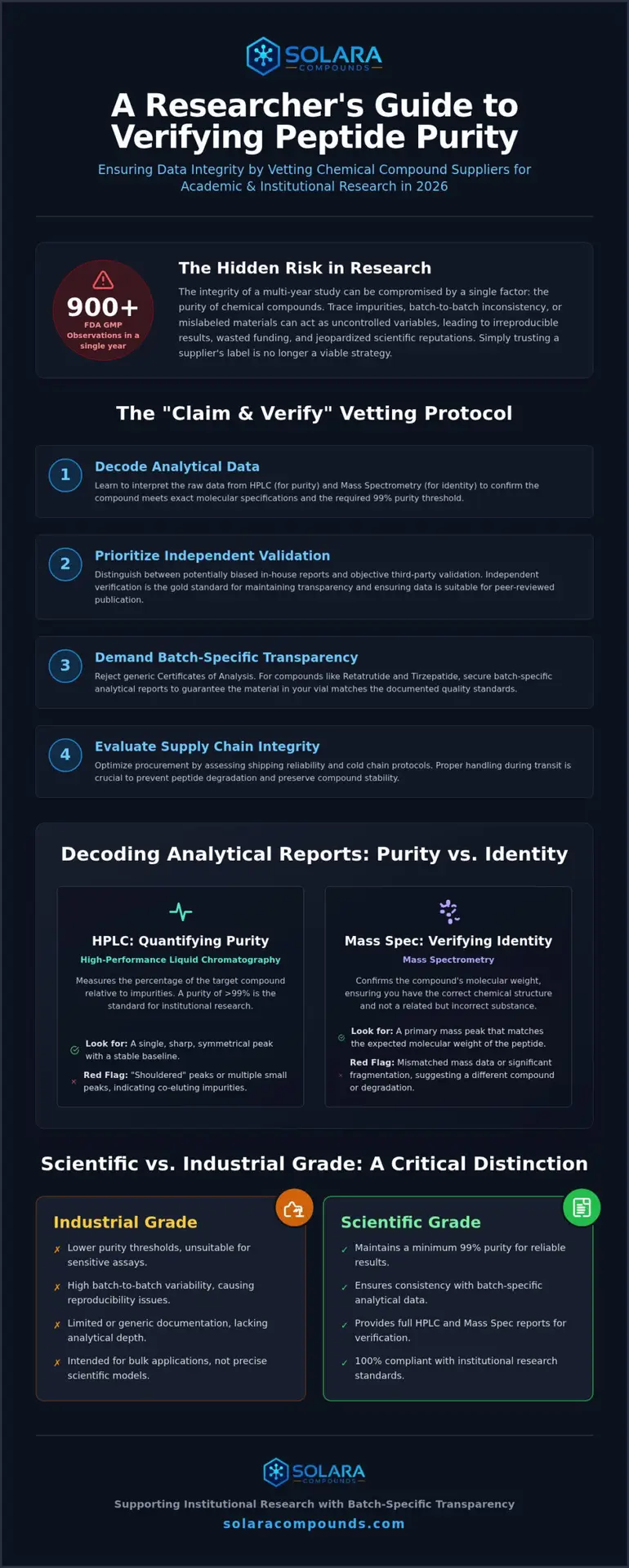
The research chemical marketplace is often saturated with marketing fluff that prioritizes aesthetic appeal over analytical depth. Academic procurement requires a shift toward performance-oriented confidence. This means ignoring bold sales claims and focusing on the raw data behind peptide synthesis and quality control. There is a sharp distinction between industrial-grade amino acid chains, often produced for bulk applications with lower purity thresholds, and the scientific-grade materials required for institutional study. Scientific-grade sourcing demands a “claim and verify” model where every vial is backed by empirical evidence.
- Industrial Grade: Typically features lower purity thresholds, frequent batch variability, and limited documentation regarding structural integrity.
- Scientific Grade: Maintains a minimum 98% purity, provides batch-specific HPLC and Mass Spectrometry data, and ensures 100% compliance with research standards.
Choosing a vendor that understands the intersection of material science and real-world utility is essential. When you source specialized compounds like Retatrutide or Tirzepatide, the supplier’s commitment to consistency becomes the bridge between a theoretical model and a successful publication. By prioritizing vendors that offer transparent, third-party verified data, labs can ensure their findings are built on a stable, engineering-grade foundation.
Decoding Analytical Verification: HPLC and Mass Spectrometry Standards
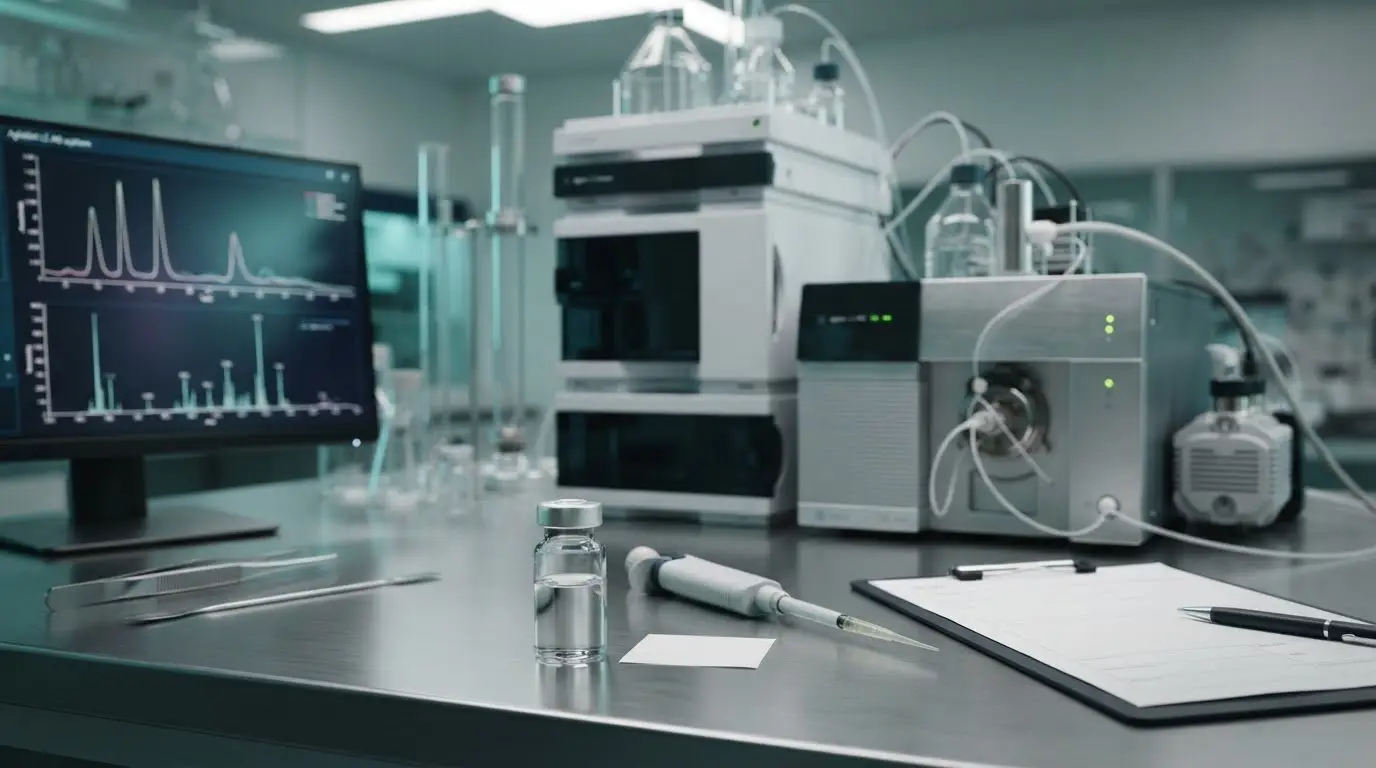
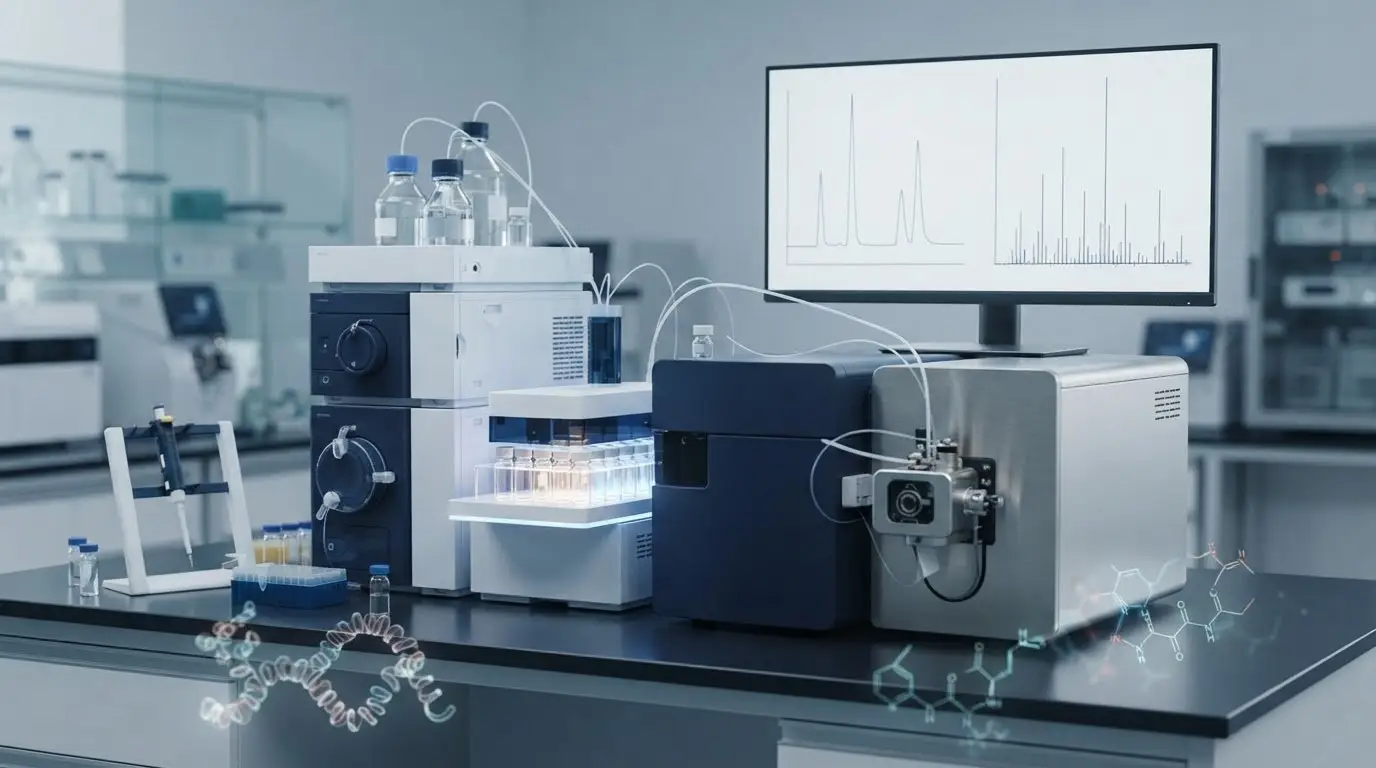
Analytical verification is the cornerstone of data reproducibility. While most vendors provide a summary percentage, verifying peptide supplier credentials for academic labs requires a deep dive into the raw data. High-Performance Liquid Chromatography (HPLC) remains the gold standard for purity quantification; however, the resulting chromatogram is far more descriptive than a simple number. A stated purity of 98% or 99% is effectively meaningless if the underlying raw data is withheld or obfuscated. To ensure research integrity, you must evaluate the visual evidence of compound homogeneity.
Reading HPLC Chromatograms Like a Principal Investigator
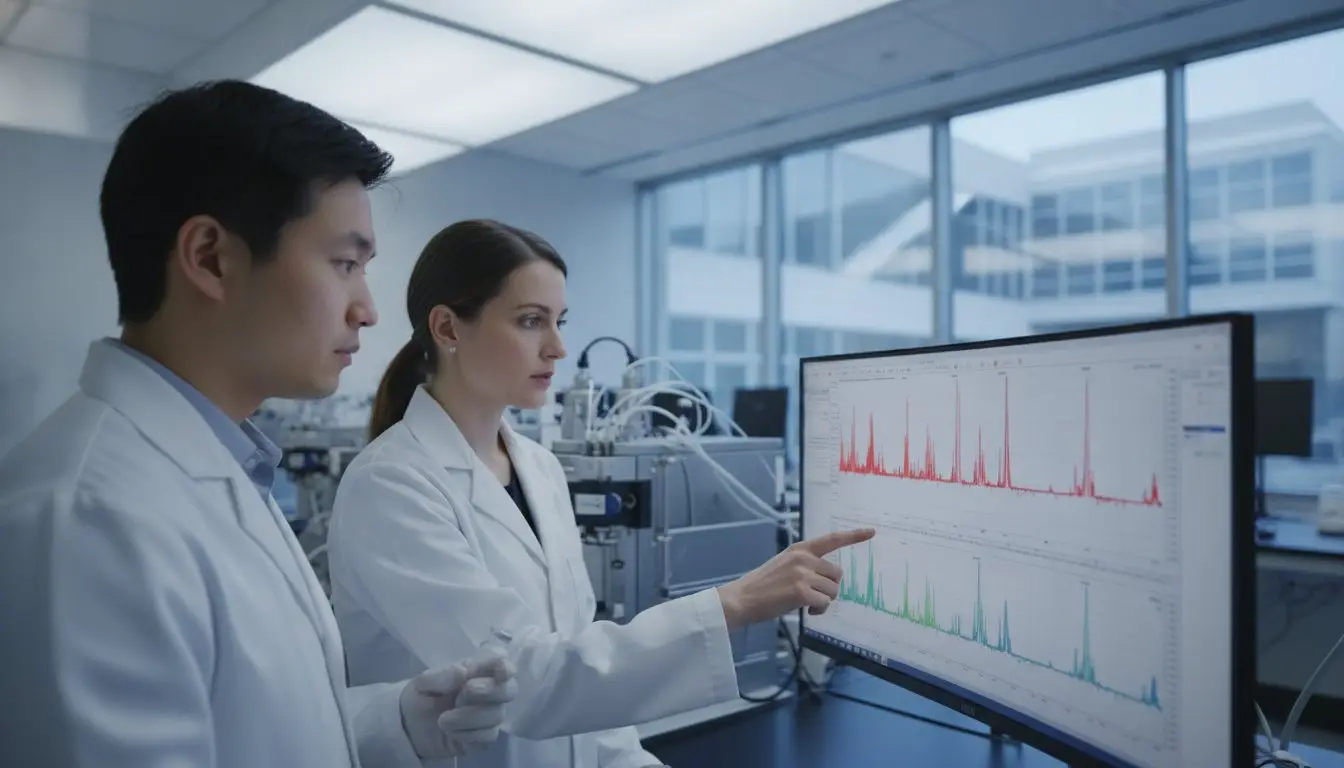
A high-grade peptide will produce a chromatogram with a single, sharp peak and a stable baseline. You should analyze peak area ratios to determine true compound homogeneity rather than relying on a vendor’s summary. If you observe a “shouldered” peak, it indicates co-eluting impurities that weren’t successfully separated during the purification phase. These impurities can skew your results by introducing unmonitored biochemical activity into your model. Adhering to NIDA ordering guidelines helps ensure that your lab maintains the documentation standards necessary for federal compliance and peer-reviewed scrutiny.
Sequence Verification via Mass Spectrometry
Purity alone doesn’t guarantee structural identity. Mass Spectrometry (MS) is essential because it verifies the exact molecular weight of the compound. For specialized research involving Retatrutide or Tirzepatide, comparing theoretical molecular weight against observed MS peaks is the only way to confirm you’ve received the correct sequence. Mass spectrometry prevents the use of incorrect peptide sequences by detecting even single amino acid substitutions that would otherwise remain hidden within a high-purity HPLC reading. This “claim and verify” approach eliminates the risk of studying the wrong molecule, which is a common but avoidable source of experimental failure.
Solara Compounds prioritizes this level of transparency by offering batch-specific analytical reports for every compound, bridging the gap between material science and your lab’s practical application. By insisting on both HPLC and MS data, you secure a foundation of stability for your long-term research goals.
Third-Party Validation vs. In-House Certificates of Analysis
Relying on a supplier’s in-house quality control introduces a fundamental conflict of interest into the procurement process. While internal testing is a necessary component of the production cycle, it cannot serve as the definitive proof of quality for academic verification. Verifying peptide supplier credentials for academic labs requires an impartial secondary audit to ensure data integrity. Independent validation removes the bias inherent in self-reporting and confirms that the compound’s structural integrity meets the rigorous standards of institutional research. In 2026 research protocols, batch-specific reporting has transitioned from a recommended practice to a mandatory requirement for high-impact journals and peer-reviewed studies.
The Anatomy of a Legitimate Certificate of Analysis
A valid Certificate of Analysis (COA) must contain specific, non-negotiable data points that allow for total traceability. These mandatory elements include a unique lot number, the exact date of analysis, and the signature of the certifying chemist. You should always cross-reference the report ID directly with the independent testing facility’s database to confirm the document’s authenticity. Many reputable third-party labs now provide digital verification portals or QR codes to ensure the data hasn’t been altered. This process ensures the COA matches the specific vial in your laboratory, preventing the accidental use of mismatched or expired batches in your study.
Detecting Forged or Misleading Documentation
Forged or misleading documentation remains a persistent challenge in the research chemical market. Some vendors utilize “representative” COAs, which are high-purity reports from a single past batch used to market multiple subsequent, lower-quality lots. This tactic effectively hides the presence of truncated sequences or residual solvents that can compromise your experimental results. Recognizing red flags is essential for maintaining research integrity. Common indicators of unreliable documentation include:
- Missing timestamps: Reports that lack a clear date of analysis or utilize outdated data from previous years.
- Generic templates: Documentation that lacks the specific letterhead or contact information of an accredited independent laboratory.
- Mismatched lot numbers: Discrepancies between the report ID and the physical label on the peptide vial.
Solara Compounds addresses these risks by providing batch-specific COAs for every compound, including specialized research materials like Retatrutide and Tirzepatide. This commitment to 100% transparency eliminates the guesswork from procurement and ensures that the analytical raw data is both current and verifiable. By prioritizing vendors that embrace this “claim and verify” model, you maintain the high-grade engineering standards necessary for long-term scientific success. Consistency is the hallmark of a reliable partner; independent validation is the only tool that guarantees it.
Institutional Procurement Criteria: Shipping, Compliance, and Supply Chain
Procurement in an academic setting requires more than a simple transaction; it demands a robust chain of custody that withstands the scrutiny of institutional auditors. While analytical data confirms the identity of the compound, the logistical framework of the vendor ensures that the material arrives without structural degradation. Verifying peptide supplier credentials for academic labs must therefore include an evaluation of their supply chain transparency and domestic shipping capabilities. For multi-phase projects, a breakdown in logistics can lead to costly delays and the loss of longitudinal data consistency. Aligning vendor capabilities with university purchasing department requirements is a prerequisite for long-term research success.
Supply Chain Transparency and Domestic Reliability
Overseas sourcing often relies on dropshipping models that lack accountability and expose sensitive compounds to prolonged customs delays. These delays aren’t merely inconvenient. They represent a significant risk of thermal degradation, even for lyophilized peptides. US-based operations like Solara Compounds provide a superior stability profile by utilizing secure national shipping from Florida. This domestic focus eliminates the unpredictability of international borders and ensures that the supply chain remains intact for the duration of a multi-year study. When university purchasing departments evaluate a vendor, they prioritize this level of reliability to mitigate the risks associated with project interruptions.
Logistics and Handling for Lyophilized Compounds
Receiving a shipment is the final step in the verification process. Upon arrival, researchers should perform a physical inspection of every vial to confirm vacuum sealing and structural integrity. A compromised seal can lead to moisture ingress, which catalyzes peptide hydrolysis and reduces the effective concentration of the compound. Best practices for institutional labs include:
- Visual Inspection: Checking for a “cake” structure in the lyophilized powder, which suggests proper freeze-drying and minimal moisture content.
- Document Matching: Verifying that the lot number on the physical vial matches the batch-specific COA provided by the supplier.
- Immediate Stabilization: Implementing storage protocols at -20°C or -80°C to maintain structural integrity post-delivery.
Establishing these protocols helps you maintain 100% compliance with research standards and ensures that your Tirzepatide or Retatrutide remains viable for the duration of your study. Aligning your lab with a partner that understands the nuances of institutional procurement is essential for maintaining experimental momentum. You can secure high-purity research compounds through our optimized domestic supply chain, ensuring your materials meet the exact specifications required for peer-reviewed excellence.
Solara Compounds: Supporting Institutional Research with Batch-Specific Transparency
Solara Compounds operates at the intersection of material science and practical research utility. We understand that academic researchers require more than just a chemical; they require a guarantee of structural integrity. Our commitment to the “claim and verify” model means we don’t expect you to take our word for it. Instead, we provide the empirical evidence necessary for verifying peptide supplier credentials for academic labs. This approach prioritizes the stability of your final result over marketing aesthetic. It’s a professional partnership rooted in precision and performance-oriented confidence.
The Solara Standard for Research Peptides
Every batch of Retatrutide 10mg and Tirzepatide 10mg in our catalog undergoes rigorous third-party analysis. We focus on the functional properties of these amino acid chains to deliver repeatable physical outcomes across multi-phase projects. You shouldn’t have to hunt for documentation. We provide access to batch-specific COAs through a secure online portal, ensuring that the lot number on your vial always matches the data in your hand. This level of transparency is the standard we set for every research-grade compound we distribute. By providing both HPLC and Mass Spectrometry data, we confirm both the purity and the identity of the molecule. This prevents the costly error of studying the wrong sequence and protects the validity of your peer-reviewed study. We believe that clarity is the foundation of scientific progress.
Partnering for Long-Term Research Success
Long-term research success depends on a partner who provides the technical “why” behind the material. We act as a technical consultant for institutional procurement, offering dedicated support for bulk inquiries and complex university contracts. Our Florida-based logistics center is optimized for secure national delivery, ensuring that cold chain requirements are met for every domestic shipment. We offer tiered pricing and wholesale agreements specifically designed to accommodate the budget cycles of academic institutions. This structure allows you to secure the high-purity materials needed for your study without compromising on data integrity or compliance. Our team understands the nuances of university purchasing departments. We provide the documentation and stability profiles required for peer-reviewed excellence. You can review our current batch-specific COAs and research catalog to see how our standards align with your lab’s specific requirements. We don’t just sell compounds; we support the integrity of your findings through every stage of the research lifecycle.
Advancing Research Through Analytical Rigor
Precision in the laboratory begins long before the first assay is performed. It’s a commitment to material transparency and the elimination of uncontrolled chemical variables. By mastering the interpretation of HPLC chromatograms and sequence verification via Mass Spectrometry, you protect your study from the risks of batch-to-batch inconsistency. Implementing a repeatable protocol for verifying peptide supplier credentials for academic labs ensures that every compound, from Retatrutide to GHK-Cu, meets the 100% compliance standards required for peer-reviewed publication.
Solara Compounds bridges the gap between complex material science and your lab’s practical application. We provide batch-specific HPLC and MS reports for every order, ensuring third-party validated purity for your most critical studies. Our Florida-based logistics center supports institutional procurement with secure national shipping and wholesale agreements tailored to university budget cycles. Reliable data starts with reliable materials.
Browse Research-Grade Peptides with Batch-Specific COAs
We look forward to supporting your next breakthrough with the stability and precision your research deserves.
Frequently Asked Questions
What is the minimum purity level required for academic peptide research?
Most peer-reviewed studies require a minimum purity level of 98% for both in vitro and in vivo research models. Premium suppliers often target ≥99% to ensure experimental reproducibility and to minimize the impact of trace contaminants on biochemical signaling pathways. Utilizing lower-grade materials can introduce uncontrolled variables that inadvertently skew your data and jeopardize your study’s validity.
How can I verify the authenticity of a third-party HPLC report?
You can verify report authenticity by cross-referencing the unique report ID directly with the independent testing facility’s digital database. Many accredited labs provide verification portals where you can enter the lot number to confirm the data hasn’t been altered. This is a critical step in verifying peptide supplier credentials for academic labs to ensure the document isn’t a generic template.
Why is mass spectrometry necessary if the HPLC purity is 99%?
Mass spectrometry is essential because HPLC only measures the quantity of UV-absorbing material, not the specific identity of the molecule. Even a sample with 99% purity could contain the wrong peptide sequence if an error occurred during the synthesis phase. MS confirms the exact molecular weight, ensuring you’re actually studying the intended compound rather than a high-purity analytical mistake.
Can academic labs use domestic suppliers for bulk peptide procurement?
Yes, domestic suppliers are often preferred for bulk institutional procurement due to the reduced risk of customs seizures and thermal degradation. US-based operations provide more stable supply chains and can often accommodate the specific invoicing and contract requirements of university purchasing departments. This reliability is vital for longitudinal studies that require consistent batch availability over several years of research.
What happens if a peptide batch does not match its COA specifications?
If a batch fails to meet the specifications listed on its COA, the supplier should offer a full replacement or refund under their quality guarantee. Researchers should immediately quarantine the material and contact the vendor’s technical support with the independent test results. Reputable vendors prioritize their scientific reputation and will work to resolve discrepancies to maintain institutional trust and data integrity.
How does lyophilization impact the long-term stability of research peptides?
Lyophilization, or freeze-drying, removes moisture to create a stable powder “cake” that resists hydrolysis and enzymatic degradation. This process allows peptides to remain stable at room temperature during transit, though long-term storage should still occur at -20°C or -80°C. Proper lyophilization is key to maintaining structural integrity for compounds like Tirzepatide or Retatrutide over extended periods in the lab.
Is it possible to verify a supplier’s credentials through peer-reviewed citations?
Citations in high-impact journals are a strong indicator of a supplier’s reliability and compound quality. When verifying peptide supplier credentials for academic labs, checking if other researchers have successfully published data using that vendor’s materials adds a layer of community-validated trust. It suggests that the vendor’s compounds have already withstood the scrutiny of the peer-review process in similar institutional settings.
What are the specific requirements for shipping peptides to university labs?
Shipping to university labs requires strict adherence to institutional receiving protocols, including clear labeling and comprehensive documentation. Vendors must provide batch-specific COAs and ensure secure packaging that protects vial integrity during national transit. Many labs also require tracking information to coordinate immediate stabilization in cold storage upon arrival to prevent any potential peptide denaturation or loss of potency.